[pageLogInLogOut]

#Spinning

Economic advantages through Trützschler IDF+1 VORTEX
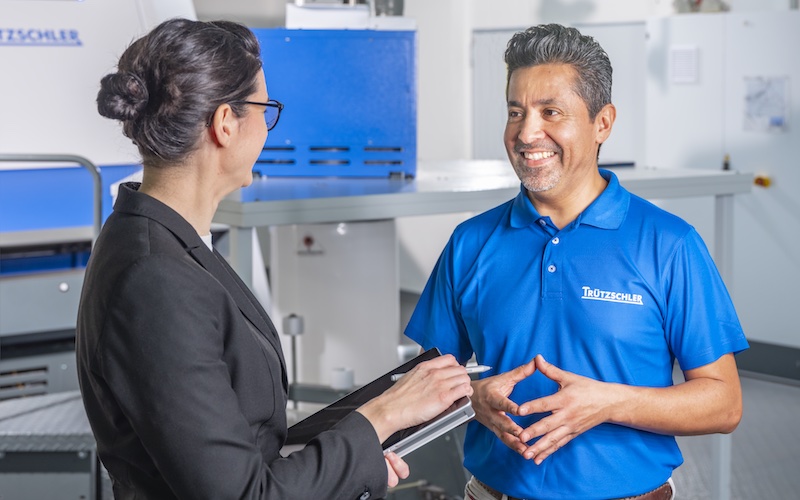
With the recent launch of the new Trützschler IDF 3, Eva Trenz, Trützschler Product Manager Spinning Preparation, spoke with Trützschler Senior Expert in R&D Technology, José Guadalupe Flores Molina, about the short preparation process IDF VORTEX SPINNING and its advantages.
Eva Trenz, Trützschler Product Manager Spinning Preparation (left), talked to José Guadalupe Flores Molina, Trützschler Senior Expert in R&D Technology (right) about IDF VORTEX SPINNING © 2024 Trützschler


Q: José, what does IDF VORTEX SPINNING mean?

A: Thanks to the IDF, it’s possible to cut down the number of draw frames used in airjet spinning. For rotor spinning, it is already standard practice to only have cards with IDF directly before the spinning machines. For airjet spinning, however, it is normal to have one card and three draw frames. By using the IDF and a 12-fold creel finisher, customers are able to shorten the preparation process – so they now only need one card with IDF and one finisher before spinning. That means they save space and energy because they need two fewer draw frames.

Q: Sounds great, but is it really that simple?

A: Yes and no... We started our research project in this area during 2015, conducting a huge number of trials at our R&D center in Germany and on-site at Trützschler customers around the globe. We collected a lot of knowledge, insights and experience. As a result, we knew that the short preparation process for airjet would work reliably when we introduced it at ITMA Asia in 2018 and ITMA 2019. We’ve seen a continuous flow of orders for new airjet spinning projects using the short process since then. And in India, demand for this has boomed.

Q: How would you respond to concerns regarding the shorter process?

A: The outcome depends on the specific situation. Together with the customer, each application is technologically evaluated in advance. We get the best results with synthetics and yarn counts up to Ne 40 so far, and we have not seen any difference in the quality of the final fabric.

I’ll always remember one customer who switched their production line to the short process using cards with IDF and 12-fold creel finishers. After one year, they hadn’t noticed any change in quality – so they placed a new order for a mill with IDF VORTEX SPINNING.

Q: What will the future bring for short spinning processes with IDF?

A: We’re always looking for new possibilities to expand the field of application. Our innovators are running tests to achieve finer yarn counts, while also working with different raw materials like Lyocell and blends. That’s what makes this project so much fun for me as an R&D technologist. There are still so many potential applications for airjet spinning where the short preparation process can be used to its full potential. And I believe it will become even more fun with the new IDF 3.

We look forward to seeing the results in the future – and we are proud that IDF VORTEX SPINNING customers can now benefit from the impressive features of our new IDF 3!

Trützschler partner Murata statement:

“We enjoy working with Trützschler and applying their technology in VORTEX plants. We’re already operating more than 200 spinning machines with IDF+1 pass. From the first stage of the trial, it was interesting to see that the yarn cut level in IDF+1 pass is less than in the conventional three passage process. This improves spinning machine efficiency a lot. The yarn data shows some small differences between one pass and three passes, but it is difficult to see the difference in knitted fabric. Our target is now to focus on intimate blends. We believe the T-Blend system, IDF and one finisher from Trützschler are a great fit for our sustainable and smart VORTEX factory!”, says Mr. Masazumi Shigeyama, VORTEX Product Manager.
More News from Truetzschler GmbH & Co. KG

#Spinning

Perfect quality through collaboration: Machinery from Trützschler, Toyota and Murata at Zirve Tekstil

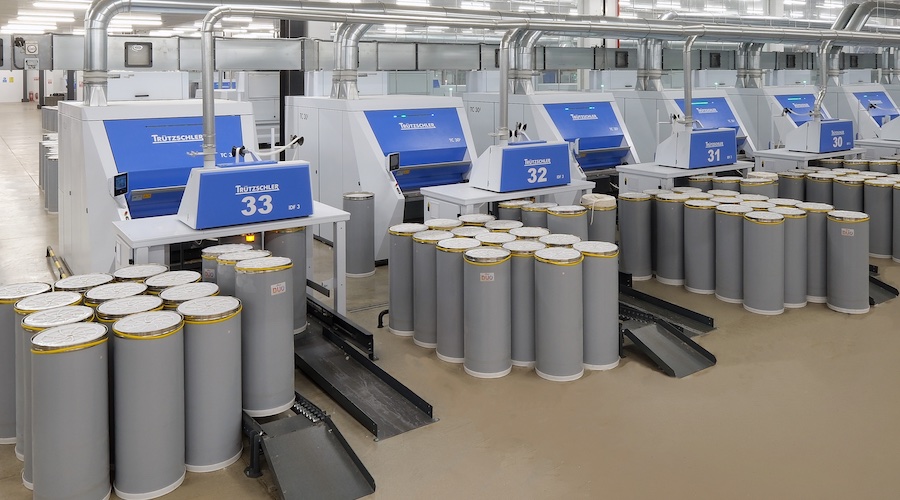
In today’s textile industry, excellence is not achieved by chance – it’s the result of deliberate decisions, technical expertise, and the courage to go beyond conventional paths. The Turkish company Zirve Tekstil has done just that: by combining the best technologies from Trützschler, Toyota and Murata, they’ve created a production setup that delivers outstanding yarn quality – recognized worldwide.

#Spinning

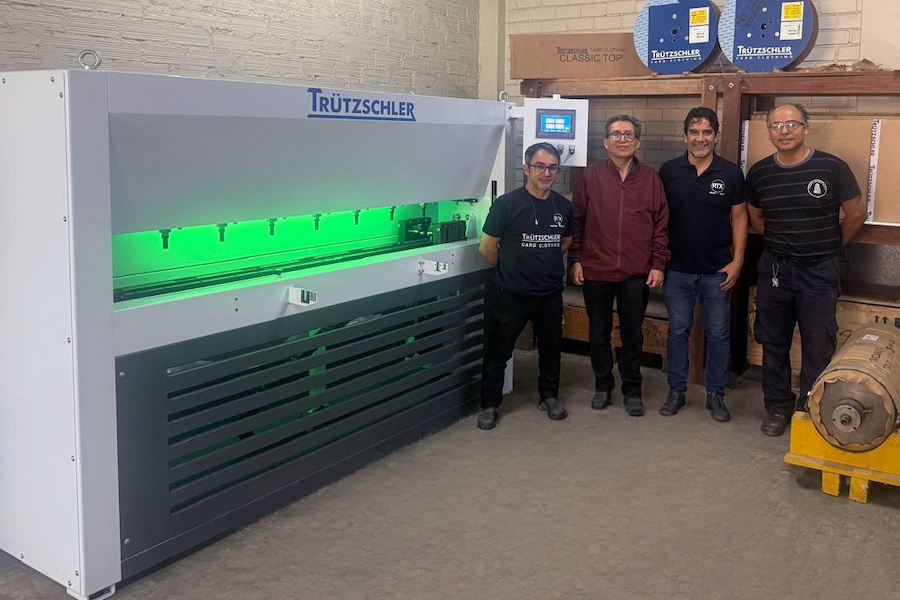
Details matter: How Trützschler cylinder wires boost efficiency in Pakistan’s spinning sector

Pakistan’s textile industry, especially its spinning sector, is the backbone of the national economy and a vibrant hub of innovation. Today’s spinning mills face growing demands for efficiency, quality, and sustainability. From the serene northern valleys to the vibrant port city of Karachi in the south, mills like Suraj Cotton Mills, Liberty, and Nishat Chunian are turning to advanced solutions.

#ITMA Asia + CITME Singapore 2025

T-CAN – Revolutionizing can transport

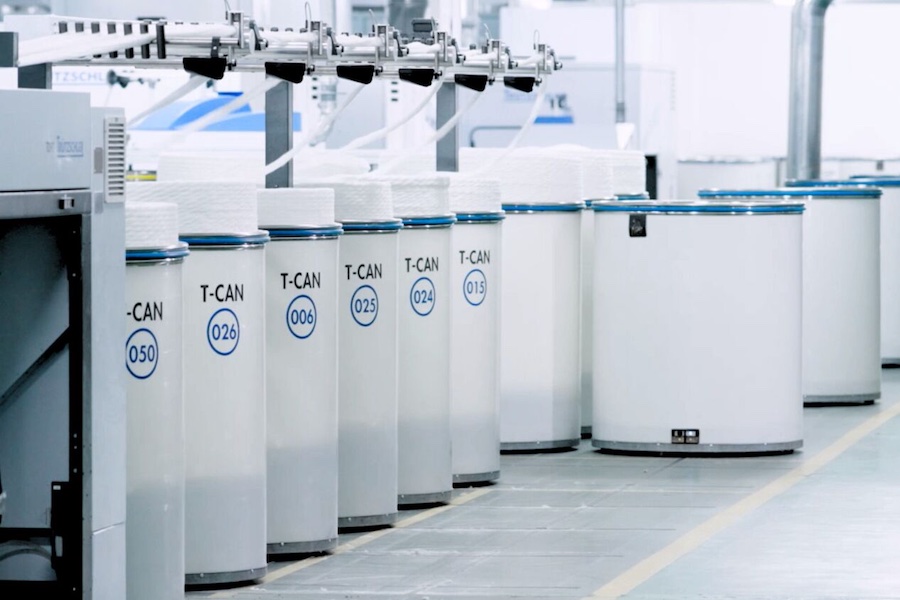
In virtually all spinning mills, transporting sliver cans is still done manually. Rising labor costs, lack of operators and increasing quality requirements make this a growing challenge. With T-CAN, Trützschler introduces a practical solution: a fully automated can transport system that will be presented live at ITMA ASIA 2025 in Singapore.

#Spinning

Pre-Cleaner CL-X: The future of cotton cleaning

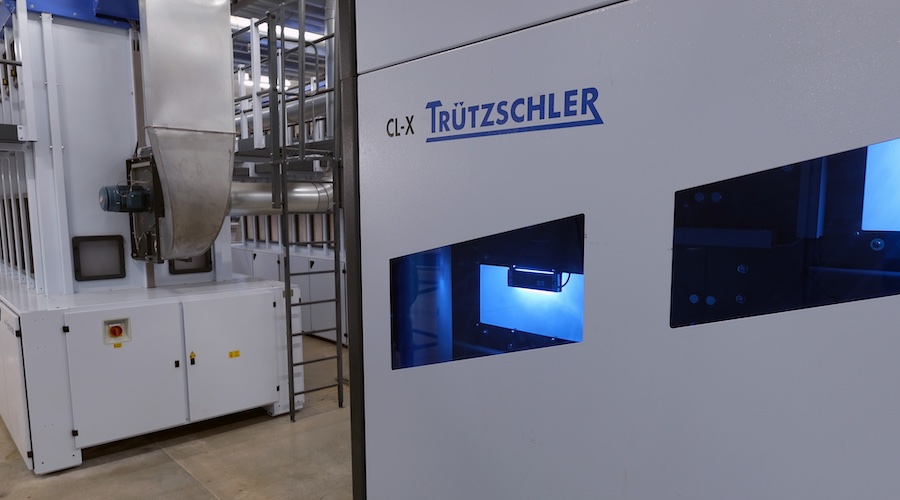
What if the future of cotton cleaning was already here – setting a new standard for cleaning efficiency, productivity and energy savings? That future has a name: CL-X. Since its market launch in 2022, the Pre-Cleaner CL-X has become a true bestseller, proving its value in several hundred customer applications worldwide. Now, new results from Türkiye demonstrate again how the Pre-Cleaner CL-X outperforms the competition.

More News on Spinning

#Spinning

Rieter responds to higher raw material prices

Global political and economic developments have been leading to rising raw material and energy costs for some time. The textile machinery industry is also affected by this trend. Rieter machines and components consist to a large extent of steel, copper, aluminum and electronics. These materials in particular have seen higher demand and higher prices in recent months.

#ITM 2026

The hub of smart and sustainable transformation in yarn technologies: ITM 2026

With global fiber production projected to reach 169 million tons by 2030, yarn manufacturing is becoming one of the most strategic fields within the textile machinery industry. Located in Halls 6, 7, and 10, the Yarn Hall at ITM 2026 is set to bring together industry professionals with innovative solutions developed around automation, energy efficiency, digitalization, and circular production.

#Spinning

Barmag: DTY efficiency for the future of fancy yarns

Fancy yarns continue to gain importance in the textile market: Whether in fashion, home textiles or the automotive industry - the trend towards individuality is fueling the demand for textured, haptically differentiated and at the same time comfortable yarns.”

#Spinning

Monitor, adjust, perfect

FiberGuard BCF is the name of the new system for real-time monitoring of yarn tension in all Neumag BCF production processes. Barmag, the innovation and technology leader for filament spinning systems, presented this innovation of its Neumag product line at ITMA Asia + CITME in Singapore last November. The new BCF yarn tension sensor is compatible with all current Neumag BCF machines and can be easily retrofitted to existing Neumag BCF S8 machines.

Latest News

#Sustainability

Ying McGuire becomes new CEO of Cascale

Cascale today announced the appointment of Ying McGuire as Chief Executive Officer, effective June 1, 2026.

#Technical Textiles

Sustainable, lightweight, and sound absorbing: Polyester-based front trunk solution for BEVs

As car manufacturers look to further reduce their carbon footprint, Autoneum has developed an innovative front trunk solution for battery electric vehicles (BEVs), made entirely from polyester-based textile. The Ultra-Silent Frunk offers significant weight reduction, improved acoustic and thermal insulation, and uses up to 70 percent recycled material, supporting sustainable and efficient vehicle design. Autoneum, global technology leader in acoustic and thermal management for vehicles, has already received orders for the new frunk from three major OEMs in Asia and Europe to be built in three BEV models. Series production for two BEVs has been underway in China and Germany since last year.

#Raw Materials

Modern testing methods for raw cotton

The 38th International Cotton Conference Bremen will take place from 25 to 27 March 2026 at the Bremen Parliament. This conference has traditionally stood for in-depth expertise and international exchange. The program will focus on technical innovations, market trends, and regulatory frameworks across the entire value chain – from agriculture to the circular economy. With high-profile speakers, the conference is regarded as the key meeting point for the global cotton industry. Today’s focus: Cotton quality and testing methods.

#Weaving

Stäubli demonstrates how innovation translates into real benefits for weaving mills at SITEX 2026

One of India’s most prominent textile industry events, SITEX 2026, is held from February 21 to 23 in Surat. Committed to empowering Indian weaving mills with state‑of‑the‑art solutions tailored to regional needs, Stäubli will present a selection of solutions designed for performance, reliability, and power efficiency. Through its weaving preparation, cam and dobby shedding solutions and Jacquard technologies, Stäubli highlights its global expertise tailored to the specific needs of the local market.

TOP