[pageLogInLogOut]

#Spinning

Perfect quality through collaboration: Machinery from Trützschler, Toyota and Murata at Zirve Tekstil
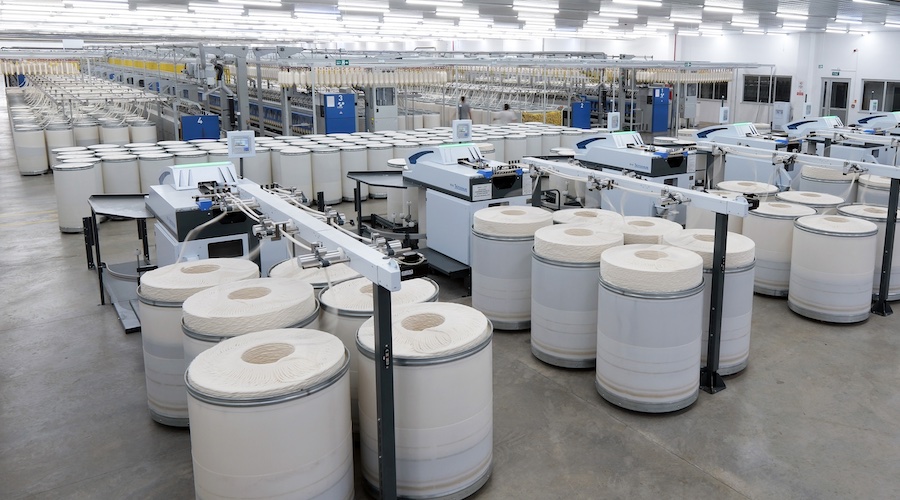
Collaboration at its finest: three leading technologies working hand in hand for one shared goal – perfect yarn quality.© 2026 Trützschler
In today’s textile industry, excellence is not achieved by chance – it’s the result of deliberate decisions, technical expertise, and the courage to go beyond conventional paths. The Turkish company Zirve Tekstil has done just that: by combining the best technologies from Trützschler, Toyota and Murata, they’ve created a production setup that delivers outstanding yarn quality – recognized worldwide.

A strategic choice for excellence

“We knew a one-brand setup might be easier,” says Erhan Tenekeci, the company’s General Manager. “But our goal was to stay competitive, which meant choosing the best in every category, Trützschler for fiber and spinning preparation, Toyota for roving and ring spinning frames and Murata for winding.”

Perfect quality from the start

Excellent quality in yarn manufacturing starts with spinning preparation. The Trützschler bale opener BO-P, for example, gently opens the fibers and ensures best possible blending from the start. The Pre-Cleaner CL-X outperforms the competition with its outstanding cleaning efficiency while significantly reducing the loss of good fibers. All in all, Trützschler’s blow room solutions lay the foundation for consistent quality and economy in yarn manufacture.
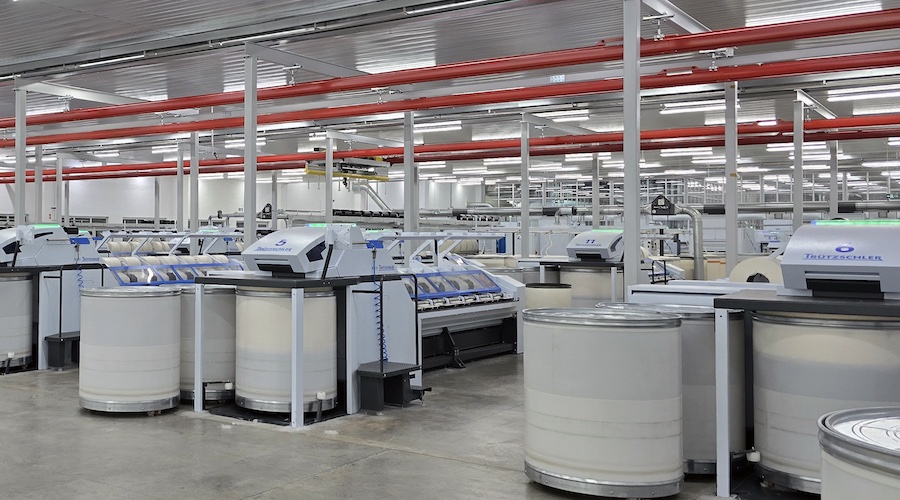
Trützschler’s spinning preparation machinery transform raw cotton into a perfectly prepared sliver. © 2026 Trützschler


The intelligent card TC 19i, equipped with SUPERTIP wires from Trützschler Card Clothing, contributes further to unmatched sliver quality through the automatic gap optimizer T-GO, which is only available from Trützschler. The card also features WASTECONTROL, which prevents any unnecessary fiber loss. In the combing stage, the TCO 21 Comber stands out with its dual-drive technology and automatic piecing optimization, delivering uniform quality across all eight heads – even at high speeds. It also enables top quality at low noil levels. Together with the high performance draw frames TD 9T and TD 10, these Trützschler spinning preparation machines form a tightly integrated system that transforms raw cotton into a perfectly prepared sliver, thus creating the basis for further processing.
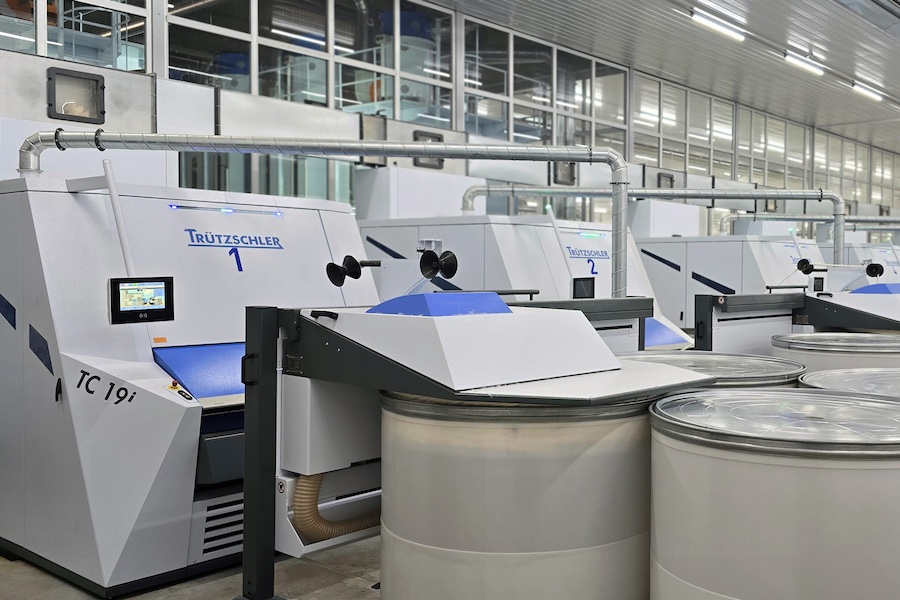
The intelligent Trützschler card TC 19i, equipped with SUPERTIP wires from Trützschler Card Clothing, ensures that every fiber is perfectly aligned, maximizing both quality and efficiency. © 2026 Trützschler


In the roving stage, four Toyota FL200 Roving Frames ensure high-quality rovings even at low twist levels – a key factor for downstream performance. Twelve Toyota RX300 Ring Spinning Frames provide exceptional stability and precise spinning geometry. As Erhan Tenekeci, General Manager of Zirve Tekstil, explains: “Despite being limited to 1824 spindles, Toyota’s compact ring machines produce more and higher-quality yarn than even the longest machines of competitors. Their performance, combined with low maintenance and high adaptability, gives us a clear edge.”
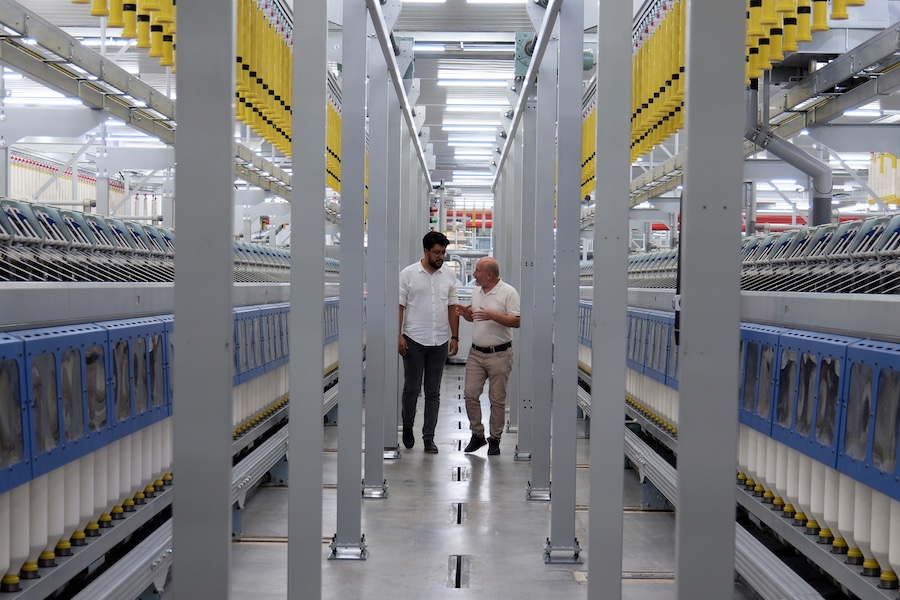
Toyota and Zirve experts exchanging insights on roving technology for superior quality at low twist levels. © 2026 Trützschler


The final step is handled by the Muratec FPRO EX Automatic Winder, seamlessly connected via Coner Link. This setup ensures smooth yarn transfer, minimal contamination, and consistently high winding quality – completing a process chain where every detail is aligned for excellence.

Quality that speaks for itself

The mill produces 18.5 tons of premium combed ring yarn daily in counts of Ne 20, 24, and 30, primarily for knitting applications. Although the focus lies on utilizing locally grown cotton – which typically comes with greater variability in fiber properties – the mill successfully produces yarns that are in high demand both in local markets with stringent quality requirements and on international export markets.

This commitment to excellence has not gone unnoticed: Pinter, the provider of the OptiFil system, has recognized the mill for achieving the highest efficiency among its Turkish benchmarking network with lowest yarn breakages – a clear indicator of the outstanding fiber preparation. This achievement is a testament to the effectiveness of combining top-tier machinery from Trützschler, Toyota, and Murata.
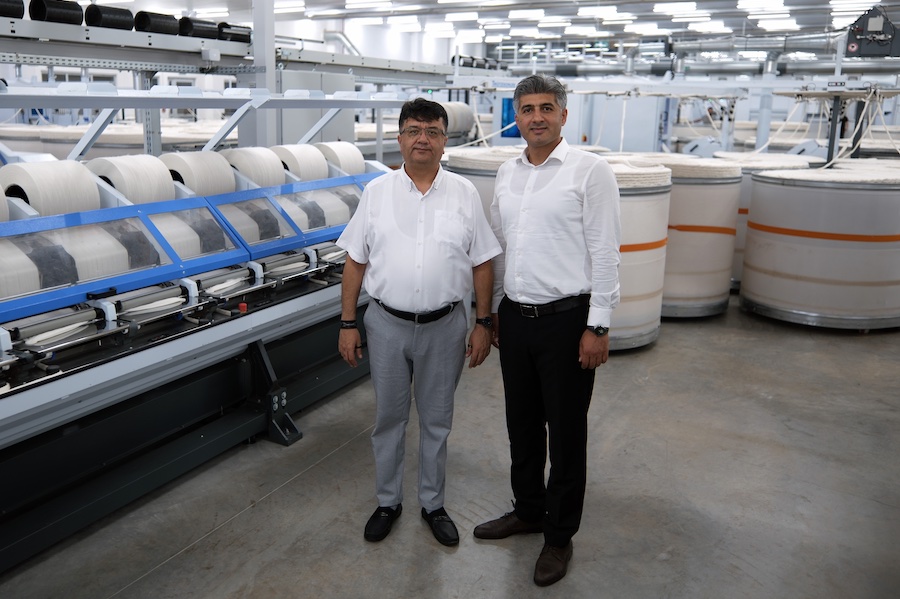
From left to right: Erhan Tenekeci (General Manager Zirve Tekstil) and Ahmet Öztürkmen (Trützschler Türkiye Sales Engineer). © 2026 Trützschler


Collaboration without compromise – The best of all worlds

This project proves that integrating machines from different manufacturers can be done – and done well. The planning phase was smooth and collaborative, with all partners working hand in hand. The result: a production line that is more than the sum of its parts, with each machine contributing to one shared goal: perfect yarn quality.

It’s a powerful example of what’s possible when openness, technical excellence, and strategic thinking come together. By selecting the best solution for each step – regardless of brand – the mill has set a benchmark for modern spinning. “The best from every machine, for the best from every fiber.”
More News from Truetzschler GmbH & Co. KG

#Spinning

Ibrahim Fibres and Trützschler: A strong partnership enters its next phase with the TC 30Si

For more than two decades, Ibrahim Fibres and Trützschler have grown side by side, driven by a shared ambition to continuously improve spinning performance, strengthen technology leadership and set new benchmarks in the textile industry. Today, Ibrahim Fibres is a leading yarn and polyester staple fiber manufacturer in Pakistan. The company operates the largest number of Trützschler cards in the country, with more than 200 machines running across its mills in Faisalabad, and plays an important role in one of Asia’s largest textile industries.

#ITM 2026

Trützschler’s Integrated Draw Frame IDF 3: Unlocking the full potential of short fiber processing

Spinning mills worldwide are looking for solutions that combine higher productivity, stable quality and shorter processes, especially when processing short fibers. Trützschler’s integrated draw frame IDF 3 has proven to be a powerful answer to these requirements. Evaluations from several customer trials in Türkiye under real production conditions highlight the strong performance of the IDF 3, particularly when combined with the next-generation card TC 30i.

#ITM 2026

Experience Trützschler’s leading fiber processing technologies at ITM 2026

From June 9 to 13, the Trützschler Group will present its latest machinery, service expertise and digital solutions at ITM 2026 in Istanbul, Türkiye. Visitors are invited to explore innovations across Spinning, Card Clothing, and Nonwovens at Hall 7, Booth 714A at the Tüyap Fair Convention and Congress Center. They can experience modern fiber processing with Trützschler!

#Spinning

Details matter: How Trützschler cylinder wires boost efficiency in Pakistan’s spinning sector

Pakistan’s textile industry, especially its spinning sector, is the backbone of the national economy and a vibrant hub of innovation. Today’s spinning mills face growing demands for efficiency, quality, and sustainability. From the serene northern valleys to the vibrant port city of Karachi in the south, mills like Suraj Cotton Mills, Liberty, and Nishat Chunian are turning to advanced solutions.

More News on Spinning

#Spinning

Object Carpet tests production of rPET BCF yarn on Neumag BCF line

In a joint project with Object Carpet GmbH, Denkendorf; the Institute for Textile Technology (ITA), Augsburg; and Next Generation Recyclingmaschinen GmbH (NGR), Feldkirchen, Austria, Barmag investigated the processing of recycled polyester for BCF yarn. The goal was to evaluate the fundamental suitability of 100% recycled carpet material for reuse in carpet yarn production to create a closed-loop system in carpet manufacturing. To date, commercial rPET BCF processes have been based solely on rPET from bottle pellets.

#Spinning

New spinning package with two-step filtration for recycled yarns and more

At the ITM in Istanbul, BB Engineering unveiled its new, patented ValuePack spinning package for the first time, which features a two-stage filtration system. This is particularly beneficial for re-cycling processes. Until now, spinning packs have used either metal powder (“sand”) or filter candles as filter media. Both options are suitable for differ-ent applications, and each has its own specific advantages and dis-advantages.

#Research & Development

GenuTrace client advisory: Is your cotton supply chain UFLPA ready?

U.S. Customs and Border Protection has released updated operational guidance (CBP Publication No. 5560-0526) expanding its forced labor enforcement framework. The guidance supersedes the original 2022 UFLPA Operational Guidance and now covers all forced labor enforcement authorities — UFLPA, CAATSA, and WROs/Findings — in a single unified document. For cotton importers, the enforcement posture has not softened. It has become more structured, more documented, and more demanding. Learn more about UFLPA.

#Spinning

"We will become a recycling powerhouse"

The textile industry is now in its fourth consecutive year of crisis, while automation, artificial intelligence and recycling are reshaping the rules of the game. In this interview, Rieter CEO Thomas Oetterli discusses the first signs of a market recovery, reflects on his first three years at the helm of the company, explains the integration of Barmag, outlines Rieter’s vision of the fully automated spinning mill and highlights the strategic importance of recycling. In doing so, he explains why the new Rieter Group aims to play a leading role in transforming the textile value chain into a circular economy.

Latest News

#Research & Development

ALADIN paves the way for circular and demand-driven textile production in Europe

Textile production can be organized sustainably by utilizing short supply chains and preventing overproduction. This can already be achieved today by intelligently connecting and efficiently utilizing existing infrastructure. At the same time, production becomes circular when innovative technologies and materials are used that enable high-quality recycling. The ALADIN research project, launched in May 2026 and co-funded with five million euros under the EU Horizon Europe program, is creating the conditions for this.

#Nonwovens

Katharina Obergruber appointed to the Management Board of Sandler AG

The Supervisory Board of Sandler AG has appointed Katharina Obergruber to the company’s Management Board. Effective September 1, 2026, the Board will consist of Philipp Ebbinghaus (CEO), Dr. Ulrich Hornfeck (currently CCO, future COO), and Katharina Obergruber (CCO). Katharina Obergruber, currently Chief Sales Officer Hygiene and member of the Management Team of Sandler AG, will assume responsibility for all sales activities as Chief Commercial Officer. She will assume this role from Dr. Ulrich Hornfeck, who will focus primarily on production and supply chain topics.

#Recycling / Circular Economy

Ence and ShareTex begin initial testing of the ATENEA innovation project to promote textile recycling in Spain

Ence and ShareTex are making progress on the Atenea R&D project, which aims to develop a complete value chain for textile recycling in Spain. Specifically, the goal of the ATENEA project—which is funded by the Center for Technological Development and Innovation (CDTI)—is to connect all the necessary stages for the recovery of textile waste, from collection and management, through recycling and transformation into new raw materials, to their incorporation into new textile products.

#Recycling / Circular Economy

DePoly Inaugurates its Showcase Plant in Monthey Switzerland

What if used plastic bottles, PET packaging material and polyester textiles could become raw materials just as high performing as virgin resources? That is the ambition of DePoly, a circular materials company based in Sion, Switzerland which inaugurated its Showcase Plant in Monthey on July 6th & 7th. The first depolymerization facility of its kind and scale in Switzerland, this industrial Showcase Plant represents a major milestone in the company's growth and its journey toward commercialization.

TOP