[pageLogInLogOut]

#Spinning

Flexible Bend Control: The game-changer for perfect carding gap settings
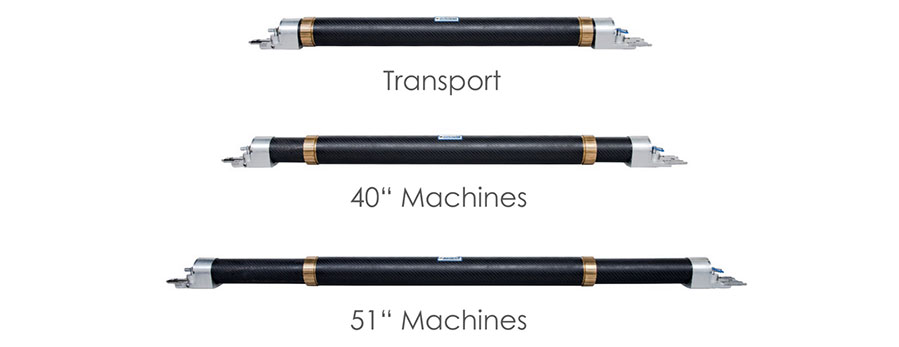
FBC / different working width © 2023 Trützschler
The new Trützschler Flexible Bend Control (FBC) service device ensures the perfect flat setting for all Trützschler cards within just a few seconds.

Voices from across the textiles industry are enthusiastic about the FBC’s setting accuracy. “Thanks to the FBC, moving flats can be adjusted at sensitivities that cannot be adjusted manually,” says one Turkish customer, for example. Trützschler Card Clothing Technologist Fatih Okuyucu adds: “Since we started sharing the results with our customers, they are demanding tuning with FBC. It now enables a more professional approach to carding machine operations and gives them deeper insights into the effects of fine-tuning.”
© 2023 Trützschler
© 2023 Trützschler


This positive market response shows that Trützschler has achieved a new technological advance in flat setting that brings many benefits.

Flexibility

The FBC offers the possibility to adjust the flexible bends on all Trützschler card generations to optimize the carding gap between the flat top and cylinder. Due to its flexible design, the FBC can be adjusted to the required machine width within seconds. As soon as the device has been adjusted to the relevant type of card, it is inserted into the flat circuit of the card and the preferred settings can be implemented.

Operation via app

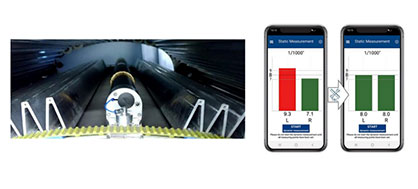
The device is operated via the FBC app, which is preinstalled on a tablet device that is supplied with the order. Alternatively, the FBC app can be downloaded on any typical smartphone or tablet.In the app, all necessary steps are explained in detail – from placing the FBC on the card to adjusting the setting points. Measurement data is transmitted live on the device.


Static and dynamic measurement

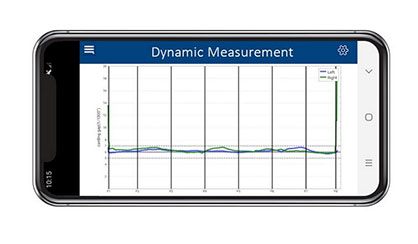
During static measurement, the FBC moves over the flat circuit – set point by set point. The measured values are displayed in real-time on the tablet, which enables the user to correct deviations from the target value directly. An overview of the setting of the main carding zone is then displayed graphically via the dynamic measurement
© 2023 Trützschler
© 2023 Trützschler


Easy handling

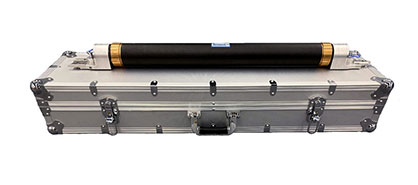
The FBC is characterized by its easy handling. It weighs no more than a flat bar, and the transport case makes it easy to take the service device with you.

The FBC ensures precise adjustments of the carding gap for all Trützschler cards, and guarantees optimum quality at all times.
© 2023 Trützschler
© 2023 Trützschler


More News from Truetzschler Card Clothing GmbH

More News on Spinning

#Spinning

Object Carpet tests production of rPET BCF yarn on Neumag BCF line

In a joint project with Object Carpet GmbH, Denkendorf; the Institute for Textile Technology (ITA), Augsburg; and Next Generation Recyclingmaschinen GmbH (NGR), Feldkirchen, Austria, Barmag investigated the processing of recycled polyester for BCF yarn. The goal was to evaluate the fundamental suitability of 100% recycled carpet material for reuse in carpet yarn production to create a closed-loop system in carpet manufacturing. To date, commercial rPET BCF processes have been based solely on rPET from bottle pellets.

#Spinning

New spinning package with two-step filtration for recycled yarns and more

At the ITM in Istanbul, BB Engineering unveiled its new, patented ValuePack spinning package for the first time, which features a two-stage filtration system. This is particularly beneficial for re-cycling processes. Until now, spinning packs have used either metal powder (“sand”) or filter candles as filter media. Both options are suitable for differ-ent applications, and each has its own specific advantages and dis-advantages.

#Research & Development

GenuTrace client advisory: Is your cotton supply chain UFLPA ready?

U.S. Customs and Border Protection has released updated operational guidance (CBP Publication No. 5560-0526) expanding its forced labor enforcement framework. The guidance supersedes the original 2022 UFLPA Operational Guidance and now covers all forced labor enforcement authorities — UFLPA, CAATSA, and WROs/Findings — in a single unified document. For cotton importers, the enforcement posture has not softened. It has become more structured, more documented, and more demanding. Learn more about UFLPA.

Latest News

#Nonwovens

EDANA announces five new board members following 2026 Annual General Meeting

The EDANA Board of Governors is elected or re-elected at the Annual General Meeting by the member companies. The Governors are senior executives (business leaders) from member companies, based in different countries and representing different sectors of the nonwovens industry. The Board has central responsibility for guiding EDANA's overall strategy and approving its policies and priorities. It meets three times a year.

#Nonwoven machines

DiloGroup - Complete nonwoven needling line for hygiene materials in the United States

DiloGroup has received an order for a complete needling line designed for the production of hygiene materials in the United States. This project further strengthens our position in the American hygiene sector and reflects the continued demand for reliable, high-performance nonwoven equipment.

#Natural Fibers

Cotton made in Africa partners receive top marks in independent verifications

Cotton made in Africa® (CmiA) and CmiA Organic are two internationally recognised standards that aim to promote sustainable development in the African cotton sector south of the Sahara. To ensure the standards’ credibility among brands, retailers, and consumers, independent verifiers evaluate compliance on the ground. The verification results for 2025, now published in the Aggregated Verification & Implementation Report, were very strong: The verifiers awarded consistently very good remarks regarding management, people, prosperity, and the environment.

#Associations

Bangladesh: Italian textile machinery mission stops in Dhaka and Chittagong

Technological upgrading and the transition toward higher value-added production are driving the new Italian industrial mission to Bangladesh. This year, the mission will split between the country’s two main manufacturing hubs, where Italian manufacturers will meet the leaders of the local textile supply chain in two strategic stages: July 7th in Dhaka and July 9th in Chittagong.

TOP