[pageLogInLogOut]

#Spinning

Trützschler Card Clothing: A pioneering partnership for sustainable success in Egypt
© 2022 Truetzschler
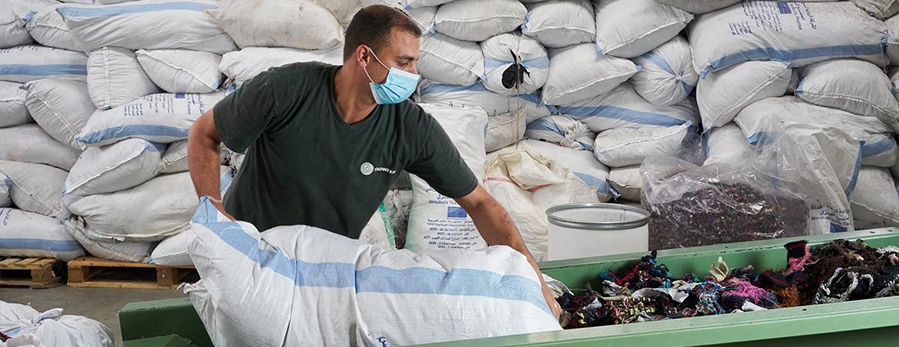
Sharabati Denim is one of the major leading manufacturers of eco-friendly denim in Egypt, Syria and Turkey. In 2018, the company launched the state-of-the-art recycling initiative “Tadweer” that uses recycled material and sustainable production processes for closing the loop. Trützschler Card Clothing (TCC) is delighted to join this innovative concept with its experts and equipment.

The story of Sharabati Denim began more than 40 years ago, when the company was founded by Mr. Mohamad Sharabati. The company’s primary focus is to be a reliable partner to fashion brands and producers by providing a diverse portfolio of denim products that are stylish, durable and sustainable. To achieve this, Sharabati Denim uses its deep technical expertise related to spinning, weaving, dyeing and finishing, as well as recycling processes. And the company also looks for partners who share its strong commitment to environmental protection.

Cooperating for more sustainable practices

TCC is one of those pioneering partners. Sharabati Denim has invested in a Trützschler TC 19i  carding machine to support its sustainability initiative Tadweer. It is part of a broader sustainability strategy that goes far beyond recycling. This approach aims to maximize the value of materials, conserve natural resources and cut waste. Sharabati is now using energy-efficient lighting for its factories, as well as solar panels and an integrated water recycling approach. And the TC 19i is also an important contributor to its pioneering sustainable practices.

“The Trützschler TC 19i allows Sharabati Denim to transform waste into hiqh-quality yarns,” says Mr. Jameel Zarka, Managing Director of Sharabati Denim. “By cooperating closely with TCC and its local agent in Egypt, Tex Trading and Services, we are able to make our products and processes better every day. We constantly share best practice and discuss innovative ideas together. As a result, Trützschler has enabled us to increase productivity and flexibility – and sustainability too. With the SUPERTIP wire, we can use recycled material to create fibers with the best levels of homogeneity and strength, while giving gentle but effective treatment of short fibers.”


Specially designed to optimize recycling

The successful partnership with Sharabati Denim is the latest example of how Trützschler Card Clothing is enabling companies in the spinning industry to reduce their environmental footprint – while also achieving benchmark levels for quality when using pre- and post-consumer fibers and blends.

Trützschler has developed a range of solutions for recycling. This includes fixed carding segments with an aligned profile geometry in connection with the chut feed of the card, which supports an optimum opening and cleaning of tufts from secondary fibers. Special conceptions of flats and special geometries of cylinder wires also ensure the best possible removal of neps. This guarantees a smooth treatment of the individual fibers that come from different sources and categories of waste, and makes it possible to produce sliver with excellent homogeneity.

In addition, the increased stability of the teeth and the quality of SUPERTIP lead to significantly prolonged utilization times of the clothing, especially for challenging applications involving recycling. The profile geometry of the cylinder wire is specifically designed for processed fibers, and ensures optimal running and less cleaning of the cylinder surface.

More than recycling

The success of Sharabati Denim reaches back more than four decades into the past. However, the company is also committed to participating in the transition to a sustainable present and future too. Its ambitious sustainability strategy is actively minimizing its impact on the environment. And by working together with experts and equipment from Trützschler, Sharabati Denim is further maximizing the quality of recycled denim and textile products.
More News from Truetzschler GmbH & Co. KG

#Spinning

Trützschler’s latest spinning and card clothing innovations at CAITME 2026

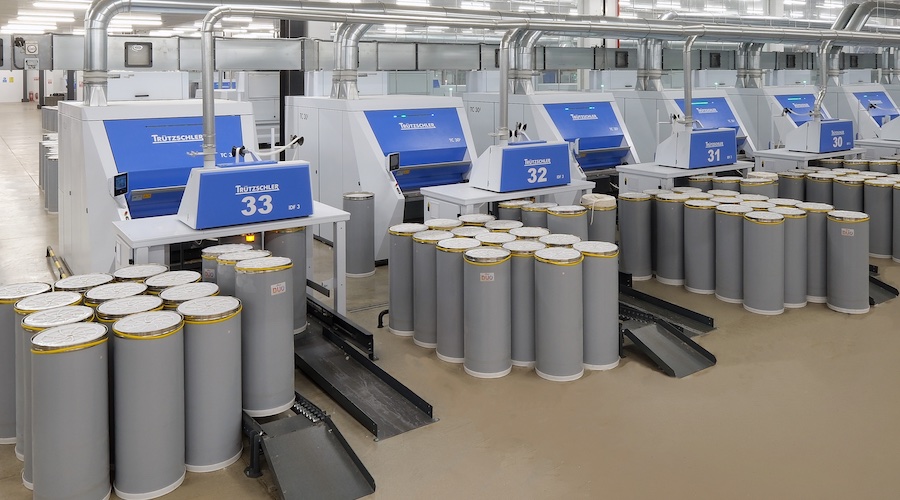
From September 8 to 10, 2026, Trützschler will present its latest innovations in spinning and card clothing for state-of-the-art fiber processing at CAITME in Tashkent, Uzbekistan. Visitors are invited to meet the experts at Pavilion 2, Booth D50 and explore solutions designed to increase productivity, streamline processes, and ensure consistently high yarn quality. Key topics include the next-generation card TC 30i, the integrated draw frame IDF 3, the high-performance comber TCO 21XL as well as Trützschler Card Clothing’s new flat top series STEELTOP®.

#Spinning

Pre-Cleaner CL-X: Proven in cotton cleaning – creating value beyond the spinning mill

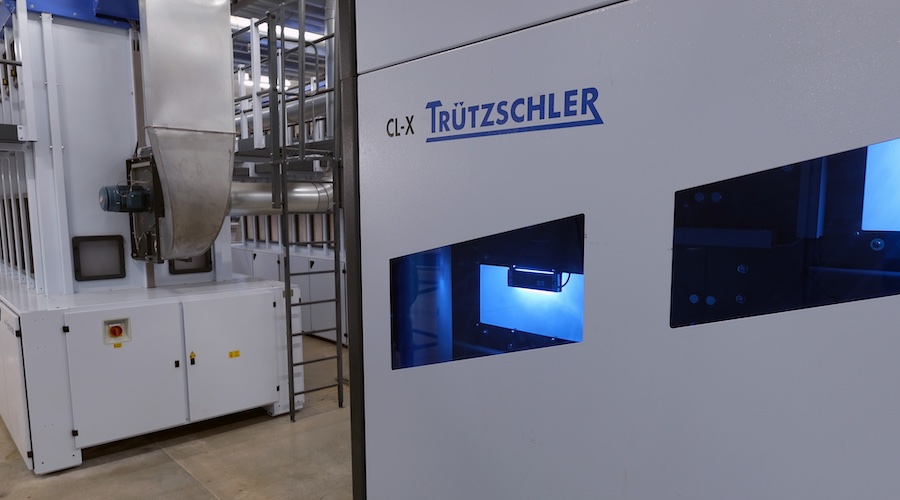
Since its market launch, the CL-X has firmly established itself in blowroom lines worldwide. Hundreds of installations confirm its ability to deliver superior cleaning efficiency, lower waste, higher productivity and significant energy savings. Now, new customer applications show that the CL-X not only continues to excel in spinning preparation – it is also entering a completely new field of application: ginning.

#Spinning

STEELTOP®: A new benchmark in flat tops for spinning preparation

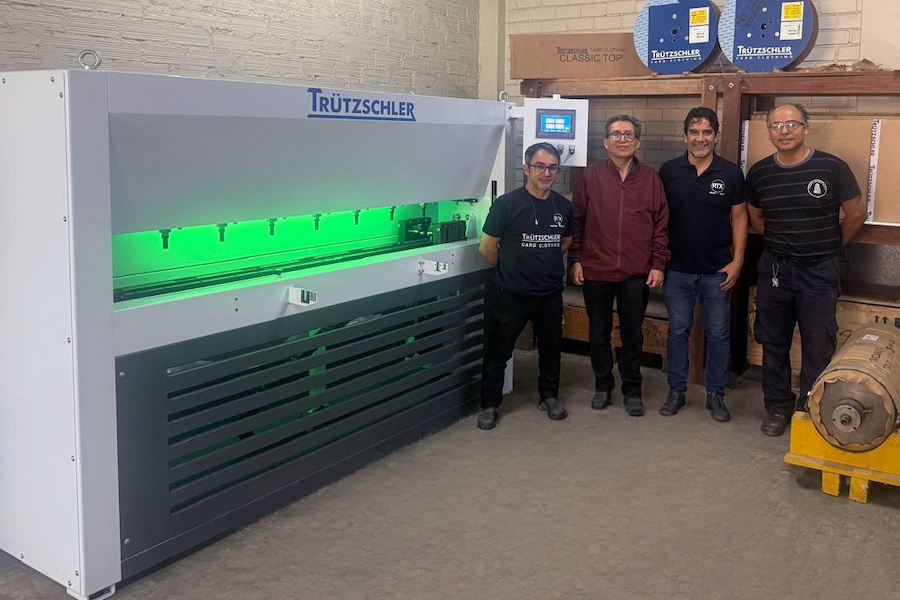
Modern carding generations achieve higher production performance, placing significantly greater stress on flat tops. Higher cylinder speeds and increased fiber density, combined with tighter carding gaps, create more demanding operating conditions. At the same time, poorer raw material quality and the increased use of recycled materials further intensify these challenges. With STEELTOP®, Trützschler introduces a new full steel flat top series developed for these demanding modern carding processes.

#Spinning

Ibrahim Fibres and Trützschler: A strong partnership enters its next phase with the TC 30Si

For more than two decades, Ibrahim Fibres and Trützschler have grown side by side, driven by a shared ambition to continuously improve spinning performance, strengthen technology leadership and set new benchmarks in the textile industry. Today, Ibrahim Fibres is a leading yarn and polyester staple fiber manufacturer in Pakistan. The company operates the largest number of Trützschler cards in the country, with more than 200 machines running across its mills in Faisalabad, and plays an important role in one of Asia’s largest textile industries.

More News on Spinning

#ITMA Asia + CITME 2026

ITMA Asia 2026: How Barmag is reshaping the future of man-made fiber production

The textile industry is entering a groundbreaking era. Manufacturers face rising energy prices, growing sustainability demands, increasing labor shortages, and an unprecedented need for flexibility. For a globally active textile industry, where competitiveness is closely linked to production efficiency and cost leadership, this means that technology is no longer merely a means of improving operational processes – it is increasingly becoming a strategic differentiator.

#Spinning

Eltex takes the tension out of heat-setting

The ACT-MULTI system developed by Eltex – a member of TMAS, the Swedish textile machinery association – is bringing individual yarn tension monitoring and automatic control to the heat-setting process, helping manufacturers maintain consistent processing conditions across every yarn position.

#Spinning

Heberlein reinforces its commitment to the Chinese market

Heberlein, globally recognised as a leading provider of air interlacing and air texturing jets for synthetic filament yarns, is consolidating its success in the Chinese market with its APh- and APe-series for DTY applications. Particularly in the field of Air Covering, Heberlein technologies combine excellent quality with significant savings in compressed-air consumption. A new service hub in Shengze City underlines the company’s long-term commitment in the Chinese market.

#Recycled Fibers

Driving circularity with Uster Recycled Fiber Matrix

The textile industry’s commitment to circularity continues to accelerate, and mechanical recycling is viewed as a targeted approach to cutting textile waste and its environmental impact. At the forefront of this drive, Uster has developed the Recycled Fiber Matrix, a two-dimensional assessment of mechanically recycled fibers to guide optimum processing and end-uses.

Latest News

#Industry 4.0 / Digitalization

Coats Digital launches AI-powered GSD RealMotion for motion analysis

Coats Digital has launched GSD RealMotion, an AI-powered solution designed to provide apparel manufacturers with greater visibility into factory-floor operations. By analysing shop-floor video and applying Coats Digital’s GSD methodology, the solution turns video recordings into structured, motion-by-motion method studies.

#Textile chemistry

Archroma and Lameirinho partner in pioneering deployment of InOneGO single-step dyeing

Archroma, a global leader in specialty chemicals, and Lameirinho, a leading home textiles manufacturer based in Portugal, are collaborating to bring InOneGO by Archroma, a new single-step dyeing process, into commercial production. Lameirinho’s first InOneGo bedlinens collection is now available worldwide.

#Knitting & Hosiery

KARL MAYER launches extra-wide HKS 3-M EL for increased productivity

KARL MAYER has launched a new extra-wide version of its HKS 3-M EL tricot machine, designed to increase productivity particularly in the manufacture of textiles for sports, activewear and athleisure applications.

#Research & Development

Reducing development times for technical textiles by accelerated thermo-oxidative aging in a high-pressure autoclave

Synthetic polymers used in technical textiles can be effectively protected against degradation caused by heat, oxygen, and water through the use of stabilizer systems. This enables service lives of several decades, extending to more than 50 years. As the use of durable technical textiles continues to grow, so does the demand for reliable methods to predict their service life within economically feasible testing periods. For the first time the German Institutes of Textile and Fiber Research Denkendorf (DITF) developed methods for robust service life prediction for textiles in an IGF research project.

TOP