[pageLogInLogOut]

#Spinning

The new Truetzschler card TC 19i for Recycling: Turning textile waste into sustainable success
© 2021 Truetzschler
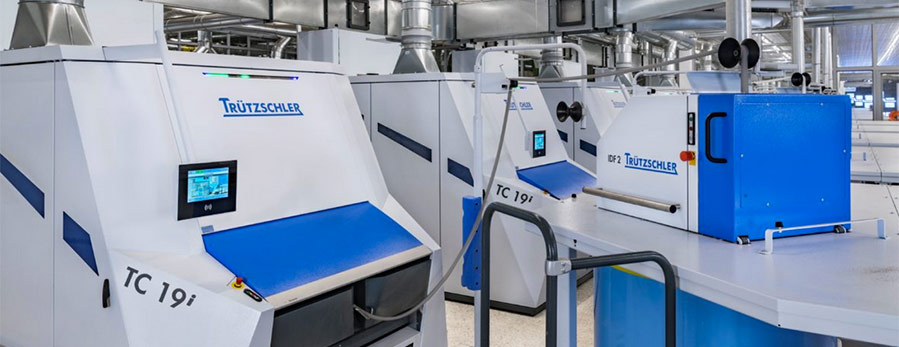
The market for recycled textiles is growing rapidly – because fashion is faster than ever, environmental regulations are stricter than ever, and the consumer focus on sustainability is sharper than ever. That’s why companies around the globe are seeking solutions to the key challenges involved in turning textile waste into high-quality yarn. Truetzschler is now launching an intelligent card that is specifically designed for this application. It’s called the TC 19i for Recycling.

Sustainability is transforming every aspect of the way people live and work, from renewable energy or electric vehicles through to packaging-free supermarkets. In the textile industry, the market for recycled fibers is growing at high speed because it taps into two contradictory trends: First, consumers buy more clothes but throw the clothes away much sooner; this is known as “fast fashion”. And second, consumers are increasingly eco-conscious and want more sustainable textile products.

Due to this high demand, as well as lower raw material costs and potentially higher profit margins, many companies are now exploring ways of producing high-quality yarns from recycled fibers – but it’s a difficult task. Waste from yarn or garment production, as well as used textiles or garments, present a wide range of challenges in spinning preparation, where the later quality of the yarn is being determined. Known as “hard waste”, secondary fibers from torn waste contain unwanted yarn or fabric particles that reduce the quality of the final output and can impair the carding performance. They also contain a high amount of short fibers, which can have a negative impact on yarn strength.

Here’s how the TC 19i is able to achieve these results:

  • Gentle but effective tuft opening: Our new WEBFEED has components such as the wired licker-in with stationary carding segments and improved profile geometries that are specifically designed for recycling applications. The recycling knife ensures the removal of disruptive particles and minimizes the loss of good fibers.
  • Robustness and reliability: Secondary fibers from torn waste may adhere to the surfaces of material carrying parts and lead to fiber blockages. With TC 19i for Recycling, this cannot happen because all material carrying parts consist of stainless steel. Moreover, the robust design and innovative coatings of key parts guarantee reliable performance in almost any application.
  • More value from waste: Our gap optimizer T-GO for Recycling uses sensors and algorithms to monitor and automatically adjust the ideal carding gap for the material involved, even under changing production conditions. In this way, it maximizes quality and productivity during recycling.
  • Flexibility: Our MULTI WEBCLEAN system enables fast, flexible and customized adjustments to recycling applications. Eight elements in the pre- and post-carding zone can be configurated either as carding or cleaning element or cover profile. This flexibility empowers customers to achieve the best possible configuration for their specific process.
  • Good advice and hands-on service: The TC 19i for Recycling, as well as Truetzschler installations for recycling as a whole, stand out due to their high number of possible configurations. Truetzschler supports each customer with recommendations for ideal settings and makes sure that customers’ production goals are actually realized.


Staying ahead of consumer demand and regulations

“By producing high-quality sliver from recycled fibers for new yarn, our customers are able to make progress toward their targets for sustainability, while also staying ahead of rising regulatory pressure and increasing consumer demand for eco-friendly products”, says Markus Wurster, Head of Global Sales. The TC 19i for Recycling is an intelligent card that helps companies in the textile industry to embrace sustainability and turn this megatrend into a mega opportunity.
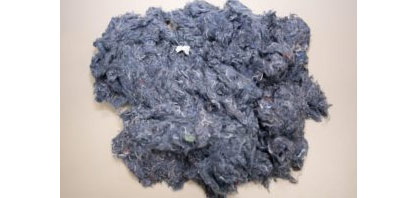
Card sliver of secondary fibers. © 2021 Trutzschler


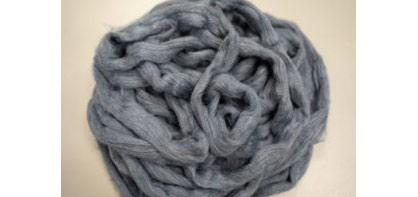
Secondary fibers of torned denim. © 2021 Truetzschler


About Truetzschler recycling solutions

Truetzschler offers complete solutions for the recycling of cotton waste from spinning preparation, as well as the recycling of secondary fibers from torn textile waste: From blowroom technology for ideal opening, cleaning and blending to advanced carding and draw frame solutions.

The TC 19i for Recycling and the integrated draw frame IDF 2 are benchmark in the direct spinning of rotor yarns from recycled materials. Truetzschler also provides a wide portfolio of card clothings specifically developed for recycling applications. Digital solutions and fast, reliable service complete our offer and help customers to turn waste into sustainable quality yarns.
More News from Truetzschler GmbH & Co. KG

#ITM 2026

Trützschler’s Integrated Draw Frame IDF 3: Unlocking the full potential of short fiber processing

Spinning mills worldwide are looking for solutions that combine higher productivity, stable quality and shorter processes, especially when processing short fibers. Trützschler’s integrated draw frame IDF 3 has proven to be a powerful answer to these requirements. Evaluations from several customer trials in Türkiye under real production conditions highlight the strong performance of the IDF 3, particularly when combined with the next-generation card TC 30i.

#ITM 2026

Experience Trützschler’s leading fiber processing technologies at ITM 2026

From June 9 to 13, the Trützschler Group will present its latest machinery, service expertise and digital solutions at ITM 2026 in Istanbul, Türkiye. Visitors are invited to explore innovations across Spinning, Card Clothing, and Nonwovens at Hall 7, Booth 714A at the Tüyap Fair Convention and Congress Center. They can experience modern fiber processing with Trützschler!

#Spinning

Perfect quality through collaboration: Machinery from Trützschler, Toyota and Murata at Zirve Tekstil

In today’s textile industry, excellence is not achieved by chance – it’s the result of deliberate decisions, technical expertise, and the courage to go beyond conventional paths. The Turkish company Zirve Tekstil has done just that: by combining the best technologies from Trützschler, Toyota and Murata, they’ve created a production setup that delivers outstanding yarn quality – recognized worldwide.

#Spinning

Details matter: How Trützschler cylinder wires boost efficiency in Pakistan’s spinning sector

Pakistan’s textile industry, especially its spinning sector, is the backbone of the national economy and a vibrant hub of innovation. Today’s spinning mills face growing demands for efficiency, quality, and sustainability. From the serene northern valleys to the vibrant port city of Karachi in the south, mills like Suraj Cotton Mills, Liberty, and Nishat Chunian are turning to advanced solutions.

More News on Spinning

#Spinning

Object Carpet tests production of rPET BCF yarn on Neumag BCF line

In a joint project with Object Carpet GmbH, Denkendorf; the Institute for Textile Technology (ITA), Augsburg; and Next Generation Recyclingmaschinen GmbH (NGR), Feldkirchen, Austria, Barmag investigated the processing of recycled polyester for BCF yarn. The goal was to evaluate the fundamental suitability of 100% recycled carpet material for reuse in carpet yarn production to create a closed-loop system in carpet manufacturing. To date, commercial rPET BCF processes have been based solely on rPET from bottle pellets.

#Spinning

New spinning package with two-step filtration for recycled yarns and more

At the ITM in Istanbul, BB Engineering unveiled its new, patented ValuePack spinning package for the first time, which features a two-stage filtration system. This is particularly beneficial for re-cycling processes. Until now, spinning packs have used either metal powder (“sand”) or filter candles as filter media. Both options are suitable for differ-ent applications, and each has its own specific advantages and dis-advantages.

#Research & Development

GenuTrace client advisory: Is your cotton supply chain UFLPA ready?

U.S. Customs and Border Protection has released updated operational guidance (CBP Publication No. 5560-0526) expanding its forced labor enforcement framework. The guidance supersedes the original 2022 UFLPA Operational Guidance and now covers all forced labor enforcement authorities — UFLPA, CAATSA, and WROs/Findings — in a single unified document. For cotton importers, the enforcement posture has not softened. It has become more structured, more documented, and more demanding. Learn more about UFLPA.

Latest News

#Nonwovens

EDANA announces five new board members following 2026 Annual General Meeting

The EDANA Board of Governors is elected or re-elected at the Annual General Meeting by the member companies. The Governors are senior executives (business leaders) from member companies, based in different countries and representing different sectors of the nonwovens industry. The Board has central responsibility for guiding EDANA's overall strategy and approving its policies and priorities. It meets three times a year.

#Nonwoven machines

DiloGroup - Complete nonwoven needling line for hygiene materials in the United States

DiloGroup has received an order for a complete needling line designed for the production of hygiene materials in the United States. This project further strengthens our position in the American hygiene sector and reflects the continued demand for reliable, high-performance nonwoven equipment.

#Natural Fibers

Cotton made in Africa partners receive top marks in independent verifications

Cotton made in Africa® (CmiA) and CmiA Organic are two internationally recognised standards that aim to promote sustainable development in the African cotton sector south of the Sahara. To ensure the standards’ credibility among brands, retailers, and consumers, independent verifiers evaluate compliance on the ground. The verification results for 2025, now published in the Aggregated Verification & Implementation Report, were very strong: The verifiers awarded consistently very good remarks regarding management, people, prosperity, and the environment.

#Associations

Bangladesh: Italian textile machinery mission stops in Dhaka and Chittagong

Technological upgrading and the transition toward higher value-added production are driving the new Italian industrial mission to Bangladesh. This year, the mission will split between the country’s two main manufacturing hubs, where Italian manufacturers will meet the leaders of the local textile supply chain in two strategic stages: July 7th in Dhaka and July 9th in Chittagong.

TOP