[pageLogInLogOut]
TRÜTZSCHLER SPINNING - THE XL COMBER

#Spinning

Gama Recycle in Gaziantep: The pioneer in textile recycling
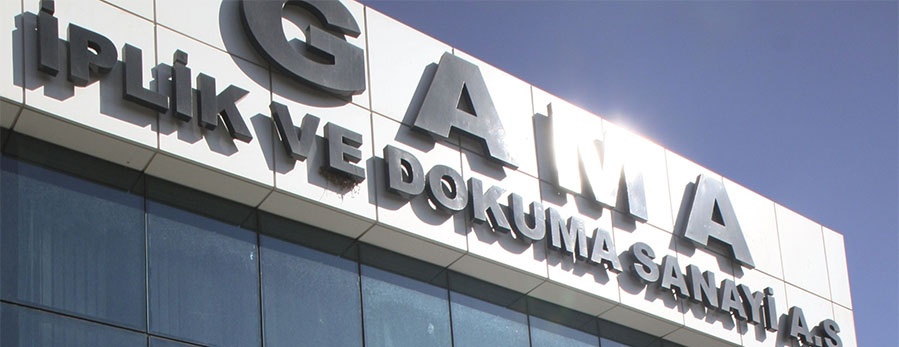
Gama Iplik © 2021 Truetzschler
At Gama Iplik ve Dokuma Sanayi A.S. in Gaziantep, south-east Turkey, everything has revolved around spinning used textiles into regenerated yarns since 1997. 100 tons of yarn and 50 tons of polyester fibers are the daily output.

Applications of the yarns produced in three spinning mills range from upholstery, home textiles and socks to cleaning cloths and packaging. But the range also includes special yarns with flame-retardant or antibacterial finish and heavy-metal-free bleached yarns for the food industry. All three plants are equipped with Truetzschler machines: Automatic bale openers BLENDOMAT and various Generations of cards with integrated draw frames (IDF2) contribute to the particularly good yarn quality.

Eva Trenz from Truetzschler talked to Zafer Kaplan, the owner of Gama Iplik.

Gama Iplik is one of the world’s greatest regenerate spinners. This implies a lot of empirical knowledge. What are the typical raw materials you are using?

Zafer Kaplan: The bandwidth of the raw materials that we process ranges from textile production waste like rags, snippets or other textile waste to post-consumer material. Millions of tons of old textiles are collected every year, but qualities vary greatly.

What do you pay attention to when purchasing ‘good’ textile waste?

Zafer Kaplan: We prefer, and that is a great challenge, classified material sorted by color and type of material.

A great environmental problem are ultra-cheap clothes. Did the quality of the raw material change within the last years? And where do you purchase your raw material?

Zafer Kaplan: We mostly buy the rags and snippets in Turkey. PET bottles are mostly imported from all over the world. The quality of the snippets is indeed getting worse and worse in the last years in Turkey. We clearly note more contamination in the production process. The threads of the fancy items in clothing production are of a poor basic quality, unfortunately.

The various basic qualities certainly require a special approach to the processing of the raw materials. How do you sort and cut the textile waste?

Zafer Kaplan: There is no way around manual sorting. Our operators are very experienced in evaluating materials. Manual sorting is essential. Also we carry out precutting and shredding processes.

From your point of view: The main challenges of the textile recycling process are….

Zafer Kaplan: It’s all about good people and the best machinery. We attach great importance to that constantly growing experience of our team, whether management or operator. Also the capability, technology and quality of the production machines are very significant.


One of the hardest parts of your business is the production of constant quality. How do you manage it?

Zafer Kaplan: We have a well-trained laboratory team in our company which guides the operators with constantly acquired knowledge and which controls the whole production process.

Zafer Kaplan, the owner of Gama Iplik © 2021 Truetzschler


What are the benefits of Truetzschler machines for your process and – of course – the yarn quality you achieve?

Zafer Kaplan: In our plant we have TC 03, TC 07, TC 11, TC 15, TC 19i, so to say: all types of Truetzschler cards. And we are very satisfied with the quality and the capability of the whole Truetzschler equipment. I would say they are the key machines in the regenerated spinning process.

How do you determine the mix of materials in your end product in view of the European Textile Labeling Act?

Zafer Kaplan: Of course we have a chemical laboratory. All necessary tests regarding the material composition are carried out there.

Sustainability is a big future issue for all of us. What challenges and developments do you expect for the future?

Zafer Kaplan: The competition is getting harder. There is a great demand for recycled yarn on the market, but what’s missing are enough good raw materials.

For which applications the produced yarn will be used?

Zafer Kaplan: We produce yarns for almost all textiles, clothing, upholstery, socks, carpets and much more. 50 percent of the production remains in Turkey, the other half is exported to 16 different countries, including Germany, Belgium and North America.
More News from Truetzschler GmbH & Co. KG

#Spinning

Details matter: How Trützschler cylinder wires boost efficiency in Pakistan’s spinning sector

Pakistan’s textile industry, especially its spinning sector, is the backbone of the national economy and a vibrant hub of innovation. Today’s spinning mills face growing demands for efficiency, quality, and sustainability. From the serene northern valleys to the vibrant port city of Karachi in the south, mills like Suraj Cotton Mills, Liberty, and Nishat Chunian are turning to advanced solutions.

#ITMA Asia + CITME Singapore 2025

T-CAN – Revolutionizing can transport

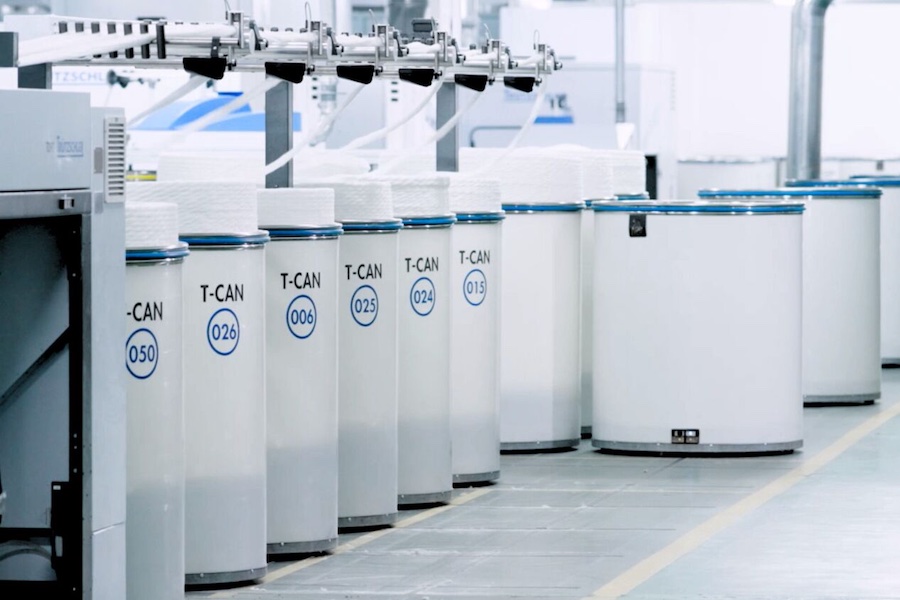
In virtually all spinning mills, transporting sliver cans is still done manually. Rising labor costs, lack of operators and increasing quality requirements make this a growing challenge. With T-CAN, Trützschler introduces a practical solution: a fully automated can transport system that will be presented live at ITMA ASIA 2025 in Singapore.

#Spinning

Pre-Cleaner CL-X: The future of cotton cleaning

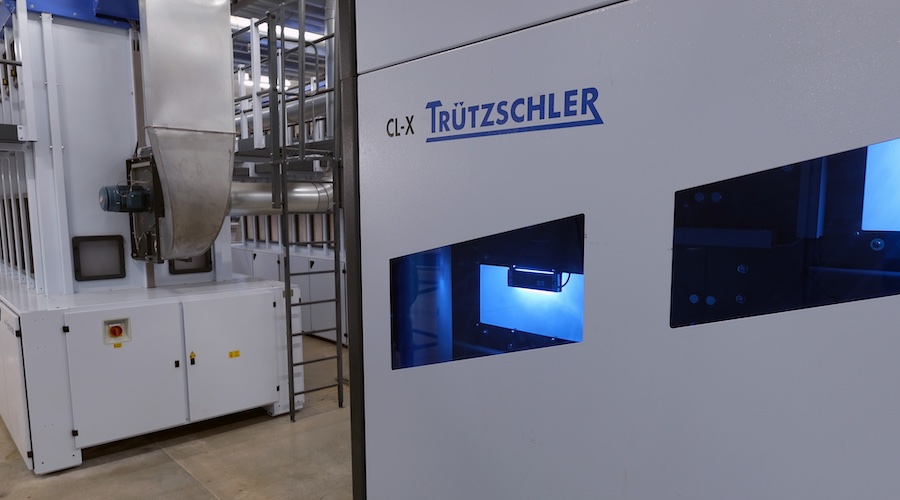
What if the future of cotton cleaning was already here – setting a new standard for cleaning efficiency, productivity and energy savings? That future has a name: CL-X. Since its market launch in 2022, the Pre-Cleaner CL-X has become a true bestseller, proving its value in several hundred customer applications worldwide. Now, new results from Türkiye demonstrate again how the Pre-Cleaner CL-X outperforms the competition.

#ITMA Asia + CITME Singapore 2025

Trützschler invites to discover the future of fiber processing at ITMA Asia Singapore 2025

From October 28 to 31, the Trützschler Group will showcase its latest technologies at ITMA Asia in Singapore. Visit them at Booth D302 in Hall 4 at the Singapore Expo to explore cutting-edge solutions in Spinning, Card Clothing, and Nonwovens. A special highlight: the newest smart automation solution T-CAN, developed in response to growing labor costs and labor shortages in the textile industry. This innovation will be revealed exclusively at the show – don’t miss the opportunity to experience it first-hand.

More News on Spinning

#Spinning

Efficiency reimagined: economical, precise, compact

At this year's PaintExpo in Karlsruhe (April 14–17), Barmag will present an optimized design of its paint metering pump (Hall 3, Booth 3344). It impresses with its low weight, increased productivity, and extended service life. Specially developed for compact robot arms, the pump enables high-precision and economical paint application – ideal for industries such as automotive, aerospace, and renewable energies.

#Spinning

Barmag's new texturing machine impresses the market

Since its premiere at ITMA Asia + CITME 2025, the eFK EvoSmart texturing machine has achieved impressive market success. The innovative technology is winning over yarn manufacturers worldwide who are committed to energy-efficient and economical production processes. A total of 84 machines has already been sold – including in China, Turkey, and Indonesia – a clear sign of the industry's confidence in this forward-looking solution.

#Spinning

First PA66 spinning plant with EvoQuench successfully commissioned

With the successful commissioning of a multi-digit PA66 spinning line for microfiber yarns, Chinese textile company Shandong Nanshan Fashion Technology Co., Ltd. has added yarn production to its textile value chain.

#Spinning

Saurer Technologies Twisting Solutions at ICFE 2026

Saurer Technologies Twisting Solutions, a global leader in textile machinery innovation, will be present at the International Carpet and Flooring Expo ICFE 2026. Join us January 6–9 at the Istanbul Expo Center, Türkiye, as industry leaders, manufacturers, and innovators gather to explore the latest breakthroughs in carpet and flooring technology. Let’s meet at the new established global Center of the Carpet Sector in hall 3, booth 300!

Latest News

#Knitting & Hosiery

Terrot introduces T-Frame platform to redefine stability and flexibility in large-diameter circular knitting

Terrot Textilmaschinen GmbH has unveiled the new T-Frame, a universal machine frame platform for large-diameter circular knitting machines. Designed to meet growing demands for flexibility, stability, and operational safety, the T-Frame provides a next-generation foundation for both current and future industrial knitting machines, combining German engineering expertise with a modular, future-ready design approach.

#Business

Canopy introduces a first-of-its-kind $2 billion USD investment blueprint to decarbonize global materials supply chains

Today, the global, solutions-driven not-for-profit Canopy joined partners at Davos to introduce a new finance model designed to accelerate the growth of low-carbon materials and transform the paper, packaging, and textile supply chains. The event was anchored by a keynote speech from Sri A Revanth Reddy, Hon’ble Chief Minister of Telangana, with India set to host the first iteration of the new investment blueprint.

#Yarns

Biella Yarn launches Collection “Reimagined” for Spring/Summer 2027 with fresh approach to fibre design

Biella Yarn, the flat knitting brand of Suedwolle Group, introduces its Spring/Summer 2027 collection “Reimagined” featuring refined yarn blends and advanced spinning technologies designed for contemporary summer knitwear. Under the motto “And the story goes on…”, Biella Yarn continues to push the boundaries of responsible yarn development, offering versatile materials that elevate modern craftsmanship.

#Recycled_Fibers

Circular progress: Trevira® CS Eco fabrics can now be made using textile-recycled, permanently flame-retardant fibers and yarns

Indorama Ventures, a global sustainable chemical company, takes an important next step toward making textiles more circular for homes and public spaces. To support fabric makers in creating a more sustainable version of the well-known flame-retardant Trevira CS fabric, the company now offers Trevira® flame-retardant fibers and filament yarns that contain 50% recycled textile material. First customers were introduced to the new offering during Heimtextil trade show mid-January in Frankfurt, Germany.

TOP