[pageLogInLogOut]
TRÜTZSCHLER SPINNING - THE XL COMBER

#Spinning

Truetzschler sheds light on the recycling jungle

Trützschler Waste Recycling Line, for example for pre-cleaning of blow room or card waste. © 2020 Truetzschler
Upcycling, downcycling, recycling and better use of raw materials are only a few terms for different sustainability efforts in the textile industry. The subject is complex and can have many different characteristics.

On the one hand there is the raw material PET bottles, i.e. former one-way water bottles, from which fleece fabrics or even carpets can be made in the second life cycle. Yesterday’s fashion items, i.e. used textiles, can also become a sought-after raw material and play a role in yarn production. A further recycling option belongs to the area of optimised raw material utilisation: Thanks to advanced machine technologies, high-quality yarns are nowadays produced from production waste or even from noils.

Outdated trousers become a top fashion item?

Unfortunately, textile recycling is not that simple. In Germany alone, over one million tonnes of old clothes are collected every year. But this huge mountain of material has to be sorted, classified and processed before it can be used as raw material. Some of it is marketed as used clothing. Another part is used as raw material and further processed, for example to make cleaning cloth, insulation material in cars or even bank notes. And a very large proportion is destined to end up in the incinerator because of its poor initial quality.

The simplest recycling route: Water bottle with a future

A basic distinction is made between chemical and mechanical recycling processes. The recovery of polyester granulate from PET bottles is assigned to the chemical side. The bottles are shredded into flakes, whose polymers are then dissolved. These dissolved polymers represent the spinning mass from which new fibers or directly a new web is produced.

For this process, Truetzschler Man-Made Fibers offers a line for producing high-quality carpet yarns, the so-called BCF yarns (Bulky Continous Filaments), directly from PET flakes. The process has three stages and consists of melting R-PET (recycled polyethylene terephthalate from PET bottles), spinning of a multifilament yarn via the spinneret, and subsequent drawing and texturing. Texturing refers to the permanent crimping of the filament.

However, fibers for short staple fiber yarns (Truetzschler Spinning) or for webs (Truetzschler Nonwovens) can also be the target. For the Truetzschler installation concepts, it makes no difference whether the polyester fiber comes from a secondary raw material or a virgin raw material. From a purely chemical point of view, it is not traceable which raw material the fiber is based on.

© 2020 Truetzschler
© 2020 Truetzschler


Mechanical recycling

The degree of difficulty of recycling processes always depends on the initial quality of the (secondary) raw materials. Blended fabrics, for example, represent a basic problem in the recycling of used clothing fiber materials – because sorting accuracy is really scarce on the used textiles market: Cotton, viscose, polyester, silk, polyamide, polyacrylonitrile, wool, linen and other materials can be mixed together in one fabric. On the other hand, secondary raw materials can also be sorted by type: Waste or noils directly produced in the spinning mill are of excellent quality and can be perfectly recycled.

Example for regenerates: Fibers from torn jeans © 2020 Truetzschler


The path to a new beginning

The later the secondary raw material is obtained, the more complex the recycling process becomes. Waste from spinning preparation can be processed comparatively well. One example of this are the so-called noils, i.e. combed-out fibers and neps, which are undesirable especially where high-quality yarns are concerned. Since the material has already passed through the blow room and over the cards, it is high-quality “waste”. This is a recyclable raw material that is used, for instance, in banknotes or hygiene products or is spun into yarn itself.

It is also possible to reclaim the share of good fibers from production waste, such as blow room and carding waste, and reintroduce it into the spinning preparation process. A separate Truetzschler waste recycling line with particularly intensive cleaning by the Waste Cleaner CL-R increases the degree of opening and enables recycling down to the last good fibers.

Used textiles require many intermediate steps before the resulting raw material can be turned into yarn in a spinning mill. Prior to running on Truetzschler machines, the material must first be sorted and cut, before it becomes a single fiber again. The result are bales made of opened and separated secondary fibers, which can then be fed again to the spinning preparation.

Example for production waste: Blow room waste © 2020 Truetzschler


Bales made of 100% recycled fibers can be processed via a simplified Truetzschler spinning opening line. Additional intensive cleaning of the fibers is no longer necessary, as they have already been cleaned before being processed into textiles. When processing blends of recycled fibers and raw cotton or synthetic fibers, the use of a T-BLEND line is recommended. This can guarantee the accuracy of the desired blending ratio, even at the highest production levels. To avoid losing too many fibers in the preparation process, the recycled fibers are no longer exposed to a separate intensive pre-cleaning process, but are mixed with the raw material afterwards.

These bales of secondary raw materials are not only used to produce yarns, but also carded nonwovens on Truetzschler Nonwovens lines. The classic method applied here is hydroentanglement. Thermobonding, after the addition of bicomponent fibers, and chemical bonding are also possible.

Sustainability and recycling: More than just a trend

The textile industry has put sustainability on the agenda. Efforts focus on environmental and resource protection, the substitution of chemicals, the promotion of sustainable fibers and humane working conditions.From cultivation to recycling or disposal, however, there are a variety of approaches to achieve these goals.

As one of the leading textile machinery manufacturers, Truetzschler faces up to this responsibility. When designing our machines, we have been paying attention to shortened processes, optimised raw material utilisation, durable machine components and machines that significantly improve the recycling process, and not just since yesterday. Together with our customers we can thus make a contribution to a sustainable textile production chain.
More News from Truetzschler GmbH & Co. KG

#Spinning

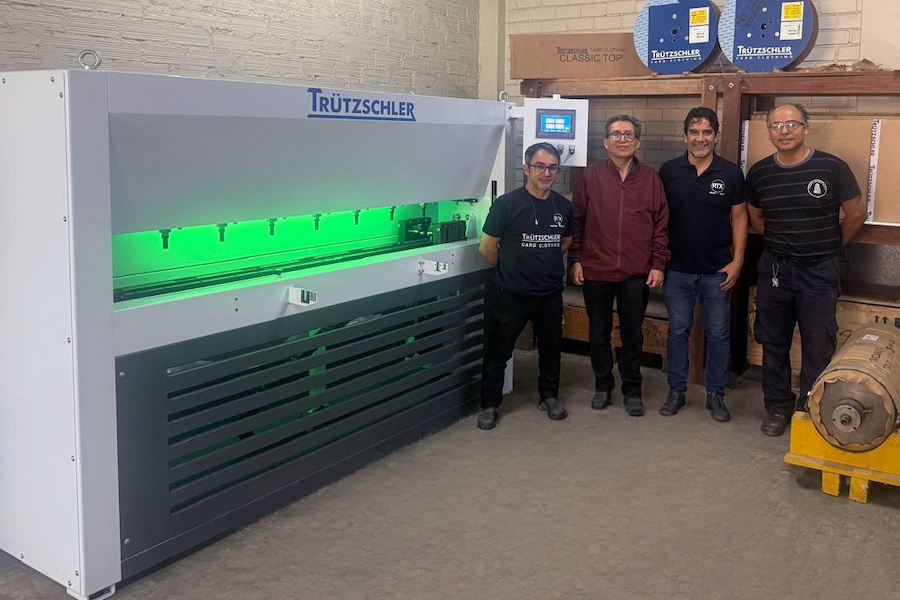
Details matter: How Trützschler cylinder wires boost efficiency in Pakistan’s spinning sector

Pakistan’s textile industry, especially its spinning sector, is the backbone of the national economy and a vibrant hub of innovation. Today’s spinning mills face growing demands for efficiency, quality, and sustainability. From the serene northern valleys to the vibrant port city of Karachi in the south, mills like Suraj Cotton Mills, Liberty, and Nishat Chunian are turning to advanced solutions.

#ITMA Asia + CITME Singapore 2025

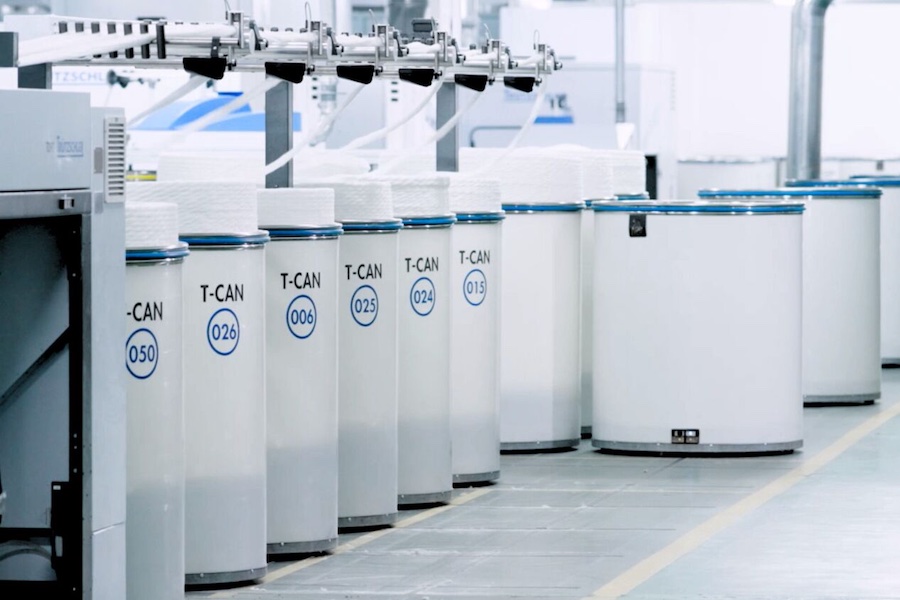
T-CAN – Revolutionizing can transport

In virtually all spinning mills, transporting sliver cans is still done manually. Rising labor costs, lack of operators and increasing quality requirements make this a growing challenge. With T-CAN, Trützschler introduces a practical solution: a fully automated can transport system that will be presented live at ITMA ASIA 2025 in Singapore.

#Spinning

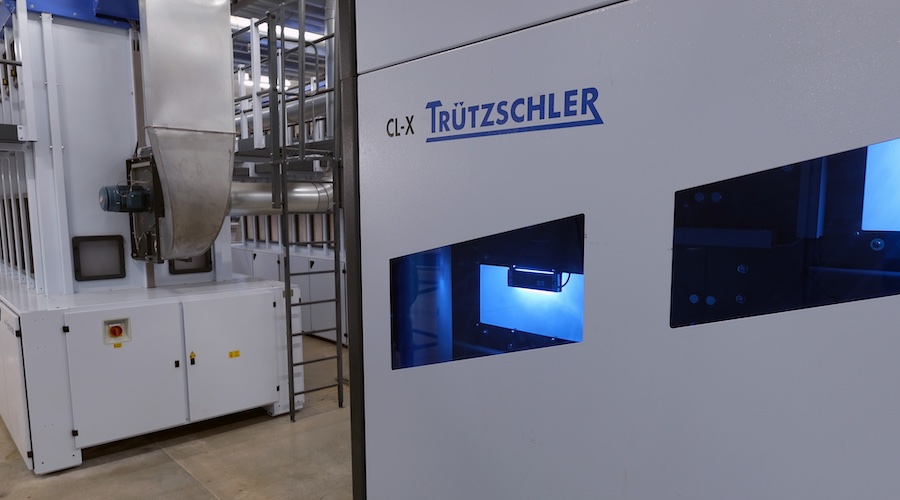
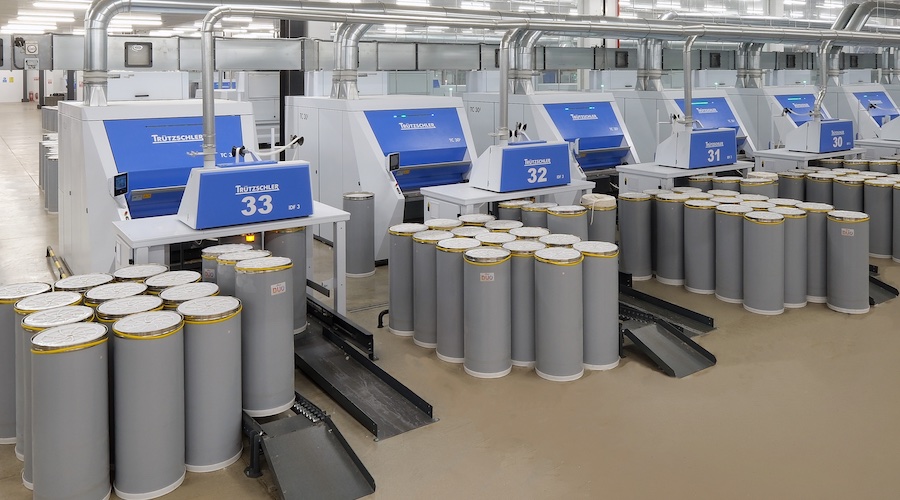
Pre-Cleaner CL-X: The future of cotton cleaning

What if the future of cotton cleaning was already here – setting a new standard for cleaning efficiency, productivity and energy savings? That future has a name: CL-X. Since its market launch in 2022, the Pre-Cleaner CL-X has become a true bestseller, proving its value in several hundred customer applications worldwide. Now, new results from Türkiye demonstrate again how the Pre-Cleaner CL-X outperforms the competition.

#ITMA Asia + CITME Singapore 2025

Trützschler invites to discover the future of fiber processing at ITMA Asia Singapore 2025

From October 28 to 31, the Trützschler Group will showcase its latest technologies at ITMA Asia in Singapore. Visit them at Booth D302 in Hall 4 at the Singapore Expo to explore cutting-edge solutions in Spinning, Card Clothing, and Nonwovens. A special highlight: the newest smart automation solution T-CAN, developed in response to growing labor costs and labor shortages in the textile industry. This innovation will be revealed exclusively at the show – don’t miss the opportunity to experience it first-hand.

More News on Spinning

#Spinning

Efficiency reimagined: economical, precise, compact

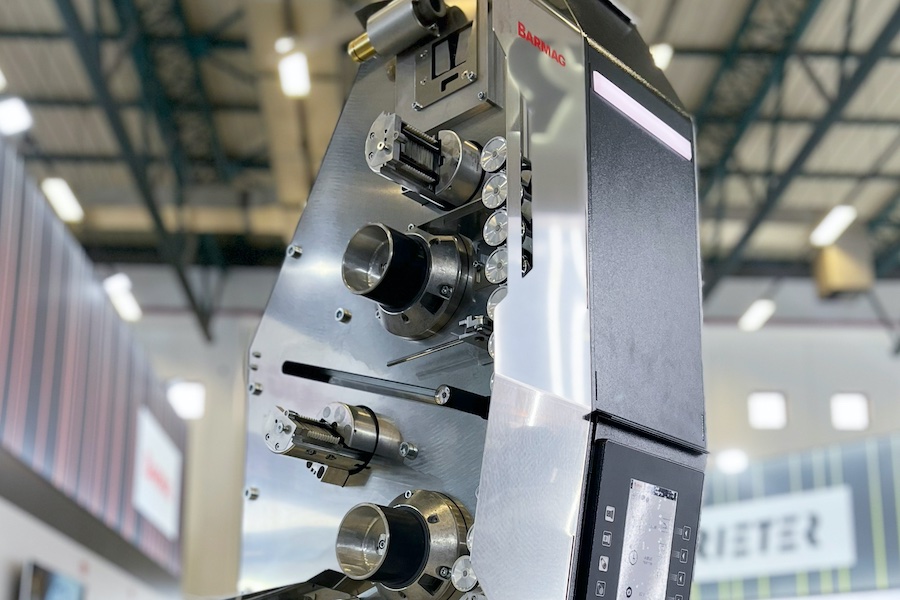
At this year's PaintExpo in Karlsruhe (April 14–17), Barmag will present an optimized design of its paint metering pump (Hall 3, Booth 3344). It impresses with its low weight, increased productivity, and extended service life. Specially developed for compact robot arms, the pump enables high-precision and economical paint application – ideal for industries such as automotive, aerospace, and renewable energies.

#Spinning

Barmag's new texturing machine impresses the market

Since its premiere at ITMA Asia + CITME 2025, the eFK EvoSmart texturing machine has achieved impressive market success. The innovative technology is winning over yarn manufacturers worldwide who are committed to energy-efficient and economical production processes. A total of 84 machines has already been sold – including in China, Turkey, and Indonesia – a clear sign of the industry's confidence in this forward-looking solution.

#Spinning

First PA66 spinning plant with EvoQuench successfully commissioned

With the successful commissioning of a multi-digit PA66 spinning line for microfiber yarns, Chinese textile company Shandong Nanshan Fashion Technology Co., Ltd. has added yarn production to its textile value chain.

#Spinning

Saurer Technologies Twisting Solutions at ICFE 2026

Saurer Technologies Twisting Solutions, a global leader in textile machinery innovation, will be present at the International Carpet and Flooring Expo ICFE 2026. Join us January 6–9 at the Istanbul Expo Center, Türkiye, as industry leaders, manufacturers, and innovators gather to explore the latest breakthroughs in carpet and flooring technology. Let’s meet at the new established global Center of the Carpet Sector in hall 3, booth 300!

Latest News

#Textile chemistry

Devan unveils innovative textile solutions to enhance comfort during sleep at Heimtextil 2026

From 13 to 16 January 2026, Devan was exhibiting at Heimtextil in Frankfurt, the world’s leading international trade fair for home and contract textiles. The event brought together key players from across the global textile value chain, providing the ideal platform for Devan to present its latest innovations.

#Heimtextil 2026

Confidence driving the textile industry: Heimtextil 2026 sharpened its global market relevance by attracting more top-level decision-makers

With 148 participating nations, rising global relevance and a marked increase in visitor quality, Heimtextil 2026 stood for stability and reliability in a volatile market environment. Once again, 3,000 exhibitors from across the globe placed their trust in the industry’s central platform in Frankfurt, presenting current collections, materials and textile solutions for holistic interior design to over 48,000 buyers. Under the motto “Lead the Change”, Heimtextil brought evolving market dynamics, Artificial Intelligence (AI) and new business opportunities to life.

#Recycled_Fibers

Borealis invests EUR 49 million in Burghausen, Germany to accelerate design for circularity

Borealis announces a EUR 49 million strategic investment to scale up production of Borstar® Nextension polypropylene (PP) at its manufacturing site in Burghausen, Germany. This will expand commercial production of next-generation single-site polypropylene (ssPP) grades that deliver enhanced purity, processability, and performance - supporting customers in key sectors including packaging, healthcare, mobility, and fibers, to meet evolving market and regulatory demands.

#Associations

Latest news from Bremen: ICAC Plenary Meeting to take place right before the International Cotton Conference

The International Cotton Advisory Committee (ICAC) will hold its 83rd Plenary Meeting on 23–24 March 2026 at the Parliament building in Bremen. The meeting will take place immediately ahead of the 38th International Cotton Conference Bremen (25–27 March 2026) and marks a historic premiere: for the first time, the ICAC Plenary will be hosted in close cooperation with the Bremen Cotton Exchange and the Faserinstitut Bremen e.V. (FIBRE).

TOP