[pageLogInLogOut]

#Research & Development

Fraunhofer IAP paves the way for "Green" carbon fibers
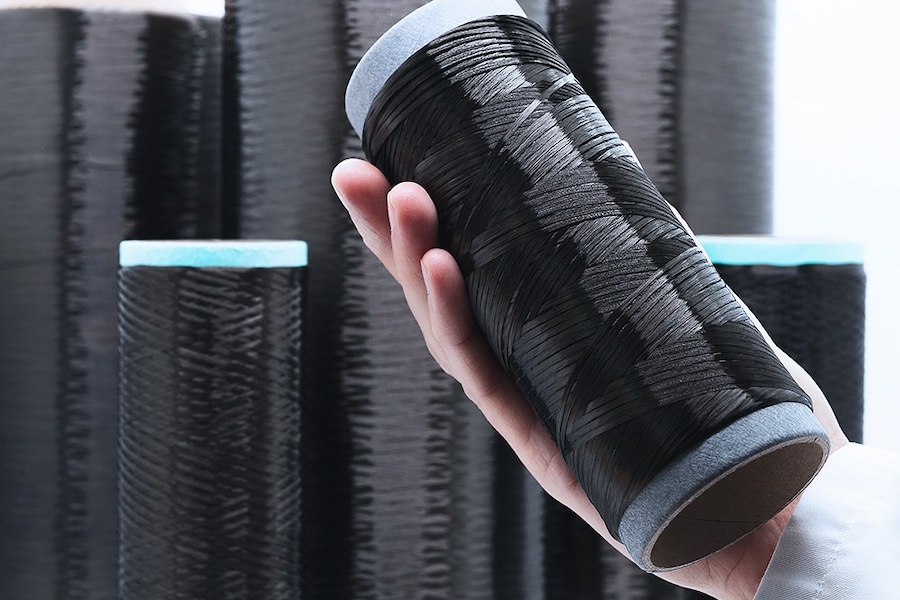
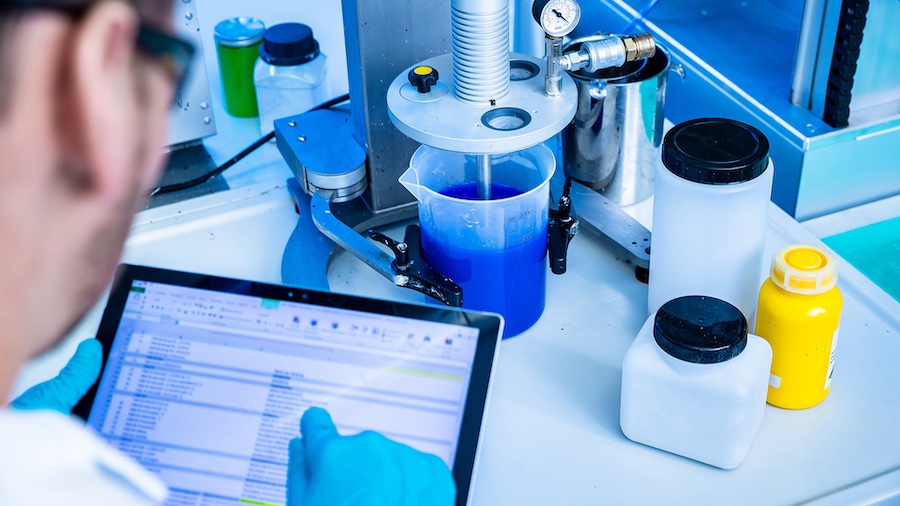
As part of the Carbon Lab Factory Lausitz, a pilot plant for the production of sustainable, cost-effective, and competitive carbon fibers will be established at the Guben site. © Fraunhofer IAP / Kristin Stein
A new pilot plant in Guben is set to enable the production of bio-based carbon fibers. The plant is part of the Carbon Lab Factory Lausitz and will make an important contribution to the transformation of the Lausitz region—from a traditionally raw material- and basic industry-oriented region to a hub for innovative high-performance materials. The German federal government and the state of Brandenburg are providing the Fraunhofer Institute for Applied Polymer Research IAP with 53.3 million euros for this purpose.

Carbon fibers are high-performance materials that combine lightness with high strength and stiffness. They are particularly in demand in lightweight construction, which is a key factor for developing efficient and resource-saving materials for future industries. The lighter cars, airplanes, wind turbines, or bicycles are, the more energy-efficiently they can be operated. Carbon fibers are also increasingly important for energy generation, conversion, and storage, for example in batteries, fuel cells, or other components of modern energy systems.

Conventional carbon fibers are predominantly produced from fossil raw materials. To expand the raw material base with sustainable alternatives, bio-based carbon fibers are gaining increasing attention. They conserve resources, have a better CO2 balance, and make the value chain more resilient. In addition, their properties can be specifically tailored to different applications. The industry already shows strong demand for such alternatives.

Concentrated expertise in bio-based carbon fibers

The production of bio-based carbon fibers is a specialty of Fraunhofer IAP: In a first step, raw materials such as cellulose or lignin from wood are dissolved and spun into precursor fibers. These are then converted into carbon fibers through carbonization.

To scale these processes for industrial applications, a pilot plant will be established in Guben as part of the Carbon Lab Factory Lausitz. The project is financed with 53.3 million euros by the Brandenburg Ministry of Science, Research, and Culture through Wirtschaftsregion Lausitz GmbH (WRL) and the federal government. The positive decision on funding by the Interministerial Working Group (IMAG) on March 12, 2026, marks an important milestone for implementation. The city of Guben is investing around 20 million euros in the construction of the building in the Guben Industrial Park. Fraunhofer IAP will use the remaining funds for plant technology, equipment, and initial setup. The plant is expected to start operation at the end of 2029.

Dr. André Lehmann, Head of the Polymer Processing Research Division and Fiber Technologies Department at Fraunhofer IAP, explains: "With the Carbon Lab Factory Lausitz in Guben, we are creating the conditions for a research and pilot infrastructure where various innovative precursor fibers can be produced up to the ton scale."

Dr. Jens Erdmann, Head of the Polymer Engineering Division at Fraunhofer IAP, adds: "We are also establishing a laboratory-scale carbonization facility that converts the new precursor fibers into carbon fibers at the kilogram scale. This allows us to efficiently evaluate process behavior and potential, optimize the processes, and gather valuable insights for larger scales. We can also provide industry with sample quantities for testing."

In close cooperation with partners in the Lausitz, Fraunhofer IAP is further developing precursor and carbon fibers for various lightweight and energy applications, thereby strengthening the transfer to industrial use.

Carbon Lab Factory Lausitz—Pioneering cross-state collaboration complementing

Fraunhofer IAP's initiative, a pilot plant for ton-scale carbon fiber production is being established in the Saxon Lausitz. Operated by the Technical University of Chemnitz, this plant can process both conventional and Fraunhofer IAP-provided precursor fibers. In cooperation with the Institute for Lightweight Design and Value Chain Management at Brandenburg University of Technology (BTU) Cottbus-Senftenberg, carbon fiber-reinforced composite materials are tailored for diverse lightweight applications. Together with regional companies, the partners test demonstrators and prototypes under real-world conditions. This accelerates the transfer of research results into industrial applications and strengthens the region as a hub for high-performance materials.

The Carbon Lab Factory Lausitz is embedded in the Lausitz research infrastructure, where the Lausitz Science Park will serve as a future hub for joint initiatives with local innovation drivers, for example.

"By combining the expertise of the participating institutions, the Carbon Lab Factory Lausitz creates a globally unique complete value chain in the region and beyond, ranging from renewable raw materials to components for lightweight applications," says Professor Böker, Director of Fraunhofer IAP, who initiated the Carbon Lab Factory Lausitz together with Professor Kroll from the Technical University of Chemnitz. The cross-state cooperation is considered a flagship project for sustainably produced carbon fibers.

More News from Fraunhofer Institute for Applied Polymer Research (IAP)

#Research & Development

Sustainable design of Geosynthetics and roof underlayments made from recyclates

Is it possible to recover plastic recyclates from previously unused waste streams in order to produce high-quality fibers and films? How can bio-based polymer fibers be manufactured so as to allow adjustable biodegradability? These are the questions being addressed by researchers from the Fraunhofer Cluster of Excellence Circular Plastics Economy CCPE in the Zirk-Tex project.

#Research & Development

Feasibility study shows potential to convert textile waste into PHB bioplastic

Textile waste could serve as a valuable source of raw materials for sustainable plastics in the future, according to the joint TexPHB feasibility study conducted by the Fraunhofer Institute for Applied Polymer Research IAP, Beneficial Design Institute GmbH and matterr GmbH. The study will be presented to the public for the first time at a network meeting on 25 November 2025 at the State Chancellery in Potsdam.

#Recycling / Circular Economy

Closing the Loop in the Textile Industry: Value Creation in the State of Brandenburg

How can the state of Brandenburg benefit from a circular textile industry? This question is addressed in the new policy paper "Closing the loop in the textile industry: Value creation in the state of Brandenburg." Based on the „TexPHB“ feasibility study funded by the Brandenburg Ministry of Climate Protection, it shows how textile waste can be integrated into new value chains.

#Research & Development

Better, faster, bio-based: Functional new Plastic alternatives

How can new bio-based and biohybrid materials with improved features be developed faster? Six Fraunhofer institutes are jointly exploring this question in the SUBI²MA flagship project, using an innovative bio-based polyamide developed by Fraunhofer researchers as a model. Its specific properties make it a promising alternative to fossil-based plastics.

More News on Research & Development

#Techtextil 2026

Stylish design made from sustainable materials – two DITF research projects receive Techtextil Innovation Awards

Materials made from domestic, renewable raw materials reduce CO₂ emissions, prevent microplastics from entering the environment, and close the material cycle. The German Institutes for Textile and Fiber Research Denkendorf (DITF) are developing nature-based alternatives to synthetically produced and predominantly petroleum-based materials. Two research projects have received a prestigious Techtextil Innovation Award. NUO Flexholz and the lignin-coated material FormLig demonstrate that sustainable concepts can meet high standards of functionality and design. Both projects were carried out in close collaboration with industry.

#Research & Development

Hohenstein publishes 2025 Sustainability Report

The testing and research service provider Hohenstein has published its latest sustainability report, outlining key progress and strategic initiatives. The report focuses on ambitious CO₂ reduction targets, the company’s new mission statement and the systematic expansion of sustainable services for customers worldwide.

#Techtextil 2026

ITM presents cutting-edge textile research at Techtextil

From April 21 to 24, 2026, the Chair of Textile Machinery and High Performance Material Technology (ITM) at TUD Dresden University of Technology will be presenting its current research at Techtextil, the leading international trade fair for technical textiles and nonwovens. In Hall 12.0, Stand D41, the team will be demonstrating how it combines high-performance fibers, AI-supported digital development tools and innovative machine technologies to develop textile solutions for lightweight construction, construction, medical technology and sustainable production from atom to product.

#Research & Development

Textile cascade filter for removing microplastics from wastewater

Microplastics are now found almost everywhere, even in remote regions of Antarctica. They enter the human body through the food chain. Studies indicate that microplastics may have negative effects on the human health.

Latest News

#Techtextil 2026

Techtextil 2026 recognition for the UK’s FET

Fibre Extrusion Technology (FET) will receive the Techtextil 2026 New Production Technology Innovation Award at next week’s Techtextil in Frankfurt (April 21-24). The Leeds-based member of the British Textile Machinery Association (BTMA) has developed the FET-500, a new toxic solvent-free gel small scale system for the production of ultra-high-molecular-weight polyethylene (UHMWPE).

#Techtextil 2026

Lower CO2, stronger bonds: Indorama Ventures enables customers’ performance at Techtextil

At Techtextil 2026 in Frankfurt am Main, Indorama Ventures presents its latest material innovations aimed at supporting customers in achieving both performance and sustainability targets. The company highlights solutions based on recycled and bio-based raw materials as well as advanced binder fibers, addressing current market demands for lower CO₂ emissions, improved efficiency, and reliable supply.

#Digital Printing

Kornit Digital redefines apparel production for the on-demand era unveiling Atlas MATRIX at Konnections 2026

Kornit Digital Ltd. (NASDAQ: KRNT, “Kornit Digital”, “Kornit”, or the “Company”), a global pioneer in sustainable, on-demand digital fashion and textile production, today unveiled its Atlas MATRIX at Konnections 2026, redefining apparel production in the on-demand era.

#Recycled Fibers

Recover™ and Prosperity Textile announce strategic denim partnership

Recover™, a global producer of low-impact, high-quality recycled cotton fiber at scale, has announced a strategic partnership with Prosperity Textile, a vertically integrated denim fabric manufacturer operating at industrial scale.

TOP