[pageLogInLogOut]

#Recycling / Circular Economy

Closing the Loop in the Textile Industry: Value Creation in the State of Brandenburg
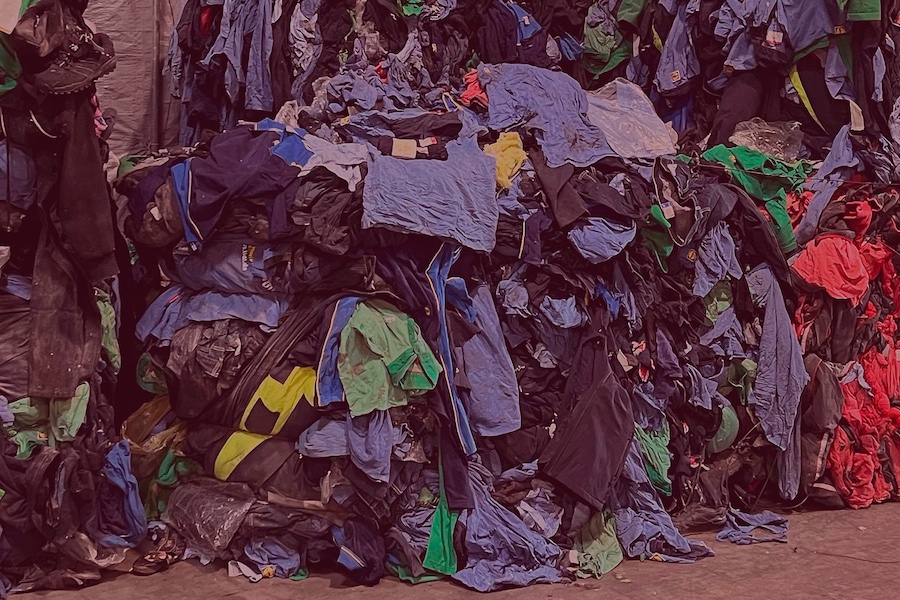
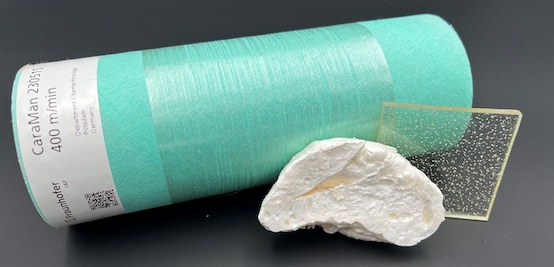
Towards a circular textile economy: A study shows that polyester-containing textile waste can be converted into bioplastic © 2025 Beneficial Design Institute GmbH
How can the state of Brandenburg benefit from a circular textile industry? This question is addressed in the new policy paper "Closing the loop in the textile industry: Value creation in the state of Brandenburg." Based on the „TexPHB“ feasibility study funded by the Brandenburg Ministry of Climate Protection, it shows how textile waste can be integrated into new value chains.

The textile industry is one of the most resource-intensive sectors and generates significant amounts of waste and emissions. In 2020 alone, approximately 6.95 million tonnes of textile waste were generated in the EU. Worldwide, 92 million tonnes of textile waste end up in landfills in the Global South or in incinerators every year. Mixed polyester-containing waste from fast fashion, workwear or industrial cleaning textiles in the lowest waste category is among the most difficult residual materials to recycle. The EU's Circular Economy Strategy therefore promotes circular processes in the textile sector.

From feasibility study to policy recommendation

In a joint feasibility study, the Fraunhofer Institute for Applied Polymer Research IAP at Potsdam Science Park, Beneficial Design Institute GmbH and matterr GmbH (formerly RITTEC 8.0 Umwelttechnik GmbH) investigated how polyester-containing waste textiles can be converted into the bioplastic polyhydroxybutyrate (PHB).


"With our innovative matterr process, we recover the monomers terephthalic acid (TA) and ethylene glycol (EG) in virgin quality from polyester-containing textile waste – suitable for the production of new polyester," explains Dr. Tim Seedorf, Head of Research & Innovation at matterr GmbH. "We have also shown that the ethylene glycol obtained can be converted into the biopolymer PHB with the help of bacteria," adds Dr. Maren Wandrey, biochemist at Fraunhofer IAP. An analysis by the Beneficial Design Institute further shows that establishing a textile hub in Brandenburg can make a significant contribution to strengthening the regional circular economy through the sustainable use of textile waste and the establishment of new value chains.

The policy paper translates the consortium's findings into concrete recommendations for political decision-makers in Brandenburg.

PHB: Benefits for the economy, society and the environment

PHB is a bioplastic that is completely biodegradable, resorbable and biocompatible. Professor Friederike von Wedel-Parlow from the Beneficial Design Institute emphasises: "PHB combines ecological advantages with economic potential in new markets. Our research has made it clear that designers, scientists and industry can jointly develop solutions that harness these advantages for society and the economy, turning make ecodesign thinking into a success story, also for Brandenburg."


The bioplastic has a wide range of applications, especially where materials remain in the environment permanently – for example, in water, soil or the human body. Examples include geotextiles for erosion control, artificial shoreline reinforcement, tree and branch protectors, or medical products such as suture material.

Action options for a circular textile economy

The policy paper recommends a multi-stage action plan to lay the foundation for a circular textile economy in Brandenburg. It comprises six key recommendations. Clima State Secretary Dr. Haase explains: "The goal is to retain value creation in the region, establish qualified jobs and position Brandenburg as a model region for this EU initiative. The project consortium's policy paper and the preliminary study results contribute to bringing together ecological sustainability and economic strength in Brandenburg."

The results also have supra-regional significance with potential for close cooperation between Brandenburg and partners in Poland and the Netherlands. Through these collaborations, the state can strengthen its position as a pioneer in the circular economy and build European value chains that incorporate design-driven added value.


Policy Paper


Closing the Loop in the Textile Industry: Value Creation in the State of Brandenburg

Policy Paper for Stakeholders committed to a circular bioeconomy in Brandenburg


Prof. Friederike von Wedel-Parlow (BD-I)

Julie C. Stamm (BD-I)

Dr. Jens Balko (Fraunhofer IAP)

Dr. Maren Wandrey (Fraunhofer IAP)


Key recommendations of the policy paper:

Promotion of start-ups and regional textile biorefineries for efficient resource use

Support programmes for research and development of new recycling technologies for old textiles

Establishment of a competence cluster for data-driven textile recycling

Support for digital data collection along the entire value chain

Qualification of companies for the upcoming Ecodesign Directive 2026

Integration of local companies into European value chains as part of the EU initiative "Regional Innovation Valleys for Circular Economy"


POLICY PAPER: 

https://www.iap.fraunhofer.de/content/dam/iap/de/documents/Presse/Policy%20Paper_Value%20Creation%20in%20the%20State%20of%20Brandenburg.pdf

More News from Fraunhofer Institute for Applied Polymer Research (IAP)

#Research & Development

Sustainable design of Geosynthetics and roof underlayments made from recyclates

Is it possible to recover plastic recyclates from previously unused waste streams in order to produce high-quality fibers and films? How can bio-based polymer fibers be manufactured so as to allow adjustable biodegradability? These are the questions being addressed by researchers from the Fraunhofer Cluster of Excellence Circular Plastics Economy CCPE in the Zirk-Tex project.

#Research & Development

Feasibility study shows potential to convert textile waste into PHB bioplastic

Textile waste could serve as a valuable source of raw materials for sustainable plastics in the future, according to the joint TexPHB feasibility study conducted by the Fraunhofer Institute for Applied Polymer Research IAP, Beneficial Design Institute GmbH and matterr GmbH. The study will be presented to the public for the first time at a network meeting on 25 November 2025 at the State Chancellery in Potsdam.

#Research & Development

Better, faster, bio-based: Functional new Plastic alternatives

How can new bio-based and biohybrid materials with improved features be developed faster? Six Fraunhofer institutes are jointly exploring this question in the SUBI²MA flagship project, using an innovative bio-based polyamide developed by Fraunhofer researchers as a model. Its specific properties make it a promising alternative to fossil-based plastics.

#Research & Development

Next-generation sustainable carbon fibers: versatile, high-performance and economical

Whether in hydrogen tanks, batteries, fuel cells or for shielding sensitive electronics – carbon fibers are used in a wide range of advanced applications. At the Potsdam Science Park, the Fraunhofer Institute for Applied Polymer Research IAP, in collaboration with Brandenburg University of Technology Cottbus-Senftenberg, is developing novel carbon fibers based on cellulose.

More News on Recycling / Circular Economy

#Research & Development

Innovation center for textile circular economy inaugurated

Just over eight months after the foundation stone was laid, the new Innovation Center for Textile Circular Economy was officially inaugurated today at TITK Rudolstadt. Thuringia's Minister President Mario Voigt, TITK Director Benjamin Redlingshöfer, and other guests of honor cut the ribbon to the modern building complex and viewed the premises, which are now ready for occupancy. The “DICE – Demonstration and Innovation Center for Textile Circular Economy” is TITK's largest single investment to date. The Free State of Thuringia supported the total cost of €11.5 million with €8 million in GRW and FTI funding.

#Associations

Waste2Fashion: FTTH Committed to advancing Circular Fashion in the Mediterranean

As an official partner of the Waste2Fashion project, the Tunisian Federation of Textile and Apparel (FTTH) participated in the Kick-off Meeting held on 10–11 December in Spain. The event brought together project partners from across the Mediterranean, including Spain, Italy, Egypt, Lebanon, and Tunisia, to align on a shared vision and initiate the first implementation steps.

#Recycled_Fibers

Leading fashion brands step up to unlock the next chapter of Circulose

Since 2024, under new ownership and leadership, Circulose has set a renewed strategic direction focused on securing long-term commitments with partner brands to bring CIRCULOSE® back to market at scale. This strategy has proven successful.

#Recycled_Fibers

Recycling mixed-fibre garments becomes a reality: RadiciGroup, The LYCRA Company and Triumph take circular fashion a step forward

The process, which is both economically and environmentally sustainable, has enabled the production of an underwear set made from 100% recycled nylon and LYCRA® fibre in a closed-loop system.

Latest News

#Associations

AATCC announces 2025 Herman & Myrtle Goldstein Graduate Student Paper Competition winners

The American Association of Textile Chemists and Colorists (AATCC) recognized the winners of the 2025 Herman & Myrtle Goldstein Graduate Student Paper Competition. Founded in 1982 to give student members the chance to conduct and present original research, the competition was renamed in 1994 in honor of Herman and Myrtle Goldstein, following their US$60,000 endowment. Their gift is a lasting remembrance of their dedication to young people in the textile industry.

#Nonwoven machines

Yanpai expands nonwovens capacity with two new ANDRITZ needlepunch lines

Zhejiang Yanpai Filter Technology Co., Ltd. (hereinafter referred to as “Yanpai”) has placed an order with international technology group ANDRITZ for two high-performance needlepunch lines. The equipment will be installed at Yanpai’s headquarters facility in Tiantai County, China. Commissioning is scheduled for the third quarter of 2026.

#Natural Fibers

Dr. Jane Dever inducted into the 2025 Cotton Research and Promotion Hall of Fame

Dr. Jane K. Dever, a recognized leader in cotton breeding and fiber quality research, was inducted into the 2025 Cotton Research and Promotion Hall of Fame during the joint Cotton Incorporated/Cotton Board Annual Meeting held on December 9 in New Orleans, LA.

#Yarns

INVISTA proposes plant closures and production shift to strengthen global competitiveness

INVISTA announced a set of proposed strategic actions intended to strengthen its global operating footprint and position the business for long-term competitiveness. The proposal includes closing its precision machine shop in Martinsville, Virginia; discontinuing production at its Gloucester, England site; transitioning operations to its Kingston, Canada facility, which will continue to serve customers in North America and Europe; and continuing to explore various investment opportunities for expanding capabilities at select advantaged sites, including its Anlon site in Shanghai, China.

TOP