[pageLogInLogOut]

#Research & Development

Textilfabrik 7.0 launched: Mönchengladbach becomes a real-world lab for sustainable textile production
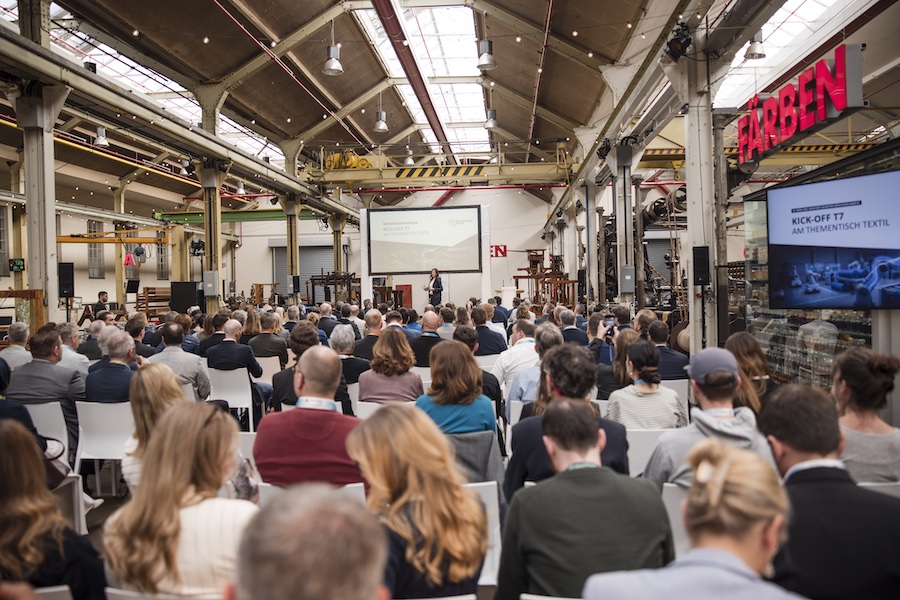
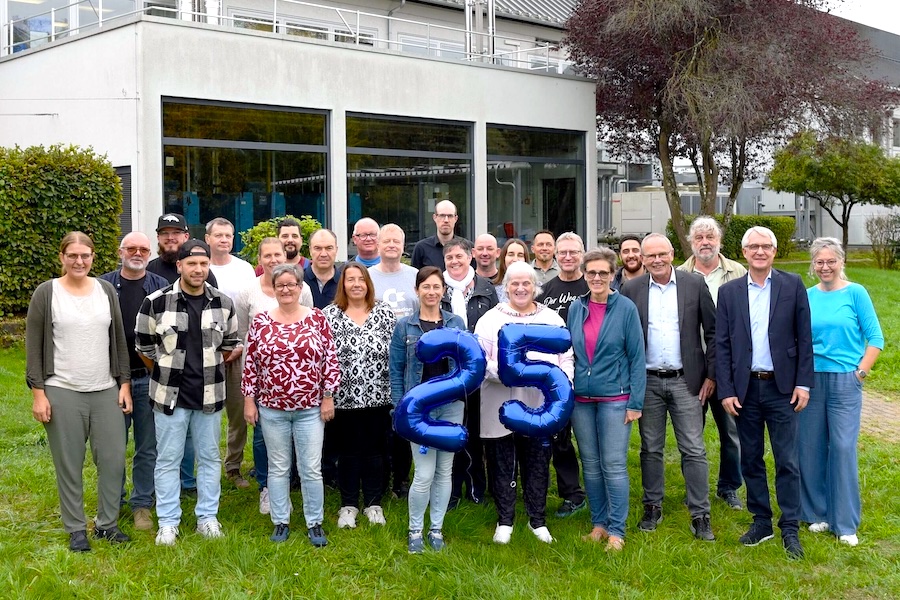
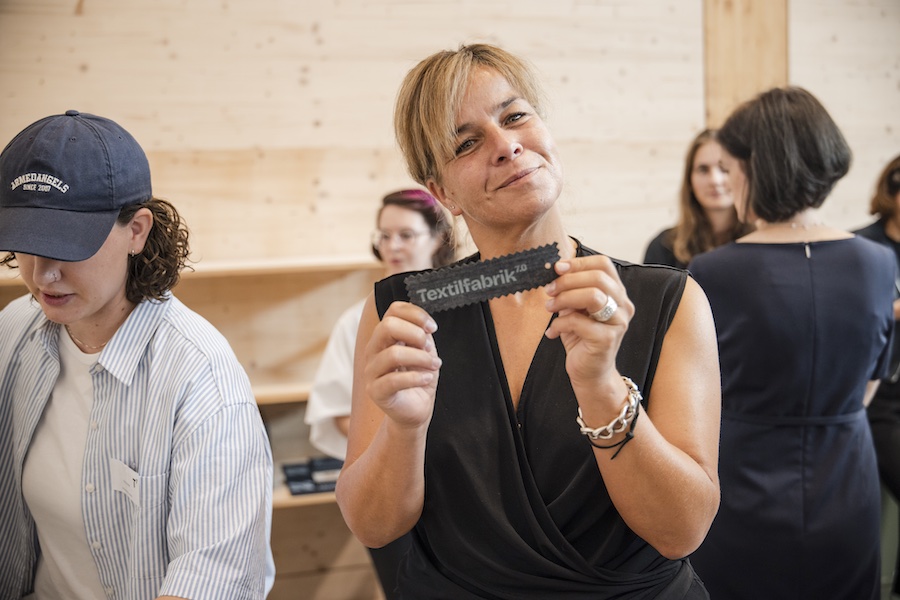
Kick-off event for Textilfabrik 7.0 © Copyright: Zukunftsagentur/Tomas Rodriguez
With the official kick-off event of the Textilfabrik 7.0 (T7), a major transformation project for the German textile and apparel industry has been launched in the Monforts Quarter in Mönchengladbach. At the “Textile Roundtable,” an event format organized by the Zukunftsagentur Rheinisches Revier, representatives from industry, research, politics, and the regional economy came together to jointly lay the foundation for CO₂-neutral, circular, and economically viable textile production in Germany.

The textile and fashion industry worldwide faces major challenges: around ten percent of global CO₂ emissions are attributed to it. At the same time, companies in Germany are under considerable competitive pressure. Textilfabrik 7.0 addresses precisely this intersection by bringing together research institutions, industry, and regional stakeholders to accelerate the transfer of innovative technologies and production processes into industrial application.

Silke Krebs, State Secretary at the Ministry of Economic Affairs, Industry, Climate Protection and Energy of the State of North Rhine-Westphalia emphasizes that the T7 project actively drives the transformation of the Rhenish mining region into a modern industrial hub. It combines innovative, sustainable textile production with research, development, and the use of AI and robotics. At the same time, it strengthens the region’s competitiveness and creates new jobs across all qualification levels. T7 demonstrates that structural change offers concrete opportunities for a future-proof industry.

For Felix Heinrichs, Mayor of the City of Mönchengladbach, it is evident that when thinking of textiles, you cannot overlook Mönchengladbach. Textile production is deeply embedded in the industrial DNA of Mönchengladbach. But it also has the potential to play a key role in the future of the city as a business location. Textilfabrik 7.0 brings industry and academia together for innovation and research. In doing so, it lays the foundation for sustainable and economically viable textile production - and thus for future-proof jobs in Mönchengladbach. Today’s launch of the T7 project marks a major milestone in the city’s structural transformation.

The kick-off event was aimed in particular at companies along the entire textile value chain. In several keynote presentations, participants gained insights into current developments and potential applications of future production models. Brother Internationale Industriemaschinen GmbH and Hch. Kettelhack GmbH & Co. KG demonstrated how on-demand production can be integrated into microfactory concepts, enabling flexible, demand-driven manufacturing processes.

In addition, 3E Smart Solutions presented how intelligent production for smart textiles could look in the future. The industry cluster Cluster Industrial Biotechnology (CLIB) showcased approaches for using biotechnological processes, such as microorganisms, in textile production to improve resource efficiency and close material loops.

At the heart of Textilfabrik 7.0 are four core modules: On-Demand Manufacturing, MicroFactory Engineering, Digital Textiles, and Biosphere. These topics also formed the basis for four workshops in which participants discussed with module leaders what requirements industry has for future production solutions. The goal was to identify concrete needs and incorporate them directly into further project planning.

Through its real-world lab approach, T7 aims to test and optimize new technologies along the entire textile value chain. These include robotics, digital process chains, and biotechnological methods that can help establish a functioning circular economy in practice.

Professor Dr. Susanne Meyer, President of Niederrhein University of Applied Sciences states that the Textilfabrik 7.0 exemplifies what applied research must achieve today: bringing together science, industry, and society to develop concrete solutions to the major challenges of our time. Niederrhein University of Applied Sciences contributes their textile expertise specifically to this future-oriented project, from digital production processes and sustainable materials to circular value creation models. In doing so, there is a contribution not only to the transformation of the textile industry but also to the innovative capacity and future viability of the entire region.

At the same time, the project makes an important contribution to structural change in the Rhenish mining region. Under the guiding principle “From Coal to AI,” new perspectives for industrial value creation and skilled employment are emerging in the region. Textilfabrik 7.0 is one of 19 anchor projects in the Rhenish mining region and is considered by the state to be central to the successful, rapid, and visible implementation of structural transformation.

Textilfabrik 7.0 is a joint project of the Research Institute for Textile and Clothing (FTB) at Niederrhein University of Applied Sciences (HSNR), the Institute for Textile Technology (ITA) at RWTH Aachen University, the Association of the North-West German Textile and Clothing Industry, the Association of the Rhenish Textile and Clothing Industry, the Textile Academy NRW, and WFMG – Mönchengladbach Economic Development Corporation.

In a second development phase, a future industrial park is planned to be created beyond Textilfabrik 7.0. Here, the textile and apparel industry will develop and produce under zero-emission conditions and with CO₂-neutral processes. The industrial park will provide space for innovative production facilities, company branches in the textile sector, and sustainable textile start-ups. This will create a modern industrial hub that combines research, development, and industrial production.

The project Textilfabrik 7.0 is funded by the Federal Ministry for Economic Affairs and Energy (BMWE) under the “STARK” funding guideline to strengthen transformation dynamics and promote new beginnings in coal regions and coal-fired power plant locations, by the State of North Rhine-Westphalia through the Ministry of Economic Affairs, Industry, Climate Protection and Energy (MWIKE) in accordance with the framework guideline for implementing the Investment Act for Coal Regions (InvKG) NRW, and by the Federal Ministry for Research, Technology and Space (BMFTR).

More News from Institut für Textiltechnik of RWTH Aachen University (ITA)

#Research & Development

ITA spin-off Solid Air (SA) Dynamics reaches the semi-finals of the Rice Business Plan Competition

The ITA spin-off SA Dynamics has been nominated for the semi-finals of this year’s Rice Business Plan Competition (RBPC), one of the world’s most prestigious start-up competitions, held at Rice University in Houston, Texas.

#Techtextil 2026

Smart textiles can also be sustainable, eco-friendly and AI-powered – ITA at Techtextil 2026

Sports shoes made from algae, leggings made from mushrooms, filtering (diesel) oil from water, 4D textiles, recyclable, sustainable and featuring AI – this is what the ITA Group is presenting at three individual stands run by ITA Aachen, ITA Augsburg gGmbH and ITA Technologietransfer GmbH on the joint stand of Elmatex in hall 12.0 D05.

#Composites

More affordable, environmentally friendly hydrogen pressure tanks at ITA-JEC booth

As a highlight of the JEC, the Institut für Textiltechnik (ITA) of RWTH Aachen University will be presenting hydrogen pressure tanks manufactured using multifilament winding processes at the NRW joint booth in Hall 5, Stand G65.

#Research & Development

Pellet press enables thermomechanical textile recycling on a pilot scale at ITA

Since the end of 2025, the technical centre of the Institut für Textiltechnik (ITA) of RWTH Aachen University has been equipped with a pellet press from the manufacturer Amandus Kahl GmbH & Co. KG, Reinbek, Germany. This press can efficiently compact shredded synthetic textiles at a throughput of up to 25 kg/h and process them into pellets with a diameter of 4 mm.

More News on Research & Development

#Techtextil 2026

Stylish design made from sustainable materials – two DITF research projects receive Techtextil Innovation Awards

Materials made from domestic, renewable raw materials reduce CO₂ emissions, prevent microplastics from entering the environment, and close the material cycle. The German Institutes for Textile and Fiber Research Denkendorf (DITF) are developing nature-based alternatives to synthetically produced and predominantly petroleum-based materials. Two research projects have received a prestigious Techtextil Innovation Award. NUO Flexholz and the lignin-coated material FormLig demonstrate that sustainable concepts can meet high standards of functionality and design. Both projects were carried out in close collaboration with industry.

#Research & Development

Hohenstein publishes 2025 Sustainability Report

The testing and research service provider Hohenstein has published its latest sustainability report, outlining key progress and strategic initiatives. The report focuses on ambitious CO₂ reduction targets, the company’s new mission statement and the systematic expansion of sustainable services for customers worldwide.

#Techtextil 2026

ITM presents cutting-edge textile research at Techtextil

From April 21 to 24, 2026, the Chair of Textile Machinery and High Performance Material Technology (ITM) at TUD Dresden University of Technology will be presenting its current research at Techtextil, the leading international trade fair for technical textiles and nonwovens. In Hall 12.0, Stand D41, the team will be demonstrating how it combines high-performance fibers, AI-supported digital development tools and innovative machine technologies to develop textile solutions for lightweight construction, construction, medical technology and sustainable production from atom to product.

#Research & Development

Textile cascade filter for removing microplastics from wastewater

Microplastics are now found almost everywhere, even in remote regions of Antarctica. They enter the human body through the food chain. Studies indicate that microplastics may have negative effects on the human health.

Latest News

#Sustainability

Number of GOTS-certified facilities grow 15% globally as demand for credible sustainability standards continues to strengthen

Global Organic Textile Standard (GOTS) certification continued to grow in 2025, with nearly 18,000 certified facilities worldwide, despite ongoing geopolitical uncertainty and rapidly evolving regulatory requirements across global textile supply chains.

#Raw Materials

ECCO introduces first shoe featuring innovative protein-based fibre

ECCO, in partnership with Spinnova, announces the launch of the limited edition ECCO BIOM® 720, a first-of-its-kind shoe utilising an often overlooked leather by-product, transformed into a protein-based fibre. The fibres are produced using patented technology that advances material innovation while reducing waste and supporting full resource use across the leather and textile industry.

#Man-Made Fibers

The LYCRA Company strengthens sustainability leadership, appoints Alistair Williamson as VP of Product Sustainability

The LYCRA Company has appointed longtime executive Alistair Williamson as vice president of product sustainability, reaffirming its commitment to developing sustainable solutions for apparel and personal care products. In this role, he will guide the company’s next chapter of sustainability strategy and oversee all initiatives aimed at reducing environmental impact across products, operations, and innovation platforms.

#Raw Materials

Kraig Biocraft Laboratories reports major progress converting record-setting spider silk cocoon production into reeled silk

Kraig Biocraft Laboratories, Inc. (OTCQB: KBLB) (“the Company”, “Kraig Labs”, or “Kraig’s”), a world leader in spider silk technology*, today announced significant progress in the processing of its recently produced recombinant spider silk cocoons into reeled silk.

TOP