[pageLogInLogOut]

#Research & Development

Pioneer of the first hour: Michael Carus steps down after more than 30 years from nova-Institute’s Management
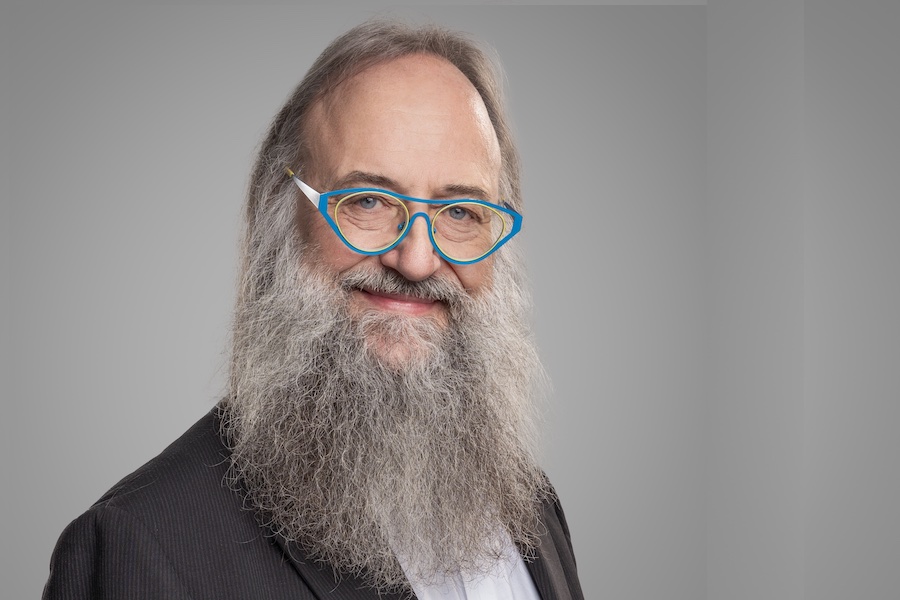
After more than three decades at the helm, founder and CEO Michael Carus is set to step down as head of the Renewable Carbon division on 1 March 2026. Lars Börger as the new CEO, will take over this key position of the nova-Institute together with COO Linda Engel, while Carus will remain with the research and consulting company as a senior advisor and shareholder. This change takes place after a one-year transition phase, as planned.

This change in leadership marks a new chapter for nova-Institute: the transition from founder Michael Carus to his successor Lars Börger represents both continuity and a fresh start. The internationally renowned institute, a pioneer in the use of renewable carbon sources, will place an even stronger focus on practical research and consultancy projects intended to drive the industry's transition to climate-neutral materials and processes. 

“After more than 30 years of hard work, I am delighted to hand over my management responsibilities to Lars Börger. During our one-year transition phase, we have carefully prepared for this change and positioned nova-Institute for a secure future. In my new role as Senior Advisor, I will support the new Renewable Feedstock department and continue to devote all my energy to the decarbonisation of the chemical, materials, and plastics industries,” Michael Carus explains.

Carus developed the nova-Institute from a start-up of six people into an internationally leading think tank for renewable carbon, employing around 50 scientists. Originally from Cologne, the physicist began his career in IT and as a science journalist before moving into solar technology and working at a renowned environmental institute. There, he headed the resources department before founding nova-Institute with other scientists in 1994. From the outset, he focused on the industrial use of biomass in the construction and automotive sectors, and then more specifically in the plastics and chemical industries. He later incorporated CO2 utilisation and recycling into his work. These developments led to the concepts of 'renewable carbon' and 'defossilisation', which provide a basis for overcoming dependence on fossil raw materials.

As Managing Director of the European Industrial Hemp Association (EIHA) and a member of numerous European Commission working groups, Carus has shaped the political and economic development of the bioeconomy for many years. In 2020, he initiated the Renewable Carbon Initiative, which has grown into a network of almost 80 companies and is driving the transformation from fossil to renewable carbon. Since 2021, he has also been responsible for the Renewable Materials Conference, which attracts 400–500 participants from around the world each year. This event has developed into the global gathering for the renewable carbon economy and will take place again in Siegburg from 22–24 September 2026.

“Michael Carus laid the foundation for the success story of nova-Institute with his pioneering work. We are very grateful for his extraordinary commitment, foresight and responsible handover. We look forward to continuing to develop ideas together and putting our pioneering spirit into practice in the future,’ says Lars Börger, CEO of nova-Institute. “Industrial transformation is more urgent than ever today, and at the same time it represents a great opportunity. As an independent, science-based catalyst and thought leader, we will actively shape this change. Success requires a combination of strategic vision and detailed analysis of sustainability, technology, politics, the market and economic efficiency. That is exactly what nova stands for.” 

The nova-Institute has an interdisciplinary team of around 50 scientists who support international innovation projects and offer scientifically sound management and strategy consultancy. The team takes a holistic approach, analysing technologies and raw materials in terms of their suitability, market potential, legal framework, sustainability and marketing opportunities. Based on these analyses, the team develops strategies for transitioning from fossil to renewable carbon. 

The nova-Institute will expand its expertise in the defossilisation of the economy with Lars Börger on board. He previously held senior positions at BASF (Germany/China) and Neste (Finland), and was a member of the European Bioplastics board. The nova-Institute will now place an even stronger focus on advising companies, associations and political decision-makers on strategies and solutions based on biomass, direct CO2 utilisation (CCU) and recycling.

“The nova-Institute's success story spans more than 30 years and stands for independent research and scientifically sound consultancy for a sustainable chemical and materials industry. With Lars Börger as CEO and Michael Carus as Senior Advisor, we are well placed for the future,” says Linda Engel, COO of nova-Institute.

The nova-Institute is divided into three business areas, which were previously overseen by four managing directors: Michael Carus, Lars Börger, Linda Engel and Dirk Schubert. Michael Carus stepped down as a managing director on 1 March 2026, but will remain a shareholder and act as a senior advisor to the Renewable Carbon business area.
More News from nova-Institut für politische und ökologische Innovation GmbH

#Recycling / Circular Economy

Advanced Recycling Conference 2026 to showcase innovations – Call for abstracts

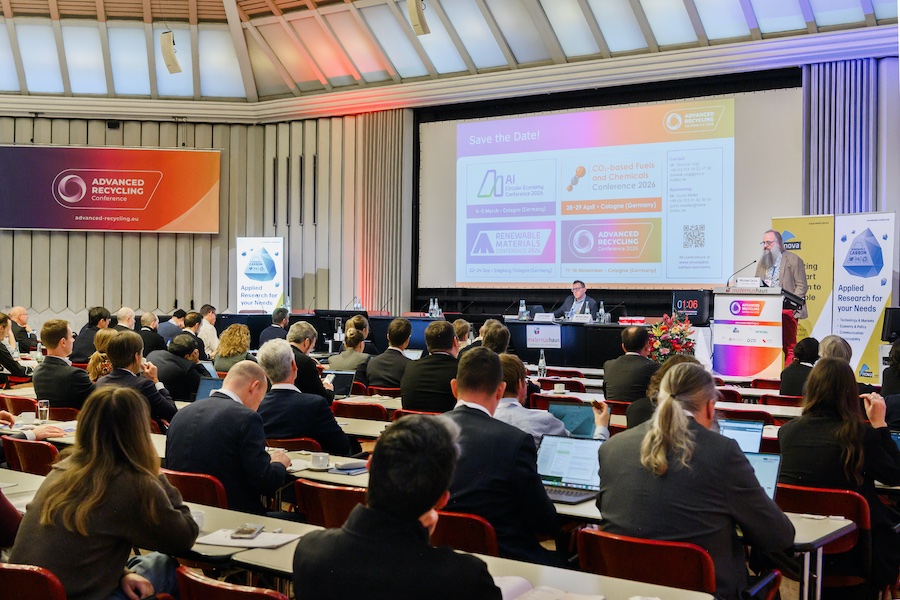
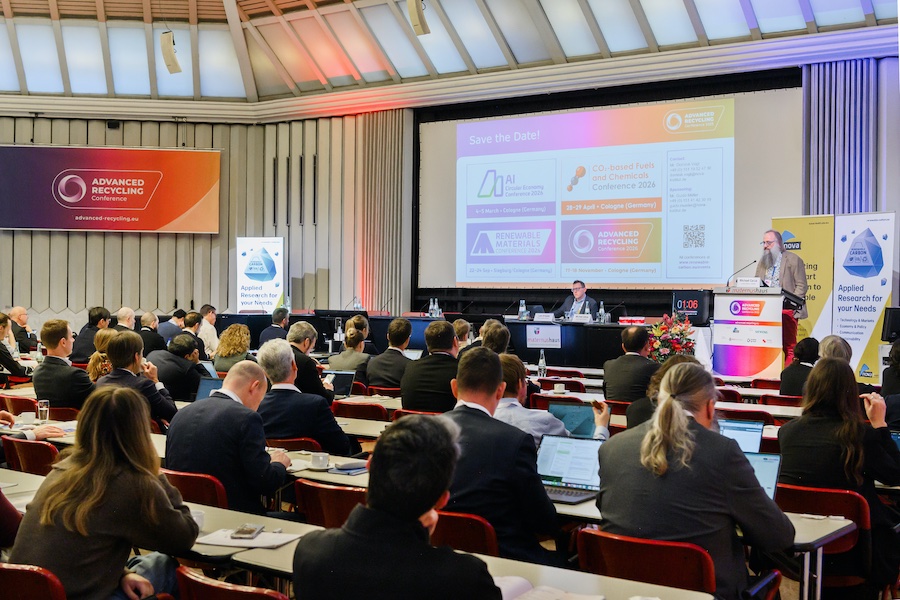
The call for abstracts is now open for the Advanced Recycling Conference (ARC) 2026, taking place on 17–18 November 2026 in Cologne, Germany, and online. Europe’s leading platform for advanced recycling brings together hands-on solutions and cutting-edge research on recycling technologies for various waste streams like plastics, polymers, textiles or automotive, highlighting progress towards a circular renewable carbon economy.

#Recycling / Circular Economy

AI Circular Economy Conference 2026 fuels innovation at the intersection of AI and Circular Economy

The AI Circular Economy Conference 2026, organised by nova-Institute, brought together 116 participants from 15 countries in Cologne and online to explore the transformation of the chemical and materials industry supported and accelerated by artificial intelligence. During the two-day event, leading experts from industry, research, start-ups and the investment community discussed how AI can maximise the potential of renewable carbon creating efficient circular value chains. The conference featured 24 presentations and multiple panel discussions, highlighting the growing convergence of digital technologies and circular material systems. It demonstrated how artificial intelligence is progressing from the experimental stage to real industrial implementation within the circular economy.

#Sustainability

The nova-Institute establishes new Renewable Feedstock Department to lay the groundwork for industrial defossilisation

The transition from fossil-based to renewable carbon – sourced from biomass, CO₂ utilisation and recycling – is the cornerstone of a climate-neutral chemical industry. The nova-Institute’s new department is dedicated to providing the essential data, analyses and strategic roadmaps required to secure a reliable future feedstock supply and make this transition a commercial and ecological reality.

#Recycling / Circular Economy

Advanced Recycling Conference 2025 fuels innovation across key waste streams

The Advanced Recycling Conference (ARC) 2025 brought together nearly 220 experts from 28 countries to spotlight pioneering advancements and foster industry collaboration in recycling across diverse waste streams including plastics, textiles, automotive and other materials.

More News on Research & Development

#Research & Development

ITA spin-off Solid Air (SA) Dynamics reaches the semi-finals of the Rice Business Plan Competition

The ITA spin-off SA Dynamics has been nominated for the semi-finals of this year’s Rice Business Plan Competition (RBPC), one of the world’s most prestigious start-up competitions, held at Rice University in Houston, Texas.

#Techtextil 2026

Smart textiles can also be sustainable, eco-friendly and AI-powered – ITA at Techtextil 2026

Sports shoes made from algae, leggings made from mushrooms, filtering (diesel) oil from water, 4D textiles, recyclable, sustainable and featuring AI – this is what the ITA Group is presenting at three individual stands run by ITA Aachen, ITA Augsburg gGmbH and ITA Technologietransfer GmbH on the joint stand of Elmatex in hall 12.0 D05.

#Techtextil 2026

Stylish design made from sustainable materials – two DITF research projects receive Techtextil Innovation Awards

Materials made from domestic, renewable raw materials reduce CO₂ emissions, prevent microplastics from entering the environment, and close the material cycle. The German Institutes for Textile and Fiber Research Denkendorf (DITF) are developing nature-based alternatives to synthetically produced and predominantly petroleum-based materials. Two research projects have received a prestigious Techtextil Innovation Award. NUO Flexholz and the lignin-coated material FormLig demonstrate that sustainable concepts can meet high standards of functionality and design. Both projects were carried out in close collaboration with industry.

#Research & Development

Hohenstein publishes 2025 Sustainability Report

The testing and research service provider Hohenstein has published its latest sustainability report, outlining key progress and strategic initiatives. The report focuses on ambitious CO₂ reduction targets, the company’s new mission statement and the systematic expansion of sustainable services for customers worldwide.

Latest News

#Techtextil 2026

Techtextil 2026: KARL MAYER impresses as an innovative sector partner

KARL MAYER looks back with satisfaction on its participation in Techtextil 2026. From April 21 to 24, the international industry leader used the trade show in Frankfurt to meet with numerous key customers at its booth and, at the same time, establish many new contacts. Most visitors came from Germany, followed by major markets such as Poland, the United Kingdom, Turkey, France, and Portugal.

#Associations

BTMA backs global growth while investing in future UK leaders

As one of a number of new initiatives launched this year, the British Textile Machinery Association (BTMA) is launching the UK-India Textile Machinery Coalition. The UK-India Free Trade Agreement, signed in July 2025, has implications that extend across sourcing, competitiveness and long-term trade dynamics, believes BTMA CEO Jason Kent.

#Raw Materials

China projected to increase cotton production, yields, and imports in 2026/27

World cotton production in the 2026/27 season is projected at 25.9 million tonnes, exceeding global consumption of 25.2 million tonnes, according to the May 2026 issue of Cotton This Month. That means both production and consumption are expected to remain close to current season levels, while global cotton trade is projected to decline by 2.7% to approximately 9.6-9.7 million tonnes.

#Raw Materials

ICAC launches Carbon Credits Initiative to deliver new income streams to cotton farmers

The International Cotton Advisory Committee (ICAC) has announced a new initiative designed to unlock additional income streams for cotton farmers through participation in carbon credit markets, linking sustainable production practices directly to financial returns.

TOP