[pageLogInLogOut]

#Research & Development

Synthetic leather made from recyclable and bio-based PBS
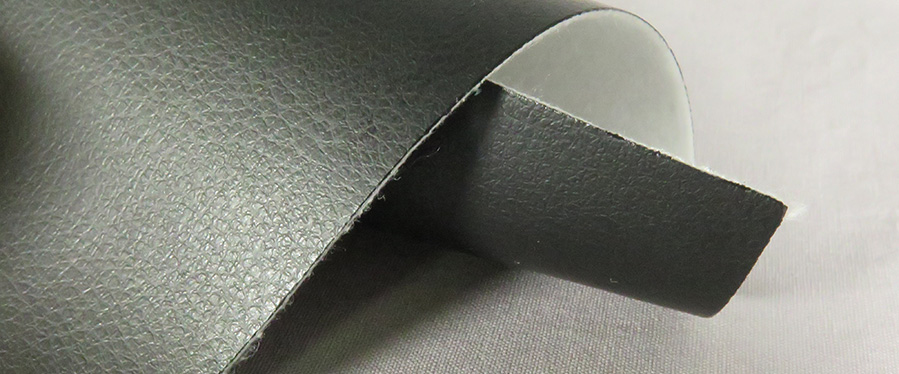
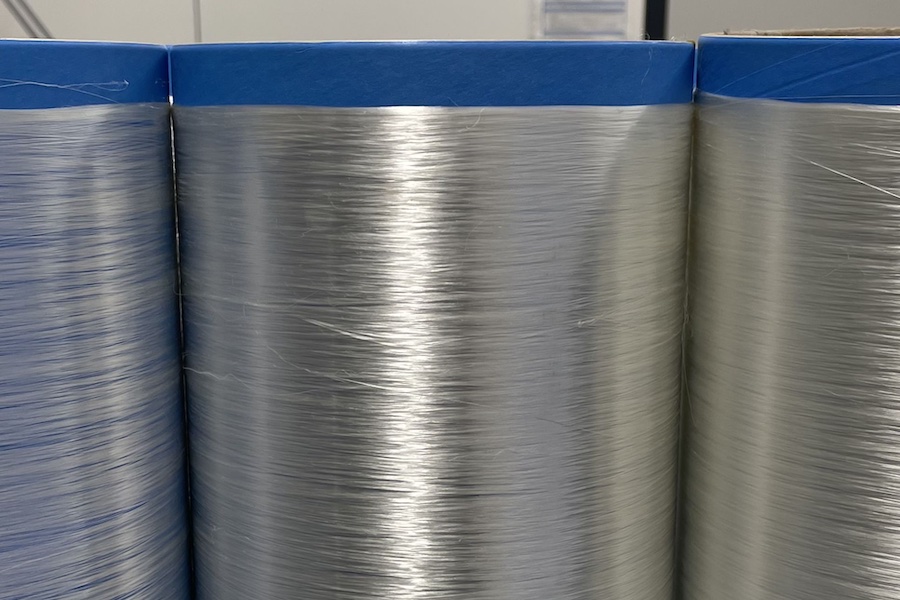
Pure PBS artificial leather. Photo: DITF 2024
A new type of pure synthetic leather meets the high requirements of the European Ecodesign Regulation. Made from a bio-based plastic, it is biodegradable and meets the requirements for a closed recycling process.

Many synthetic leathers consist of a textile substrate to which a polymer layer is applied. The polymer layer usually consists of an adhesive layer and a top layer, which is usually embossed. The textile backing and the top coat are usually completely different materials. Woven, knitted, or nonwoven fabrics made of PET, PET/cotton, or polyamide are often used as textile substrates. PVC and various polyurethanes are commonly used for coatings. The use of these established composite materials does not meet today's sustainability criteria. Recycling them by type is very costly or even impossible. They are not biodegradable. The search for alternative materials for the production of artificial leather is therefore urgent. In 2022, the EU adopted the Sustainable Products Initiative (SPI) ("Green Deal"). It includes an eco-design regulation that considers a product's life cycle in the conservation of resources. For textile and product design, this means incorporating closing the loop or end-of-life into product development.

In an AiF project carried out in close cooperation between the DITF and the Freiberg Institute gGmbH (FILK), it has now been possible to develop a synthetic leather in which both the fiber material and the coating polymer are identical. The varietal purity is a prerequisite for an industrial recycling concept.

The aliphatic polyester polybutylene succinate (PBS) was recommended as the base material because of its properties. PBS can be produced from biogenic sources and is now available on the market in several grades and in large quantities. Its biodegradability has been demonstrated in tests. The material can be processed thermoplastically. This applies to both the fiber material and the coating. Subsequent product recycling is facilitated by the thermoplastic properties.

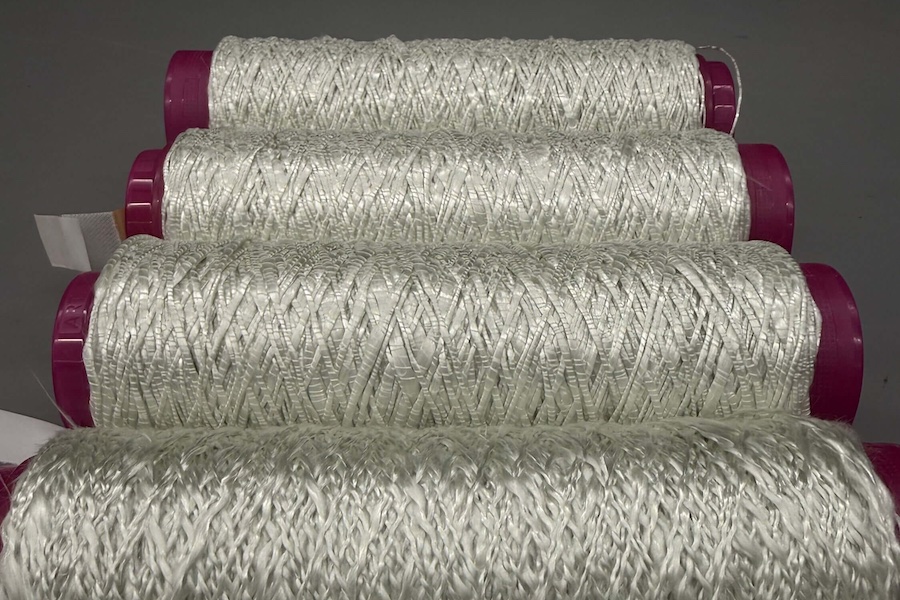
In order to realize a successful primary spinning process and to obtain PBS filaments with good textile mechanical properties, process adjustments had to be made in the cooling shaft at the DITF. In the end, it was possible to spin POY yarns at relatively high speeds of up to 3,000 m/min, which had a tenacity of just under 30 cN/tex when stretched. The yarns could be easily processed into pure PBS fabrics. These in turn were used at FILK as a textile base substrate for the subsequent extrusion coating, where PBS was also used as a thermoplastic.

With optimized production steps, PBS composite materials with the typical structure of artificial leather could be produced. Purity and biodegradability fulfill the requirements for a closed recycling process.

More News from Deutsche Institute für Textil- und Faserforschung Denkendorf

#Research & Development

Panty liners prevent bacterial vaginosis

Worldwide, almost one third of women of childbearing age suffer from bacterial vaginosis. This is when the sensitive microbiome of the vagina becomes unbalanced. Such a disorder of the vaginal flora can cause urogenital infections, abscesses on the ovaries or fallopian tubes or premature births. This significantly increases the risk of infertility in women and of contracting a sexually transmitted disease or HIV.

#Research & Development

DITF send a signal for climate protection

The German Institutes of Textile and Fiber Research Denkendorf (DITF) have successfully implemented extensive investments in photovoltaic systems at their site in Denkendorf. The systems installed on the roofs of the buildings and covered parking lots have a total installed capacity of 840 kilowatt peak (kWp). The DITF invested 1.6 million euros in this with the support of the state of Baden-Württemberg. The system was ceremonially put into operation on September 17, 2025.

#Research & Development

4.2 million Euros for research into textile recycling

Around the world, used textiles are still rarely recycled and pile up into huge mountains of waste. A recent study by the Boston Consulting Group (BCG) drew attention to this problem. However, the low recycling rate is also due to the fact that only a small percentage of used textiles are actually suitable for recycling into high-quality materials and for demanding applications. The German Institutes of Textile and Fiber Research Denkendorf (DITF) are addressing this problem with their research.

#Research & Development

Denkendorf fiber chart revised

A companion during studies and for practical use in the workplace: generations of textile experts have used the Denkendorf Fiber Chart to keep track of all the important characteristic values of textile raw materials. Following the first two editions in the 1970s and 1980s, Denkendorf scientists have comprehensively revised the Fiber Chart. The third edition is now available in digital form for the first time.

More News on Research & Development

#Research & Development

The region of renewable raw materials: Central German Alliance for Bioplastics

The development of sustainable plastic solutions is rapidly gaining importance in light of global environ- mental pollution, dwindling fossil resources and ambitious climate protection targets. As part of the re- gional alliance RUBIO, which brings together 18 partners from central Germany and the Berlin-Branden- burg area, the bio-based and biodegradable plastic polybutylene succinate (PBS) was comprehensively investigated, starting with the raw material, through the manufacturing process, to industrial application.

#Nonwoven machines

Cooperation in the field of meltblown laboratory technology

The Nonwoven Institute (NWI) at North Carolina State University and Oerlikon Nonwoven will be collaborating in the field of meltblown laboratory technology in the future. This was announced by Professor Raoul Farer, Executive Deputy Director of the NWI and Professor at the Wilson College of Textiles at North Carolina State University, and Dr. Ingo Mählmann, Sales Director Nonwoven at Oerlikon Neumag, during this year's ITMA Asia and CITME in Singapore.

#Recycling / Circular Economy

European research project addresses textile waste through integrated recycling technologies

A major European research initiative coordinated by Fraunhofer UMSICHT has been launched to develop integrated solutions for textile waste recycling. The AUTOLOOP project aims to create a comprehensive system that could process 1.24 million tonnes of textile waste annually by 2050, whilst potentially creating over 130,000 green jobs across the EU. This project aims to develop, test and integrate automated sorting, tracing, and closed-loop recycling technologies for polyester-based textiles (NRT), addressing the pressing challenge of textile waste management.

#Research & Development

Feasibility study shows potential to convert textile waste into PHB bioplastic

Textile waste could serve as a valuable source of raw materials for sustainable plastics in the future, according to the joint TexPHB feasibility study conducted by the Fraunhofer Institute for Applied Polymer Research IAP, Beneficial Design Institute GmbH and matterr GmbH. The study will be presented to the public for the first time at a network meeting on 25 November 2025 at the State Chancellery in Potsdam.

Latest News

#Recycling / Circular Economy

Advanced Recycling Conference 2025 fuels innovation across key waste streams

The Advanced Recycling Conference (ARC) 2025 brought together nearly 220 experts from 28 countries to spotlight pioneering advancements and foster industry collaboration in recycling across diverse waste streams including plastics, textiles, automotive and other materials.

#Dyeing, Drying, Finishing

Navis TubeTex announces U.S. partnership with Icomatex

Navis TubeTex, a global leader in advanced dyeing and finishing machinery solutions, is pleased to announce a new partnership with Icomatex (www.icomatex.com), a respected European manufacturer of high-quality stenters and textile finishing equipment. Under this agreement, Navis TubeTex will exclusively represent the Icomatex stenter line in the United States.

#Recycling / Circular Economy

ADVANSA launches ADVA®tex: A new step toward textile-to-textile recycling

ADVANSA has introduced ADVA®tex, a new filling fibre made entirely from recycled pre-consumer textile waste, positioning the material as a significant step forward in textile-to-textile (T2T) recycling. The fibre is designed for use in duvets, pillows, mattresses, and furniture applications and is available in three versions.

#Knitting & Hosiery

KARL MAYER celebrates 35 years of EL pattern drive

KARL MAYER is celebrating an anniversary this year: on 30 November 1990, the first warp knitting machine with electronic guide bar control, the KS 4 EL, was delivered – another milestone for patterning. As early as 1980, the SU gearbox with the MRS42SU had initiated the transition from mechanical chains to digital data.

TOP