[pageLogInLogOut]

#Research & Development

Leading innovator Borealis files record number of patent applications in 2020
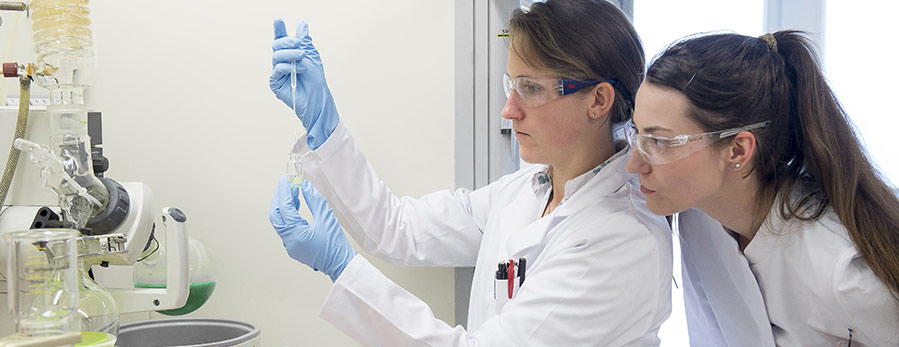
Researchers in Borealis’ Innovation Headquarters in Linz, Austria Photo: © Borealis
Borealis filed a total of 182 patent applications at the European Patent Office in 2020, breaking its own record of 179 in the previous year. With this achievement, Borealis cements its position as a pioneering innovator and industry leader in the fields of advanced and circular polyolefins, mechanical recycling of plastics, base chemicals and fertilizers.

Providing intelligent and sustainable solutions to the challenges faced by society is a core Borealis mission. Patents play a crucial role in safeguarding visionary ideas when developing novel approaches, technologies, and applications.

Borealis' Innovation Head Quarter Atrium and Showroom in Linz, Austria © Borealis Photo: © Borealis


“Re-inventing for more sustainable living is what drives us at Borealis,” says Borealis CEO Alfred Stern. “Breaking our own record in the number of patent applications is testimony to our dedication to creating value through innovation. We will continue to develop new technologies and novel, value-added products that enhance the circularity of plastics and thus benefit society as a whole.”


The 179 patent applications filed by Borealis in 2019 put the company at the top of the European Patents Office national rankings. In 2020 the company was able to top its own record with a total of 182 filings. In sum, the Borealis Group now possesses around 10,000 individual patents or patent applications which are subsumed in approximately 1,200 patent families. The growing number of patents underscores the company’s position as leading industry innovator.
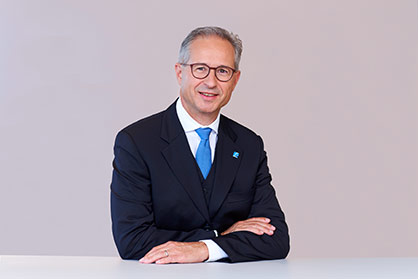

Borealis CEO Alfred Stern Photo: © Borealis


More News from TEXDATA International

#ITM 2026

ITM 2026: The new geography of textile production

New production hubs are emerging across North Africa and Central Asia, while Türkiye is accelerating its transformation toward higher-value, technology-driven and more sustainable textile manufacturing.

#Research & Development

“Production is a product”

From technical textiles and AI-driven robotics to the limitations of textile circularity: Professor Dr Thomas Gries looks back on more than two decades of development at ITA Aachen. In the interview, he explains why production technology remains a decisive success factor, discusses international collaborations and innovation ecosystems, and shares his views on the transformation of production landscapes and the challenges facing an increasingly regulated industry.

#Knitting & Hosiery

“We need to move away from the price trap and return to a value-driven mindset.”

With its new Textile Innovation Center, KARL MAYER is sending a strong signal for innovation, collaboration, and the future of textile applications. In this interview, Karl Josef Mayer discusses new opportunities in warp knitting, the processing of staple fibres, recycling, the changing role of machinery manufacturers, and why the textile industry must once again focus more strongly on the value of textiles. by Oliver Schmidt

#Associations

“Innovation, resilience and international experience remain the great strengths of the Swiss textile machinery industry”

Geopolitical uncertainty, growing competitive pressure from China, new free trade agreements and the shift towards a circular economy are currently reshaping the global textile industry. In this interview, Cornelia Buchwalder discusses the current mood within the Swiss textile machinery sector, the industry’s distinctive innovative strength, new market opportunities in India and Asia, and the technological trends that could shape the upcoming trade fair cycle leading up to ITMA 2027.

More News on Research & Development

#Research & Development

From smart jackets to laser technology: Mona Neubaur explores Textile Factory 7.0

As part of her summer tour, North Rhine-Westphalia’s Minister for Economic Affairs and Climate Action, Mona Neubaur, visited Textilfabrik 7.0 in Mönchengladbach to experience the project’s innovations first-hand. Under the motto “smart and clean”, the visit focused on innovative technologies and sustainable alternatives for textile production - from smart jackets to the decolourisation of textiles using fungal cultures.

#Research & Development

MELANGE starts with a co-creative design workshop at Aalto University to shape the visual identity of this new project transforming colouration in textiles

Over the next three years, MELANGE will lower the environmental impact of interior textile production by moving colour design to the beginning of the manufacturing process. This Horizon Europe project officially started on 1 August 2026, and will be publicly launched on 27 August 2026.

#Research & Development

Outdoor Industry Association completes Clean Heat CoLab initiative

The Outdoor Industry Association (OIA) has completed its multi-year Clean Heat CoLab initiative, bringing together outdoor brands and technology experts to accelerate the adoption of electrified process heating in textile manufacturing. The collaboration focused on reducing emissions from thermal processes such as dyeing, washing and finishing, which remain among the most carbon-intensive stages of textile production.

#Research & Development

Europe is committed to recycling end-of-life wind turbine blades

Starting in 2026, Europe’s wind energy industry has committed itself to ensuring that wind turbine blades do not end up in landfills once they reach the end of their service life. The EU-funded research project REWIND is exploring ways to reuse this composite waste. The German Institutes of Textile and Fiber Research Denkendorf (DITF) are one of 13 project partners from seven countries.

Latest News

#Europe

European textile industry calls for €10 handling fee on ultra-fast-fashion imports

The introduction of the €3 customs duty on low-value imports marks an important milestone in Europe’s efforts to address the challenges created by the rapid growth of ultra-fast-fashion imports. Together with the abolition of the €150 customs duty exemption, it demonstrates that policymakers are willing to act when market distortions become impossible to ignore. However, the European textile and clothing industry considers this a first step rather than the final destination.

#CINTE Techtextil China 2026

Cinte Techtextil China 2026 has opened today, bringing global innovations and resources to Shanghai

As Asia’s premier platform catering to the evolving needs in technical textiles and nonwovens, Cinte Techtextil China has opened today at the Shanghai New International Expo Centre, gathering over 300 exhibitors from 15 countries and regions. Across Halls W3 to W5, this edition will create chances for fast-growing sectors and emerging trends – such as Mobiltech, Medtech & Protech, Indutech and more. The curated zones, pavilions, and fringe programme are designed to better connect exhibitors with targeted buyers from across China, Asia-Pacific, and further afield. Meanwhile, the Association Village will gather international industry associations to foster even more global collaboration.

#Textiles & Apparel / Garment

Texworld Apparel Sourcing Paris opens with focus on AI, circularity and new sourcing regions

More than 1,000 exhibitors from around the world are gathering at Paris-Le Bourget as Texworld Apparel Sourcing Paris opens its doors from August 31 to September 2. With around 500 textile manufacturers and a similar number of apparel and accessories suppliers, the trade fair reflects the ongoing transformation of global sourcing and the growing diversification of supply regions.

#Raw Materials

Brazil sets new cotton export record and consolidates global leadership

Brazil ended the 2025/26 commercial year with a new record, consolidating its position as the world’s largest cotton exporter. Between August 2025 and July 2026, the country shipped 3,373,941 tonnes of the fiber, 19% more than in the previous cycle, and reached record revenue of US$5.3 billion. The result represents a milestone in Brazil’s expansion in the international market and reinforces the country’s role as a strategic supplier to the global textile industry.

TOP