[pageLogInLogOut]

#Recycling / Circular Economy

The circular textile economy is rapidly approaching
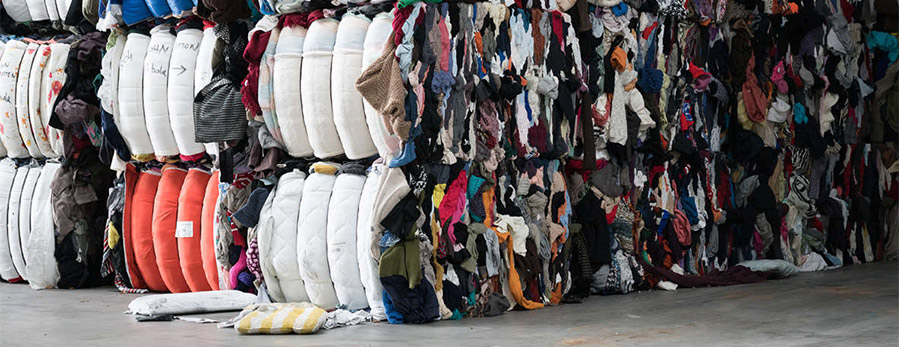
The plant will have the capacity to prevent 1’000 tonnes of textiles being incinerated every year, paving the way for industrial-scale operations. © 2022 Worn Again Technologies
Worn Again Technologies announces plans to build a new textile recycling demo plant in Winterthur Switzerland

Worn Again Technologies is in the final planning stages of an innovative demonstration plant that will showcase its ground-breaking polymer processing technologies for textile recycling. The facility, which will be built and operated by the company, is to be constructed in Winterthur, Switzerland and will have the capacity to prevent 1’000 tonnes of textiles being incinerated every year, paving the way for industrial-scale operations.

Worn Again Technologies’ demonstration plant will be constructed near to one of the startup’s technology partners, Sulzer Chemtech, in Winterthur, Switzerland. This represents a crucial step towards upscaling and commercializing the company’s recycling process technology.
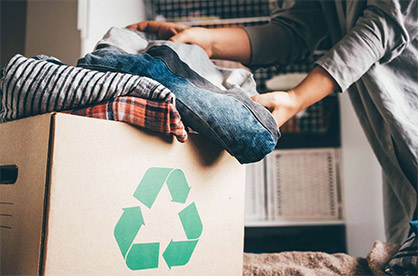
The pilot plant will showcase Worn Again’s ground-breaking polymer processing technologies for textile recycling. © 2022 Worn Again Technologies


In particular, the new industrial-scale infrastructure will help validate the closed-loop chemical recycling solution that has been developed by Worn Again Technologies and its strategic partners. The process obtains polyethylene terephthalate (PET) and cellulose from non-reusable, hard-to-recycle textiles that constitute post-industrial and post-consumer waste. Additionally, the Worn Again Technologies process purifies the products by removing dyes, contaminants and impurities, a step forward from traditional recycling methods. As such, it delivers high-quality, virgin-like materials that can be reintroduced into supply chains to become new fibers, textiles and other products.

Erik Koep, CEO at Worn Again Technologies, comments: “We are excited to be taking the next step in making reliable, high-performance textile recycling a reality. The construction and operation of this demonstration plant are the next major milestones in achieving our vision for textile circularity. We look forward to starting operations soon and see this as the first plant in a global network of processing facilities.”


Torsten Wintergerste, Chairman of Worn Again Technologies, adds: “We are delighted to see our technologies being leveraged to create a state-of-the-art textile recycling plant. Building it in Switzerland gives Worn Again Technologies direct access to Sulzer Chemtech’s global R&D facilities and the Swiss textile industry. We will build an ecosystem of partners around this demo plant and drive forward the creation of a circular economy of textiles. Switzerland is an ideal location for Worn Again to realize the demonstration plant with all stakeholders in the shortest time period possible.”

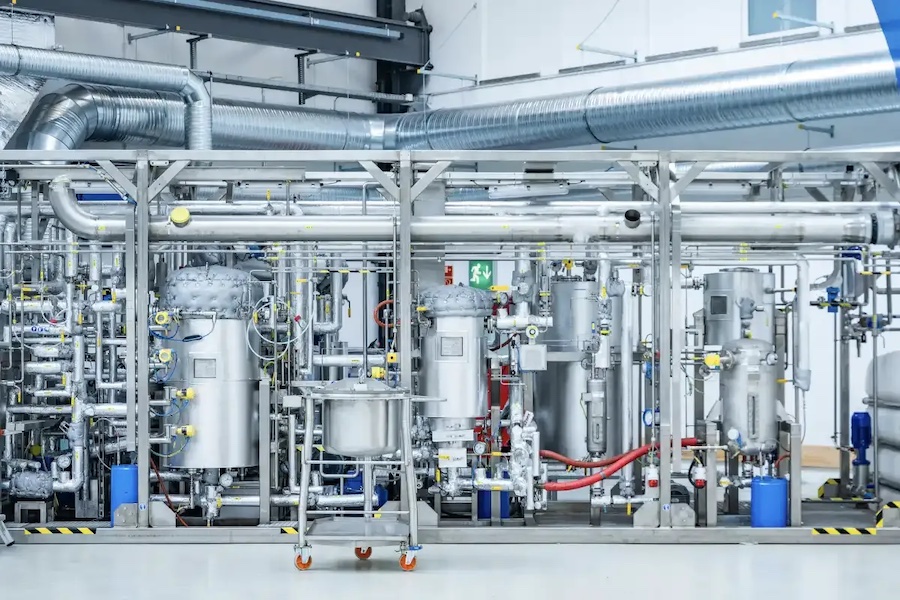
Worn Again Technologies has announced plans to build a new textile recycling demo plant in Winterthur Switzerland. © 2022 Worn Again Technologies


More News from Worn Again

More News on Recycling / Circular Economy

#Recycling / Circular Economy

The textile industry in transition

Recycling, traceability, eco-design and digitalisation are among the key future challenges facing the European textile industry. The Erasmus+ project Skills4Circularity, involving 21 partners from twelve countries, is investigating the skills required to address these challenges. As the German industry partner, the Industry Association for Finishing – Yarns – Fabrics – Technical Textiles (IVGT) is bringing the industry’s perspective to the project.

#Spinning

"We will become a recycling powerhouse"

The textile industry is now in its fourth consecutive year of crisis, while automation, artificial intelligence and recycling are reshaping the rules of the game. In this interview, Rieter CEO Thomas Oetterli discusses the first signs of a market recovery, reflects on his first three years at the helm of the company, explains the integration of Barmag, outlines Rieter’s vision of the fully automated spinning mill and highlights the strategic importance of recycling. In doing so, he explains why the new Rieter Group aims to play a leading role in transforming the textile value chain into a circular economy.

#Recycling / Circular Economy

Countdown to Textiles Recycling Expo 2026: Brussels prepares for Europe’s textile recycling gathering

With only two weeks remaining until the start of the second edition of the Textiles Recycling Expo 2026, preparations are entering the final phase. The exhibition and conference, dedicated exclusively to textile recycling and circularity, will take place on 24–25 June 2026 at Brussels Expo and is expected to attract stakeholders from across the textile recycling value chain.

#Recycled Fibers

Indorama Ventures enables brands to scale circular textiles through proven, traceable supply chains

Indorama Ventures, a global leader in recycled polyester staple fibers and filament yarns, will exhibit at Textiles Recycling Expo in Brussels on June 24–25. At the event, the company will show how brands and textile manufacturers can build traceable, circular textile supply chains by working with proven partners who deliver recycled materials on an industrial scale.

Latest News

#Spinning

New spinning package with two-step filtration for recycled yarns and more

At the ITM in Istanbul, BB Engineering unveiled its new, patented ValuePack spinning package for the first time, which features a two-stage filtration system. This is particularly beneficial for re-cycling processes. Until now, spinning packs have used either metal powder (“sand”) or filter candles as filter media. Both options are suitable for differ-ent applications, and each has its own specific advantages and dis-advantages.

#ITMA 2027

ITMA 2027 gains strong momentum

In line with the theme "Co-creating the future of textiles", ITMA continues to strengthen its support for start-ups, recognising their role in driving innovation and shaping the future of textile and garment manufacturing. Through the Start-Up Valley, emerging companies gain access to a global marketplace where they can connect with industry leaders, potential partners, investors and customers.

#ITM 2026

Positive market signals for KARL MAYER at ITM 2026

KARL MAYER is pleased with its participation as an exhibitor at ITM 2026. Faced with the challenges of rising domestic costs and fierce competition from low-priced Asian markets, the industry leader had traveled to Istanbul with mixed feelings – yet still draws a really positive conclusion.

#Associations

Mongolia: Workshop on Italian textile technologies kicks off in Ulaanbaatar

The workshop dedicated to Italian textile technologies will kick off in Ulaanbaatar from 21 to 23 June 2026. Focused on the most advanced innovative solutions for the textile industry, the initiative will bring together 13 Italian textile machinery manufacturers, confirming the growing interest in strengthening industrial cooperation between the two countries and highlighting Mongolia’s strategic importance for Italian textile machinery producers.

TOP