[pageLogInLogOut]

#Recycled Fibers

Worn Again Technologies unveils the Accelerator
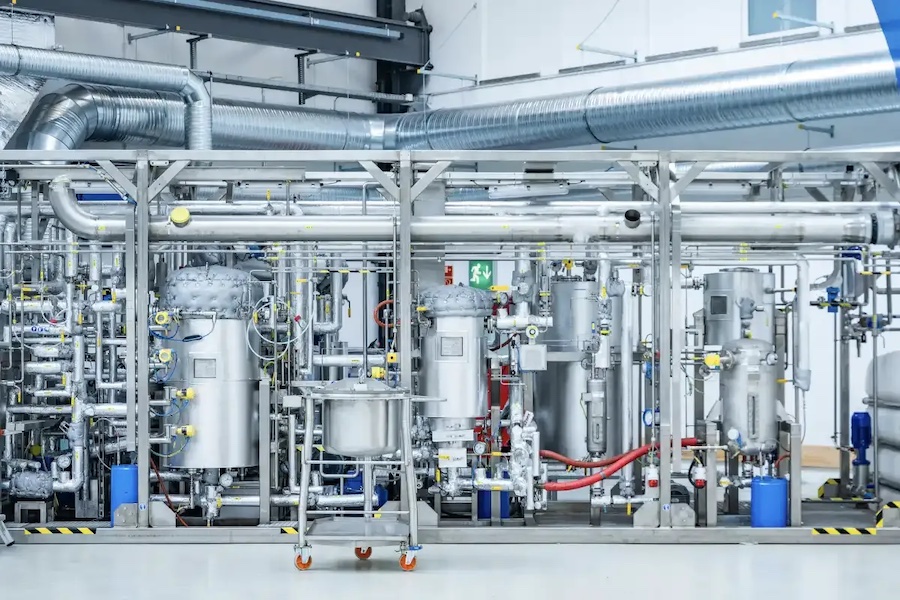
The Accelerator fiber recycling system by Worn Again Technologies © 2026 Worn Again Technologies
Worn Again Technologies unveils the Accelerator, the next major step towards commercialising its pioneering Textile-to-Fibre recycling process and proving the technical and economic feasibility of polycotton recycling.

A Textile-to-Fibre Accelerator plant – which the company has started up in Winterthur, Switzerland – showcases Worn Again’s proprietary chemical recycling technology at scale, providing a real-world validation of a process that recovers and regenerates polyester and cellulose from end-of-life textiles. This marks a significant milestone in Worn Again’s journey to transform textile waste into circular fibres.

Less than 1% of clothes are recycled. Meanwhile, textile production already exceeds a staggering 120 million tonnes per annum, a figure that continues to grow, exacerbated by consumer demand for fast fashion. The time is now to scale solutions designed to tackle the textile waste crisis.

“The fashion industry is at a pivotal point,” said Michael Weiss, CEO of Worn Again Technologies. “Blended polycottons, once nearly impossible to recycle efficiently, are now being reimagined through our groundbreaking process. This technology maintains material value, minimises waste, and unlocks significant economic opportunities.”

From laboratory to scaled application

The Accelerator represents the evolution from laboratory innovation to industrial demonstration. In recent years, Worn Again has refined the process chemistry and engineering design – optimising solvent systems and separation techniques – to enable efficient, high-purity recovery of polyester and cellulose fibres. Crucially, the process recovers over 95% of solvents used, reinforcing environmental responsibility.

The technology’s multi-solvent approach allows effective separation of complex materials, including dyes and elastane, which are major challenges for traditional recycling methods. Since 2024, the company achieved breakthroughs by successfully spinning fibres from recovered outputs, reaching new heights in product purity and quality – critical milestones underpinning the deployment of larger-scale operations.

Ongoing scale-up engineering activities continue to enable process efficiencies that weren’t feasible in the laboratory – enhancing the value proposition of the recycling technology as it scales.

The Accelerator plant is being delivered in modules. The first module is to recover spinnable polyester from waste textiles, including post-consumer polycotton blends sourced from Switzerland, the EU & UK. The recovered, Circular Polyester, will soon be available for downstream piloting & product application testing. The next module (which has entered detailed engineering) will produce Next-Gen Cellulosic Fibres and other advanced cellulosic materials.

Advancing towards commercial deployment

The Accelerator provides a platform for testing the technology’s real-world applications. Partner companies will be able to evaluate their feedstocks and validate the process across diverse textile streams, generating critical data to refine and scale operations.

Worn Again is progressing towards a full-scale manufacturing facility designed to process significant volumes of textile waste and produce high-value circular products. “The Accelerator is a critical asset for building towards our first commercial plant.” said Toby Moss, Chief Commercial Officer, “Testing at this scale will expand our solutions to a broader range of feedstocks, ensuring that we stay ahead by valorising more material streams and creating a growing portfolio of high-value, downstream product applications.”

Worn Again has gathered a growing network of strategic partners who will now receive priority access the Accelerator plant and its circular products. As production capacities continue to grow, it will further develop these partnerships and new ones to deliver binding commitments for supply and offtakes of a planned first commercial scale production plant. With the Accelerator now operational, Worn Again is open for business and ready to work with brands, manufacturers and waste handlers to “clean up fashion”.

Delivery of the Worn Again Textile-to-Fibre Accelerator plant in Winterthur, Switzerland © 2026 Worn Again
More News from Worn Again

More News on Recycled Fibers

#Recycled Fibers

UNIFI celebrates recycled and circular Innovation with ninth annual REPREVE® Champions of Sustainability Awards

Unifi, Inc. (NYSE: UFI), the makers of REPREVE® and one of the world’s leading innovators in recycled and synthetic yarns, today announced the winners of its ninth annual REPREVE Champions of Sustainability Awards, recognizing brands and mills that are advancing circularity and responsible manufacturing across the global textile industry.

#Recycled Fibers

RE&UP partners with Madewell and ISKO on textile-to-textile denim capsule

RE&UP Recycling Technologies is accelerating the shift toward a closed-loop textile economy through a collaboration with American denim brand Madewell and global fabric manufacturer ISKO. By transforming approximately 20,000 pairs of post-consumer jeans into recycled feedstock for a textile-to-textile denim capsule, RE&UP demonstrates the commercial viability of circular systems in the denim sector.

#Recycled Fibers

Syre and JEPLAN Announce Strategic Partnership to Accelerate Textile-to-Textile Recycling

JEPLAN, INC. the Japanese pioneer developing and operating chemical recycling technologies for circularity in packaging and textiles, and Syre, the textile impact company on a mission to hyperscale textile-to-textile recycling, announced today a strategic partnership. Together, the companies aim to extensively accelerate the timeline towards commercialization of next generation textile-to-textile polyester recycling technology.

#Recycling / Circular Economy

Reju secures €135 Million in Dutch NIKI Funding for industrial-scale textile-to-textile regeneration hub at Chemelot Industrial Park, the Netherlands

Reju™, the progressive textile-to-textile regeneration company, has been awarded €135 million in funding under the Netherlands’ Nationale Investeringsregeling Klimaatprojecten Industrie (NIKI) program. The funding will support Reju’s planned industrial-scale Regeneration Hub at Chemelot Industrial Park in Sittard-Geleen, covering both the investment phase and ongoing operations, and represents a critical milestone on the path toward final investment decision.

Latest News

#Techtextil 2026

SAHM Winding Solutions and Vandewiele Automation present integrated automation solution for winding processes

For the first time at the Techtextil trade fair in Frankfurt am Main, Germany (21 - 26 April), SAHM Winding Solutions (Hallo 12.0. / Booth 95) and Vandewiele Automation will be showcasing their combined automation expertise for industrial winding processes. Under the motto “Combining Automation. Maximizing Flow”, the two companies will demonstrate how automated package handling and robot-assisted yarn knotting can be integrated into a continuous production flow.

#Man-Made Fibers

Teijin Frontier announces new Stretch Polyester yarn offering exceptional compatibility with high-performance Polyester materials

Teijin Frontier Co., Ltd. announced today that it has developed a new stretch polyester yarn that offers new opportunities to create comfortable, all- polyester fabrics for sports and outdoor wear. The new polyester yarn demonstrates exceptional compatibility with high-performance polyester materials. Further, Teijin Frontier’s proprietary polymer design and spinning technology impart excellent elasticity to the new yarn. In turn, this yarn adds stretchability and recovery to the advanced functionality and excellent texture of high-performance polyester materials.

#Man-Made Fibers

Lenzing commissions 14 MW power‑to‑heat facility, strengthening grid stability and heat management

The Lenzing Group has successfully commissioned a new power‑to‑heat (P2H) facility with an electrical capacity of 14 megawatts. The installation converts renewable electricity directly into process heat, is fully integrated into the existing heat network at the industrial site, and represents a key building block for a fossil‑free heat supply. As project partner, VERBUND was responsible for the energy‑market integration and will operate the facility for balancing energy marketing, enabling it to respond flexibly to short‑term fluctuations in the power grid.

#Raw Materials

Kraig Biocraft reaches next step in production growth

Kraig Biocraft Laboratories, Inc. (OTCQB: KBLB) (“the Company”, “Kraig Labs”, or “Kraig’s”), a world leader in spider silk technology*, today announced that it has produced more than 1.3 metric tons of recombinant spider silk cocoons in a single month. This is a new world record and shatters the Company’s previous production record by a factor of five. Today marks a pivotal step forward in the transition of spider silk from laboratory innovation to an industrial-scale material platform.

TOP