[pageLogInLogOut]

#Recycling / Circular Economy

AFRY chosen as main engineering partner for Infinited’s flagship plant
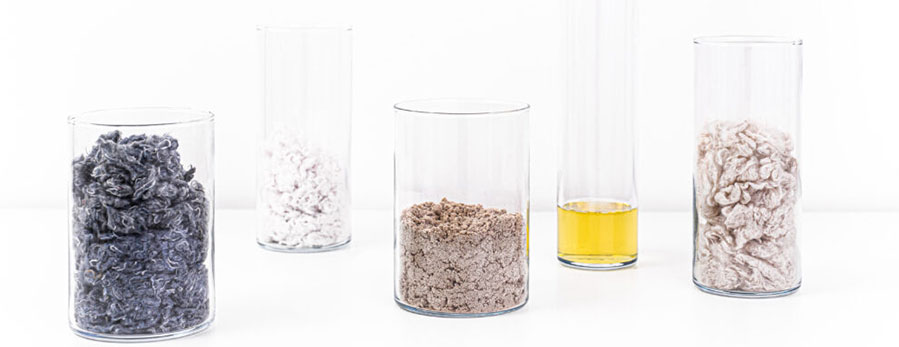
© 2021 Infinted Fiber
Finland-based circular fashion and textile technology group Infinited Fiber Company has selected AFRY as the main engineering partner for its new flagship factory for producing regenerated textile fibers for the world’s leading fashion and apparel brands.

More than 92 million tonnes of textile waste is produced globally every year, with much of it ending up in landfills or incinerators. At the same time, textile fiber demand is increasing rapidly. Infinited Fiber Company’s unique technology turns cellulose-based raw materials, like cotton-rich textile waste, into a premium regenerated textile fiber that goes by the name Infinna™. The technology, which can be licensed for both new factories and to retrofit existing pulp or viscose production units, offers a solution for eliminating waste and reducing the textile industry’s burden on limited virgin resources. 

Infinited Fiber Company currently operates pilot plants in Finland and has announced plans to build a flagship factory there to meet the strong demand from international clothing brands. The flagship factory will be the first of its kind in the world and will use post-consumer textile waste as feedstock. Production is scheduled to begin in 2024. In Finland, the national-level collection of textile waste will begin in 2023, and in the EU, the collection of textile waste will become mandatory in 2025, which will facilitate raw material supply. 

The annual production capacity of the plant is planned at 30,000 tonnes of Infinna fiber, which corresponds to the amount of fiber needed for about 100 million t-shirts. Infinited Fiber Company has already sold a significant portion of future production through multi-year sales deals with global fashion brands, who see its regenerated Infinna fiber as an important part of their own circular economy strategies.

AFRY’s assignment includes the basic engineering of the new factory to support the final investment decision. In this basic engineering phase, AFRY will design the combination of several technology and equipment deliveries into one viable plant. AFRY will also provide its AFRY Smart Site services for the digitalization of the factory, utilizing Industry 4.0 technologies to optimize and digitally connect all the factory’s processes and operations.


“This factory project is vital for us. It enables us to make our regenerated Infinna fiber more widely available to the global apparel brands, and through them to ordinary consumers as well. The plant will also serve as a demonstration facility to accelerate the licensing of our technology. This is why we have chosen world-class experts like AFRY as our partners in the project. AFRY’s strong track record of the successful implementation of similar projects convinced us that AFRY is the right partner to carry out the basic engineering of our factory,” says Petri Alava, CEO and co-founder of Infinited Fiber Company.

“We are honoured to partner with Infinited Fiber in this new investment to boost the circular economy in the textile industry by regenerating new fibers from textile waste. AFRY has extensive experience in implementing large factory projects. Together with Infinited Fiber, we are now designing a modern factory in Finland that will promote the use of regenerated fiber in the clothing industry,” says Kalle Rasinmäki, AFRY’s Head of Process Industries in Finland.  



More News from TEXDATA International

#ITM 2026

ITM 2026: The new geography of textile production

New production hubs are emerging across North Africa and Central Asia, while Türkiye is accelerating its transformation toward higher-value, technology-driven and more sustainable textile manufacturing.

#Research & Development

“Production is a product”

From technical textiles and AI-driven robotics to the limitations of textile circularity: Professor Dr Thomas Gries looks back on more than two decades of development at ITA Aachen. In the interview, he explains why production technology remains a decisive success factor, discusses international collaborations and innovation ecosystems, and shares his views on the transformation of production landscapes and the challenges facing an increasingly regulated industry.

#Knitting & Hosiery

“We need to move away from the price trap and return to a value-driven mindset.”

With its new Textile Innovation Center, KARL MAYER is sending a strong signal for innovation, collaboration, and the future of textile applications. In this interview, Karl Josef Mayer discusses new opportunities in warp knitting, the processing of staple fibres, recycling, the changing role of machinery manufacturers, and why the textile industry must once again focus more strongly on the value of textiles. by Oliver Schmidt

#Associations

“Innovation, resilience and international experience remain the great strengths of the Swiss textile machinery industry”

Geopolitical uncertainty, growing competitive pressure from China, new free trade agreements and the shift towards a circular economy are currently reshaping the global textile industry. In this interview, Cornelia Buchwalder discusses the current mood within the Swiss textile machinery sector, the industry’s distinctive innovative strength, new market opportunities in India and Asia, and the technological trends that could shape the upcoming trade fair cycle leading up to ITMA 2027.

More News on Recycling / Circular Economy

#Recycling / Circular Economy

RE&UP establishes Fiber Club consortium to scale Next-Gen material sourcing

Originally developed as an umbrella framework by innovation platform Fashion for Good, the RE&UP Fiber Club aims to accelerate the commercial adoption of circular Next-Gen materials across the global fashion ecosystem.

#Recycling / Circular Economy

HKRITA signs MoU with Jeanologia and Looptworks to establish the Green Machine Circular Textile Ecosystem

The Hong Kong Research Institute of Textiles and Apparel (HKRITA) yesterday officially signed a landmark Memorandum of Understanding (MoU) with two key global partners, Jeanologia and Looptworks, to establish the Green Machine Circular Textile Ecosystem – a first-of-its-kind collaboration to accelerate the large-scale recycling of blended textiles.

#Spinning

Object Carpet tests production of rPET BCF yarn on Neumag BCF line

In a joint project with Object Carpet GmbH, Denkendorf; the Institute for Textile Technology (ITA), Augsburg; and Next Generation Recyclingmaschinen GmbH (NGR), Feldkirchen, Austria, Barmag investigated the processing of recycled polyester for BCF yarn. The goal was to evaluate the fundamental suitability of 100% recycled carpet material for reuse in carpet yarn production to create a closed-loop system in carpet manufacturing. To date, commercial rPET BCF processes have been based solely on rPET from bottle pellets.

#Recycling / Circular Economy

Albany International reports progress with Cyclezyme on industrial textile recycling project

Albany International Corp. (NYSE:AIN) reports continued progress in the ongoing project with Cyclezyme AB, a leader in advanced enzyme-based plastic recycling, based in Sweden. The project exemplifies leading edge innovation in materials science, focusing on the development of enzyme-based recycling of industrial textiles primarily consisting of polyester and polyamide, where there is currently a significant lack of effective solutions for circular material flows. The objective of the project is to establish enzymatic processes for depolymerization and recycling of technical textiles and high-performance industrial materials.

Latest News

#Yarns

Yarn Expo Shenzhen 2026 closes doors, advancing sustainable and innovative sourcing in South China

Yarn Expo Shenzhen 2026 served as a strategically positioned mid-year sourcing platform for the Greater Bay Area, highlighting Shenzhen’s role in connecting regional demand, supply and innovation exchange across the textile value chain. During the three-day fair, over 20,000 visits were drawn from 74 countries and regions[1], as exhibitors and buyers engaged with new developments in greener, performance-led, and value-added yarn and fibre solutions. Held in conjunction with Intertextile Shenzhen Apparel Fabrics and PH Value, the fair underscored the benefits of closer synergy and new materials across yarn, fabric and apparel platforms for the South China market.

#Research & Development

2026 general meeting of the Friends and Supporters of RWTH Aachen at ITA

The Friends and Supporters of RWTH Aachen e. V. (proRWTH) looked back on a successful year of support at their 2026 general meeting. The meeting took place at Institut für Textiltechnik (ITA) of RWTH Aachen and was combined with a joint session of the Executive Board and the Administrative Board. Before the general meeting began, participants were given a guided tour of ITA, providing them with fascinating insights into current research and development topics in textile engineering.

#Natural Fibers

Cotton ConneXions Insight to Impact brings supply chain leaders together around cotton innovation

Cotton Incorporated’s Cotton ConneXions Insight to Impact brought together more than 300 industry leaders from 140 companies across 10 countries, including more than 45 top global brands and sourcing organizations, underscoring strong global interest in cotton-rich product development, sourcing and supply chain collaboration.

#Knitting & Hosiery

Footwear innovation enabled by warp knitting technology– insights from New Balance

The future of the athletic shoe is increasingly being shaped on warp knitting machines. For KARL MAYER, the footwear industry is one of the most important growth markets – and one of the sectors where innovative textiles can realize their full potential. In his keynote address at the opening of KARL MAYER’s TEXTILE INNOVATION CENTER in Obertshausen in April, Vishnu Prakash Muthusamy, Senior Textile and Materials Engineer at New Balance, explained the opportunities that warp knitting technology opens up for performance, sustainability, and faster development processes, and why textile manufacturers are transitioning from suppliers to development partners.

TOP