[pageLogInLogOut]

#Europe

Circular economy offers the EU win-win on environment and economy

Stepping up a circular economy offers the European Union the potential for significant positive impacts on Europe’s environment and poses an untapped and strategic economic opportunity in terms of better access to materials and the creation of new businesses. Three new assessments on circularity, published today by the European Environment Agency (EEA), also stress the need to accelerate investment in circularity efforts to meet EU climate and environment policy targets.


A set of 17 circular economy actions have the potential to reduce the EU’s impact on climate change by 22%, or almost one billion tonnes of CO2-equivalents, reduce its impact on biodiversity loss by 19% and reduce air pollution (fine particulate matter) by 25% according to the EEA briefing ‘The environmental and climate benefits of circular economy'.

These estimated benefits, based on modelling of specific circularity measures carried out in selected sectors like housing, mining, food, and mobility also have positive aspects in terms of building resource supply security. They would reduce the EU’s reliance on strategic raw materials produced elsewhere around the world. For example, the EU reliance on aluminium, nickel, and platinum group metals ores extracted in other world regions would decline by around 20%, and by 12% for copper.

The environmental and climate benefits of a circular economy

Circularity measures generate environmental and climate benefits by reducing demand for natural resources – and their associated negative impacts on nature. This in turn leads to economic opportunities by shifting value creation from material extraction to other parts of the economy.

Reducing natural resource use in Europe has benefits both within and outside the EU as the EU imports large amounts of resources and products, the extraction of which burdens the local environment in other world regions.

Untapped business opportunities

The circular economy represents a strategic business opportunity to expand Europe’s market, unlock significant economic returns and decrease resource dependence at the same time as reducing pressure on the climate and the environment, according to the EEA report ‘Unlocking the circular economy: investment needs, barriers and enabling conditions’.

Building on the most recent estimates, the EEA report shows that accelerated investment is needed to meet the objectives of the circular economy policies already adopted, with an investment gap of around EUR 82 billion a year up to 2040.

Unlocking the circular economy: investment needs, barriers and enabling conditions

It points to product design and end of life-stages as areas that need the most attention with the greatest sectoral gaps in construction, textiles, and batteries and vehicles. It adds that while private finance currently dominates investment, public funding plays a catalytic role in de-risking projects and enabling blended and long-term financing.

The progress of the circular economy faces structural economic and financial barriers that need to be addressed adding that policy action is needed to improve access to finance and marketability of circular projects. Better monitoring is also crucial to follow financial flows and how they deliver the best socio-economic and environmental benefits.

Better circularity and use of longer lasting materials

Improving the circularity — reuse or recycling potential — of Europe’s long-lived products like buildings, cars, roads or machinery can provide the EU economy with more cost-competitive homegrown raw materials, according to the EEA briefing ‘Material stocks in a circular economy’.

Europe’s economy depends heavily on large amounts of materials: 14.4 tonnes are consumed by each person per year. Almost half of that, over 6 tonnes, ends up embedded in buildings, infrastructure or machinery, forming what is known as material stock. Stocks are essential for our quality of life, they are buildings and roads, hospitals and schools, cars and washing machines, but they increasingly shape Europe’s resource dependency.

Material stocks in a circular economy

Material stocks have a key part to play in a circular economy, Increasing the circularity of material stocks can transform them into a source of secondary raw materials, strengthening European competitiveness and economic security.
More News from European Environment Agency

#Europe

State of Europe’s environment not good: threats to nature and impacts of climate change top challenges

State of Europe’s environment not good: threats to nature and impacts of climate change top challenges Significant progress has been made in reducing greenhouse gas emissions and air pollution, but the overall state of Europe’s environment is not good, especially its nature which continues to face degradation, overexploitation and biodiversity loss. The impacts of accelerating climate change are also an urgent challenge, according to the European Environment Agency’s (EEA) most comprehensive, ‘state of environment’ report, published today. The outlook for most environmental trends is concerning and poses major risks to Europe’s economic prosperity, security and quality of life.

#Europe

EEA Scientific Committee elects new chair and vice-chairs

The European Environment Agency’s (EEA) Scientific Committee has elected a new chair and two vice-chairs at its spring meeting held over two days at the EEA headquarters in Copenhagen.

#Sustainability

What are the impacts of PFAS polymers on our health and the environment?

The widespread use of PFAS polymers in everything from consumer products to green technologies can lead to contamination of water, air, soil, food and people. A European Environment Agency (EEA) assessment, published today, says that these chemicals can also contribute to global warming and ozone depletion.

#Europe

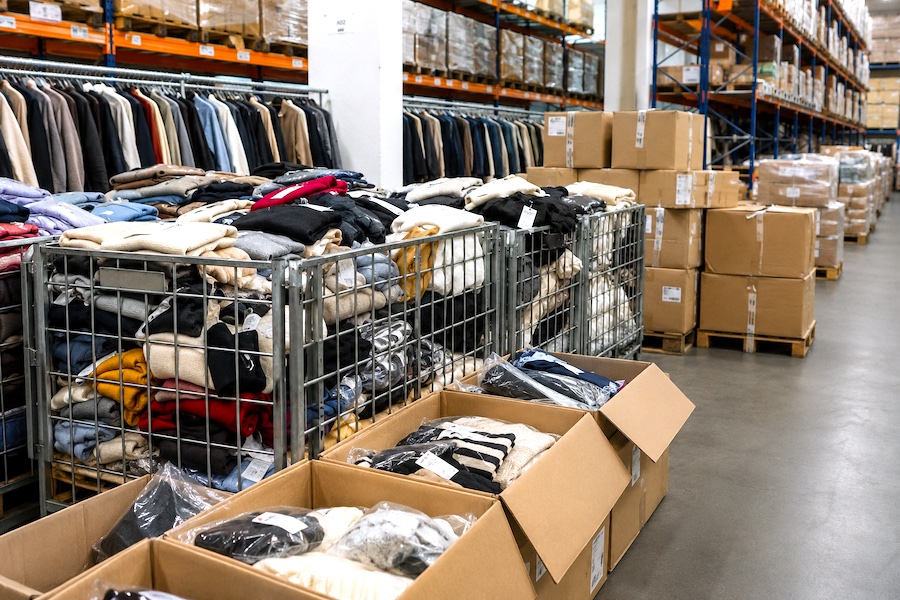
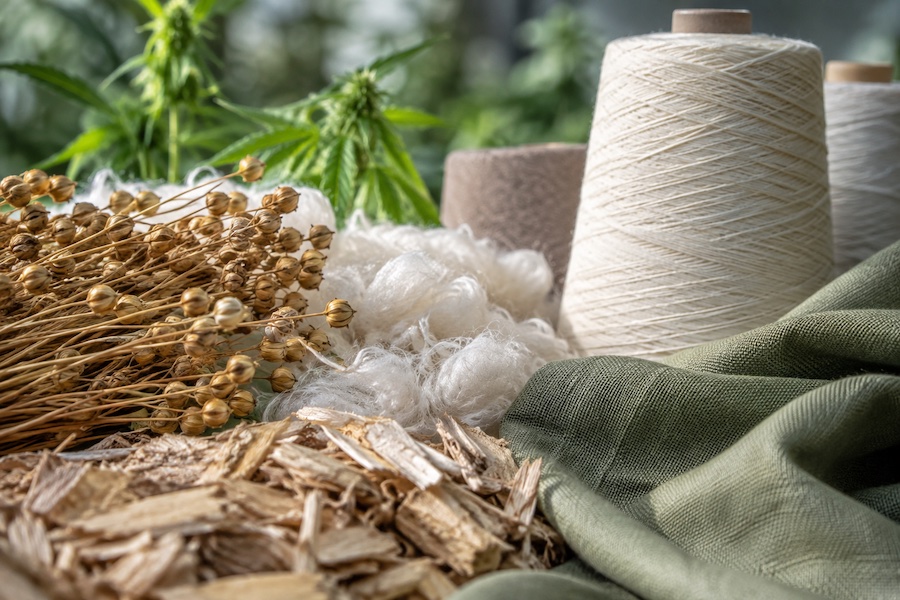
Consumption of clothing, footwear, other textiles in the EU reaches new record high

Europeans are buying and discarding more clothing, footwear and other textiles than ever before, which as a result, is putting more pressure on our climate and environment, according to a European Environment Agency (EEA) briefing released today. The updated consumption data highlights the need for policymakers, industry and consumers to play their role in helping Europe shift away from the fast-fashion trend, to produce better, longer lasting quality textiles which are designed to last long, and can be reused, repaired and recycled.

More News on Europe

#Europe

EU and Australia strengthen relations with Security and Defence Partnership and Trade Agreement

The EU and Australia have today announced the adoption of a groundbreaking Security and Defence Partnership. They have also concluded negotiations for an ambitious and balanced free trade agreement (FTA) and agreed to launch formal negotiations for the association of Australia to Horizon Europe, the world's largest funding programme for research and innovation. With these steps, the EU and Australia are delivering mutually beneficial outcomes and further reinforcing their already close relations in a time of geopolitical uncertainty.

#Europe

Commission presents proposal for EU Inc. - unlocking the full potential of the Single Market for Europe's entrepreneurs

Today, the European Commission presented its proposal for EU Inc., a new single set of corporate rules, building the cornerstone and starting point for the EU's 28th regime. EU Inc. is an optional, digital-by-default European corporate framework. It will make it easier for businesses to start, operate and grow across the EU – incentivising them to stay in Europe, and encourage those who once looked elsewhere to return.

#Associations

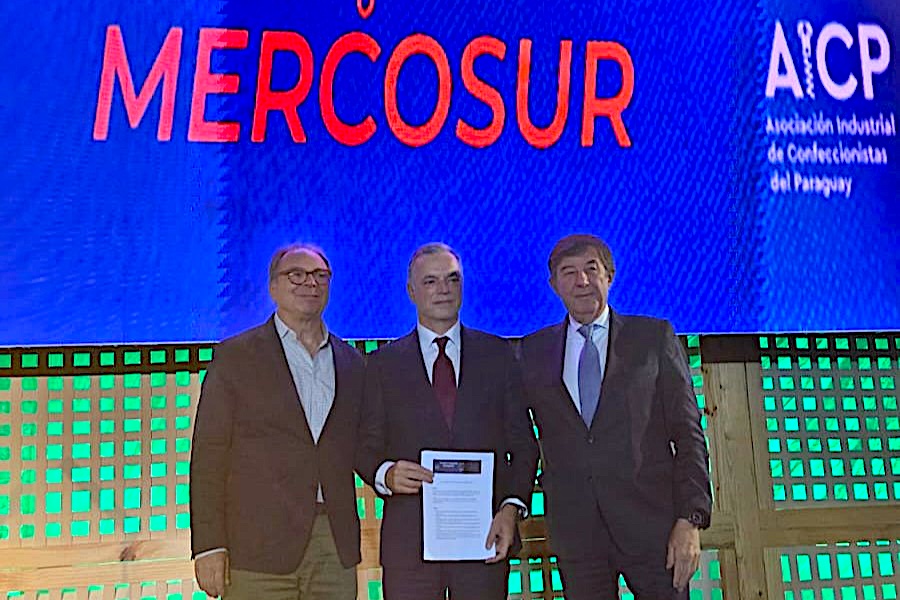
European Business Coalition welcomes provisional application of EU–Mercosur Agreement and calls for Swift and full implementation

With the European Commission’s decision to provisionally apply the EU–Mercosur Interim Trade Agreement, a process spanning more than 25 years now moves decisively into its implementation phase.

#Europe

Antwerp Declaration community urges EU leaders to deliver emergency measures as Europe’s competitiveness crisis deepens

EURATEX, representing the European textile and fashion industry, joins the Antwerp Declaration Community’s call on EU Heads of State and Government to adopt emergency measures that restore industrial competitiveness and deliver tangible results for Europe’s manufacturing base in 2026.

Latest News

#Technical Textiles

Fifteen years of Autoneum – From spin off to global technology leader

What started as a strategic carve‑out has since become the success story of a global technology leader in acoustic and thermal management solutions for vehicles. Headquartered in Winterthur, Switzerland, Autoneum supplies leading automobile manufacturers worldwide with innovative, lightweight and increasingly sustainable solutions.

#Textile chemistry

The CHT Group GmbH awarded Best Managed Company 2026

The CHT Group GmbH has been honored as Best Managed Company 2026. The seal of approval recognizes excellently managed medium-sized companies and is awarded as part of a program by Deloitte Private, UBS, the Frankfurter Allgemeine Zeitung, and the Federation of German Industries (BDI).

#Nonwoven machines

Kruger, Canada, orders first nonwovens line for sustainable wipes from ANDRITZ

International technology group ANDRITZ has received an order from newly established Kruger Nonwovens to deliver a complete WetlaceTM hybrid line for the Wayagamack mill in Trois-Rivières, Quebec, Canada. With this investment, pulp and paper producer Kruger is preparing to enter the nonwovens market with a new generation of plastic-free, chemical-free materials for sustainable wipes. The line is the first of its kind in Canada and is scheduled to start production in 2028.

#ITM 2026

Picanol to present its leading weaving technology at ITM 2026

Picanol is pleased to announce it will be participating in ITM 2026 in Istanbul. This is a key event for industry professionals to engage with the Turkish textile industry as well as the extensive international audience attending the fair. During the event, Picanol will present its latest innovations to the visitors in Hall 8, booth 802.

TOP