[pageLogInLogOut]

#Recycling / Circular Economy

Reju secures €135 Million in Dutch NIKI Funding for industrial-scale textile-to-textile regeneration hub at Chemelot Industrial Park, the Netherlands

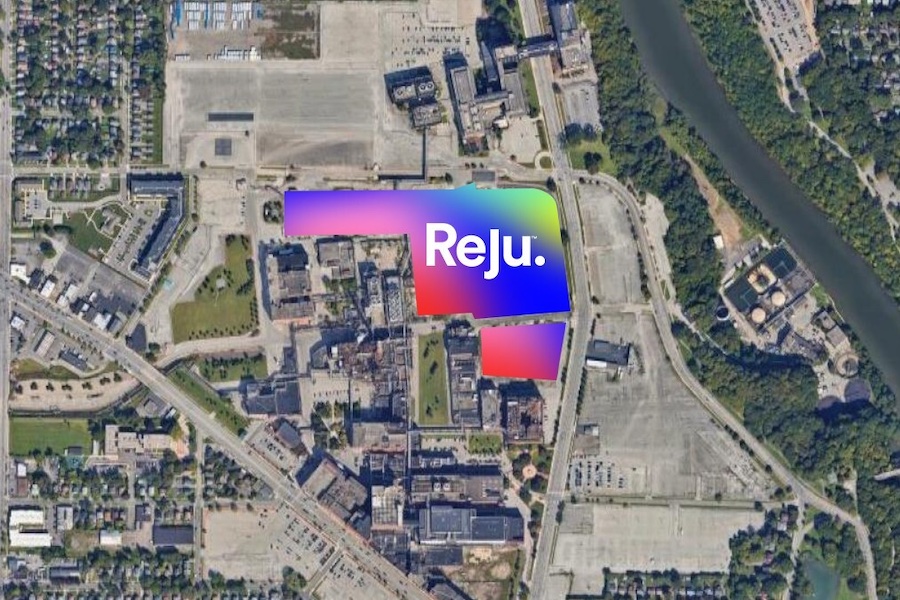
Example rendering of a Reju Regeneration Hub © 2026 Reju
Reju™, the progressive textile-to-textile regeneration company, has been awarded €135 million in funding under the Netherlands’ Nationale Investeringsregeling Klimaatprojecten Industrie (NIKI) program. The funding will support Reju’s planned industrial-scale Regeneration Hub at Chemelot Industrial Park in Sittard-Geleen, covering both the investment phase and ongoing operations, and represents a critical milestone on the path toward final investment decision.

“We are grateful to the Government of the Netherlands and the Ministry of Economic Affairs and Climate for supporting the scale-up of commercial technologies that can deliver measurable emissions reductions and accelerate the transition to a truly circular textile industry.” said Patrik Frisk, CEO of Reju. “This award is a strong vote of confidence in our technology and our team. At Chemelot, we will deliver circular raw materials at scale, reduce emissions across textile value chains, and establish a replicable blueprint for circular textiles in Europe.” 

NIKI is the Dutch government’s flagship program to accelerate large-scale industrial decarbonization and circularity, supporting both national and European Union circular economy objectives. Reju’s project is closely aligned with these goals, expanding a textile to-textile process that converts difficult-to-recycle, polyester-containing textiles into high quality circular intermediates for new polyester production. By diverting residual textile fractions from landfill and incineration, Reju, aims to materially reduce the environmental impact of textile waste.

The future Regeneration Hub will process post-consumer textiles that would otherwise enter the waste stream. This regenerated output will be transformed into Reju Polyester, delivering approximately 50% lower carbon emissions compared with virgin polyester. The material will then be reintroduced into downstream supply chains, where it will be converted into yarns and fabrics ready for end-use consumer applications. The project is expected to emphasize industrial integration, energy and resource efficiency, and fully traceable circular supply chains, maximizing the displacement of virgin, fossil based inputs.

Chemelot Industrial Park was selected for its established industrial ecosystem, shared utilities and logistics infrastructure, and proximity to innovation and research capabilities. These attributes are expected to support efficient ramp-up, operational reliability, and the replication of the model across future sites.

More News from Reju

#Recycled Fibers

Reju announces site selection for French Regeneration Hub in Lacq advancing Europe’s circular textile infrastructure

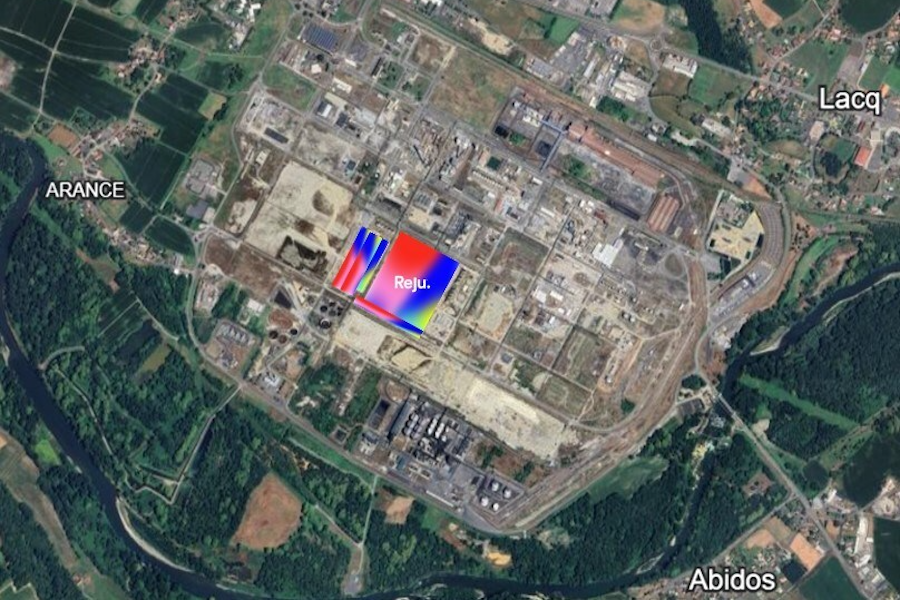
Reju, the textile-to-textile regeneration company based in France, announces the site selection for an industrial sized Regeneration Hub, in Lacq, in the Pyrénées-Atlantiques, on the Induslacq platform. Reju, a Technip Energies owned company, is deepening its roots in France through the development of this new Regeneration Hub.

#Recycling / Circular Economy

Reju announces site selection for first U.S. industrial sized facility regeneration hub in Rochester, New York

Reju, the textile-to-textile regeneration company, today announced it has selected the site for its first U.S.-based industrial facility marking a significant milestone in its efforts to scale globally. This future Regeneration Hub will be in Rochester, New York, reinforcing Reju’s commitment to the adoption of circular textile system across key regions worldwide.

#Recycling / Circular Economy

Reju and Circle-8 Textile Ecosystems partner to further large-scale textile recycling in the U.K.

Reju™, the progressive textile-to-textile regeneration company, and Circle-8 Textile Ecosystems, a key builder of ecosystems and infrastructures unlocking textile-to-textile recycling, today announced a partnership to further facilitate a circular textiles ecosystem in the U.K.

#Recycling / Circular Economy

Reju COO Alain Poincheval Appointed Chairman of Petcore Europe’s Textile SIG

Reju has announced that Alain Poincheval, the company’s Chief Operations Officer, has been appointed Chairman of the Textile Special Industry Group (SIG) at Petcore Europe, the leading Brussels-based association representing the PET value chain in Europe.

More News on Recycling / Circular Economy

#ITM 2026

BB Engineering unveils new, patented “Val-uePack” spin pack at ITM

At the upcoming ITM in Istanbul, taking place June 9–13 at the Tüyap Fair Convention and Congress Center in Hall 7, Booth 702B, BB Engineering will once again be represented at a joint booth with its parent company, Barmag, and its representative, Tekstil Servis. The German machine manufacturer will show-case its expertise in man-made fiber and recycling technology, presenting its entire product portfolio, which includes compo-nents such as extruders and filters, as well as complete sys-tems for spinning synthetic fibers, air-texturing, and PET recy-cling.

#Recycled Fibers

Syre expands partnership with Target to advance next-generation recycled materials at scale

Advancing next-generation materials to support scalable circular solutions across global retail Stockholm, May 2026 — Syre, the textile impact company hyperscaling textile-to-textile recycling today announced an expanded collaboration with Target to accelerate the adoption of next-generation recycled materials across retail at scale.

#Recycling / Circular Economy

Project REWEAR investigates diverse economies of rewear as a global practice of circularity

Every year, European households discard millions of tonnes of clothing. Around a quarter of what gets separately collected is exported, much of it classified as rewearable. A significant share ends up in markets like Kantamanto in Accra, Ghana, where an estimated 15 million garments arrive every week. New research published today reveals what happens when that clothing arrives.

#Recycling / Circular Economy

RE&UP contributes to Global Fashion Summit 2026 circularity discussion

RE&UP contributed to the global conversation on textile circularity at Global Fashion Summit 2026 in Copenhagen, where Fatih Konukoğlu, Chairman of RE&UP and Vice Chairman of Sanko Holding, took part in both the keynote session “The New Rules” and the panel discussion “A Reckoning and Renewal for Circular Horizons”, alongside leaders from H&M Group, Looper Textile Co. and Sourcing Journal.

Latest News

#INDEX 2026

“We clearly see that reliability, flexibility, service and total cost of ownership are becoming increasingly important again.”

The nonwovens industry continues to face a challenging market environment. Nevertheless, AUTEFA Solutions reports successful projects, new line sales and growing demand for energy-efficient and flexible solutions. In this interview, André Imhof of AUTEFA Solutions talks about competitiveness against Chinese suppliers, new service and recycling concepts, the growing importance of application development and the opportunities created by countercyclical investments.

#INDEX 2026

“Needle punching technology is more universal and sustainable than ever!”

Needle punching technology was long regarded as a rather traditional and comparatively slow technology within the nonwovens industry. In this interview, Johann Philipp Dilo explains why needle punching is more relevant than ever today – ranging from energy efficiency and resource conservation to hygiene applications, new machine concepts and design-oriented nonwoven solutions.

#Research & Development

Textile climate control system in workwear – exhibition at the 2026 SME Innovation Day!

Conventional protective workwear often reaches its limits during strenuous physical activity. In particular, the transport of sweat and excess body heat poses a problem. The German Institutes of Textile and Fiber Research (DITF) conducted research on flow-optimized, air-conducting textile structures that enable targeted climate control directly on the body. These structures can be integrated straight into protective work garments. The textile climate control system supports the body’s natural thermoregulation. This contributes to improved workplace safety and comfort.

#Nonwovens

PET spunbond from China – EDANA welcomes imposition of provisional anti-dumping measures

On 13 May 2026, after eight months of investigation, the European Commission imposed provisional anti-dumping duties of 45.6-50.0% on imports of PET spunbond from China. EDANA welcomes this expression of the Commission’s clear determination to protect EU industries from the unfair trade practices of Chinese producers.

TOP