[pageLogInLogOut]

#Recycled_Fibers

Advancing the future of stretch: Fashion for Good launches new project to validate bio-based and recycled elastane
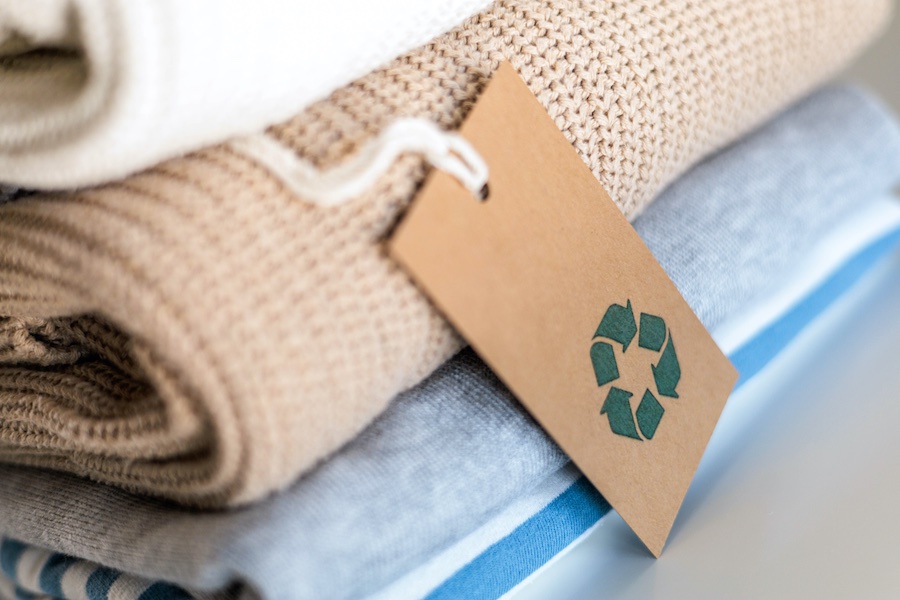
Source: Canva © 2026
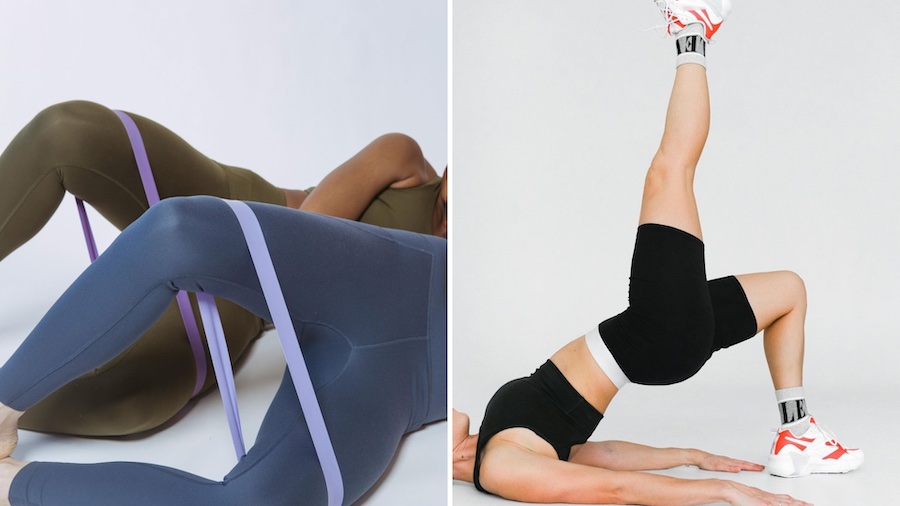
Launched today, Stretching Circularity is a collaborative project initiated by Fashion for Good dedicated to accelerating the adoption of lower-impact elastane alternatives that are compatible with circular textile systems. By validating bio-based and recycled elastane solutions through pilot-scale testing and demonstrator garments, the initiative aims to remove one of the most significant technical barriers to a circular textile economy.


Present in approximately 80% of all clothing1, elastane is a material added in varying concentrations (typically from 1–5% by weight in cotton or wool garments to up to 20% in tackles this challenge through two key workstreams. One workstream focuses on testing next-generation elastane materials made from alternative inputs, including bio-based materials and other feedstocks. This phase includes the creation of "demonstrator" garments, specifically a technical t-shirt (with 10% elastane) and a non-technical t-shirt (with 2% elastane). The other focuses on testing regenerated elastane made through emerging recycling innovations. Both workstreams follow a pilot-scale validation approach to generate comparable data on performance, impact, economical feasibility and scalability.

Driving this work is a powerful coalition of industry stakeholders representing the entire value chain. The consortium includes Fashion for Good partners Levi Strauss & Co (Beyond Yoga), On, Paradise Textiles, Positive Materials, and Reformation, with Ralph Lauren Corporation as an Advisor. Supported by ecosystem experts like Materiom and the Ellen MacArthur Foundation, the group will support knowledge sharing across the consortium to identify gaps and generate comparative data to de-risk the adoption of these circular solutions for the wider industry. Stretching Circularity operates under a structured due diligence and validation framework to assess if alternative materials are not just conceptually sound but also meet the performance standards of conventional elastane.

“Lower-impact elastane solutions exist, but they lack the pilot-scale validation brands need to scale them confidently,” Katrin Ley, Fashion for Good Managing Director. “This initiative seeks to provide that missing data, turning a well-known recycling "contaminant" into a functional component of a circular supply chain.”

“Elastane is one of the most overlooked blockers to true circularity in fashion: it’s everywhere and yet there is a significant challenge to recovering it at scale. Stretching Circularity is about tackling that problem at the root and proving that lower-impact stretch materials and new recycling pathways can meet real performance and design standards." - Carrie Freiman Parry, Senior Director of Sustainability at Reformation

More about the project, please click on this link:

https://www.fashionforgood.com/case-study/stretching-circularity-project/


1 Stadler, A. (2025). Elastane in textile sorting: One challenge of recycling stretch fibers.

2 Boschmeier, E., Archodoulaki, V.-M., Schwaighofer, A., Lendl, B., & Bartl, A. (2023). A novel quantification tool for elastane in textiles using thermal treatment. Polymer Testing, 118, 107920.


More News from Fashion for Good

#Recycling / Circular Economy

Fashion for Good releases open-source blueprint for near-net-zero textile manufacturing

Fashion for Good launches the first open-source blueprint for near-net-zero textile manufacturing, tackling one of fashion’s biggest emissions hotspots. Developed under the Future Forward Factory project, the blueprint offers Tier 2 manufacturers in India five practical, financially viable pathways to reduce carbon emissions by up to 93%.

#New Materials

From premiums to parity: How Fashion for Good is rewriting the economics of new materials

Fashion for Good launches Price Parity Toolkit: developed with support from Laudes Foundation, Canopy and Finance Earth, the framework introduces an innovative financing approach (premium decoupling) to remove price premiums from the supply chain and unlock faster adoption of lower-impact materials across the industry.

#Natural Fibers

Fashion For Good launches “Beyond50 Denim” to address hemp integration barriers in global denim production

Fashion for Good, together with leading global brands BESTSELLER, C&A, PDS Limited, Reformation, and Target, launched Beyond50 Denim: Combining Cottonised Hemp and Green Chemistry, a project accelerating the use of hemp as an alternative to conventional cotton in denim. By combining two pioneering innovations (SEFF’s Nano-Pulse™ cottonised hemp fibres and FIBRE52™’s proprietary chemistry formulations with soft handfeel), the project seeks to demonstrate that hemp-based denim can match or even surpass cotton in both performance and appeal.

#Sustainability

Fashion For Good unveils “The Next Stride”, a new footwear project to replace fossil fuel mate-rial with bio-based sole innovation

Fashion for Good today announced the launch of The Next Stride: Bio-Based Materials for Footwear Soles, a 12-month project to transform the $400 billion footwear industry¹ by reimagining one of its most impactful components: the sole. In partnership with adidas, Target, and Zalando, alongside leading material innovators Algenesis Labs, Balena, Evoco, KUORI, and Yulex, the initiative will test and validate bio-based polymers as high-performance alternatives to the fossil fuel–derived materials that dominate footwear production. By focusing on the sole (the foundation of every shoe), The Next Stride aims to accelerate the industry’s shift toward scalable, circular solutions.

More News on Recycled_Fibers

#Yarns

Biella Yarn launches Collection “Reimagined” for Spring/Summer 2027 with fresh approach to fibre design

Biella Yarn, the flat knitting brand of Suedwolle Group, introduces its Spring/Summer 2027 collection “Reimagined” featuring refined yarn blends and advanced spinning technologies designed for contemporary summer knitwear. Under the motto “And the story goes on…”, Biella Yarn continues to push the boundaries of responsible yarn development, offering versatile materials that elevate modern craftsmanship.

#Recycled_Fibers

Circular progress: Trevira® CS Eco fabrics can now be made using textile-recycled, permanently flame-retardant fibers and yarns

Indorama Ventures, a global sustainable chemical company, takes an important next step toward making textiles more circular for homes and public spaces. To support fabric makers in creating a more sustainable version of the well-known flame-retardant Trevira CS fabric, the company now offers Trevira® flame-retardant fibers and filament yarns that contain 50% recycled textile material. First customers were introduced to the new offering during Heimtextil trade show mid-January in Frankfurt, Germany.

#Recycled_Fibers

Borealis invests EUR 49 million in Burghausen, Germany to accelerate design for circularity

Borealis announces a EUR 49 million strategic investment to scale up production of Borstar® Nextension polypropylene (PP) at its manufacturing site in Burghausen, Germany. This will expand commercial production of next-generation single-site polypropylene (ssPP) grades that deliver enhanced purity, processability, and performance - supporting customers in key sectors including packaging, healthcare, mobility, and fibers, to meet evolving market and regulatory demands.

#Heimtextil 2026

Eastman Naia™ expands All-Night Comfort at Heimtextil 2026

New fill solutions and the debut of sleepwear highlight the versatility and performance of Naia™ Renew, its circular fiber, for home textile applications.

Latest News

#Knitting & Hosiery

Huixing acquires insolvent Mayer & Cie.

Insolvency proceedings for the circular knitting and braiding machine manufacturer Mayer & Cie. were opened on December 1, 2025. Immediately following the opening of proceedings, the complete cessation of business operations was initiated. Most employees were subsequently given notice effective the end of February 2026. The production of the remaining orders in the circular knitting segment is expected to be completed by the end of the month. As early as December 2025, Mayer & Cie.’s braiding machine division was sold to an Italian investor.

#Spinning

Barmag: DTY efficiency for the future of fancy yarns

Fancy yarns continue to gain importance in the textile market: Whether in fashion, home textiles or the automotive industry - the trend towards individuality is fueling the demand for textured, haptically differentiated and at the same time comfortable yarns.”

#Knitting & Hosiery

The new RE 6 EL from KARL MAYER shows what it can do

KARL MAYER’s new RE 6 EL from KARL MAYER brings a breath of fresh air to raschel fabric production. The latest samples from the textile product development department of this innovative textile machine manufacturer demonstrate the extensive design possibilities on offer.

#Research & Development

Testing and research laboratory ensures safe and more sustainable products worldwide

For 80 years, Hohenstein has stood for independent testing, scientific expertise and practical solutions. Today, the testing and research service provider supports manufacturers and brands worldwide in making textiles, hardlines and medical devices safe, more sustainable and market-ready – thereby building trust among consumers. With an international presence and interdisciplinary expertise, Hohenstein supports its customers from production through to market launch, helping them navigate an environment of growing regulatory and societal demands.

TOP