[pageLogInLogOut]

#Raw Materials

Digitalising farming: Better Cotton Pakistan project aims to standardise field data collection

As the 2024 cotton season begins in Pakistan, Better Cotton is kicking off a new project to digitalise field data collection in the country.

With consumers, legislators and the cotton industry at large seeking transparency about the origins and route to market of cotton, there is a growing demand for more information about cotton supply chains. These growing needs require more sophisticated technological solutions and processes to be introduced at the farm level to create an efficient, timely and credible data life cycle. 

In order to improve data collection at the farm level, Better Cotton Pakistan has set up a project with 40 smallholder Producer Units (PUs), that will streamline their transition to digital methods of data collection. Better Cotton is supporting Programme Partners in the country with standardised data collection tools, software licences and training for field staff. 

In January 2024, the Monitoring Evaluation and Learning, Data, and Assurance teams from nine Better Cotton Programme Partners in Pakistan came together for a day-long workshop to prepare for the commencement of this project. The primary objective of the session was to review and standardise data collection tools related to farmer identification and participation, capacity-strengthening sessions, adoption of sustainable practices, and farm-level inputs and outputs. 

The ambition is that through this first phase of the project rollout, almost 40% of Better Cotton Producer Units in Pakistan will adopt tech-driven methods for collecting farmer data. This will pave the way for the digital recording of capacity-strengthening data, and ultimately facilitate the adoption of more sustainable farming practices. In the next phase, the remaining Producer Units in the country will be upgraded, resulting in all field data being handled digitally throughout its life cycle. 

This digitalisation rollout plan is informed by the learnings from multiple previous pilots carried out across Better Cotton’s programmes, including a farmer data digitalisation Pilot in India, a project to digitalise farmer field books in Mozambique, and a first mile traceability pilot in Pakistan. 
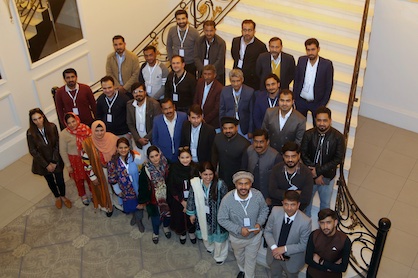


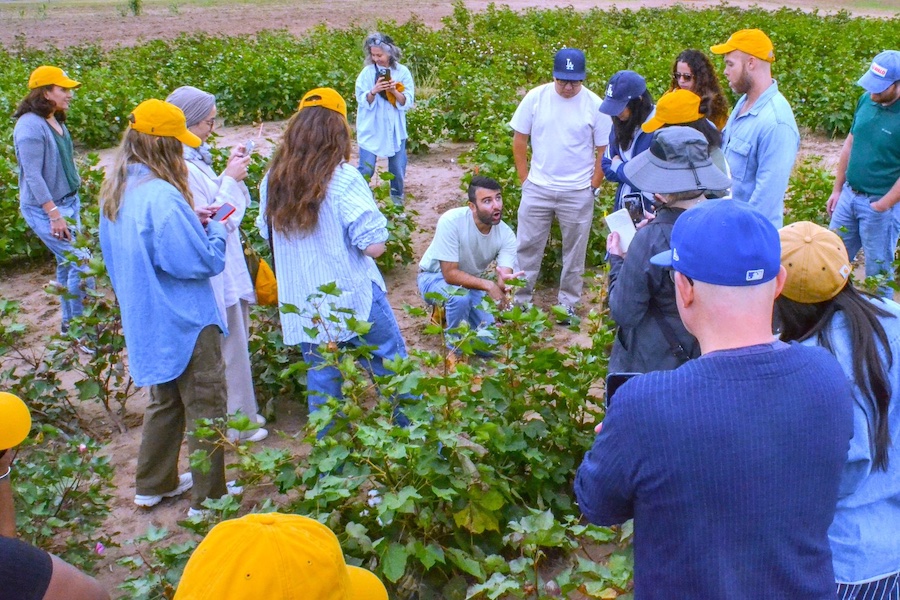
Group photo of workshop participants In Lahore, Pakistan, 2024 © Photo credit: Better Cotton Pakistan. Location: Lahore, Pakistan, 2024.


"This strategic move towards digitalisation reflects Better Cotton’s commitment to enhancing Programme Partners’ efficiency, improving data quality, ensuring data traceability, elevating analytics capacity, and strengthening data governance within the country team and Programme Partners, setting a positive precedent for the future of cotton in the region", says Muhammad Qadeer ul Hussnain, Digital Agriculture Manager at Better Cotton.

More News from Better Cotton

#Raw Materials

Better Cotton Initiative opens enrollment in the US with promising opportunities for producers

Producer enrollment for the US Program of the Better Cotton Initiative (BCI) is open until May 15 for the 2026-2027 season. With over 2,600 members spanning the cotton supply chain and more than 11,000 users of its Better Cotton Platform (BCP) as of 2025, BCI’s standard is implemented in 15 countries and covers one fifth of global cotton production.

#Natural Fibers

Better Cotton Initiative partners with Uzbek government agency to offset certification costs

The Better Cotton Initiative (BCI) has today announced a strategic agreement with Uzbekistan’s Light Industry Agency to increase financial support for cotton farming clusters adopting sustainable agricultural practices.

#Natural Fibers

Better Cotton Initiative surpasses 50% traceable BCI Cotton milestone

Two years since the launch of its traceability solution, the Better Cotton Initiative (BCI) has announced that over 50% of BCI Cotton volumes entering global fashion and textile supply chains are now traceable, deriving from 15 countries.

#Natural Fibers

BCI warns against ‘dangerous dilution’ of EU corporate directives

The approval of the European Commission’s Omnibus I proposal by the European Parliament’s Committee on Legal Affairs, accepting controversial changes to key sustainability directives is of great concern. These changes, namely to the Corporate Sustainability Reporting Directive (CSRD) and the Corporate Sustainability Due Diligence Directive (CSDDD), threaten to significantly dilute business reporting and due diligence obligations.

More News on Raw Materials

#Natural Fibers

Modern testing methods for raw cotton

The 38th International Cotton Conference Bremen will take place from 25 to 27 March 2026 at the Bremen Parliament. This conference has traditionally stood for in-depth expertise and international exchange. The program will focus on technical innovations, market trends, and regulatory frameworks across the entire value chain – from agriculture to the circular economy. With high-profile speakers, the conference is regarded as the key meeting point for the global cotton industry. Today’s focus: Cotton quality and testing methods.

#Natural Fibers

38th International Cotton Conference Bremen: Let´s Talk about Cotton!

The 38th International Cotton Conference Bremen, to be held on 25-27 March 2026 in Bremen’s parliament building on market square, once again sends a powerful signal for professional excellence and international dialogue. The focus is on the latest market trends and technical innovations throughout the entire value chain – from agriculture and quality assurance to processing and the circular economy. With its high-calibre speakers, the conference remains an indispensable forum for anyone involved in shaping the cotton industry scientifically, technically, or economically.

#Natural Fibers

Human Rights Day: Cotton made in Africa reinforces its commitment to ensuring respect for human rights in cotton production

The sustainable cotton standard Cotton made in Africa (CmiA) has always focussed on respect for human rights, including by prohibiting child labour and discrimination. With the new version of the CmiA standard coming into force, AbTF raises requirements for due diligence in the areas of human rights and risk management.

#Research & Development

How innovations drive BASF’s success

“Innovation has always been part of BASF’s DNA. Especially in these volatile times, it is crucial to leverage our innovative strength to develop competitive solutions that differentiate us as a company in our markets and give us a competitive edge,” said Dr. Stephan Kothrade, Member of the Board of Executive Directors of BASF and Chief Technology Officer, at the company’s Research Press Briefing held today. To achieve this, BASF implemented its “Winning Ways” strategy about a year ago with the clear goal of becoming the preferred chemical company to enable its customers’ green transformation.

Latest News

#Nonwoven machines

Three ANDRITZ spunlace lines start operating at Alar Silk Road New Materials in China

Alar Silk Road New Materials and ANDRITZ have successfully commissioned three spunlace lines in crosslapped configuration at Alar’s facility in Aral City, Xinjiang, China.

#Knitting & Hosiery

SHIMA SEIKI to exhibit at GMMSA Expo India

Leading Japanese computerized flat knitting technologist SHIMA SEIKI MFG., LTD. of Wakayama, Japan, together with its Indian sales representative Universal MEP Projects & Engineering Services, Ltd., will participate in the upcoming Garments Machinery Manufacturers & Suppliers Association (GMMSA) Expo India 2026 exhibition to be held in Ludhiana, India next month. Through its lineup at GMMSA, SHIMA SEIKI aims to further strengthen its presence within the Indian market with an exhibit that caters to diverse needs, consisting of seam-free WHOLEGARMENT® knitting technology as well as a brand-new shaping machine with high productivity and excellent cost performance.

#Research & Development

Bio-based fibers with good flame retardancy

Fibers made from bio-based plastics reduce dependence on fossil raw materials and promote the circular economy. The covalent bonding of flame-retardant additives can open the way for these fibers to enter the mass market.

#Nonwovens

ENDURANCE Program: Driving operational sustainability at Magnera

As Magnera enters a new year, the company is reflecting on a key sustainability milestone from 2025: the launch of ENDURANCE, its global, employee-led initiative focused on waste reduction and sustainable innovation. Launched on Earth Day 2025, this initiative has generated more than 250 improvement submissions from team members across Magnera’s global operations, demonstrating strong engagement and shared accountability for sustainability across the organization.

TOP