[pageLogInLogOut]

#Raw Materials

Better Cotton convenes Brazil’s agricultural and textile sectors for unique collaborative action

Better Cotton, the world’s largest cotton sustainability initiative, has launched a new effort uniting key stakeholders across Brazil’s agricultural and textile sectors to build an ambitious vision for more sustainable cotton production.
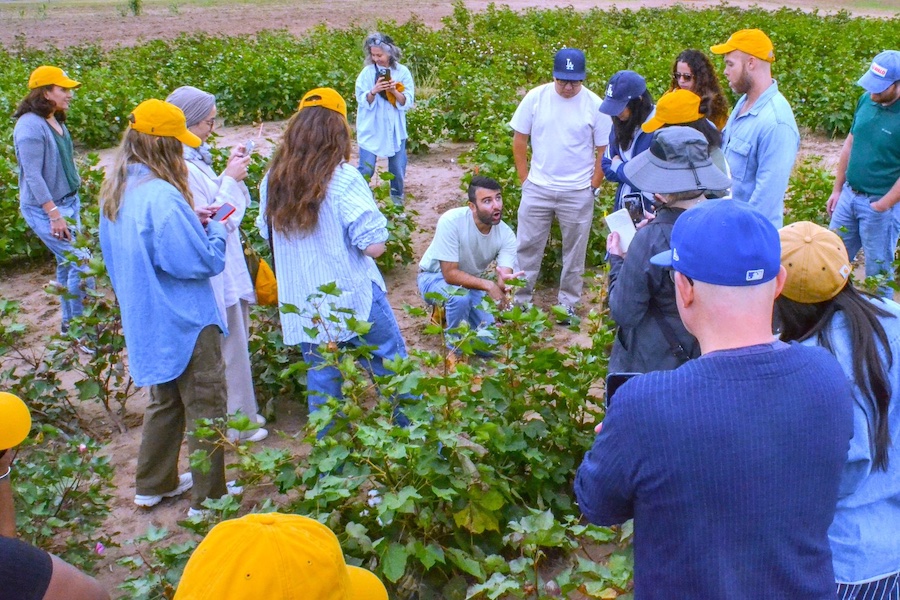
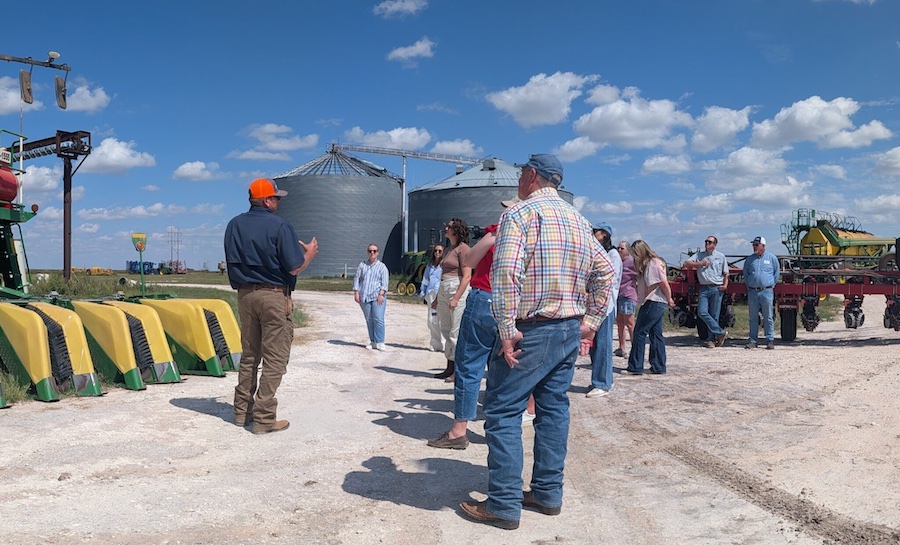
Attendees of Better Cotton’s Multistakeholder Dialogue during an interactive session. © 2025 Photo credit: Better Cotton / Bárbarah Queiroz.


The inaugural Multistakeholder Dialogue, held in Brasília on 26 March, brought together representatives from cotton producers and exporters, textile associations, retailers, brands, civil society, researchers, government agencies, financial institutions, and NGOs. 

Together, participants identified climate resilience, traceability, and greater collaboration as priority areas to shape future actions, help define best practices and tackle systemic agricultural challenges. 

Lena Staafgård, COO at Better Cotton, said: “Brazil’s agricultural industry is vast and is not only a leading producer and exporter of cotton, but of many other commodities. By bringing together key stakeholders across Brazil, we create a platform to overcome mutual challenges and champion best practices. Together, I’m confident we can accelerate change, and I look forward to future meetings.” 

Better Cotton has worked in Brazil’s cotton sector for more than a decade in collaboration with its Strategic Partner ABRAPA, the country’s association of cotton producers. Márcio Antonio Portocarrero, Executive Director at ABRAPA, said: “I see dialogue as a way for us to build a coalition of ideas and solutions together with diverse sectors that often tend to isolate themselves and think differently. This can only lead to progress and improvement.” 

As cotton is grown in rotation with other crops, closer collaboration across sectors is essential to addressing shared challenges and driving best practice adoption. 

This initiative offers Brazilian cotton growers a platform for stronger engagement with industry stakeholders, to gain insights into their work and perceived risks, and for increased innovations to address sector-wide challenges.

Kamila Garantizado, Sustainability Specialist at Brazilian clothing department store Lojas Renner, noted: “This was a highly educational environment, with very active listening. It became very clear that the needs [of others] are relatively similar to ours—like improving communication.” 

Participants committed to continuing their collaboration and will reconvene in the coming months to drive further progress towards a more sustainable cotton production in Brazil.

More News from Better Cotton

#Raw Materials

Better Cotton Initiative marks certification anniversary with progress update and accreditation

One year since becoming a certification scheme, the Better Cotton Initiative (BCI) has announced that more than 3,000 supply chain actors have been certified. At farm level, more than 30% of farms and producer units supplying BCI Cotton have received a positive audit outcome.

#Raw Materials

Better Cotton Initiative opens enrollment in the US with promising opportunities for producers

Producer enrollment for the US Program of the Better Cotton Initiative (BCI) is open until May 15 for the 2026-2027 season. With over 2,600 members spanning the cotton supply chain and more than 11,000 users of its Better Cotton Platform (BCP) as of 2025, BCI’s standard is implemented in 15 countries and covers one fifth of global cotton production.

#Natural Fibers

Better Cotton Initiative partners with Uzbek government agency to offset certification costs

The Better Cotton Initiative (BCI) has today announced a strategic agreement with Uzbekistan’s Light Industry Agency to increase financial support for cotton farming clusters adopting sustainable agricultural practices.

#Natural Fibers

Better Cotton Initiative surpasses 50% traceable BCI Cotton milestone

Two years since the launch of its traceability solution, the Better Cotton Initiative (BCI) has announced that over 50% of BCI Cotton volumes entering global fashion and textile supply chains are now traceable, deriving from 15 countries.

More News on Raw Materials

#Raw Materials

Esquel Group adds two new extra-long staple cotton varieties approved

Esquel Group’s Xinjiang Research & Development Center has successfully developed two new Sea Island cotton (Extra-Long-Staple cotton, ELS cotton) varieties named “Yuan Loong 37” and “Yuan Loong 42,” which have been officially approved and granted registration numbers. Both varieties have also obtained Plant Variety Rights certificates, marking another significant breakthrough for the Group in cotton breeding and commercial application.

#Raw Materials

Aid by Trade Foundation reaches new milestones in supply chain transparency

The Aid by Trade Foundation (AbTF) is reaching new milestones as it leads the way towards greater physical traceability for Cotton made in Africa® (CmiA) cotton. With around 700 suppliers and producers in a total of 25 countries, the Aid by Trade Foundation has reached a new record number of partners who can trace CmiA cotton from the product back to its origin. This is more than double the previous year’s figure.

#Raw Materials

Modern testing methods for raw cotton

The 38th International Cotton Conference Bremen will take place from 25 to 27 March 2026 at the Bremen Parliament. This conference has traditionally stood for in-depth expertise and international exchange. The program will focus on technical innovations, market trends, and regulatory frameworks across the entire value chain – from agriculture to the circular economy. With high-profile speakers, the conference is regarded as the key meeting point for the global cotton industry. Today’s focus: Cotton quality and testing methods.

#Raw Materials

2026 production plan set for a record 10 metric tons of recombinant spider silk cocoon per month

Kraig Biocraft Laboratories, Inc. (OTCQB: KBLB) (“the Company”, “Kraig Labs”, or “Kraig’s”), a world leader in spider silk technology*, today announced its 2026 production plan that will drive explosive growth and establish a new global benchmark for spider silk manufacturing.

Latest News

#Weaving

Itema America acquires Palmetto Loom Reed, strengthening local manufacturing and service in the U.S.

Itema America, the U.S. subsidiary of Italy-based Itema Group, has acquired – through an Assets Purchase Agreement – Palmetto Loom Reed, a Greenville, South Carolina-based manufacturer of weaving reeds and one of the last remaining domestic producers of these precision components in the United States.

#Recycled_Fibers

Reju announces site selection for French Regeneration Hub in Lacq advancing Europe’s circular textile infrastructure

Reju, the textile-to-textile regeneration company based in France, announces the site selection for an industrial sized Regeneration Hub, in Lacq, in the Pyrénées-Atlantiques, on the Induslacq platform. Reju, a Technip Energies owned company, is deepening its roots in France through the development of this new Regeneration Hub.

#Functional Fabrics

lululemon introduces Unrestricted Power™ — A new sensation for strength training

lululemon (NASDAQ: LULU) has unveiled Unrestricted Power™, a new innovation platform engineered for heavy lifts and demanding gym sessions. The assortment, which launches in North America, is backed by thousands of hours of research and development, providing secure support without compromising comfort and mobility, enabling a distraction-free fit built to match every move.

#Natural Fibers

Merino wool moves into China’s high-performance sportswear market

China’s leading sportswear brands are beginning to treat Merino wool not as a lifestyle material, but as a performance input as natural fibres move from the margins of sportswear into elite technical applications. That shift is increasingly evident in the material strategies of major domestic groups such as ANTA.

TOP