[pageLogInLogOut]

#Raw Materials

Leadership workshop in India brings together female field staff to promote gender inclusion
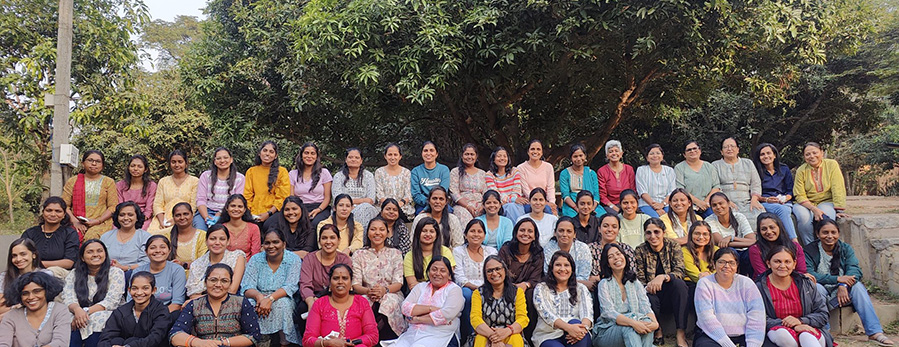
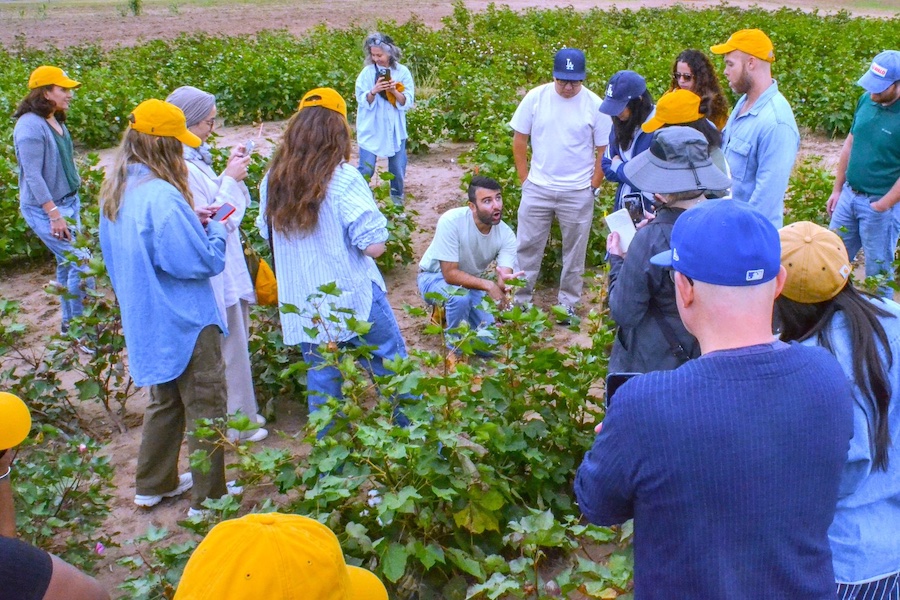
(c) 2024 Better Cotton - Bangalore, India, 2024 - Better Cotton organises leadership workshop to promote gender inclusion
In January, Better Cotton India organised its first ever residential leadership workshop for female field staff, with the aim of assessing gender influence and leadership, and examining how the organisation can enhance the overall experience of women in Better Cotton projects.

Better Cotton collaborated with training coordinators Nandini Rao and Chaitali Haldar to put on the event at the Visthar Conference and Retreat Centre in Bangalore. Participants were given a safe space to share and encouraged to explore their personal experiences and reflect on the impact of gender. They delved into topics like sociogramming (mapping the relationships within a group); the politics of language and food; inclusion; intersectionality; power dynamics; and patriarchal traditions across the country.

More than 50 people attended, representing 11 different Better Cotton Programme Partners from across India and roles that ranged from Producer Unit Managers, Coordinators, and Gender Leads from various projects. 

At Better Cotton, we group smallholder and medium cotton farmers into ‘Producer Units’ (PUs) – groups of farms each managed by a Producer Unit Manager.

Multilingual training leaders and participants facilitated sharing and understanding despite language differences. Open discussions showcased the diverse experiences of women from different regions, highlighting differences and similarities. Participants were encouraged to share their perspectives in group sessions through tools such as roleplay, poems and narration. The eco-sanctuary setting facilitated movement and informal interactions, creating an engaging environment.

This initiative helps enable a more holistic approach to gender inclusion and supports Better Cotton’s cross-cutting priority of gender equality in its Principles & Criteria. The Better Cotton India team is excited to develop similar learning opportunities and platforms for partners and farming communities, irrespective of gender, to collectively work towards greater gender inclusion within our projects.
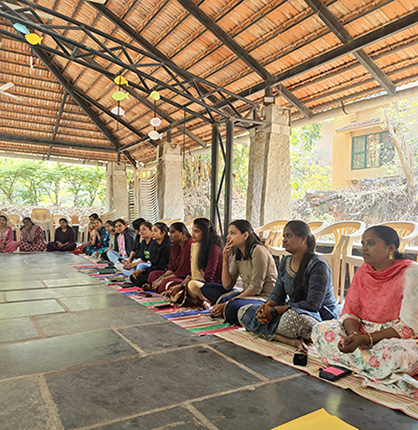
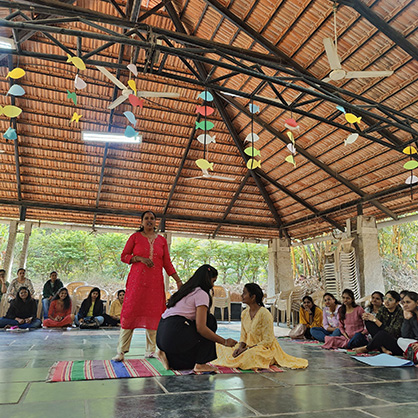
(c) Better Cotton - Bangalore, India, 2024 - Workshop participants.


More News from Better Cotton

#Raw Materials

Better Cotton Initiative marks certification anniversary with progress update and accreditation

One year since becoming a certification scheme, the Better Cotton Initiative (BCI) has announced that more than 3,000 supply chain actors have been certified. At farm level, more than 30% of farms and producer units supplying BCI Cotton have received a positive audit outcome.

#Raw Materials

Better Cotton Initiative opens enrollment in the US with promising opportunities for producers

Producer enrollment for the US Program of the Better Cotton Initiative (BCI) is open until May 15 for the 2026-2027 season. With over 2,600 members spanning the cotton supply chain and more than 11,000 users of its Better Cotton Platform (BCP) as of 2025, BCI’s standard is implemented in 15 countries and covers one fifth of global cotton production.

#Natural Fibers

Better Cotton Initiative partners with Uzbek government agency to offset certification costs

The Better Cotton Initiative (BCI) has today announced a strategic agreement with Uzbekistan’s Light Industry Agency to increase financial support for cotton farming clusters adopting sustainable agricultural practices.

#Natural Fibers

Better Cotton Initiative surpasses 50% traceable BCI Cotton milestone

Two years since the launch of its traceability solution, the Better Cotton Initiative (BCI) has announced that over 50% of BCI Cotton volumes entering global fashion and textile supply chains are now traceable, deriving from 15 countries.

More News on Raw Materials

#Raw Materials

ICAC projects slight decline in production, relative stability for consumption

Global cotton production is projected to decline by 4% in the 2026/27 season to 24.8 million tonnes, while consumption is expected to remain relatively steady at 25.0 million tonnes, according to the March 2026 edition of Cotton This Month.

#Raw Materials

Beyond the wardrobe – innovative cotton takes the spotlight

Cotton can do more – a lot more. Cutting-edge textiles and high-tech products made from 100% cotton prove just how powerfully performance and sustainability can come together. That very surge of innovation is front and centre at the 38th Bremen Cotton Conference, taking place March 25–27, 2026, at Bremen’s Parliament on the historic market square – culminating in a bold and dedicated closing session on Friday. In the spotlight: performance upgrades for pure cotton, smart strategies for circular textile waste solutions, and pioneering concepts for demanding technical applications. From natural fibre–reinforced composites to highly effective flame-retardant solutions, cotton steps out of the closet and shows the future potential woven into every fibre.

#Raw Materials

Esquel Group adds two new extra-long staple cotton varieties approved

Esquel Group’s Xinjiang Research & Development Center has successfully developed two new Sea Island cotton (Extra-Long-Staple cotton, ELS cotton) varieties named “Yuan Loong 37” and “Yuan Loong 42,” which have been officially approved and granted registration numbers. Both varieties have also obtained Plant Variety Rights certificates, marking another significant breakthrough for the Group in cotton breeding and commercial application.

#Raw Materials

Aid by Trade Foundation reaches new milestones in supply chain transparency

The Aid by Trade Foundation (AbTF) is reaching new milestones as it leads the way towards greater physical traceability for Cotton made in Africa® (CmiA) cotton. With around 700 suppliers and producers in a total of 25 countries, the Aid by Trade Foundation has reached a new record number of partners who can trace CmiA cotton from the product back to its origin. This is more than double the previous year’s figure.

Latest News

#Composites

Teijin Carbon advances sustainability leadership with EcoVadis, CDP reporting and expanding Tenax Next™ sustainable carbon fiber portfolio

As the composites industry intensifies its focus on measurable environmental, social and governance (ESG) progress, Teijin Carbon announces significant milestones that advance its position among the sector’s most sustainability-driven material suppliers. Teijin Carbon Europe achieved an EcoVadis score of 72/100 in the 2025 assessment, ranking among the top 15% of evaluated companies in its industry.

#Knitting & Hosiery

KARL MAYER (China) celebrates its 30th anniversary

On February 6, KARL MAYER (China) celebrated the new year and its 30th anniversary. Employees and the management team at the Changzhou location, as well as representatives from management in Germany, Italy, and Hong Kong, were invited to the festivities. A special highlight was the visit by Lutz Wolf, CEO of KARL MAYER.

#Digital Printing

UK Manufacturer Basic Prints commits to digital-first production model with dual investment in Kornit Digital’s Apollo

Kornit Digital, a global leader in sustainable, on-demand digital fashion and textile production technologies, today announced that UK clothing manufacturer Basic Prints has expanded its digital production capacity with a second Kornit Apollo Direct-to-Garment (DTG) system. This marks a strategic shift supporting Basic Prints’ digital-first manufacturing model.

#Spinning

Development of bio-based polyethylene fibers for textile applications – BB Engineering partici-pates in the bioPEtex research project

In the German research project bioPEtex, BB Engineering (BBE) is working with other partners to develop textiles made from 100% bio-based polyethylene (PE). The aim is to make use of this poly-mer, which has hardly been used in the chemical fiber industry to date. BBE is contributing its spinning and texturizing expertise and developing the texturing process on an industrial scale. The first promising results are already available – opening up new opportu-nities for sustainable and economically attractive applications in the textile industry.

TOP