[pageLogInLogOut]

#Raw Materials

Focus on the International Cotton Industry
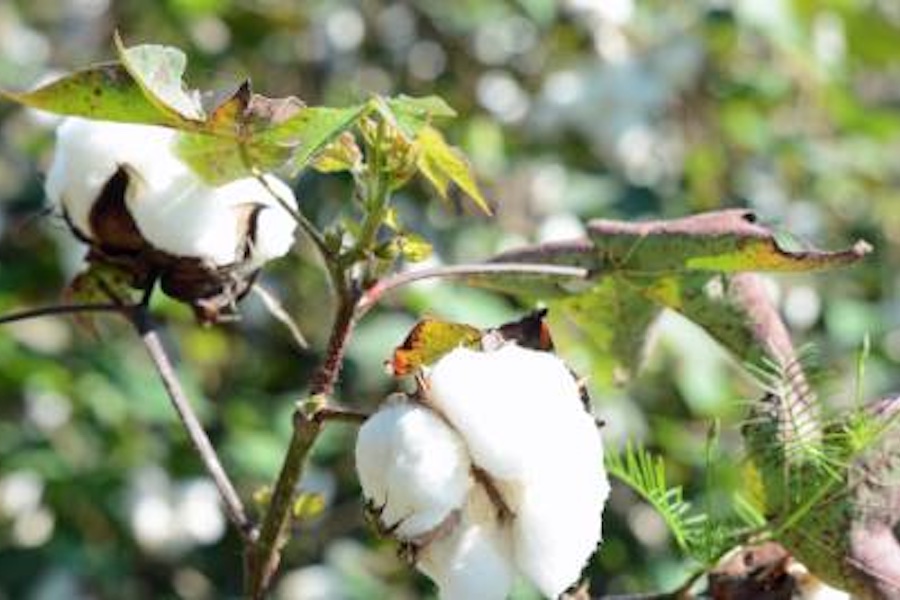
(c) 2024 Nick Robinson - Cotton Australia
The International Cotton Conference starts in Bremen in just a few weeks. With approximately 400 people attending, for the 37th time the Hanseatic city of Bremen will become a focal point for today’s global cotton industry and its supply chain, from cotton cultivation through to the end product.

Delegates will be evenly split across the areas of cotton farming, processing, retail and the textile trade, industry service providers and, as always, research. The conference is being organised by the Bremen Cotton Exchange and Fibre Institute Bremen.

This year, the venue is not the historic Town Hall, but the city’s modern parliament building, known as the Haus der Bürgerschaft, right next to the Bremen Cotton Exchange. 

Reflecting on the state of the supply chain as part of eleven sessions with informative lectures and first-rate discussion groups, the conference will cover a range of topics offering an insight into the current situation in the industry, while focusing on the challenges and presenting forward-looking solution models.

Cotton is cultivated in around 80 countries worldwide, covering everything from small-scale farming to industrial structures. A large part of these are developing countries in which agriculture is still the main source of income for many people. Anyone who is or would like to be involved in the global cotton industry, simply must have knowledge of the economic and structural relationships of the trade in individual countries.

What is meant by progressive cotton production?

A more focused look at the considerable progress being made in the development of cotton farming in growth regions will be provided by four informative lectures, including a session on Cotton Production in Growing Regions.

USA: David Albers, Bayer USA, will inform attendees about significant developments in the use of various genetically modified types of cotton in the US in the period from 2008 to 2022. The focus will be on analysing the progress in relation to fibre length. This is a key factor for the manufacture of high-quality yarns in the spinning mills.

China: Jingyan Wei from the Cotton Research Institute at the Chinese Academy of Agricultural Sciences in Anyang, will present the results of tests on various types of cotton in the form of 266 samples taken from the country’s main cotton growing regions. These were analysed using various test methods with regard to quality standards such as spinnability, uniformity of length, and strength. The findings confirmed that the quality of the samples met with the expectations of China’s spinning sector.


Uzbekistan: Rinat Gulyaev from the Cotton Science and Innovation Centre in Tashkent will speak about the extensive transformation of the Uzbek cotton sector as the basis of an ambitious textile export strategy. This includes the use of a monitoring system to check the growth process of seed cotton and the introduction of drip irrigation systems, as well as advanced developments in the field of organic agriculture and an increase in the use of machine harvesting. Also noteworthy are the investments in new instruments for testing cotton quality, and mechanisms for raw material traceability.

Greece: Chris Cavalaris from the University of Thessaly in Volos and Maria Stenull from the BASF Sustainability Team will report on findings from a pilot project on regenerative cultivation practices for sustainable and traceable cotton production in Greece. The University of Thessaly worked with selected Greek cotton farmers from three growing regions and the agricultural division of BASF to implement regenerative methods for producing certified, non-genetically modified cotton. This focused on comparing conventional farming with regenerative methods in relation to their life cycle analysis. During the conference, findings will be presented on developments regarding CO2 footprint, yields and other parameters between 2022 and 2023.

Online access to the cotton conference

Delegates who will not be travelling to Bremen and have therefore opted to participate online may follow the conference on the tried and tested online platform. Here, all participants will have access to every conference session, break-out session, and poster presentation. Those attending the conference in person will also be able to watch the sessions online and use the variety of networking tools available.

The Bremen Cotton Exchange team will provide detailed information about other programme topics at the International Cotton Conference in further press releases in the run-up to the conference. All information is regularly updated and can be found on the conference website at www.cotton-conference-bremen.de.

Registration is now open

Participants can register easily at any time online at https://cotton-conference-bremen.de/registration/


More News from Bremer Baumwollbörse

#Raw Materials

A Powerful Opening: Global thought leaders launch the International Cotton Conference Bremen

The International Cotton Conference Bremen will open on 25 March 2026 in the Parliament building of the Free Hanseatic City of Bremen with a keynote session of exceptional calibre. Distinguished international experts will set the stage for the conference by offering incisive perspectives on the most pressing challenges and the defining trends shaping the future of the global cotton trade. Their insights will span a broad spectrum — from geopolitically driven disruptions affecting global supply chains to the opportunities emerging from innovation-led agriculture capable of supporting a growing world population. Together, these opening keynotes will frame the dialogue of the conference, highlighting both the complexity of today’s market environment and the pathways toward a resilient and forward-looking cotton sector.

#Natural Fibers

Beyond Cotton: Natural Fibres in the Spotlight at the Bremen Cotton Conference - Branded by DNFI

Climate targets, fragile supply chains, and rising regulatory requirements are fundamentally changing the perspective of the textile industry - the focus is increasingly shifting toward the base material. Not only cotton, but natural fibres are gaining significant importance: they stand out not only because of their outstanding functional properties, but also because they make a valuable contribution to the bioeconomy and responsible product development.

#Raw Materials

Beyond the wardrobe – innovative cotton takes the spotlight

Cotton can do more – a lot more. Cutting-edge textiles and high-tech products made from 100% cotton prove just how powerfully performance and sustainability can come together. That very surge of innovation is front and centre at the 38th Bremen Cotton Conference, taking place March 25–27, 2026, at Bremen’s Parliament on the historic market square – culminating in a bold and dedicated closing session on Friday. In the spotlight: performance upgrades for pure cotton, smart strategies for circular textile waste solutions, and pioneering concepts for demanding technical applications. From natural fibre–reinforced composites to highly effective flame-retardant solutions, cotton steps out of the closet and shows the future potential woven into every fibre.

#Raw Materials

Modern testing methods for raw cotton

The 38th International Cotton Conference Bremen will take place from 25 to 27 March 2026 at the Bremen Parliament. This conference has traditionally stood for in-depth expertise and international exchange. The program will focus on technical innovations, market trends, and regulatory frameworks across the entire value chain – from agriculture to the circular economy. With high-profile speakers, the conference is regarded as the key meeting point for the global cotton industry. Today’s focus: Cotton quality and testing methods.

More News on Raw Materials

#Raw Materials

Textile Exchange publishes cotton Life Cycle Assessment study to strengthen impact data

Textile Exchange has published the first in a series of seven Life Cycle Assessment (LCA) studies designed to improve the quality and robustness of environmental impact data for raw material production across the fashion, textile, and apparel industry. The first LCA study focuses on cotton and addresses critical data gaps and methodology variability through new high-quality data across key producing countries. The study includes organic, regenerative, recycled, and country averages for conventional cotton production systems, providing a clearer picture of the associated environmental impact.

#Raw Materials

Fashion for Good mobilises industry to adopt mass balance attribution and accelerate decarbonisation

Fashion for Good launches today the Mass Balance Demonstrator project, a collaborative industry initiative to implement and scale the mass balance attribution (MBA) chain-of-custody model for biomass-attributed PET in textile applications. The project represents a concrete step toward accelerating brand-driven decarbonisation across the apparel value chain.

#Raw Materials

The 83rd Plenary Meeting: Reports from the ICAC Secretariat

Every year, one of the most anticipated sessions at the International Cotton Advisory Committee's (ICAC) Plenary Meeting is the Reports from the Secretariat — and the 83rd edition in Bremen, Germany, did not disappoint.

#Raw Materials

Lenzing Group positions bio‑based materials as a strategic asset for Europe’s economic security

The Lenzing Group, a leading supplier of regenerated cellulose fibers for the textile and nonwovens industries, hosted a high‑level roundtable in Brussels to discuss how bio‑based materials can strengthen Europe’s economic security and support the shift toward a fossil‑free future. Organized in cooperation with Euractiv, the event brought together representatives of the European Commission, the UK Mission to the EU, academia, civil society, and industry.

Latest News

#Research & Development

Textile cascade filter for removing microplastics from wastewater

Microplastics are now found almost everywhere, even in remote regions of Antarctica. They enter the human body through the food chain. Studies indicate that microplastics may have negative effects on the human health.

#Textile processing

Jeanologia showcases the future of product development

Jeanologia is showcasing how software is transforming product development in the fashion industry at PI Apparel Europe: The Fashion Technology Show, taking place on March 30–31 in London.

#Techtextil 2026

Groz-Beckert showcases cross-segment innovations for technical textiles in Frankfurt

From April 21 to 24, 2026, Groz-Beckert will present its latest innovations and solutions across the product areas of knitting, weaving, nonwovens and sewing at Techtextil 2026 in Frankfurt (Hall 12, Booth B90).

#Techtextil 2026

VANDEWIELE Group at Techtextil 2026 – Textile innovations together

The VANDEWIELEGroup will showcase its latest technologies for technical textiles at Techtextil 2026 in Frankfurt from April 21–24 (Hall 12.0, Stand C21). As a global leader in textile machinery, the group brings together specialised brands to support the evolving demands of high-performance textile applications. Visitors will discover solutions in laboratory testing, yarn joining, yarn feeding and thread tension monitoring, designed to create measurable value across the textile value chain.

TOP