[pageLogInLogOut]

#Raw Materials

World Cotton Day 2024
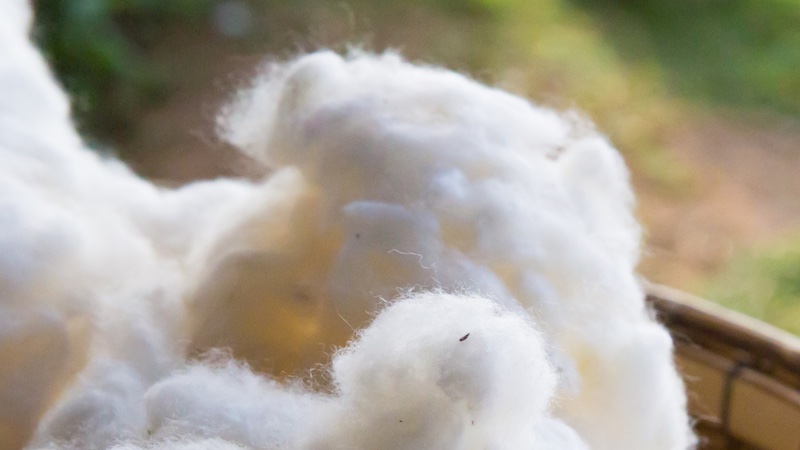
Cotton has the potential to shape a more sustainable world. It is more than just an agricultural crop. For around 100 million farmers it is their livelihood, and for many a cultural asset that dates back to the beginnings of human civilisation. Six years ago, the United Nations followed a proposal by the ‘Cotton Four’, the West African cotton-growing countries Benin, Burkina Faso, Chad and Mali, to declare 7 October as World Cotton Day.
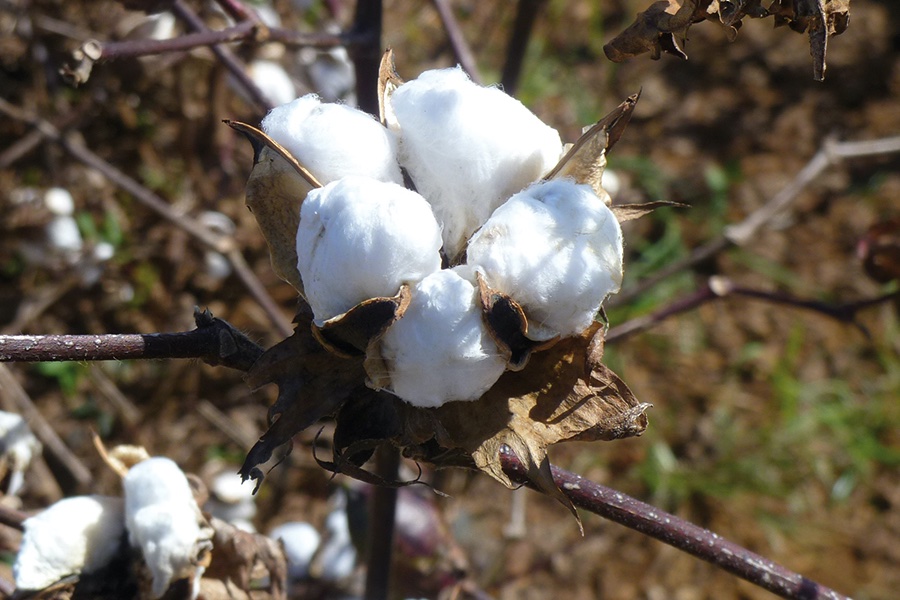
Harvested cotton © 2024 Bremer Baumwollböre / canva


This year, the day will be organised by the West African country of Benin. The aim is to raise awareness of the benefits of this natural resource and its potential for global economic development.

World Cotton Day was first launched in 2019 at the headquarters of the World Trade Organisation (WTO) in Geneva, together with four other founding organisations, the International Cotton Advisory Committee (ICAC), the International Trade Centre (ITC), the United Nations Food and Agriculture Organisation (FAO) and the United Nations Conference on Trade and Development (UNCTAD). The Bremen Cotton Exchange also regularly participates in World Cotton Day.

The motto of World Cotton Day is ‘Cotton for good’. International events aim to focus attention on the economic importance of cotton and the achievements of the people working in the global cotton and textile industry.

This year, more than 400 stakeholders from the global cotton community will come together in Benin to discuss the many advantages of cotton and its development potential. This year’s themes will include regenerative farming and how to promote biodiversity, the role of women (who make up almost half of the world’s cotton farmers) in cotton production, and the competitiveness of African smallholders.

Cotton – more than just a T-shirt

Cotton accounts for the largest share of all natural fibres. It is used daily not just for clothing and home textiles, but also for the production of technical textiles such as filter materials and composites, and in the manufacture of ropes, nets and insulating materials, as well as in medical products. In addition, the cotton seed kernels are processed to make cottonseed oil and flour, which are used in the food, cosmetics and animal feed industries. In the paper industry, the raw material is used to improve counterfeit protection in the production of banknotes.

Cotton nourishes

As a crop, cotton represents an important livelihood for millions of small farmers and their families, providing employment and income. In some of the least developed countries in the world, it helps to alleviate poverty and offers people stable and decent jobs. The ICAC estimates that each ton of cotton fibre provides a year-round income for around five people.

Cotton is kind to the environment

While it grows, cotton binds and removes carbon from the atmosphere. Unlike synthetic alternatives, cotton does not pollute our oceans as it is biodegradable. As a crop that tolerates drought, it can also grow in places where no other crop can thrive.

Cotton is driving industrialisation in Africa

As the driving force behind World Cotton Day, the Cotton Four countries are among the leading cotton producers in Africa. The contribution that cotton production makes to their respective gross domestic products and the share of cotton exports in total agricultural export revenues are among the highest in the world. The cotton industry is a central pillar of economic and social development in Benin, Burkina Faso, Chad and Mali. Cotton farming is a key sector for economic development and poverty alleviation, especially for their rural communities.

The governments of the Cotton Four countries have taken measures to strengthen the cotton sector. This includes aid for the procurement of seed and fertiliser as well as investments in the modernisation of agriculture. In the long term, the cotton sector is expected to benefit from further government investment and international partnerships, and industrialisation is expected to succeed.

Supported by the United Nations Industrial Development Organisation (UNIDO) and the World Trade Organisation (WTO), local value creation in the cotton sector is expected to promote the development and growth of a comprehensive and sustainable textile industry. The aim is to promote the development and expansion of fair and sustainable local cotton processing and thus support secure jobs and economic development in the regions.


More News from Bremer Baumwollbörse

#Natural Fibers

38th International Cotton Conference Bremen launches registration and unveils key topics

Participants can now register online for the 38th International Cotton Conference Bremen, which will be held on 25-27 March 2026 at the Haus der Bürgerschaft parliament building on market square. All visitors can look forward to a high-calibre conference programme, numerous additional meetings and a valuable exchange of knowledge and information. The comprehensive range of topics covering the entire value chain will provide practical expertise, address current developments, answer key industry questions, and provide new impetus for the future.

#Natural Fibers

151st General Assembly of the Bremen Cotton Exchange

Economic change and personnel decisions were the dominant themes on the agenda of the Annual General Assembly of the Bremen Cotton Exchange on 26 June 2025. During the meeting, the new Executive Committee and Board of Directors of the raw material association, which is now almost 153 years old, were elected. Fritz. A. Grobien will take over as President.

#Natural Fibers

The 151st General Meeting of the Bremen Cotton Exchange on 26 June 2025

The General Assembly of the Bremen Cotton Exchange will take place in Bremen and online on 26 June 2025. All members, partners and friends of the association are cordially invited to attend this important event.

#Raw Materials

Cotton-supported study highlights potential dangers of microplastics in synthetic fibers

Microplastics are ubiquitous and evidence of serious harm is increasing. Studies have linked microplastics and nanoplastics to heart attacks, strokes and deaths, and microplastics have been found in the bone marrow of leukaemia patients and in the brains of dementia patients.

More News on Raw Materials

#Natural Fibers

ICAC to collaborate with Uzbekistan and Bizpando on regenerative agriculture

The Government of Uzbekistan has allocated 55,000 hectares of land to implement a regenerative agriculture program for cotton as part of a collaborative project with the International Cotton Advisory Committee (ICAC) and Bizpando, a company with a a blockchain-based internet platform designed to ensure supply chain compliance.

#Natural Fibers

World Cotton Trade declined 4.1% in 2024/25, according to ICAC's 2025 World Cotton Trade Report

Washington, DC — The International Cotton Advisory Committee (ICAC) has released the 2025 World Cotton Trade Report, which covers trade developments in raw cotton since 1980. An annual publication, it provides analysis of world trade by region; import/export projections by country; matrices of trade flows; and seasonal estimates of export commitments to date.

#Natural Fibers

BCI warns against ‘dangerous dilution’ of EU corporate directives

The approval of the European Commission’s Omnibus I proposal by the European Parliament’s Committee on Legal Affairs, accepting controversial changes to key sustainability directives is of great concern. These changes, namely to the Corporate Sustainability Reporting Directive (CSRD) and the Corporate Sustainability Due Diligence Directive (CSDDD), threaten to significantly dilute business reporting and due diligence obligations.

#Natural Fibers

ICAC releases 2025 edition of the Specialty Cotton Report

The ICAC has released the newest edition of the Specialty Cotton Report, a free publication that was created in 2023 to highlight the many new "identity cotton programs" that have been emerging around the world, in addition to covering long-staple (LS) and extra-long staple (ELS) cotton. For the ICAC's purposes, "specialty cotton" refers to any cotton that is remarkable in some way — LS, ELS, or falls under a specific identity program.

Latest News

#Recycling / Circular Economy

Advanced Recycling Conference 2025 fuels innovation across key waste streams

The Advanced Recycling Conference (ARC) 2025 brought together nearly 220 experts from 28 countries to spotlight pioneering advancements and foster industry collaboration in recycling across diverse waste streams including plastics, textiles, automotive and other materials.

#Dyeing, Drying, Finishing

Navis TubeTex announces U.S. partnership with Icomatex

Navis TubeTex, a global leader in advanced dyeing and finishing machinery solutions, is pleased to announce a new partnership with Icomatex (www.icomatex.com), a respected European manufacturer of high-quality stenters and textile finishing equipment. Under this agreement, Navis TubeTex will exclusively represent the Icomatex stenter line in the United States.

#Recycling / Circular Economy

ADVANSA launches ADVA®tex: A new step toward textile-to-textile recycling

ADVANSA has introduced ADVA®tex, a new filling fibre made entirely from recycled pre-consumer textile waste, positioning the material as a significant step forward in textile-to-textile (T2T) recycling. The fibre is designed for use in duvets, pillows, mattresses, and furniture applications and is available in three versions.

#Knitting & Hosiery

KARL MAYER celebrates 35 years of EL pattern drive

KARL MAYER is celebrating an anniversary this year: on 30 November 1990, the first warp knitting machine with electronic guide bar control, the KS 4 EL, was delivered – another milestone for patterning. As early as 1980, the SU gearbox with the MRS42SU had initiated the transition from mechanical chains to digital data.

TOP