[pageLogInLogOut]

#Raw Materials

‘All ICAC’ Edition of the review focusses on textiles & sustainability

In the newest edition of ‘Cotton: Review of the World Situation’, Editor and Economist Lorena Ruiz turned to her colleagues at the ICAC to address the intersection of two critical topics for cotton: textiles and sustainability.

Executive Summary

The just-released edition of ‘Cotton: Review of the World Situation’ includes:

  • An article from ICAC Economist Ms Lorena Ruiz on the global textiles and apparel trade,
  • An article from ICAC Head of Textiles Mr Kanwar Usman on the Product Environmental Footprint,
  • An article from ICAC Communications Director Mike McCue on the global textile supply chain, and
  • The official Final Statement from the ICAC’s 80th Plenary Meeting.


In addition to authoring an article herself, ‘Global Textiles and Apparel Trade: A Post-Pandemic Review’, Ms Ruiz secured articles from:

  • Mr Kanwar Usman, ICAC Head of Textiles, who wrote a deep-dive analysis of the Product Environmental Footprint (PEF), a life-cycle assessment (LCA) methodology developed by the European Commission's Joint Research Center (JRC), and
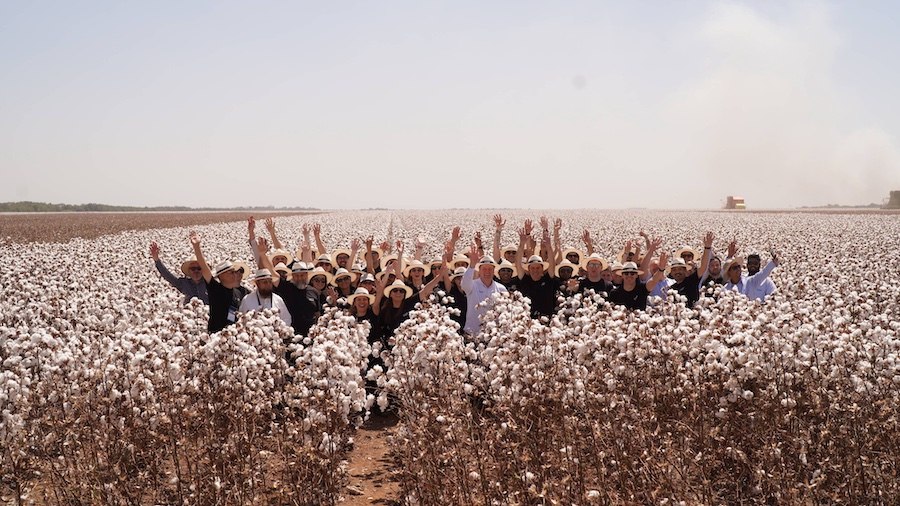
  • ICAC Communications Director Mr Mike McCue, who provided an overview of the 2022 World Café, which convened 27 experts from around the world to discuss ‘The Evolving Global Textile Supply Chain’.

The final entry in the 13-page issue is the Final Statement of the ICAC’s 80th Plenary Meeting, which was held virtually from 29 November 2022 – 1 December 2022 with the theme, ‘Driving Sustainability through Innovation and Leadership’.


‘This issue of the Review reflects the recent and intensifying focus of the ICAC on textiles, as evidenced by the hiring of the first-ever Head of Textiles, Kanwar Usman’, Ms Ruiz said. ‘And while sustainability has always been a major area of emphasis for the ICAC, its importance to all stakeholders in the cotton industry is growing rapidly. Between the three staff-written articles and the Final Statement, readers will have a good sense of what the ICAC has been focussing on recently and that will only increase as we move forward’.


To read this free issue of the Review, please click:

https://tinyurl.com/577m7ja7.

More News from International Cotton Advisory Committee (ICAC)

#Europe

ICAC to support European Commission on pending PEF legislation

The International Cotton Advisory Committee (ICAC) is proud to announce that it has been included as a member of the European Commission’s Technical Advisory Board (TAB) on the Product Environmental Footprint methodology. The Commission developed the Product Environmental Footprint (PEF) to assess and communicate the life cycle environmental performance of products and organizations.

#Natural Fibers

ICAC to collaborate with Uzbekistan and Bizpando on regenerative agriculture

The Government of Uzbekistan has allocated 55,000 hectares of land to implement a regenerative agriculture program for cotton as part of a collaborative project with the International Cotton Advisory Committee (ICAC) and Bizpando, a company with a a blockchain-based internet platform designed to ensure supply chain compliance.

#Natural Fibers

Bangladesh becomes World's largest importer in 2024/25 after China cuts imports by 65% to 1.1 million tonnes

As we prepare to turn the calendar on 2025, world cotton lint production currently is estimated to be about 25.4 million tonnes — roughly the same as the last season — surpassing the world cotton lint consumption by 392,000 tonnes.

#Natural Fibers

ICAC announces postponement of the 83rd Plenary Meeting in Tanzania

Due to unforeseen circumstances arising from the recent developments in Tanzania, the ICAC has announced that its upcoming 83rd Plenary Meeting has been postponed. Scheduled for Nov. 17-20 in Mwanza, the delay was recommended by Tanzania, and the decision was made out of an abundance of caution, prioritizing the safety and well-being of all participants.

More News on Raw Materials

#Raw Materials

Modern testing methods for raw cotton

The 38th International Cotton Conference Bremen will take place from 25 to 27 March 2026 at the Bremen Parliament. This conference has traditionally stood for in-depth expertise and international exchange. The program will focus on technical innovations, market trends, and regulatory frameworks across the entire value chain – from agriculture to the circular economy. With high-profile speakers, the conference is regarded as the key meeting point for the global cotton industry. Today’s focus: Cotton quality and testing methods.

#Raw Materials

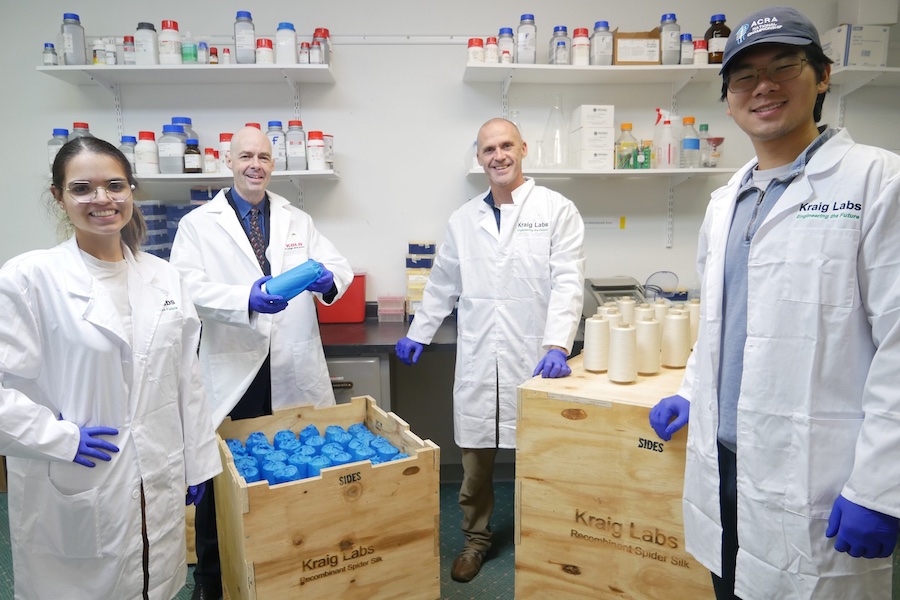
2026 production plan set for a record 10 metric tons of recombinant spider silk cocoon per month

Kraig Biocraft Laboratories, Inc. (OTCQB: KBLB) (“the Company”, “Kraig Labs”, or “Kraig’s”), a world leader in spider silk technology*, today announced its 2026 production plan that will drive explosive growth and establish a new global benchmark for spider silk manufacturing.

#Man-Made Fibers

Lenzing AG to become majority owner of TreeToTextile AB and accelerates industrialization of new fibers

The Lenzing Group is taking another strategic milestone by acquiring a controlling majority in the Swedish innovation company TreeToTextile AB. This step strengthens Lenzing’s position as a leading provider of sustainable, wood‑based specialty fibers and expands its innovation pipeline with a highly scalable, patent‑protected technology platform. The transaction is executed through the issuance of new shares.

#Raw Materials

Better Cotton Initiative marks certification anniversary with progress update and accreditation

One year since becoming a certification scheme, the Better Cotton Initiative (BCI) has announced that more than 3,000 supply chain actors have been certified. At farm level, more than 30% of farms and producer units supplying BCI Cotton have received a positive audit outcome.

Latest News

#Sustainability

Ying McGuire becomes new CEO of Cascale

Cascale today announced the appointment of Ying McGuire as Chief Executive Officer, effective June 1, 2026.

#Technical Textiles

Sustainable, lightweight, and sound absorbing: Polyester-based front trunk solution for BEVs

As car manufacturers look to further reduce their carbon footprint, Autoneum has developed an innovative front trunk solution for battery electric vehicles (BEVs), made entirely from polyester-based textile. The Ultra-Silent Frunk offers significant weight reduction, improved acoustic and thermal insulation, and uses up to 70 percent recycled material, supporting sustainable and efficient vehicle design. Autoneum, global technology leader in acoustic and thermal management for vehicles, has already received orders for the new frunk from three major OEMs in Asia and Europe to be built in three BEV models. Series production for two BEVs has been underway in China and Germany since last year.

#Spinning

Rieter responds to higher raw material prices

Global political and economic developments have been leading to rising raw material and energy costs for some time. The textile machinery industry is also affected by this trend. Rieter machines and components consist to a large extent of steel, copper, aluminum and electronics. These materials in particular have seen higher demand and higher prices in recent months.

#Weaving

Stäubli demonstrates how innovation translates into real benefits for weaving mills at SITEX 2026

One of India’s most prominent textile industry events, SITEX 2026, is held from February 21 to 23 in Surat. Committed to empowering Indian weaving mills with state‑of‑the‑art solutions tailored to regional needs, Stäubli will present a selection of solutions designed for performance, reliability, and power efficiency. Through its weaving preparation, cam and dobby shedding solutions and Jacquard technologies, Stäubli highlights its global expertise tailored to the specific needs of the local market.

TOP