[pageLogInLogOut]

#Textile processing

trinamiX mobile NIR spectroscopy: New applications for the footwear and textile industry

trinamiX GmbH expands its solution portfolio for the circular economy, now enabling the identification of materials used in the footwear and textile industries. With its mobile near-infrared (NIR) spectroscopy solutions, trinamiX supports manufacturers, sorters, recyclers, and brand owners in reliably identifying materials and improving transparency across increasingly complex value chains.

Modern footwear and textiles consist of complex material combinations and blended structures. As a result, visual inspection alone is no longer sufficient to determine their material composition. At the same time, regulatory requirements and sustainability targets are driving the demand for reliable and traceable material data.

“Material innovation is driving the future of footwear and textiles, but it also increases complexity across the value chain,” said Adrian Vogel, Segment Lead Circular Economy at trinamiX. “trinamiX Mobile NIR Spectroscopy Solution provides a practical tool that helps customers gain transparency, minimize risks, and enable informed decisions in recycling and circular economy processes.”

Reliable identification of shoe components

Footwear products today consist of multiple components made from different polymers, foams, textiles and composite materials. The mobile NIR spectroscopy solution from trinamiX enables the reliable identification of commonly used shoe materials such as EVA, polyester and PU within seconds and directly on site. Measurements can be performed during incoming goods inspection, in production as well as in sorting or recycling processes. This improves material separation, quality control, and recycling readiness, while reducing contamination risks and manual sorting efforts.

Transparency in textile value chains

Similar challenges arise in the textile industry, where blended fabrics pose major challenges for recycling and reuse. The trinamiX solution supports the identification of relevant textile materials and their blends such as cotton/polyester or viscose/polyester. For binary blends, fiber ratios are determined as percentages. Complex material compositions can be reliably analyzed and assessed.

The textile application will be available from May 2026. It is designed to support textile producers, brands, sorters, recyclers and carpet manufacturers in validating material declarations, improving sorting accuracy, and facilitating closed-loop recycling processes.

Integrated handheld solution for decentralized use

trinamiX enables material identification at the push of a button. The solution combines a robust handheld spectrometer with an intuitive mobile app and a cloud-based data platform. The handheld spectrometer trinamiX PAL Two enables fast, non-destructive measurements even in demanding environments. The mobile app guides users through the measurement process and delivers instant, easy-to-interpret results, while the customer portal enables secure documentation, visualization, and traceability of measurement data. Users benefit from reproducible results, minimal training requirements, and standardized material identification across different sites and regions.

The trinamiX ecosystem can also be seamlessly integrated into existing software solutions and platforms via interfaces (API), supporting further data processing in the context of regulatory requirements such as Digital Product Passports (:) and sustainability performance metrics.

Supporting circular economy strategies

By enabling reliable material identification along the entire value chain, the trinamiX solution supports companies in implementing circular economy strategies. Improved material transparency helps increase recycling efficiency, reduce downcycling, and enhance the availability of high-quality secondary raw materials.

More information: https://trinamixsensing.com/application/textile-identification


More News from BASF Aktiengesellschaft
Performance Chemicals for Textiles Europe

#Recycled Fibers

Lindex and BASF partner to bring textile-­to­-textile recycled polyamide to lingerie sector

Lindex has partnered with BASF’s loopamid® to accelerate textile-­to-­textile recycling and advance the shift towards more circular material solutions in the fashion industry. Together they introduce loopamid to the lingerie sector.

#Techtextil 2026

BASF at Techtextil 2026: Helping to shape the future of the textile industry with tangible solutions

At the leading international trade fair for technical textiles and nonwovens from April 21 to 24, 2026 at the Messe Frankfurt, BASF will present numerous solutions and new projects in the textile sector to customers and partners at booth B 68 in hall 11.0. The focus is on product innovations and future-oriented technologies.

#Textile chemistry

A flagship for chemical production: BASF inaugurates world-scale Verbund site in China

BASF today (March 26, 2026) celebrated the official inauguration of its newly built, world-scale Verbund site in Zhanjiang, Guangdong Province in southern China. Covering an area of around four square kilometers, it is more than a major BASF project in the chemical growth market of China. “Zhanjiang shows what the future of chemistry looks like: efficient, digital and sustainable by design. The site showcases a smart integrated Verbund structure on an industrial scale,” said Dr. Markus Kamieth, CEO of BASF, at the ceremony attended by representatives from government, customers, business partners and employees.

#Recycling / Circular Economy

trinamiX with new management

BASF is examining strategic options for its subsidiary trinamiX GmbH. trinamiX specializes in biometric imaging and mobile material analysis. These activities are not part of BASF’s core business, on which the company is focusing as part of the implementation of its new strategy.

More News on Textile processing

#Textile processing

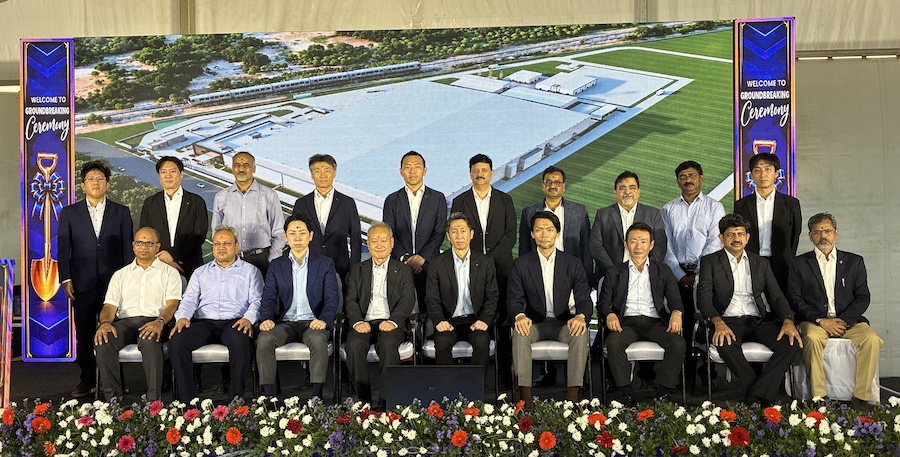
YKK invests USD 150 million in new manufacturing facility in India

YKK Corporation has announced plans to construct a new manufacturing facility in India, reinforcing its long-term commitment to one of the world's fastest-growing textile and apparel production hubs. The new factory will be built at Origins by Mahindra in Chennai, Tamil Nadu, and will become the third manufacturing site of YKK India Private Limited. The facility is expected to be completed by February 2028 and represents an investment of approximately USD 150 million, covering land, buildings, machinery and equipment.

#Texprocess 2026

Eton’s AI-driven sorting system targets growing resale market

At the recent Texprocess exhibition in Frankfurt, Eton Systems – a member of TMAS, the Swedish textile machinery association – demonstrated its new aUPS module for the rapid sorting of used garments.

#Texprocess 2026

Sustainable embroidery materials and digital finishing attract attention at GUNOLD booth

More exhibition space, more visitors, and a high level of international participation: GUNOLD’s concept for this year’s Texprocess 2026, which took place in Frankfurt am Main from April 21 to 24, 2026, was a complete success. “Our decision to showcase our entire product range alongside application examples and expert tips was very well received,” says Marketing Director Stephan Gunold, delighted with the positive outcome of the trade show. The focus was particularly on the Stockstadt-based company’s sustainable products as well as its laser, engraving, and sublimation services.

#Textile processing

YKK joins ZDHC as a Signatory Supplier, strengthening commitment to eliminating hazardous chemicals

YKK Corporation (Headquarters: Chiyoda-ku, Tokyo; President: Koichi Matsushima; hereafter, YKK) has joined ZDHC (Zero Discharge of Hazardous Chemicals) as a Signatory Supplier as of May 2026.

Latest News

#Spinning

Barmag and Hitech Automation enter into partnership for an auto-doff system for texturing machines

Barmag (Suzhou) Technology Co., Ltd. and Hitech Automation Solutions PVT LTD. of Surat, India, have agreed to an exclusive partnership to jointly market Hitech’s Doffmatic automation solution for Barmag’s proven manual eFK texturing machines. In many texturing facilities, manual doffing processes remain heavily operator-dependent – resulting in issues such as increased scrap, inconsistent quality, and limited productivity.

#ITM 2026

Uster’s new Recycling Opening Index guides spinners to the perfect blend

Uster AFIS 6 now offers the key data for better decisions when blending recycled fibers. Process control is decisive in determining the quality and economic outcome. The new R Recycling Module of AFIS 6 introduces the Recycling Opening Index (ROI), so spinners can optimize their circularity credentials. It was officially launched at ITM 2026 in Istanbul, Türkiye.

#HIGHTEX 2026

The heart of the technical textiles and nonwovens world will beat in Istanbul

Only 1 day remains until HIGHTEX 2026 International Technical Textiles and Nonwovens Exhibition opens its doors. Bringing together manufacturers, technology developers, investors, and industry professionals from around the world, HIGHTEX 2026 is preparing to showcase the innovations shaping the future of the industry. As the countdown to this major event continues, Istanbul is once again getting ready to become the meeting point of the global technical textiles industry.

#Man-Made Fibers

Grasim Industries announces fresh investment of ₹3094 Crore to expand Lyocell capacity

Grasim Industries Limited, the flagship company of the Aditya Birla Group and a global leader in cellulosic fibres, today announced an investment of ₹3,094 crore, for Phase II Lyocell capacity of 110K TPA at Harihar, Karnataka. This expansion will consist of 2 lines of 55K TPA (150 Tons per day) each. The first line is expected to be commissioned by 2028, and the second line is expected to be commissioned by 2030.

TOP