[pageLogInLogOut]

#Raw Materials

Global production expected to decline in 2026/27 as policy shifts and weak demand reshape trade

Early projections for the 2026/27 season indicate that global cotton lint production will decline by 4% to 24.9 million tonnes, while world consumption is expected to remain stable at approximately 25 million tonnes, according to the April 2026 issue of Cotton This Month.


The anticipated production decline is driven primarily by lower cotton prices, weak demand, and reduced planting intentions, particularly in major producing countries such as Brazil and Australia. In the United States, early planting surveys also suggest a shift away from cotton toward competing crops such as corn and soybeans. Global cotton production in 2026/27 will continue to be led by China, followed by India, Brazil, and the United States.

World cotton lint trade is projected to decline by 2.5% to 9.6 million tonnes, reflecting lower production levels and evolving global demand. Trade flows are expected to remain highly sensitive to tariffs, trade agreements, and geopolitical developments, including recent disruptions to global shipping routes.

On the import side, Bangladesh is projected to remain the world’s largest cotton importer at 1.8 million tonnes, followed by Vietnam, China, Pakistan, Türkiye, and India, together accounting for approximately 80% of global imports.

ICAC’s Statistical Data Portal

For the most current statistics, users are encouraged to consult ICAC’s Statistical Data Portal, which is continuously updated and reflects the latest revisions in global cotton supply and demand data.

The author of Cotton This Month is Parkhi Vats, Economic Affairs Officer at ICAC.

The next issue of Cotton This Month will be released on May 1, 2026.


More News from International Cotton Advisory Committee (ICAC)

#Raw Materials

Global Cotton area and production are projected to decline in the 2026/27 Season

The June 2026 issue of Cotton This Month projects a modest contraction in global cotton area, production, and trade during the 2026/27 season, reflecting weaker demand sentiment, rising production costs, and shifting environmental factors across major producing nations.

#Raw Materials

China projected to increase cotton production, yields, and imports in 2026/27

World cotton production in the 2026/27 season is projected at 25.9 million tonnes, exceeding global consumption of 25.2 million tonnes, according to the May 2026 issue of Cotton This Month. That means both production and consumption are expected to remain close to current season levels, while global cotton trade is projected to decline by 2.7% to approximately 9.6-9.7 million tonnes.

#Raw Materials

ICAC launches Carbon Credits Initiative to deliver new income streams to cotton farmers

The International Cotton Advisory Committee (ICAC) has announced a new initiative designed to unlock additional income streams for cotton farmers through participation in carbon credit markets, linking sustainable production practices directly to financial returns.

#Raw Materials

The 83rd Plenary Meeting: Reports from the ICAC Secretariat

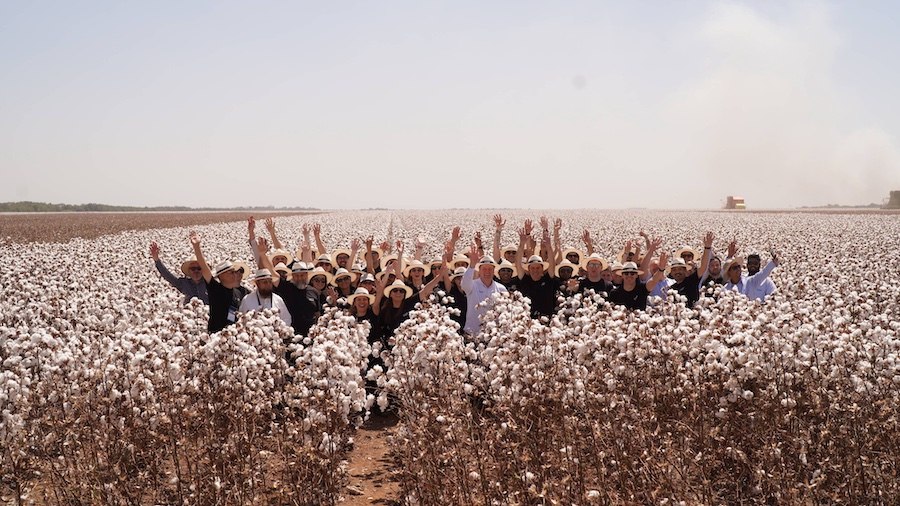
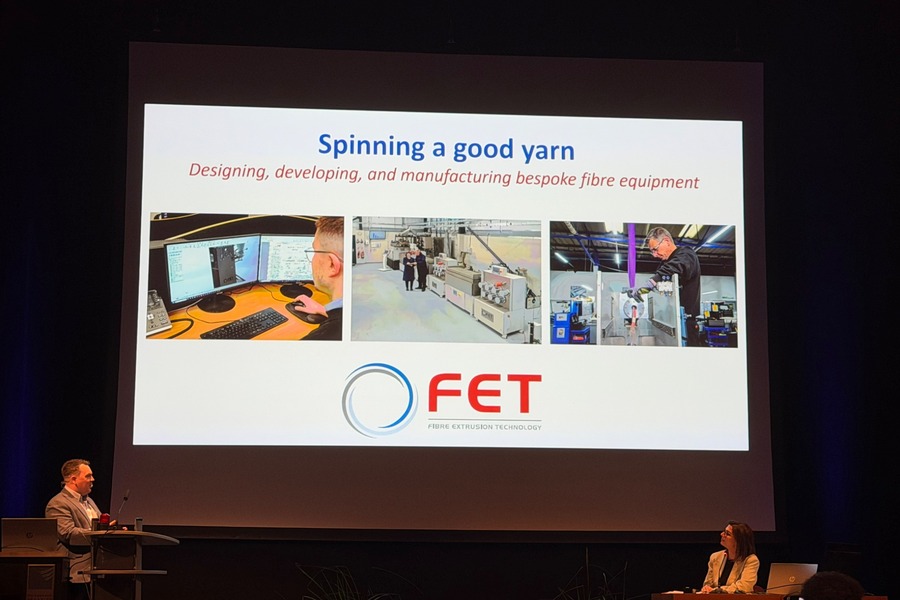
Every year, one of the most anticipated sessions at the International Cotton Advisory Committee's (ICAC) Plenary Meeting is the Reports from the Secretariat — and the 83rd edition in Bremen, Germany, did not disappoint.

More News on Raw Materials

#Raw Materials

New U.S. cotton study uses real-world grower data to reveal where fiber impacts occur

Cotton Incorporated has released a critically reviewed life cycle assessment (LCA) of U.S. cotton fiber production that examines how cotton’s environmental impacts are measured and where meaningful improvements can be made across the value chain. The new data, grounded in real‑world grower inputs, measures what drives U.S. cotton’s environmental footprint from field to gin.

#Raw Materials

ECCO introduces first shoe featuring innovative protein-based fibre

ECCO, in partnership with Spinnova, announces the launch of the limited edition ECCO BIOM® 720, a first-of-its-kind shoe utilising an often overlooked leather by-product, transformed into a protein-based fibre. The fibres are produced using patented technology that advances material innovation while reducing waste and supporting full resource use across the leather and textile industry.

#Raw Materials

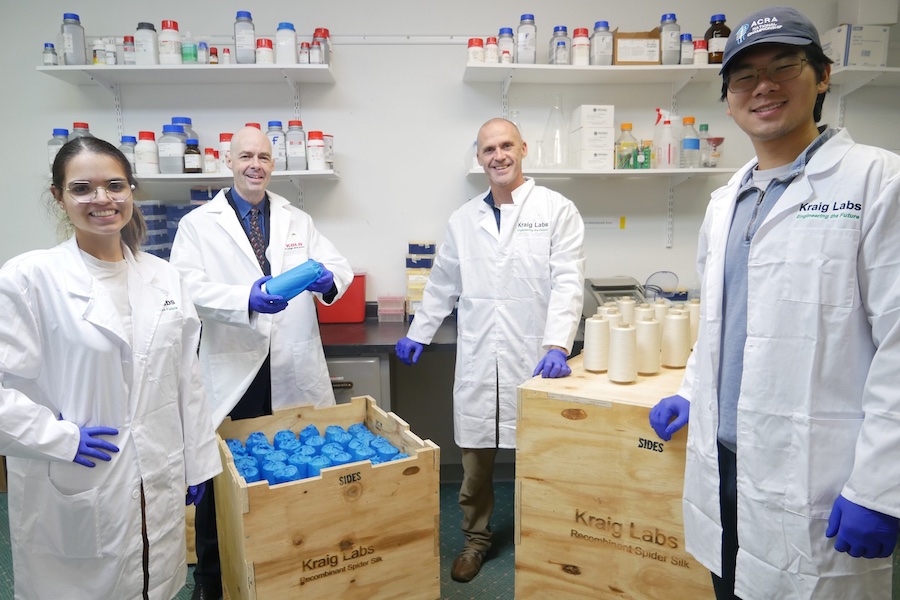
Kraig Biocraft Laboratories reports major progress converting record-setting spider silk cocoon production into reeled silk

Kraig Biocraft Laboratories, Inc. (OTCQB: KBLB) (“the Company”, “Kraig Labs”, or “Kraig’s”), a world leader in spider silk technology*, today announced significant progress in the processing of its recently produced recombinant spider silk cocoons into reeled silk.

#Textile processing

trinamiX mobile NIR spectroscopy: New applications for the footwear and textile industry

trinamiX GmbH expands its solution portfolio for the circular economy, now enabling the identification of materials used in the footwear and textile industries. With its mobile near-infrared (NIR) spectroscopy solutions, trinamiX supports manufacturers, sorters, recyclers, and brand owners in reliably identifying materials and improving transparency across increasingly complex value chains.

Latest News

#ITM 2026

SHIMA SEIKI to show complete knitting and cutting workflow at ITM 2026

Leading computerized flat knitting technology provider SHIMA SEIKI MFG., LTD. of Wakayama, Japan, together with its Turkish representative TETAS IC VE DIS TICARET A.S., will participate in the ITM 2026 International Textile Machinery Exhibition in Istanbul, Türkiye this month with a full product lineup. In addition to flat knitting machines and design software, visitors will also have the opportunity to experience the full range of SHIMA SEIKI textile machinery with its automatic cutting machine exhibit, all geared toward the fashion apparel market as well as non-apparel related businesses.

#Natural Fibers

European Flax-Linen & Hemp step into advanced manufacturing: Enabling filament winding, 3D printing and high-performance composite processes

The Alliance for European Flax-Linen & Hemp announces a new wave of technological advancements demonstrating how flax-linen and hemp fibres are now being successfully integrated into advanced composite manufacturing processes. These developments mark a transition beyond traditional hand lay-up techniques, positioning natural fibres as credible, scalable solutions for high-performance industrial applications.

#ITM 2026

SETEX turns dyeing and finishing data into daily production control

At ITM 2026, SETEX will show how textile mills can use machine, recipe, quality and energy data for more reliable daily production decisions — not as another reporting layer, but as part of the running dyeing and finishing process. With OrgaTEX X3 MES, E390x/C390x controllers, CamCOUNT and FabricInspector Portable, SETEX connects planning, machine execution and fabric-related quality insight within existing mill structures.

#Technical Textiles

Fifteen years of Autoneum – From spin off to global technology leader

What started as a strategic carve‑out has since become the success story of a global technology leader in acoustic and thermal management solutions for vehicles. Headquartered in Winterthur, Switzerland, Autoneum supplies leading automobile manufacturers worldwide with innovative, lightweight and increasingly sustainable solutions.

TOP