[pageLogInLogOut]

#Raw Materials

Better Cotton launches programme in Uzbekistan after several years of piloting

© 2023 Better Cotton
Better Cotton is pleased to confirm the launch of a Better Cotton Programme in Uzbekistan. As the sixth largest cotton producer globally, this programme brings them one step closer to their vision of a world where sustainable cotton is the norm.

Uzbekistan’s cotton sector has come a long way in recent times. After years of well-documented issues of systemic forced labour, the Uzbek government, International Labour Organization (ILO), Cotton Campaign, civil society institutions and human rights activists have been successful in driving state-led labour reforms in the Uzbek cotton industry. As a result, Uzbekistan has successfully eliminated systemic child labour and forced labour in its cotton sector, according to recent ILO findings.

Driving more progress across the Uzbek cotton sector

Building on this success, Better Cotton believes that commercial incentives can help ensure that the newly privatised cotton sector continues to reform and meet international standards. The Better Cotton Programme in Uzbekistan has the potential to provide that incentive by linking cotton farmers to international markets and supporting them to continuously improve their practices.

Through implementation of the Better Cotton Standard System, Better Cotton will provide robust and credible decent work monitoring systems that can demonstrate impact and results made on the ground. Better Cotton will also introduce physical traceability, under which cotton from licensed farms will be fully segregated and traced through the supply chain. Any licensed Better Cotton from Uzbekistan will, at the present time, not be sold via the mass balance chain of custody.

"Better Cotton exists to work in contexts with both environmental and social challenges. Uzbekistan’s cotton sector, government and the farms themselves have made enormous progress, and we are looking forward to building on this multi-stakeholder engagement and to drive further positive change across the sector", says Better Cotton CEO Alan McClay.


The Participating Farms

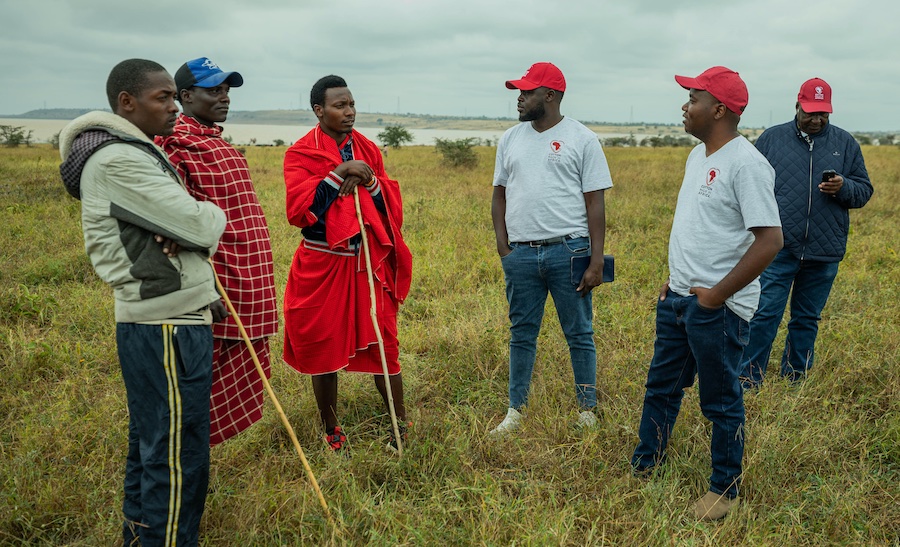
The International Finance Corporation and GIZ began piloting implementation of the Better Cotton Principles and Criteria in Uzbekistan in 2017. The pilots provided a strong entry point for our programme, with 12 large farms already benefiting from significant training, six of which have maintained participation. These are the same six farms now participating in the programme during the 2022-23 cotton season. All the farms were assessed against the Better Cotton Principles and Criteria by trained and approved third-party verifiers.

Farms with manual picking received additional decent work monitoring visits that focused on extensive worker and community interviews, along with management interviews and documentation reviews. This additional decent work monitoring looked specifically at labour risks due to the country’s past challenges. In total, nearly 600 workers, management and community leaders, local authorities, and other stakeholders (including civil society actors) were interviewed as part of our decent work monitoring. The findings of these third-party verification visits and the decent work monitoring were documented and discussed with technical labour experts and contributed to our enhanced assurance activities, which confirmed that no systemic forced labour was present on any of the farms. Like in all other Better Cotton countries, not all participating farms received a license this season. Better Cotton will continue to support both the farms that received licenses as well as those who were denied licenses through our capacity building efforts so that they can continuously improve their practices, and are equipped to meet the core requirements of the Standard moving forward.

Looking Ahead

As they begin their work in Uzbekistan, they focus on several key areas where progress still needs to be made. These include the effective introduction of trade unions and the appropriate use of workers' contracts. Better Cotton is encouraged by the progress made so far, but expects that their journey ahead will not be without challenges. Thanks to a solid foundation, strong partnerships and the commitment of all stakeholders, they intend to succeed together.

They concluded by stating that they look forward to supporting the continuous improvement of Uzbekistan's cotton production.




More News from TEXDATA International

#ITM 2026

ITM 2026: The new geography of textile production

New production hubs are emerging across North Africa and Central Asia, while Türkiye is accelerating its transformation toward higher-value, technology-driven and more sustainable textile manufacturing.

#Research & Development

“Production is a product”

From technical textiles and AI-driven robotics to the limitations of textile circularity: Professor Dr Thomas Gries looks back on more than two decades of development at ITA Aachen. In the interview, he explains why production technology remains a decisive success factor, discusses international collaborations and innovation ecosystems, and shares his views on the transformation of production landscapes and the challenges facing an increasingly regulated industry.

#Knitting & Hosiery

“We need to move away from the price trap and return to a value-driven mindset.”

With its new Textile Innovation Center, KARL MAYER is sending a strong signal for innovation, collaboration, and the future of textile applications. In this interview, Karl Josef Mayer discusses new opportunities in warp knitting, the processing of staple fibres, recycling, the changing role of machinery manufacturers, and why the textile industry must once again focus more strongly on the value of textiles. by Oliver Schmidt

#Associations

“Innovation, resilience and international experience remain the great strengths of the Swiss textile machinery industry”

Geopolitical uncertainty, growing competitive pressure from China, new free trade agreements and the shift towards a circular economy are currently reshaping the global textile industry. In this interview, Cornelia Buchwalder discusses the current mood within the Swiss textile machinery sector, the industry’s distinctive innovative strength, new market opportunities in India and Asia, and the technological trends that could shape the upcoming trade fair cycle leading up to ITMA 2027.

More News on Raw Materials

#Raw Materials

AMSilk and Ajinomoto Foods Europe expand partnership to enable industrial-scale production of silk proteins

AMSilk GmbH (“AMSilk”), a global leader leader in biotech produced silk materials, today announced a significant expansion of its partnership with Ajinomoto Foods Europe (AFE), marking a key step in scaling the industrial production of its silk proteins. Building on the collaboration first established in 2023, the two companies have now entered into a long-term manufacturing and supply agreement, enabling the transition from industrial validation to dedicated, large-scale production.

#Natural Fibers

Global cotton trade poised for recovery as India and China drive import demand

The July 2026 issue of Cotton This Month highlights a changing global cotton market, with consumption and trade expected to strengthen despite a modest decline in production during the 2026/27 season. The next issue of Cotton This Month will be released on August 1, 2026.

#Natural Fibers

Cotton made in Africa partners receive top marks in independent verifications

Cotton made in Africa® (CmiA) and CmiA Organic are two internationally recognised standards that aim to promote sustainable development in the African cotton sector south of the Sahara. To ensure the standards’ credibility among brands, retailers, and consumers, independent verifiers evaluate compliance on the ground. The verification results for 2025, now published in the Aggregated Verification & Implementation Report, were very strong: The verifiers awarded consistently very good remarks regarding management, people, prosperity, and the environment.

#Natural Fibers

Cotton ConneXions Insight to Impact brings supply chain leaders together around cotton innovation

Cotton Incorporated’s Cotton ConneXions Insight to Impact brought together more than 300 industry leaders from 140 companies across 10 countries, including more than 45 top global brands and sourcing organizations, underscoring strong global interest in cotton-rich product development, sourcing and supply chain collaboration.

Latest News

#Textiles & Apparel / Garment

Carrington Textiles publishes third Sustainability Report

Carrington Textiles has announced the publication of the third Sustainability Report from the RTS Textiles Group, highlighting another year of progress towards more responsible manufacturing across its global operations. The report outlines continued investment in technologies and initiatives designed to improve environmental performance and support long-term business resilience across the Group’s manufacturing facilities in the UK, Portugal and Pakistan.

#Spinning

Barmag Fuzhou Customer Day concludes successfully, boosting high-quality chemical fiber growth in Fujian & Guangdong

Barmag hosted its Customer Day themed “A New Era. Powered by Innovation.” in Fuzhou on June 28, welcoming nearly one hundred invited customers from Fujian and Guangdong provinces. Georg Stausberg, CEO of Barmag Group, attended along-side the sales and R&D expert China team to jointly present integrated solutions covering the entire man-made fiber value chain.

#Recycled Fibers

Recover™ and Ünteks Group partner to scale recycled cotton in knitwear

Recover(TM), a global producer of low‐impact, high‐quality recycled cotton fiber, announces a new partnership with Ünteks Group, a vertically integrated textile manufacturer based in Turkey. The collaboration focuses on the development of circular knit fabrics and garments, combining Recover’s recycled cotton fiber with Ünteks Group’s integrated capabilities across knitting, dyeing, printing, and garment production.

#Spinning

STEELTOP®: A new benchmark in flat tops for spinning preparation

Modern carding generations achieve higher production performance, placing significantly greater stress on flat tops. Higher cylinder speeds and increased fiber density, combined with tighter carding gaps, create more demanding operating conditions. At the same time, poorer raw material quality and the increased use of recycled materials further intensify these challenges. With STEELTOP®, Trützschler introduces a new full steel flat top series developed for these demanding modern carding processes.

TOP