[pageLogInLogOut]

#Raw Materials

U.S. Cotton Trust Protocol confirmed as ISEAL Community Member

The U.S. Cotton Trust Protocol was accepted as an ISEAL Community Member following a rigorous and meticulous approval process and only eighteen months after the program’s launch.

ISEAL is a global membership organization that supports credited sustainability systems in their work, with the goal to drive greater impact and establish markets that are a force for good. The organization focuses on a wide variety of global challenges such as the climate emergency, biodiversity crisis and human rights issues among others. ISEAL works to define credible practices for sustainability, foster collaboration and shared experience, deliver expertise and training, and promote innovation to strengthen sustainability systems.

“I’m very happy to congratulate the U.S. Cotton Trust Protocol on becoming an ISEAL Community Member,” said Karin Kreider, ISEAL’s Executive Director. “The Trust Protocol supports cotton producers to develop bespoke management plans aimed at improving their sustainability, and innovative use of data and metrics supports measurement of success over time. We are excited to have a fresh perspective in the ISEAL learning community, and to have another member working to improve sustainability outcomes in the cotton sector.”

ISEAL Community Members must be committed to continually improving their systems through learning and innovation, with emphasis on the importance of collaboration. They also are required to be transparent about how their programs work and the how they measure impacts.

The Trust Protocol is the only fiber sustainability system that provides quantifiable, verifiable goals and measurement and drives continuous improvement in six key sustainability metrics - land use, soil carbon, water management, soil loss, greenhouse gas emissions, and energy efficiency. It also is the world’s first sustainable cotton fiber to offer its members article-level supply chain transparency through the Protocol Consumption Management Solution.


“We are proud that the Trust Protocol was accepted as an ISEAL Community Member understanding the rigorous process and governance ISEAL adheres to,” said Dr. Gary Adams, president of the U.S. Cotton Trust Protocol. “ISEAL Community membership provides the Trust Protocol the continued opportunity to set a new standard in more sustainable cotton production where full transparency is a reality and continuous improvement to reduce our environmental footprint is the central goal.”

The U.S. Cotton Trust Protocol is aligned with the UN Sustainable Development Goals, recognized by Textile Exchange and Forum for the Future, and part of the Sustainable Apparel Coalition, Cotton 2025 Sustainable Cotton Challenge, Cotton 2040 and Cotton Up initiatives. It has also been recognized and published in the ITC Standards Map and recognized as a standard for sustainable cotton by the Partnership for Sustainable Textiles.

To learn more about the U.S. Cotton Trust Protocol visit:

http://TrustUSCotton.org.


More News from TEXDATA International

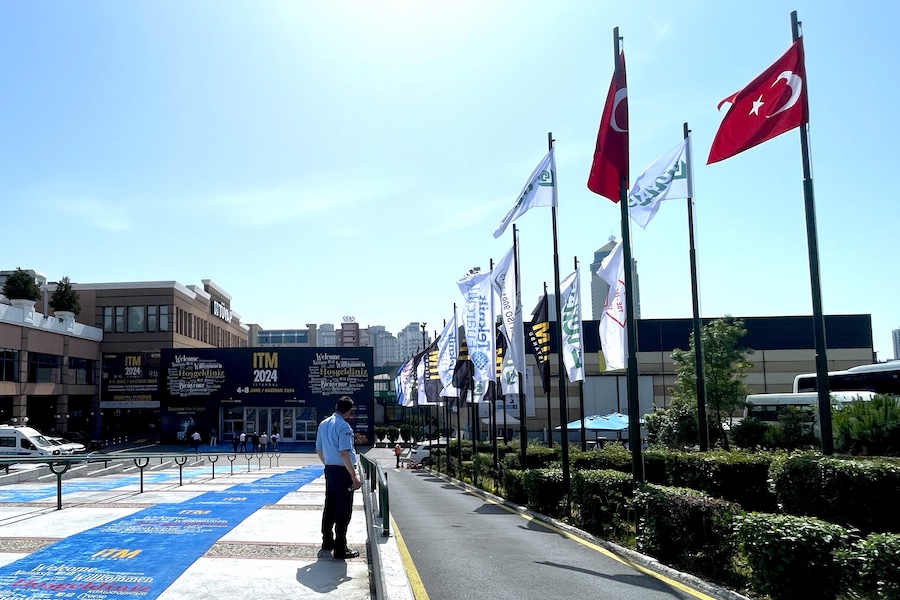
#ITM 2026

ITM 2026: The new geography of textile production

New production hubs are emerging across North Africa and Central Asia, while Türkiye is accelerating its transformation toward higher-value, technology-driven and more sustainable textile manufacturing.

#Research & Development

“Production is a product”

From technical textiles and AI-driven robotics to the limitations of textile circularity: Professor Dr Thomas Gries looks back on more than two decades of development at ITA Aachen. In the interview, he explains why production technology remains a decisive success factor, discusses international collaborations and innovation ecosystems, and shares his views on the transformation of production landscapes and the challenges facing an increasingly regulated industry.

#Knitting & Hosiery

“We need to move away from the price trap and return to a value-driven mindset.”

With its new Textile Innovation Center, KARL MAYER is sending a strong signal for innovation, collaboration, and the future of textile applications. In this interview, Karl Josef Mayer discusses new opportunities in warp knitting, the processing of staple fibres, recycling, the changing role of machinery manufacturers, and why the textile industry must once again focus more strongly on the value of textiles. by Oliver Schmidt

#Associations

“Innovation, resilience and international experience remain the great strengths of the Swiss textile machinery industry”

Geopolitical uncertainty, growing competitive pressure from China, new free trade agreements and the shift towards a circular economy are currently reshaping the global textile industry. In this interview, Cornelia Buchwalder discusses the current mood within the Swiss textile machinery sector, the industry’s distinctive innovative strength, new market opportunities in India and Asia, and the technological trends that could shape the upcoming trade fair cycle leading up to ITMA 2027.

More News on Raw Materials

#Natural Fibers

Cotton ConneXions Insight to Impact brings supply chain leaders together around cotton innovation

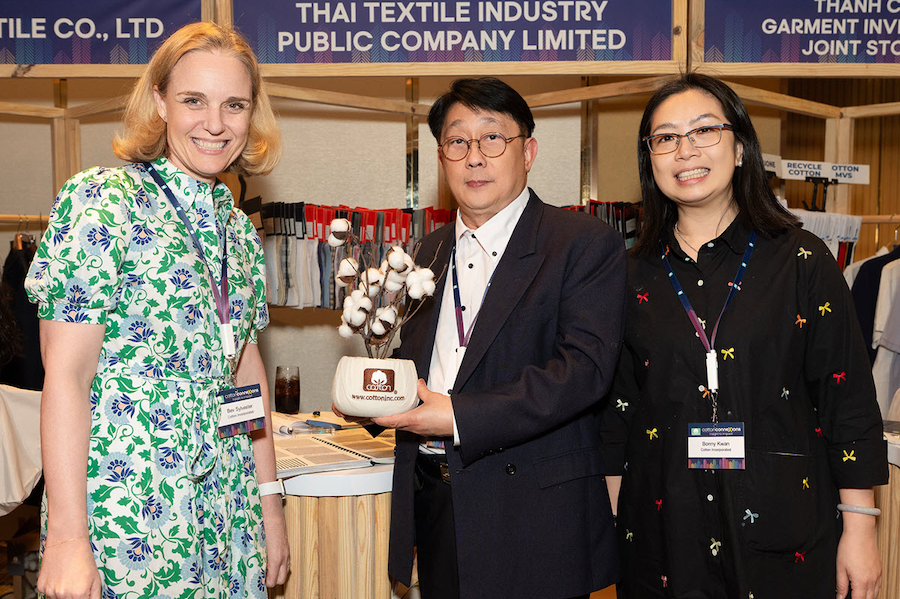
Cotton Incorporated’s Cotton ConneXions Insight to Impact brought together more than 300 industry leaders from 140 companies across 10 countries, including more than 45 top global brands and sourcing organizations, underscoring strong global interest in cotton-rich product development, sourcing and supply chain collaboration.

#Natural Fibers

Bremen Cotton Exchange: Fritz A. Grobien re-elected as President

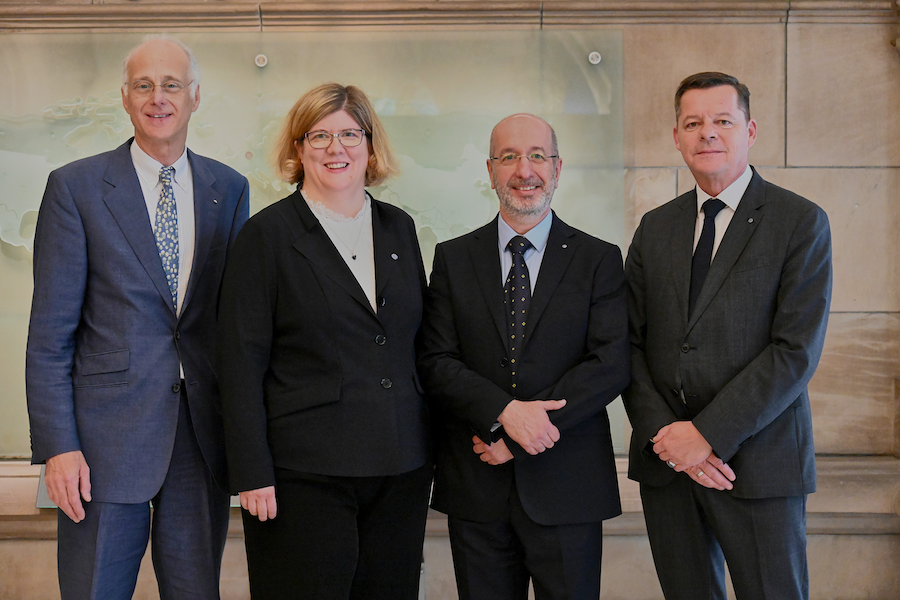
The members of the Bremen Cotton Exchange have re-elected Fritz A. Grobien as President during the association’s 152nd General Assembly on June 18, 2026. The election confirms the organization’s commitment to maintaining its role as a leading international platform for the cotton and fiber industry amid a period of geopolitical and economic uncertainty.

#Natural Fibers

Organic cotton at the crossroads: Ideology, evidence, and the road ahead

Organic cotton occupies one of the most contentious spaces in global agriculture. While praised by brands and consumers for its environmental ideals, it also faces persistent questions about yield stability, certification integrity, and scalability. The current edition of The ICAC Recorder cuts through the ideology to deliver a rigorous, evidence-based assessment of both sides of the debate.

#Man-Made Fibers

Christian Wichert appointed Chief Executive Officer to lead next phase of growth

AMSilk GmbH (“AMSilk”), a global leader in advanced biomaterials made from silk proteins, today announces the appointment of Christian Wichert as its new Chief Executive Officer (CEO), effective 1 June. The appointment marks a pivotal moment in AMSilk’s journey, as the Company advances from development through scale-up to commercialization.

Latest News

#Research & Development

2026 general meeting of the Friends and Supporters of RWTH Aachen at ITA

The Friends and Supporters of RWTH Aachen e. V. (proRWTH) looked back on a successful year of support at their 2026 general meeting. The meeting took place at Institut für Textiltechnik (ITA) of RWTH Aachen and was combined with a joint session of the Executive Board and the Administrative Board. Before the general meeting began, participants were given a guided tour of ITA, providing them with fascinating insights into current research and development topics in textile engineering.

#Knitting & Hosiery

Footwear innovation enabled by warp knitting technology– insights from New Balance

The future of the athletic shoe is increasingly being shaped on warp knitting machines. For KARL MAYER, the footwear industry is one of the most important growth markets – and one of the sectors where innovative textiles can realize their full potential. In his keynote address at the opening of KARL MAYER’s TEXTILE INNOVATION CENTER in Obertshausen in April, Vishnu Prakash Muthusamy, Senior Textile and Materials Engineer at New Balance, explained the opportunities that warp knitting technology opens up for performance, sustainability, and faster development processes, and why textile manufacturers are transitioning from suppliers to development partners.

#Natural Fibers

Cashmere specialist joins AbTF Board of Trustees

The Aid by Trade Foundation (AbTF) is pleased to welcome Brian Yu, the chief executive officer of the Artwell Group, to its board of trustees. As CEO, Brian Yu developed Artwell into the world’s largest supplier of responsibly produced cashmere knitwear.

#Recycling / Circular Economy

HKRITA signs MoU with Jeanologia and Looptworks to establish the Green Machine Circular Textile Ecosystem

The Hong Kong Research Institute of Textiles and Apparel (HKRITA) yesterday officially signed a landmark Memorandum of Understanding (MoU) with two key global partners, Jeanologia and Looptworks, to establish the Green Machine Circular Textile Ecosystem – a first-of-its-kind collaboration to accelerate the large-scale recycling of blended textiles.

TOP