[pageLogInLogOut]

#Raw Materials

Promoting better cotton farming practices in Maharashtra: Case study

Between August 2019 and October 2020, the Deutsche Gesellschaft für Internationale Zusammenarbeit GmbH (GIZ) funded a BCI programme in Maharashtra, India, to engage approximately 140,000 farmers in the Nandurbar, Chandrapur and Nagpur districts.

The programme aimed to promote sustainable environmental and social agricultural practices, with a focus on increasing farmer income through better yields and market connectivity, while also improving environmental and decent work practices.

Case Study: Women’s Self-Help Groups in Chandrapur

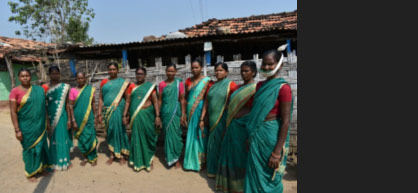
Through one of the programme’s workstreams, BCI Implementing Partner Ambuja Cement Foundation (ACF) launched an initiative in the Jiwati block of the Chandrapur district to explore how women’s ‘self-help groups’ could boost women’s incomes through collectively buying cotton and then trading it onwards. The initiative eventually led to 33 self-help groups being set up in the district, with the groups able to benefit from seed capital provided by the local office of the Maharashtra State Rural Livelihood Mission.


One such self-help group was the Jangudevi Women Self-Help Group, who earned a surplus of €1,250 over a three-month period. Read more about their group and this initiative in this first case study from the programme: Sowing the Seeds of Gender Empowerment in Cotton Value Chains of Maharashtra.

https://bettercotton.org/wp-content/uploads/2021/05/GIZ-BCI-Case-Study-India-Sowing-the-Seeds-of-Gender-Empowerment.pdf

© 2021 Better Cotton Initiative


More News from TEXDATA International

#ITM 2026

ITM 2026: The new geography of textile production

New production hubs are emerging across North Africa and Central Asia, while Türkiye is accelerating its transformation toward higher-value, technology-driven and more sustainable textile manufacturing.

#Research & Development

“Production is a product”

From technical textiles and AI-driven robotics to the limitations of textile circularity: Professor Dr Thomas Gries looks back on more than two decades of development at ITA Aachen. In the interview, he explains why production technology remains a decisive success factor, discusses international collaborations and innovation ecosystems, and shares his views on the transformation of production landscapes and the challenges facing an increasingly regulated industry.

#Knitting & Hosiery

“We need to move away from the price trap and return to a value-driven mindset.”

With its new Textile Innovation Center, KARL MAYER is sending a strong signal for innovation, collaboration, and the future of textile applications. In this interview, Karl Josef Mayer discusses new opportunities in warp knitting, the processing of staple fibres, recycling, the changing role of machinery manufacturers, and why the textile industry must once again focus more strongly on the value of textiles. by Oliver Schmidt

#Associations

“Innovation, resilience and international experience remain the great strengths of the Swiss textile machinery industry”

Geopolitical uncertainty, growing competitive pressure from China, new free trade agreements and the shift towards a circular economy are currently reshaping the global textile industry. In this interview, Cornelia Buchwalder discusses the current mood within the Swiss textile machinery sector, the industry’s distinctive innovative strength, new market opportunities in India and Asia, and the technological trends that could shape the upcoming trade fair cycle leading up to ITMA 2027.

More News on Raw Materials

Latest News

#Man-Made Fibers

ROICA™ launches new global brand identity and digital experience

ROICA™, the premium stretch fiber developed by Asahi Kasei, today announced the launch of its new global brand identity, including a new key visual and a fully redesigned website. This milestone initiative marks the beginning of a new phase in ROICA™’s evolution as a global brand.

#Nonwovens

EDANA launches landmark continence report to mark the start of the World Continence Week

Today marks the official commencement of the World Continence Week. To honour this global awareness initiative, EDANA has published a comprehensive report titled "The Central Role of Absorbent Hygiene Products in the Management of Adult Urinary Incontinence: Benefits, Costs and Environmental Impact." The World Continence Week (WCW) is an annual global initiative dedicated to raising public awareness about incontinence and bladder or bowel health issues. Traditionally held in June, this awareness week aims to shed light on a condition that affects millions of people worldwide but is frequently kept secret due to widespread social stigma, embarrassment, and taboo.

#Associations

Mario Jorge Machado re-elected President of EURATEX

The EURATEX General Assembly has re-elected Mario Jorge Machado as President of EURATEX, renewing its confidence in his leadership at a crucial moment for the European textile and clothing industry. The sector is facing rising costs, global competitive pressure and an increasingly challenging transition towards sustainability and digitalisation.

#ITM 2026

ITM 2026 makes happy participants with its international and qualified visitor profile

ITM 2026 International Textile Machinery Exhibition, one of the most prestigious meeting points of the textile machinery sector, attracted attention in its first three days, particularly with its diverse international visitor numbers. Industry professionals from all over the world had the opportunity to closely examine the latest technology machines and solutions displayed in operation. Thousands of visitors from approximately 100 countries, primarily Egypt, Pakistan, India, Uzbekistan, Syria, Turkmenistan, Tajikistan, Morocco, Algeria, and Tunisia, met at the Tüyap Fair and Congress Center for new investment and cooperation opportunities.

TOP