[pageLogInLogOut]

#Nonwovens / Technical Textiles

Ensuring the quality of respiratory masks and medical protective clothing

Weight and thickness have a great influence on the functionality of nonwoven goods. Especially in the current situation in the wake of the worldwide corona pandemic, it is essential to be able to rely 100 percent on the quality of medical products such as masks or protective gowns. Thanks to decades of experience and a wide range of measurement and control technology, the German company Mahlo GmbH + Co KG can support manufacturers in monitoring and controlling important parameters during the production process. Various sensors are avail- able depending on the application.

Control basis weight and material thickness with the beta sensor Gravimat DFI from Mahlo

The Gravimat DFI sensor is part of the modular Qualiscan QMS quality measurement system and measures weight and material thickness using isotope radiation. The measurement is based on the attenuation of radioactive radiation by the substrate in the measuring gap. This weakening of the intensity is a measure of the basis weight of the goods. Mahlo works with different isotope variants in order to do justice to different material properties. Krypton-85 is used for goods with a weight between 10 and 1400 g/m2, strontium-90 is used for 100 to 6000 g/m2.

Mouth and nose masks are currently part of everyday life. (c) 2020 hedgehog94 stock.adobe


Proven and reliable function

The transmitter in the traversing sensor beams onto the running web. Due to its mass, the radiation reaches the receiver in a damped manner. The values of the transmitted and received radiation are calculated to obtain the weight per unit area. Mahlo uses a multi-channel receiver in which the incoming measuring radiation is distributed to dif- ferent areas of the fabric surface. In this way precise values are obtained, no matter what position the fabric is currently in.

This method also solves one of the biggest problems faced by manufacturers of webshaped goods such as hygiene fleece: measurement inaccuracies due to fabric flutter. Its sensor technology makes the Gravimat DFI immune to changes in the center of gravity. It measures precisely and unaffected by any changes in degree of dryness, density or thickness.

Measuring principle with beta radiation (c) 2020 Mahlo


The Gravimat DFI does not require strong absorbers or highly radioactive sources. Nevertheless, the highest precision, speed and resolution are guaranteed. The sensor can be used for practically all nonwoven applications.

For nonwoven fabric used for face masks, air permeability is of particular importance. After all, the wearer must be able to breathe easily. In this case, Mahlo combines basis weight measurement with an air permeability sensor, which can also measure on the running web with a light touch.

Gravimat DFI installation at Kirson Industrial Reinforcements GmbH (c) 2020 Mahlo


Quality assurance from Mahlo - in the service of health

Manufacturers of medical goods are currently under pressure to deliver their goods as quickly as possible, but still with high quality. With process control systems from Mahlo, this balancing act is not only easier to master - production costs are also further reduced. The automatic basis weight control significantly limits the spread of the basis weight and thus guarantees a more uniform end product. Suitable setpoint settings with minimum tolerance ranges, in addition to ensuring product quality, save considerable material and energy costs. In addition, a safety margin is eliminated, which otherwise means loss of goods and time.
More News from Mahlo GmbH + Co. KG

#Advertorial

New Gravimax MMX-R X-ray sensor platform opens up new application fields

The demands placed on quality control in web-based production processes are increasing: materials are becoming more complex, basis weights are varying more widely, and at the same time, pressure is growing to make processes more efficient and transparent. Precise measurement data across the entire web width has therefore become a key factor in ensuring stable production processes. With its new Gravimax MMX-R sensor platform, Mahlo introduces a radiometric measurement solution designed to set new standards in determining basis weight and material composition. The platform combines advanced X-ray technology with newly developed signal processing, enabling measurement tasks that previously often required multiple sensor technologies.

#Dyeing, Drying, Finishing

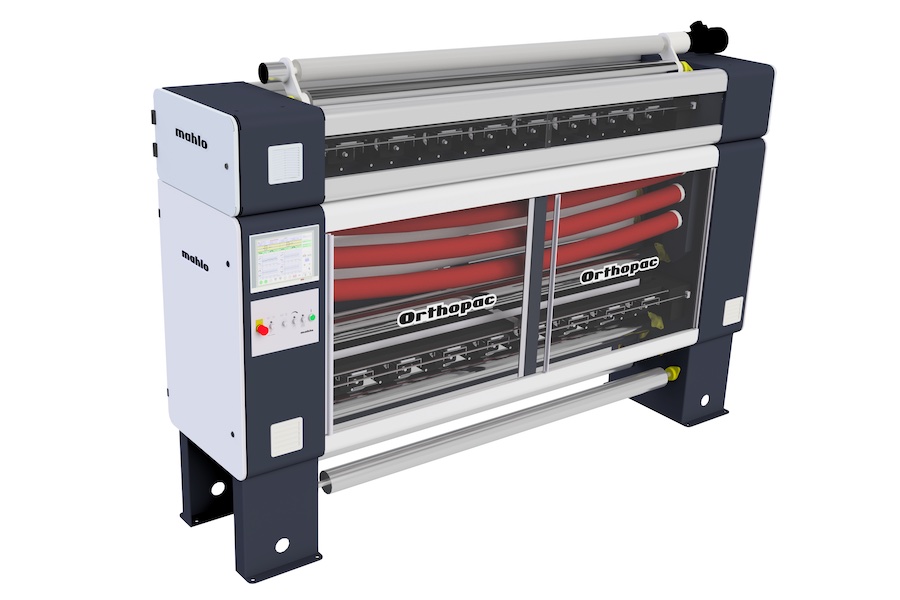
Orthopac RVMC-20 plus: German Engineering for Smarter Weft Straightening

In times of rising cost pressure and growing quality demands, textile producers worldwide are searching for solutions that combine precision, efficiency, and sustainability. With its latest innovation, the Orthopac RVMC-20 plus, Mahlo once again demonstrates the strength of German engineering: improving proven technology to meet today’s challenges.

#Dyeing, Drying, Finishing

Stefan Moll becomes new CEO of the machinery manufacturer

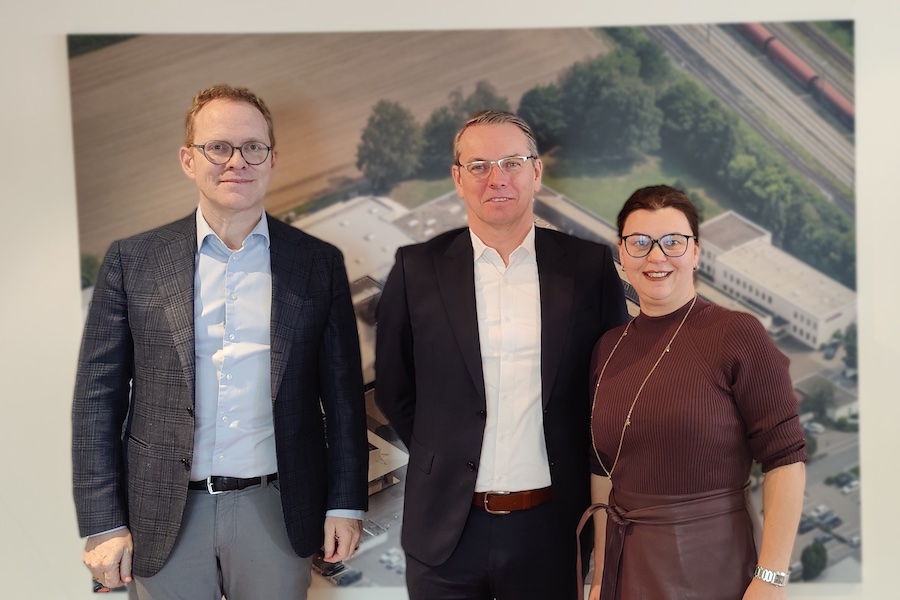
Starting January 1, 2026, Stefan Moll will take over the management of Mahlo GmbH + Co. KG, the world’s leading provider of measurement and control technology for web-shaped materials. With this move, Mahlo is focusing on the long-term safeguarding of its market position and technological leadership. The current CEO, Rainer Mestermann, will leave the company after 14 years as part of a planned succession arrangement.

#Dyeing, Drying, Finishing

Knitex Industries Ltd. (Mondol Group) invests in advanced Mahlo technology

Bangladesh’s Knittex Industries Ltd. is known for its commitment to top-quality knitwear and responsible produc-tion. To further enhance fabric quality, the company has invested in a Mahlo Orthopac RVMC-15 weft straightener. Installed by Tootal Quality Resources, the system ensures perfect fabric alignment and supports Knittex’s goal of continuous improvement.

More News on Nonwovens / Technical Textiles

#ITMA Asia + CITME Singapore 2025

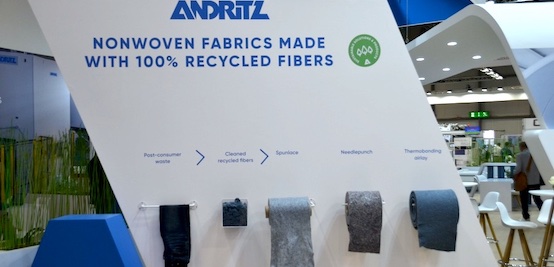
ANDRITZ sets focus on textile recycling and durable nonwoven production technologies at ITMA Asia 2025

International technology Group ANDRITZ will be presenting its innovative nonwovens production and textile solutions at ITMA ASIA + CITME 2025 in Singapore, from October 28 to 31, 2025 (Hall 2, D106). ANDRITZ will showcase its MMCF production plants, textile sorting and recycling, bast fiber processing, needlepunch, airlay, and life-cycle service technologies, with a focus on sustainable solutions. Discover how these innovations can grow your business opportunities and support a greener future.

#ITMA Asia + CITME Singapore 2025

Dilo Group at ITMA ASIA Singapore 2025

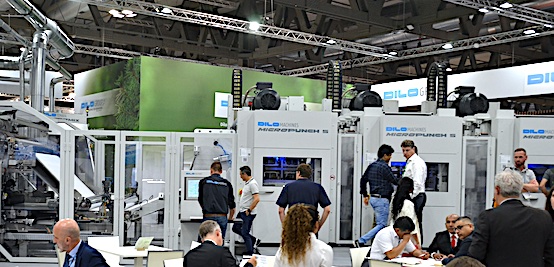
At ITMA ASIA Singapore, the Dilo Group will exhibit at Booth No. H2 – D202. Together with Kansan Materials, Izmir, the company will present its latest developments and looks forward to welcoming visitors to exchange ideas and explore innovations in needling technology.

#Nonwovens

OUTLOOK™ 2025: Charting a sustainable and innovative future for the Nonwovens Industry

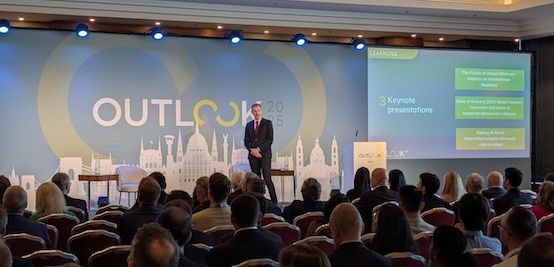
EDANA concluded its flagship event, OUTLOOK™ 2025, last week, marking it as a major success and addressing the biggest questions facing the industry. The three-day conference highlighted the urgent need for a unified approach to sustainability, regulation, and innovation in the absorbent hygiene and wipes sectors.

#Nonwovens

Global Nonwovens Alliance unveils Inaugural Board, advancing collaboration and growth worldwide

The Global Nonwovens Alliance (GNA), a tax-exempt federation jointly founded by INDA, the Association of the Nonwoven Fabrics Industry, and EDANA, the Voice of Nonwovens, announces the appointment of its founding Board of Directors. This group of leaders represents some of the most influential executives across the nonwovens value chain and reflects GNA’s mission to foster global collaboration, innovation, and growth in the industry.

Latest News

#Techtextil 2026

AI, Start-ups, Research: Techtextil and Texprocess bring together players in the textile industry

From start-ups to universities and research institutes: at Techtextil and Texprocess, the world’s leading innovation trade fairs in Frankfurt am Main, exhibitors present future-oriented concepts for the global textile industry. With the international Campus & Research area, a strong participation from start-ups and the latest AI applications for textile processing, both trade fairs showcase current developments in the textile industry. By bringing together innovation, research and application, they enable new partnerships across the textile value chain.

#Techtextil 2026

IVGT joint stand brings innovation and networking to Techtextil 2026

At Techtextil 2026 and the parallel Texprocess 2026, key transformation topics such as artificial intelligence, digitalisation, sustainability, recycling and the circular economy will be reflected across the show. Against this backdrop, the IVGT, together with 16 member companies, will present its joint stand in Hall 12.1 (Stand D62) as a platform for exchange and networking.

#Man-Made Fibers

Indorama Ventures supports Southeast Asia’s textile customers with reliable regional supply and global innovative portfolio

Indorama Ventures, one of the leading global polyester fiber and filament yarn suppliers globally, will participate in Indo Intertex 2026 in Jakarta this April, making its diverse global portfolio available to apparel, home textile, and hygiene customers across Southeast Asia.

#Raw Materials

New study shows low environmental impact by Cotton made in Africa Organic Cotton from Tanzania

Today, the Aid by Trade Foundation (AbTF) is announcing the results of a comprehensive life-cycle analysis (LCA) for cotton produced in Tanzania under the Cotton made in Africa Organic (CmiA Organic) standard. The study emphasises the small ecological footprint of CmiA Organic verified cotton. This can largely be traced back to the absence of synthetic pesticides, artificial fertilisers, and artificial irrigation. Consequently, CmiA Organic cotton can help the textile industry meet regulatory requirements as well as science-based targets. The results also show that the consequences of climate change threaten the livelihoods of these cotton farmers, even though the type of agriculture they practise barely contributes to climate change.

TOP