[pageLogInLogOut]

#Sustainability

Veolia announces a major technological breakthrough, effective to achieve up to 99.9999% destruction of targeted PFAS
Veolia announces an unprecedented technological breakthrough in Europe in the fight against per- and polyfluoroalkyl substances (PFAS), commonly known as "forever chemicals." Developed in the Group’s global research centers, the patented Drop® technology enables the removal of these persistent pollutants with an efficiency rate of up to 99.9999%1 on several targeted PFAS. Veolia is currently deploying the patent across its 20 incineration lines dedicated to hazardous waste in France, Germany, Spain, Poland, United Kingdom, Switzerland, and Hungary.
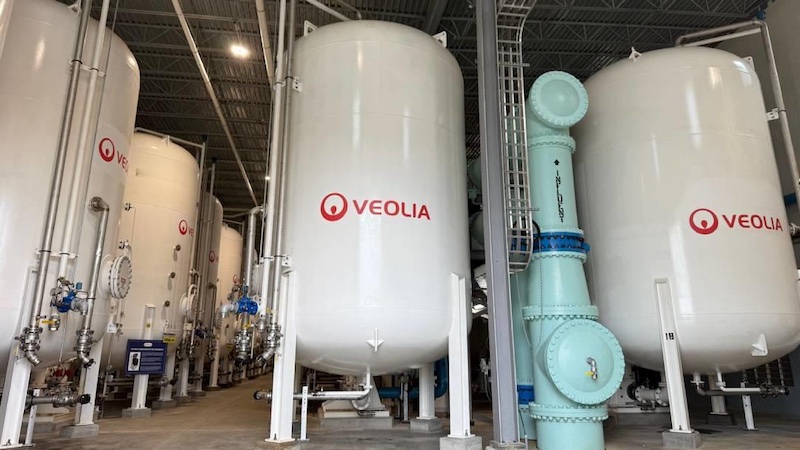
Veolia’s largest PFAS treatment plant sets global standard for protecting drinking water by removing regulated PFAS from up to 30 million gallons of water per day © 2025 Veolia


This major innovation addresses one of the most complex environmental challenges of our time: the treatment and disposal of PFAS and waste that may contain PFAS. These substances, used in many industrial and domestic applications since the 1940s, are particularly difficult to treat and degrade due to their carbon-fluorine bonds, which are among the strongest in organic chemistry. Their persistence in the environment and their potential effects on human health make them a concern from both a health and industrial perspective.

To develop this unique solution, Veolia drew on its 50 years of experience in hazardous waste management in more than 40 countries. The Group, which currently holds and files the largest number of patents in the world in the field of hazardous waste treatment, innovates at every stage of the waste treatment process: analysis tailored to the specific characteristics of facilities and their operation, treatment of industrial effluents, thermal treatment, soil and groundwater remediation, and final storage.

“At a time when health expectations are rising in Europe and regulations are becoming stricter, Veolia is now able to offer a wide range of tailor-made treatments, aligned with the principles of resource regeneration and the environmental challenges faced by the industry. Thanks to our patented Drop® technology, we are proud to set a European benchmark by eliminating up to 99.9999% of targeted PFAS. As a European and global leader in hazardous waste treatment, we are fully committed to continuing, as we always have, to innovate in this field, which is as complex as it is crucial for industry and health,” says Catherine Ricou, CEO, Veolia Hazardous Waste Europe

A disruptive innovation capable of eliminating targeted PFAS while preserving the integrity of industrial facilities

The Drop® technology, thanks to a catalyst added during thermal treatments, accelerates the degradation of PFAS with the aim of mineralizing them, and eliminates the acidic gases formed during the process to transform everything into simple, non-toxic mineral substances. It also drastically reduces problems of corrosion and fouling in boilers to ensure long-term reliability of installations. Its implementation is part of the BeyondPFAS offer launched by Veolia in 2024.

Based on standardized waste containing known concentrations of several target PFAS, which are also considered Persistent Organic Pollutants (POP), introduced into the furnace at over 900°C, Veolia achieved destruction efficiencies of up to 99.9999%, whether the relevant target PFAS were non-polymeric PFAS(notably PFOA, PFOS, and PFHxS) or polymeric PFAS.

Through several testing campaigns conducted since 2022, and based on the sampling standards validated by the U.S. Environmental Protection Agency (EPA), OTM-45 and OTM-50, which allow for the analysis of semi-volatile and volatile PFAS in air at the outlet of stacks, Veolia has been able to demonstrate the performance of targeted PFAS destruction in dedicated hazardous waste incineration.

1 Destruction and Removal Efficiency (DRE) (up to 6 log) and not Destruction Efficiency (DE) (up to 4 log), notably in application of the March 2025 guidance communication

More News from Veolia

More News on Sustainability

#Research & Development

The region of renewable raw materials: Central German Alliance for Bioplastics

The development of sustainable plastic solutions is rapidly gaining importance in light of global environ- mental pollution, dwindling fossil resources and ambitious climate protection targets. As part of the re- gional alliance RUBIO, which brings together 18 partners from central Germany and the Berlin-Branden- burg area, the bio-based and biodegradable plastic polybutylene succinate (PBS) was comprehensively investigated, starting with the raw material, through the manufacturing process, to industrial application.

#Textile chemistry

Archroma funds development of sustainable textile laboratory at Mumbai’s Institute of Chemical Technology

Archroma, a global leader in specialty chemicals focused on sustainable solutions, has supported the Institute of Chemical Technology (ICT), Mumbai, India in the renovation and development of a sustainable laboratory facility as part of its Corporate Social Responsibility (CSR) program.

#Sustainability

Peak Sustainability Ventures & Arvind launch India’s first industrial-scale cotton-stalk torrefaction project, decarbonizing textile manufacturing in Gujarat

Arvind Limited, one of India’s leading textile-to-retail conglomerates, and Peak Sustainability Ventures, a Mumbai-based global climate investment firm, have entered into a partnership to build a large-scale cotton stalk torrefaction plant in Gujarat, with a capacity of 40,000+ tonnes per year, to accelerate Arvind’s decarbonization goals and promote torrefaction at scale in India.

#Sustainability

Textile Exchange evolves its membership structure to unlock the next stage of collective action for climate and nature

Textile Exchange is excited to announce that it is evolving its membership structure to a more action-oriented, impact-driven model designed to provide clearly defined pathways that help organizations respond to the climate and nature crisis.

Latest News

#Recycling / Circular Economy

Advanced Recycling Conference 2025 fuels innovation across key waste streams

The Advanced Recycling Conference (ARC) 2025 brought together nearly 220 experts from 28 countries to spotlight pioneering advancements and foster industry collaboration in recycling across diverse waste streams including plastics, textiles, automotive and other materials.

#Dyeing, Drying, Finishing

Navis TubeTex announces U.S. partnership with Icomatex

Navis TubeTex, a global leader in advanced dyeing and finishing machinery solutions, is pleased to announce a new partnership with Icomatex (www.icomatex.com), a respected European manufacturer of high-quality stenters and textile finishing equipment. Under this agreement, Navis TubeTex will exclusively represent the Icomatex stenter line in the United States.

#Recycling / Circular Economy

ADVANSA launches ADVA®tex: A new step toward textile-to-textile recycling

ADVANSA has introduced ADVA®tex, a new filling fibre made entirely from recycled pre-consumer textile waste, positioning the material as a significant step forward in textile-to-textile (T2T) recycling. The fibre is designed for use in duvets, pillows, mattresses, and furniture applications and is available in three versions.

#Knitting & Hosiery

KARL MAYER celebrates 35 years of EL pattern drive

KARL MAYER is celebrating an anniversary this year: on 30 November 1990, the first warp knitting machine with electronic guide bar control, the KS 4 EL, was delivered – another milestone for patterning. As early as 1980, the SU gearbox with the MRS42SU had initiated the transition from mechanical chains to digital data.

TOP