[pageLogInLogOut]

#Natural Fibers

Better Cotton Initiative surpasses 50% traceable BCI Cotton milestone
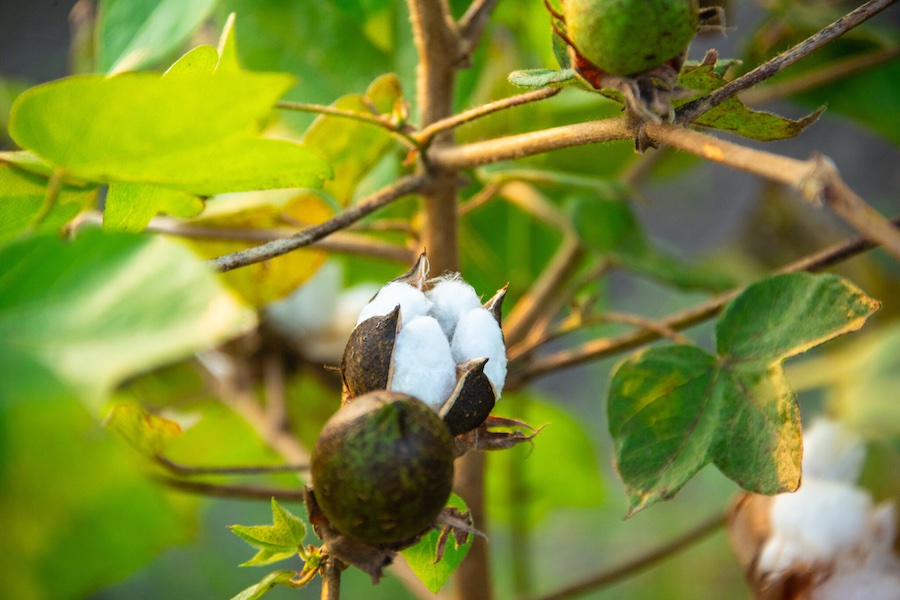
© 2025 Better Cotton Initiative/Joe Woodruff. Location: Gujarat, India, 2023.
Two years since the launch of its traceability solution, the Better Cotton Initiative (BCI) has announced that over 50% of BCI Cotton volumes entering global fashion and textile supply chains are now traceable, deriving from 15 countries.

Since BCI Traceability was implemented in November 2023, the number of retailer and brand members sourcing traceable BCI Cotton, officially known as Physical BCI Cotton, has grown at pace. More than 60 companies have signed up to source via BCI Traceability, while 17 have received products containing Physical BCI Cotton. 

Jacky Broomhead, Director of Traceability at the Better Cotton Initiative, says that traceable cotton has become a clear necessity for the fashion and textile industries. She said: “The complexity of textile supply chains, combined with increased legislation, makes the offer of traceability non-negotiable. To continue delivering on our mission to support cotton farmers around the world and ensure BCI farmers can access key markets, we needed to make BCI Cotton traceable.”

In just two years, more than 23,000 metric tonnes (MT) of Physical BCI Cotton have been traced from cotton gins to BCI Retailer and Brand Members, a huge increase from the 90 MT achieved by November 2024. With the average 100% cotton t-shirt containing around 180g grams, it means that enough Physical BCI Cotton has reached retailers and brands to make more than 127 million t-shirts. 

BCI has now rolled the solution out across all countries where it has field-level programmes and continues to help supplier and manufacturer members align with its Chain of Custody (CoC) Standard, which sets the requirements for handling Physical BCI Cotton and ensures the integrity of the system.

Achieving scale

In the past 12 months, BCI Traceability has been launched in Australia and Brazil, while the number of BCI Supplier and Manufacturer Members aligned with the CoC Standard has risen from 700 in 2024 to over 2,000. 

Broomhead added: “Making traceability both accessible to the market and inclusive of all BCI farmers has been a key goal of ours. Achieving this has been a truly collaborative effort made possible through the invaluable contributions of our retailer and supplier community who helped develop the solution, and the many companies now sourcing Physical BCI Cotton.” 

The continued success of BCI Traceability will also be vital cog in the rollout of the organisation’s new product label, which launched last month. The new label is available to BCI Retailer and Brand Members, enabling them to claim with confidence that their products contain Physical BCI Cotton, certified by a third-party body and traced from its country of origin.  

Third-party certification of the supply chain, in addition to traceability, makes the label a source of reassurance for consumers, while enhancing the credibility of retailers and brands.

More News from Better Cotton

#Natural Fibers

Better Cotton Initiative partners with Uzbek government agency to offset certification costs

The Better Cotton Initiative (BCI) has today announced a strategic agreement with Uzbekistan’s Light Industry Agency to increase financial support for cotton farming clusters adopting sustainable agricultural practices.

#Natural Fibers

BCI warns against ‘dangerous dilution’ of EU corporate directives

The approval of the European Commission’s Omnibus I proposal by the European Parliament’s Committee on Legal Affairs, accepting controversial changes to key sustainability directives is of great concern. These changes, namely to the Corporate Sustainability Reporting Directive (CSRD) and the Corporate Sustainability Due Diligence Directive (CSDDD), threaten to significantly dilute business reporting and due diligence obligations.

#Natural Fibers

Better Cotton Initiative marks World Cotton Day with launch of innovative product label

The Better Cotton Initiative (BCI) has launched an innovative product label for the fashion and textile sectors which allows retailer and brand members to provide consumers with greater clarity about the origin and percentage of BCI Cotton in their products.

#Natural Fibers

Better Cotton partners with Planboo to reduce emissions using cotton crop waste

Better Cotton, the world’s largest cotton sustainability initiative, has teamed up with climate technology startup Planboo to help cotton farmers reduce greenhouse gas (GHG) emissions – and earn carbon credits for it.

More News on Natural Fibers

Latest News

#Recycling / Circular Economy

Advanced Recycling Conference 2025 fuels innovation across key waste streams

The Advanced Recycling Conference (ARC) 2025 brought together nearly 220 experts from 28 countries to spotlight pioneering advancements and foster industry collaboration in recycling across diverse waste streams including plastics, textiles, automotive and other materials.

#Dyeing, Drying, Finishing

Navis TubeTex announces U.S. partnership with Icomatex

Navis TubeTex, a global leader in advanced dyeing and finishing machinery solutions, is pleased to announce a new partnership with Icomatex (www.icomatex.com), a respected European manufacturer of high-quality stenters and textile finishing equipment. Under this agreement, Navis TubeTex will exclusively represent the Icomatex stenter line in the United States.

#Recycling / Circular Economy

ADVANSA launches ADVA®tex: A new step toward textile-to-textile recycling

ADVANSA has introduced ADVA®tex, a new filling fibre made entirely from recycled pre-consumer textile waste, positioning the material as a significant step forward in textile-to-textile (T2T) recycling. The fibre is designed for use in duvets, pillows, mattresses, and furniture applications and is available in three versions.

#Knitting & Hosiery

KARL MAYER celebrates 35 years of EL pattern drive

KARL MAYER is celebrating an anniversary this year: on 30 November 1990, the first warp knitting machine with electronic guide bar control, the KS 4 EL, was delivered – another milestone for patterning. As early as 1980, the SU gearbox with the MRS42SU had initiated the transition from mechanical chains to digital data.

TOP