[pageLogInLogOut]

#Natural Fibers

Better Cotton enhances due diligence and decent work approaches in Uzbekistan
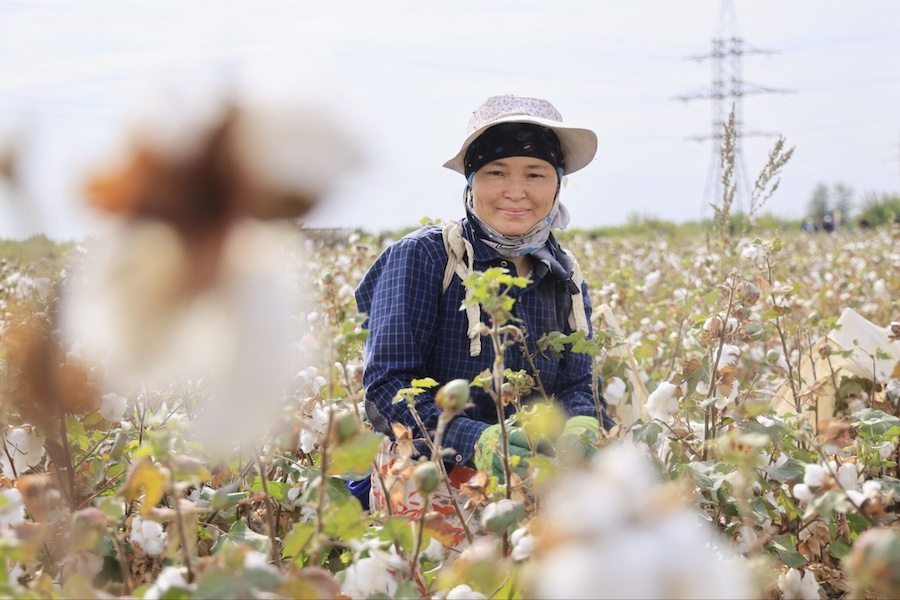
Better Cotton, the world’s largest cotton sustainability initiative, has announced significant progress in the delivery of its Uzbekistan programme, including the adoption of stronger and more refined approaches to due diligence and decent work activities.
Woman working at a cotton field in Uzbekistan. © 2025 Photo credit: Uzbekistan’s Ministry of Agriculture


Katerina Gorbunova, Head of Better Cotton’s programme in Uzbekistan, said: “In collaboration with our Programme Partner, the German Agency for International Cooperation (GIZ), we have strengthened the programme’s framework and the services we offer to accelerate change across the country’s cotton sector.” 

Better Cotton’s Uzbek programme has strengthened in-country verification of licensed clusters by building the capacity of independent civil society groups and third-party auditors, plus implementing an updated due diligence methodology to ensure more robust and local oversight. 

This new-and-improved approach includes in-depth interviews and questionnaires with both cluster management and workers. It also consists of checks on financial health, ethics, and governance, providing a more comprehensive view of risk and performance across participating enterprises. The insights generated through this process are used to inform targeted interventions. 

Decent work-related actions have also evolved in light of Better Cotton recently becoming a certification scheme. The organisation now conducts preliminary assessments of newly onboarded clusters before the season begins to determine their readiness for certification and if requirements are not met, audits are postponed to the following season. 

For clusters with active licences, second party checks by qualified Better Cotton staff are conducted to identify potential decent work-related issues and, if necessary, trigger a more comprehensive examination by external labour rights monitoring organisations. 

Since August 2024, Better Cotton and GIZ have expanded training to cover not only innovative and regenerative agricultural practices, but also social sustainability and decent work principles following recent changes to Uzbek labour laws. 

This effort deployed a cascading training methodology to target cotton cluster management on the basis that they can subsequently educate workers, who can then support their peers. 

Gorbunova said: “The Uzbek cotton sector has tremendous potential to be a leader in the production of more sustainably produced cotton. This can only be achieved through collaboration, robust and transparent processes, and perseverance. Better Cotton is uniquely positioned to help unlock this potential and will continue to engage stakeholders across the country to make our vision a reality.” 

Paul Schumacher, Cotton Project Manager at GIZ Uzbekistan, added: “Today, sustainable agricultural methods, trade facilitations and decent work are no longer parallel efforts, they are parts of one sustainable system. With the right networks and shared effort, as we created within the frame of Better Cotton, we turn individual action into systemic change.”

More News from Better Cotton

#Natural Fibers

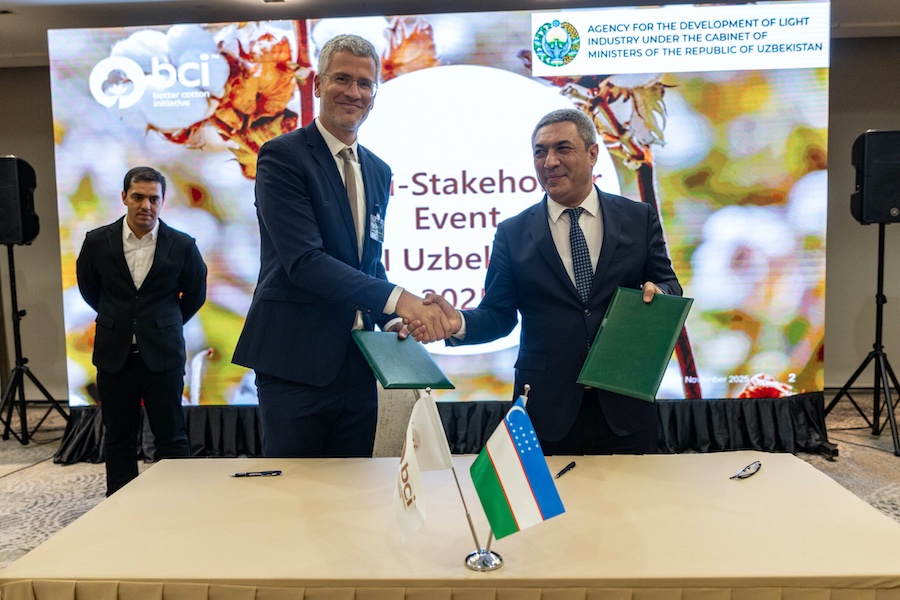
Better Cotton Initiative partners with Uzbek government agency to offset certification costs

The Better Cotton Initiative (BCI) has today announced a strategic agreement with Uzbekistan’s Light Industry Agency to increase financial support for cotton farming clusters adopting sustainable agricultural practices.

#Natural Fibers

Better Cotton Initiative surpasses 50% traceable BCI Cotton milestone

Two years since the launch of its traceability solution, the Better Cotton Initiative (BCI) has announced that over 50% of BCI Cotton volumes entering global fashion and textile supply chains are now traceable, deriving from 15 countries.

#Natural Fibers

BCI warns against ‘dangerous dilution’ of EU corporate directives

The approval of the European Commission’s Omnibus I proposal by the European Parliament’s Committee on Legal Affairs, accepting controversial changes to key sustainability directives is of great concern. These changes, namely to the Corporate Sustainability Reporting Directive (CSRD) and the Corporate Sustainability Due Diligence Directive (CSDDD), threaten to significantly dilute business reporting and due diligence obligations.

#Natural Fibers

Better Cotton Initiative marks World Cotton Day with launch of innovative product label

The Better Cotton Initiative (BCI) has launched an innovative product label for the fashion and textile sectors which allows retailer and brand members to provide consumers with greater clarity about the origin and percentage of BCI Cotton in their products.

More News on Natural Fibers

Latest News

#Recycling / Circular Economy

Advanced Recycling Conference 2025 fuels innovation across key waste streams

The Advanced Recycling Conference (ARC) 2025 brought together nearly 220 experts from 28 countries to spotlight pioneering advancements and foster industry collaboration in recycling across diverse waste streams including plastics, textiles, automotive and other materials.

#Dyeing, Drying, Finishing

Navis TubeTex announces U.S. partnership with Icomatex

Navis TubeTex, a global leader in advanced dyeing and finishing machinery solutions, is pleased to announce a new partnership with Icomatex (www.icomatex.com), a respected European manufacturer of high-quality stenters and textile finishing equipment. Under this agreement, Navis TubeTex will exclusively represent the Icomatex stenter line in the United States.

#Recycling / Circular Economy

ADVANSA launches ADVA®tex: A new step toward textile-to-textile recycling

ADVANSA has introduced ADVA®tex, a new filling fibre made entirely from recycled pre-consumer textile waste, positioning the material as a significant step forward in textile-to-textile (T2T) recycling. The fibre is designed for use in duvets, pillows, mattresses, and furniture applications and is available in three versions.

#Knitting & Hosiery

KARL MAYER celebrates 35 years of EL pattern drive

KARL MAYER is celebrating an anniversary this year: on 30 November 1990, the first warp knitting machine with electronic guide bar control, the KS 4 EL, was delivered – another milestone for patterning. As early as 1980, the SU gearbox with the MRS42SU had initiated the transition from mechanical chains to digital data.

TOP