#Market Analysis & Forecasts
2021 Report on Innovations in Cellulosic Fibres Derived from Recycled Textile and Clothing Waste
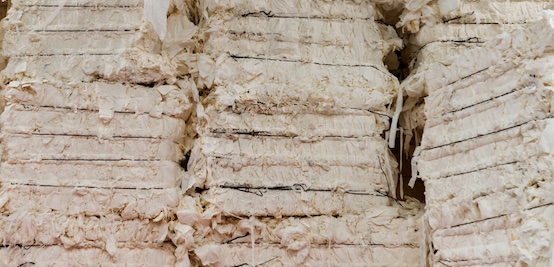
Brands and retailers are under immense pressure to provide textile and apparel products which are environmentally sustainable. At the same time, there is an urgent need to reduce the amount of waste generated by the global fashion industry--which is estimated at 92 mn tons per annum. These key challenges could be addressed by making cellulosic fibres from materials derived from textile waste. These fibres are biodegradable and are therefore considered to be more environmentally sustainable than synthetic fibres.
Also, textiles and clothing made from these fibres can themselves be used as feedstocks in recycling processes at the ends of their useful lives, thereby contributing towards the development of a circular economy. Some start-up companies have been quick to recognise the huge commercial potential for cellulosic fibres derived from textile waste and made rapid progress in developing innovative technologies in this area. Other companies have developed ways of making unique cellulosic fibres from materials recovered from textile waste.
This report highlights the potential for commercialising cellulosic fibres derived from textile waste, and includes profiles of six start-up companies innovating in this sector, namely Circ, Evrnu, Infinited Fiber Company, Renewcell, Spinnova and Worn Again Technologies. Also, it describes a number of projects supporting the development of cellulosic fibres derived from post-consumer waste and provides an outlook for the future.
Several innovative start-up companies have recently made huge progress in developing cellulosic fibres derived from textile and clothing waste and some of these fibres are poised for commercialisation in 2021, according to a 31-page report in Issue 207 of Textile Outlook International.
Brands and retailers are under immense pressure to provide textile and apparel products which are environmentally sustainable. At the same time, there is an urgent need to reduce the amount of waste generated by the fashion industry--which is estimated at 92 mn tons a year.
Making cellulosic fibres from materials derived from textile and clothing waste is one way of addressing these two key challenges--not least because such fibres are biodegradable and are therefore considered to be more environmentally sustainable than synthetic fibres and cellulosic fibres made using conventional processes.
Furthermore, cellulosic fibres derived from textile and clothing waste can themselves be used as feedstocks in recycling processes when the textiles and garments which incorporate them have reached the ends of their useful lives, thereby contributing towards the development of a circular economy.
Some start-up companies--such as Evrnu and Renewcell--have focused on the development of pulp derived from textile waste. This pulp can, in turn, be used as an alternative to wood pulp in the manufacture of cellulosic fibres such as lyocell and viscose. Meanwhile, Infinited Fiber Company has developed its own "unique" cellulosic fibre which is made from cellulose derived from textile waste, and Spinnova is scaling up the manufacture of its specialist cellulosic filament fibre which is produced from pulp without the use of a dissolving process. In addition, Spinnova is conducting research into the use of textile waste and bio-based waste as feedstocks.
Some of these companies are poised to commercialise their products in 2021, representing an exciting opportunity for textile and apparel companies seeking to improve the environmental sustainability of their products.
Indeed, cellulosic fibres derived from textile and clothing waste are attracting high commercial interest, and a number of the apparel industry's key players--including H&M Group, Kering and Patagonia--have invested in start-ups innovating in this field. Other companies, such as Adidas, Bestseller, Levi Strauss & Co, PVH and Wrangler, have established partnership agreements through which they are exploring the use of such fibres in the manufacture of innovative new products.
Looking to the future, demand for cellulosic fibres--and lyocell in particular--is set for healthy growth, and so there is much opportunity for providers of cellulosic fibres derived from textile and clothing waste. Collaboration is key to bringing such products to market and, to support progress in this area, some major industry projects have been established--including the Full Circle Textiles Project: Scaling Innovations in Cellulosic Recycling, and the New Cotton Project.
However, it should be noted that start-ups entering the market are competing with some industry heavyweights--including Asahi Kasei, Birla Cellulose, Lenzing, Sateri, and Tangshan Sanyou. Consequently, they will need to keep abreast of the latest developments - notably those relating to traceability. Consumers are demanding increasingly that materials incorporated in textile and apparel products are capable of being traced along the entire supply chain. This is considered to be particularly important in relation to fibres derived from recycled materials, and Lenzing has made major strides in this area through its use of innovative blockchain technology.
Key Topics Covered:
1. SUMMARY
2. INTRODUCTION
3. COMPANIES RECOVERING MATERIALS FROM TEXTILE WASTE FOR USE IN THE MANUFACTURE OF CELLULOSIC FIBRES
Circ (Tyton BioSciences)
Investments and partnerships
Evrnu
NuCycl
Partnerships
Funding
Renewcell
Brands utilising Circulose fibres
Manufacturing facilities
Partnerships
Worn Again Technologies
Investors and pioneer members
Grants and facilities
Fibersort Consortium
4. START-UP COMPANIES MAKING CELLULOSIC FIBRES FROM MATERIALS RECOVERED FROM TEXTILE WASTE
Infinited Fiber Company
Fibre manufacturing process
Partnerships
Spinnova
Fibre production technology
Partnerships
5. PROJECTS SUPPORTING THE DEVELOPMENT OF CELLULOSIC FIBRES DERIVED FROM POST-CONSUMER WASTE
Full Circle Textiles Project: Scaling Innovations in Cellulosic Recycling
The New Cotton Project
6. OUTLOOK
For more information about this report visit
https://www.researchandmarkets.com/r/ybq8vf
Source: Textiles Intelligence Ltd.