[pageLogInLogOut]

#Making-Up

Innovative solutions by Gerber at CISMA 2013 in Shanghai
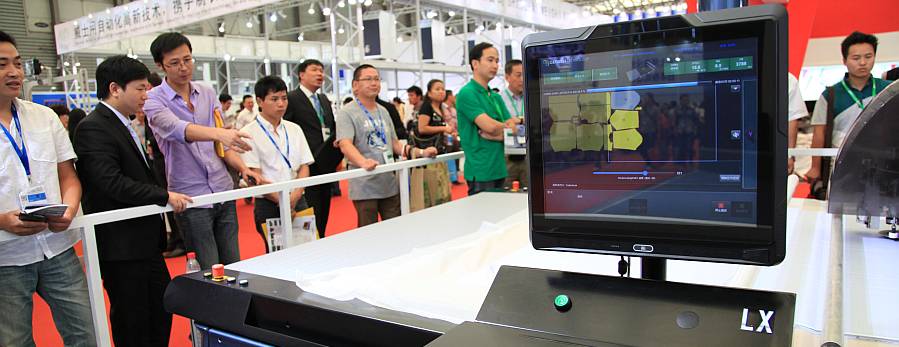
The audience at CISMA watching the Paragon® cutting System (c) 2013 Gerber
During the China International Sewing Machinery & Accessories (CISMA) show in Shanghai, China Sept. 25-28, Gerber Technology, the sewn goods industry’s leading provider of automation technology, is demonstrating breakthrough software and manufacturing solutions that embody decades of best practices from thousands of users – making them easy to operate, easy to maintain and capable of producing the highest-quality products possible.

Focus on optimizing workflow and maximizing cutting room efficiencies

“Any design or cutting room manager or business owner of any size, will want to witness Gerber’s newest technology in action at CISMA,” said Steve Park, vice president and general manager of Gerber’s Sewn Goods business. “Visitors will see several ground-breaking solutions to help them optimize their workflow from the design room through the cutting room, to maximize productivity and ensure quality.”

“We’ve focused on making our systems the easiest to use and have incorporated advanced technologies that maximize system uptime and ensure parts are cut precisely the first time – every time,” said Park. “We also provide managers with the data they need to continuously improve their cutting operation.”

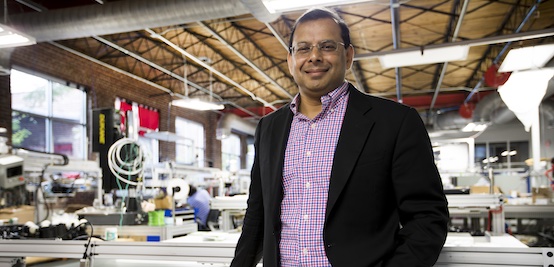
Pic: Gerber Technology President and CEO, Mike Elia, at Gerber’s CISMA press conference

New Paragon® cutting platform

The new Paragon System from Gerber maximizes cut room productivity with advanced machine intelligence and breakthrough ease-of-use.

Paragon leverages Gerber’s decades of experience and the learning from over 250 million hours of cutting operation to produce high- quality cut parts regardless of material, application or operator. With its superior uptime performance, Paragon also enables manufacturers to realize a higher return on investment by producing more parts in less time.
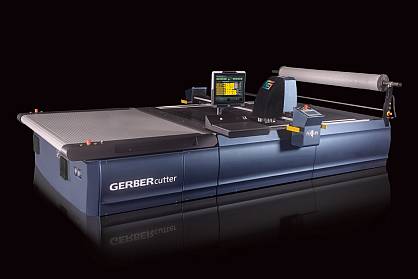
Pic: Paragon® cutting system

“Paragon customers will no longer need to hold on to antiquated technology due to fear of re-training experienced operators or spend months training new operators only to lose them in a competitive labor market,” said Mike Elia, president and CEO of Gerber. “Paragon’s elegant, breakthrough user interface, which we call KERI™,  is simple enough for any operator to use efficiently and accurately from the start – it’s as easy as click-click-cut.” 
More News from Gerber Technology

More News on Making-Up

Latest News

#Techtextil 2026

Young talents honoured – 60 years Walter Reiners Foundation

At the Techtextil trade fair in Frankfurt at the end of April, Peter D. Dornier, chairman of the VDMA’s Walter Reiners Foundation, presented awards to five successful young engineers. Promotion and sustainability awards were presented in the categories of bachelor’s/project theses and diploma/master’s theses. Academic theses are eligible for the sustainability awards if, for example, they develop solutions for resource-efficient products and technologies.

#Recycling / Circular Economy

RE&UP contributes to Global Fashion Summit 2026 circularity discussion

RE&UP contributed to the global conversation on textile circularity at Global Fashion Summit 2026 in Copenhagen, where Fatih Konukoğlu, Chairman of RE&UP and Vice Chairman of Sanko Holding, took part in both the keynote session “The New Rules” and the panel discussion “A Reckoning and Renewal for Circular Horizons”, alongside leaders from H&M Group, Looper Textile Co. and Sourcing Journal.

#Recycling / Circular Economy

Europe’s textile future at a turning point: New 2030 Circularity Blueprint aims to scale recycling and unlock investment opportunities

The EU textile system is at a critical crossroads. Today, less than 1% of discarded garments are recycled into new garments, despite EU-wide obligations for separate collection. In response, Global Fashion Agenda (GFA) is launching the 2030 Circularity Blueprint, in partnership with ReHubs. This ambitious initiative is designed to support the transformation of the EU textile ecosystem to advance textile-to-textile recycling and drive the transition to a circular economy.

#Research & Development

Regional hemp bast for lightweight construction profiles

The cultivation of fibre hemp for the production of ropes and clothing has a long tradition in Saxony. Due to its excellent fibre properties, it is also suitable as a renewable raw material for reinforcement in fibre composites. At the STFI and IWU in Chemnitz, the CannaPul project is cur- rently investigating how a regional value chain for hemp-based lightweight construction profiles can be established. To this end, the technical processing of hemp fibres into continuous fibre strands and their embedding in a suitable bio-based matrix are being investigated.

TOP