[pageLogInLogOut]

#Knitting & Hosiery

Movement without gears. Patterning without limits.

KARL MAYER celebrates 35 years of EL pattern drive
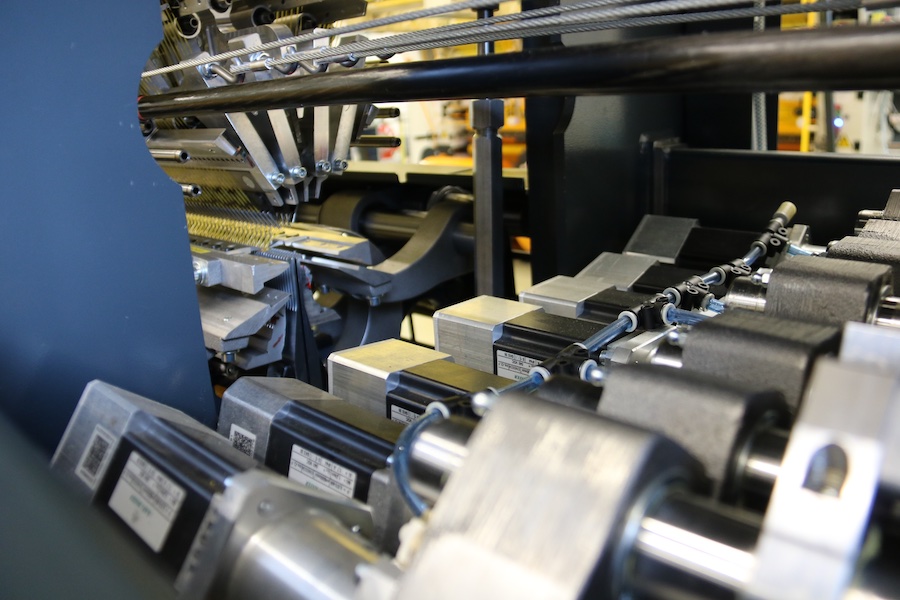
EL Pattern Drive Double Raschel maschine © 2025 KARL MAYER
KARL MAYER is celebrating an anniversary this year: on 30 November 1990, the first warp knitting machine with electronic guide bar control, the KS 4 EL, was delivered – another milestone for patterning. As early as 1980, the SU gearbox with the MRS42SU had initiated the transition from mechanical chains to digital data.

SU drive: cassette instead of chain

The SU drive – first introduced in Multibar Raschel machines – controlled the shogging movement of the guide bars magneto-mechanically via actuators and a microcomputer. The advantages were virtually unlimited repeat lengths, higher production speeds, less handling and shorter set-up times. Patterns could be changed in minutes instead of hours without changing chains.

Thanks to an SU drive with integrated overlap device developed in 1985, the pattern chains and discs for the guide bar control on tricot machines could also be replaced – paving the way for further electronic solutions.

EL guide bar control: motor instead of mechanics

In order to overcome the mechanical limitations of the SU drive for tricot machines, KARL MAYER developed a system with electric motors, thereby performing pioneering work.

“We wanted to use electric motors to move the bars. That was completely new territory,” recalls Georg Kraus, Senior Expert Technology Development and EL pattern drive activist from the very beginning.

A test rig with asynchronous motors and ball screws showed that the new principle worked quickly, precisely and reliably.

The prototype led to the development of electronic guide bar control, and a new era began. The first KS 4 EL was up to 37% faster than the version with SU drive and offered completely free patterning via data transfer without pattern discs and without mechanical limitations. It also required less maintenance and space.
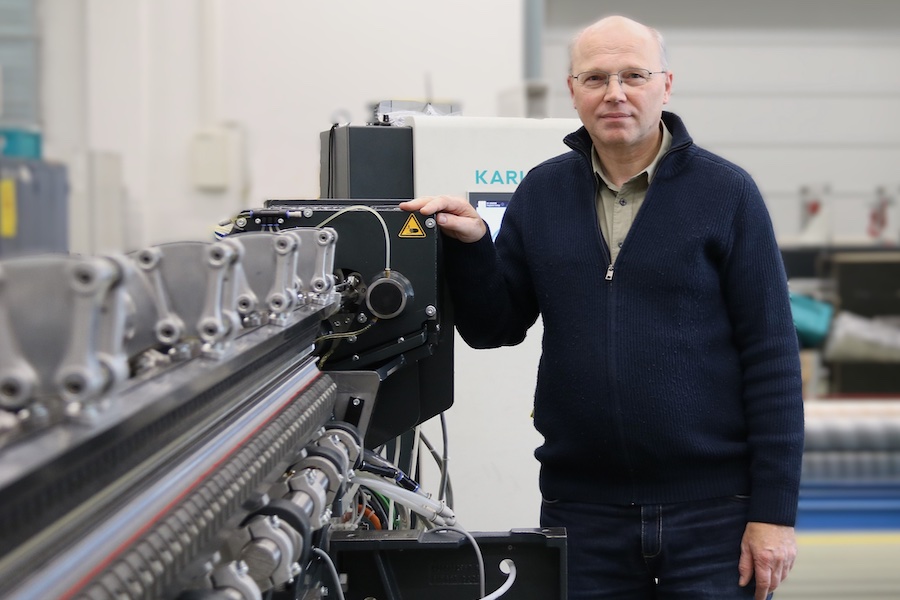
Georg Kraus © 2025 KARL MAYER


Expansion to further machine types

Subsequently, NIPPON MAYER's double raschel machines and machines for the production of technical textiles were converted to the EL system.

The lace raschel machines followed later. Thanks to an upgrade for use in high-bar models, the first Multibar Raschel machine with electronic control of all guide bars – a TL 66 – was launched in 2002. The models in this series also had an additional advantage: the compact design of the mechanics allowed the integration of more guide bars and a higher maximum shogging distance for the pattern bars, thus offering greater patterning potential compared to the variants with SU equipment.

Extension to other machine components

At the same time, the price-performance ratio of the EL system was improved, but above all its potential was also exploited for other sub-processes of warp knitting, such as yarn feeding.

Based on EL technology for the tension rail, Advanced Feeding Control (AFC) was developed, which ensures maximum machine performance even with complex patterns involving highly variable yarn consumption. Equipped with the AFC system, the fastest three-bar tricot machine with electronic guide bar control on the market was introduced at ITMA 2023. The newcomer produced a pleated fabric at a speed of 2,900 rpm in front of an astonished audience at the trade fair.

There was also a quantum leap in the field of technical textiles: the warp knitting machine with weft insertion WEFTTRONIC® II G with the new VARIO WEFT laying system was also introduced at ITMA 2023. The weft insertion system does not require any mechanical intervention regarding the threading for weft patterning, has no repeat limitation and reduces edge waste. This is also based on EL technology.

For technology pioneer Georg Kraus, the potential of the EL drive is far from exhausted. In the medium term, he expects it to completely replace the N pattern drive. He also has many ideas for further electronic applications in the warp knitting machine sector.

More News from KARL MAYER Textilmaschinenfabrik GmbH

#Composites

KARL MAYER strengthens partnerships in the composites industry at JEC World 2026

KARL MAYER further strengthened its role as a reliable and competent partner to the composites industry at JEC World 2026. The global market leader in textile machinery manufacturing used the trade show to meet key customers, establish numerous new contacts, and engage in in-depth technical discussions.

#Knitting & Hosiery

Driving WARP KNIT Inspiration

KARL MAYER sees performance fabrics and next-level textile solutions in particular as potential growth drivers for its customers, as a motor for business development and as real game changers for the entire textile industry. Innovation does not happen by chance. It is the result of close exchange with customers & brands, textile expertise and competence in textile machine engineering. This is why KARL MAYER is investing in progress and collaborative development and opening its TEXTILE INNOVATION CEN-TER (TIC) – a place to be for the entire textile world.

#Knitting & Hosiery

KARL MAYER (China) celebrates its 30th anniversary

On February 6, KARL MAYER (China) celebrated the new year and its 30th anniversary. Employees and the management team at the Changzhou location, as well as representatives from management in Germany, Italy, and Hong Kong, were invited to the festivities. A special highlight was the visit by Lutz Wolf, CEO of KARL MAYER.

#Knitting & Hosiery

KARL MAYER at JEC: Multiaxial reinforced CFRP pultrusion profiles are picking up speed in the mobility sector

KARL MAYER Technical Textiles will be showcasing exciting new application potentials for multiaxial non-crimp fabrics in combination with the pultrusion process at the upcoming JEC in Hall 5, Booth C 46. The advancement of the tried-and-tested pultrusion process enables the cost-efficient production of complex CFRP multi-chamber profiles, which are used in the CETROVO high-speed metro. The world's first carbon-intensive lightweight rail vehicle of this type is designed for speeds of up to 140 km/h.

More News on Knitting & Hosiery

#Techtextil 2026

Groz-Beckert showcases cross-segment innovations for technical textiles in Frankfurt

From April 21 to 24, 2026, Groz-Beckert will present its latest innovations and solutions across the product areas of knitting, weaving, nonwovens and sewing at Techtextil 2026 in Frankfurt (Hall 12, Booth B90).

#Techtextil 2026

Shima Seiki showcases WHOLEGARMENT® and 3D knitting solutions for technical textiles at Techtextil 2026

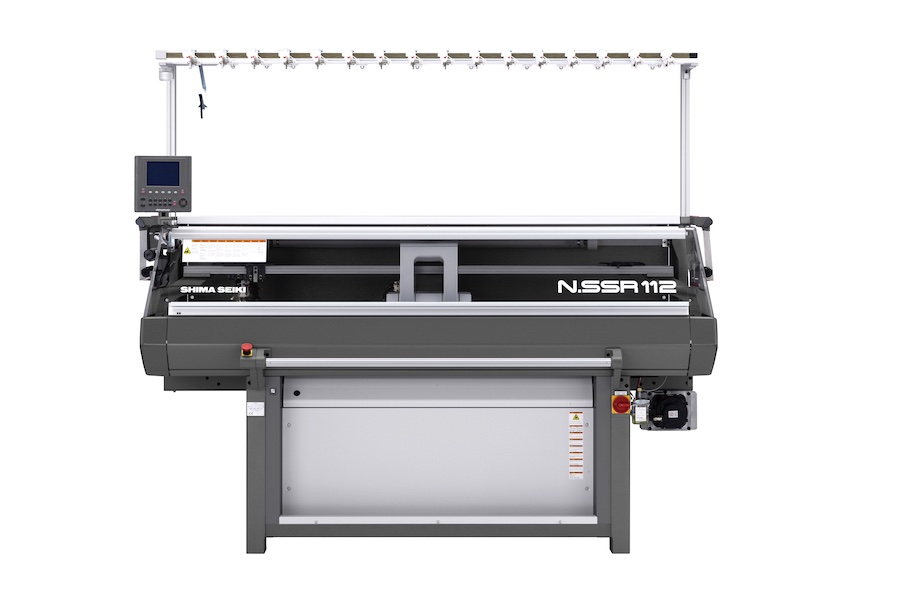
Leading textile technology solutions provider SHIMA SEIKI MFG., LTD. of Wakayama, Japan, along with its Italian subsidiary SHIMA SEIKI ITALIA S.p.A., will be participating in the Techtextil 2026 exhibition in Frankfurt, Germany next month. On display will be WHOLEGARMENT® and other advanced three-dimensional knitting applications across a wide range of industries besides fashion apparel that are not typically associated with knitting, such as technical textiles using industrial materials and advanced three-dimensional knitting.

#Knitting & Hosiery

SHIMA SEIKI announces partnership with CLO Virtual Fashion

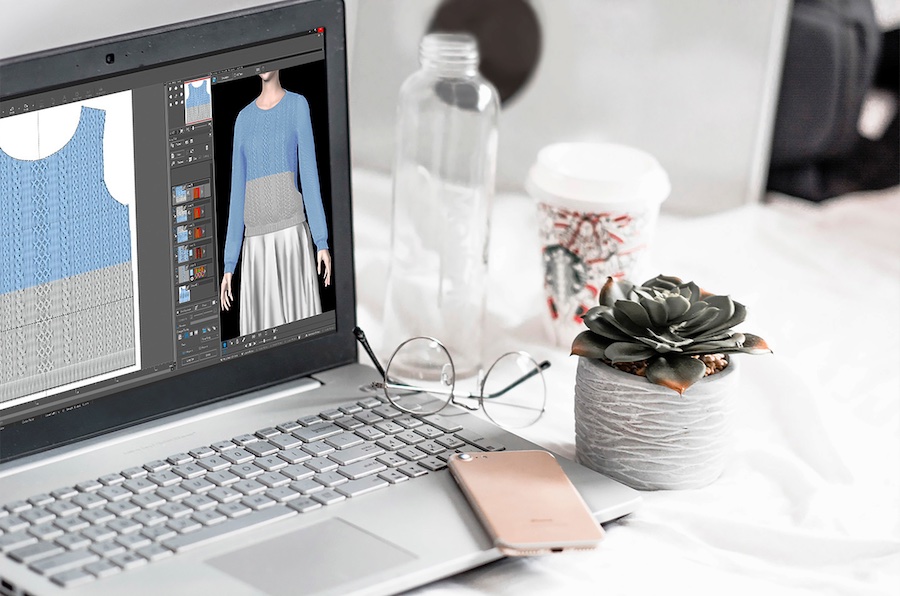
Leading computerized flat knitting innovator SHIMA SEIKI MFG., LTD. of Wakayama, Japan is partnering with digital garment solutions provider CLO Virtual Fashion of Seoul, South Korea for the integration of technology in garment design and simulation.

#Knitting & Hosiery

Huixing acquires insolvent Mayer & Cie.

Insolvency proceedings for the circular knitting and braiding machine manufacturer Mayer & Cie. were opened on December 1, 2025. Immediately following the opening of proceedings, the complete cessation of business operations was initiated. Most employees were subsequently given notice effective the end of February 2026. The production of the remaining orders in the circular knitting segment is expected to be completed by the end of the month. As early as December 2025, Mayer & Cie.’s braiding machine division was sold to an Italian investor.

Latest News

#Techtextil 2026

Modernizing Needling – DiloGroup at Techtextil & INDEX 2026

With the theme “Modernizing Needling”, the DiloGroup presents a comprehensively enhanced portfolio for needling technology. The objective is to further increase the performance and application range of needlefelt production lines in terms of productivity, flexibility, and the development of new products, thereby meeting the growing demands of modern technical textiles.

#Advertorial

New Gravimax MMX-R X-ray sensor platform opens up new application fields

The demands placed on quality control in web-based production processes are increasing: materials are becoming more complex, basis weights are varying more widely, and at the same time, pressure is growing to make processes more efficient and transparent. Precise measurement data across the entire web width has therefore become a key factor in ensuring stable production processes. With its new Gravimax MMX-R sensor platform, Mahlo introduces a radiometric measurement solution designed to set new standards in determining basis weight and material composition. The platform combines advanced X-ray technology with newly developed signal processing, enabling measurement tasks that previously often required multiple sensor technologies.

#Recycling / Circular Economy

Carbios confirms Longlaville plant in France following financing progress

Carbios has reaffirmed its plans to build its Longlaville plant in France within a project financing framework, targeting the start of production in the first half of 2028. The company also reports a solid cash position of around €60 million at the end of 2025 and has appointed Benoît Grenot as Deputy Chief Executive Officer to support the execution of its strategic projects.

#Recycling / Circular Economy

ABB and Syre partner to explore technologies for industrial-scale textile recycling

ABB has signed a Memorandum of Understanding (MoU) with Swedish textile impact company Syre to jointly explore technologies to support the development of Syre’s first textile-to-textile recycling plant in Vietnam. The agreement establishes a framework for collaboration to investigate how ABB’s automation, electrification and digital technologies could contribute to safe, efficient and scalable operations. It will also explore how these capabilities could further optimize process and quality control performance as Syre advances its ambition to produce circular polyester at industrial scale.

TOP