[pageLogInLogOut]

#Recycling / Circular Economy

Polyester-based tricot fabric with elasticity – a new development from KARL MAYER
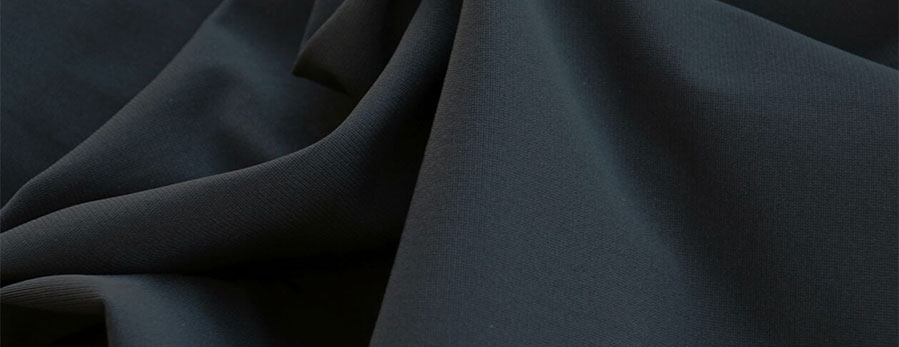
© 2021 KARL MAYER
If, for example, discreet comfort stretch for the clothing sector is required, KARL MAYER’s new fabric offers an ecological alternative.

Elastic yet still recyclable

The textile industry is responsible for huge mountains of waste in Europe: in Germany alone, 390,000 tonnes of textile waste are produced every year. Only Italy tops this figure with almost 466,000 tonnes per year, as shown by a study on waste disposal behaviour in 15 EU countries commissioned by the fashion label Labfresh. According to further study results, every German person produces 4.7 kilograms of textile waste, of which only 0.5 kilograms are recycled and 0.4 kilograms are reused without treatment. The rest is incinerated or dumped. /1/

A key reason contributing to the low recycling rate is the purity of the material. Many clothing textiles consist of fibre or yarn mixtures that cannot be separated for the treatment process or can only be separated with great difficulty. If, for example, discreet comfort stretch for the clothing sector is required, KARL MAYER’s new fabric offers an ecological alternative. The textile is made from yarns of different polyester polymers: a semi-dull version for a soft look and a bicomponent fibre that offers moderate mechanical elasticity with a well-thought-out structure. The elements of the stretchable fibre consist also of different polymers and show different shrinkage behaviour: when heated, a spiral crimp is formed. As the bulky deformation is not mechanically induced – unlike in textured yarns – it produces a more permanent and pronounced elongation in comparison.


The two polyester yarns were processed into a dense fabric on a high-performance HKS 3-M tricot machine in gauge E 32. The fabric weighs 202 g/m². It stands out thanks to its dense, rich feel and a heavy drape. Clothing made from it is comfortable to wear, easy to wash, does not need to be ironed and can be recycled – after removing accessories such as buttons and buckles.
More News from KARL MAYER Textilmaschinenfabrik GmbH

#Knitting & Hosiery

KARL MAYER at JEC: Multiaxial reinforced CFRP pultrusion profiles are picking up speed in the mobility sector

KARL MAYER Technical Textiles will be showcasing exciting new application potentials for multiaxial non-crimp fabrics in combination with the pultrusion process at the upcoming JEC in Hall 5, Booth C 46. The advancement of the tried-and-tested pultrusion process enables the cost-efficient production of complex CFRP multi-chamber profiles, which are used in the CETROVO high-speed metro. The world's first carbon-intensive lightweight rail vehicle of this type is designed for speeds of up to 140 km/h.

#Knitting & Hosiery

The new RE 6 EL from KARL MAYER shows what it can do

KARL MAYER’s new RE 6 EL from KARL MAYER brings a breath of fresh air to raschel fabric production. The latest samples from the textile product development department of this innovative textile machine manufacturer demonstrate the extensive design possibilities on offer.

#Knitting & Hosiery

KARL MAYER and Lenzing partner to advance warp knitting with scalable cellulose fiber solutions

The Lenzing Group, a leading supplier of regenerated cellulosic fibers for the textile and nonwovens industries, together with KARL MAYER, the global market leader in warp knitting machines and warp preparation systems, debut a joint innovation project during Premiere Vision, Paris.

#Knitting & Hosiery

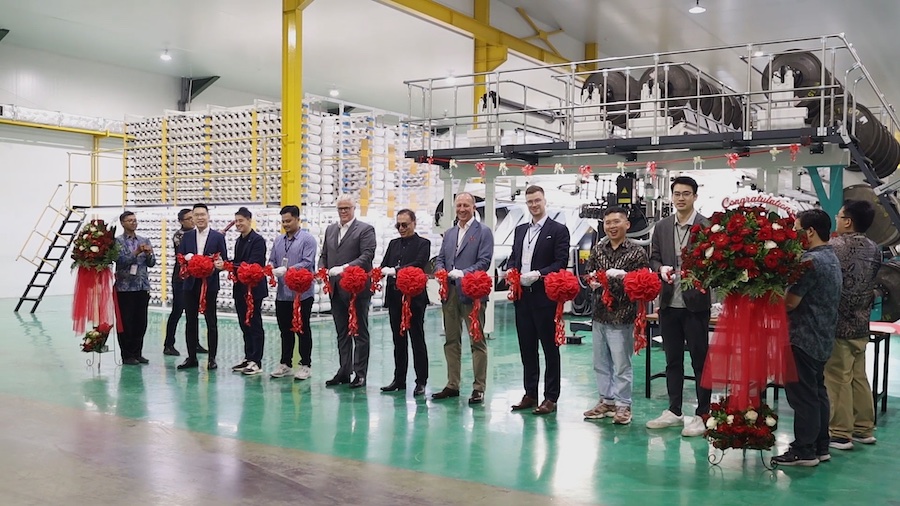
KARL MAYER opens a new TEXTILE INNOVATION CENTRE – a new era of textile innovation begins

KARL MAYER is opening its new TEXTILE INNOVATION CENTRE (TIC), sending a strong signal that it is driving textile innovation forward and opening up new perspectives for the textile industry. The TIC brings together the latest developments in Warp Knitting, Technical Textiles and Warp Preparation – KARL MAYER’s core areas of expertise.

More News on Recycling / Circular Economy

#Recycled_Fibers

Selenis to double capacity in Portugal by Q3 2027 - Accelerating the Global transition to circular and low-carbon polyesters

Selenis, a global leader in high-performance specialty polyesters and part of the IMG Group, has announced a transformational expansion of its industrial headquarters in Portalegre, Portugal. This strategic investment is set to double the site’s production capacity by the third quarter of 2027, significantly accelerating the industrial scale-up of bio-based, medical-grade, and circular co-polyesters.

#Research & Development

Pellet press enables thermomechanical textile recycling on a pilot scale at ITA

Since the end of 2025, the technical centre of the Institut für Textiltechnik (ITA) of RWTH Aachen University has been equipped with a pellet press from the manufacturer Amandus Kahl GmbH & Co. KG, Reinbek, Germany. This press can efficiently compact shredded synthetic textiles at a throughput of up to 25 kg/h and process them into pellets with a diameter of 4 mm.

#Associations

EDANA joins industry coalition urging a strong internal market legal basis for the New Circular Economy Act

EDANA has joined 67 European industry associations in a joint industry statement calling on the European Commission and co-legislators to anchor the forthcoming New Circular Economy Act (CEA) in the Internal Market legal basis (Article 114 TFEU).

#Research & Development

Fabolose: Fabricating vegan and circular leather alternatives from bio-tech-derived cellulose

Fabulose is an EU funded project coordinated by the German Institutes of Textile and Fiber Research (DITF). Its consortium consists of leading research institutes, biotech innovators, and industry stakeholders who aim to create high-performance, biobased and recyclable leather-like fabrics, using efficient biotech production routes for bacterial cellulose, cyanophycin and bacterial pigments

Latest News

#Composites

JEC World 2026 returns with an unprecedented content program

Recognized worldwide as the leading trade exhibition for composite materials and their applications, JEC World returns on March 10-12, 2026, at Paris Nord Villepinte as the most ambitious edition to date, in line with its motto “Pushing the limits”. As the must-attend event for the composites industry, JEC World will offer an unprecedented program, blending conferences, markets insights, technical sessions, awards, and above all, a unique experience and invaluable connections.

#Raw Materials

Beyond the wardrobe – innovative cotton takes the spotlight

Cotton can do more – a lot more. Cutting-edge textiles and high-tech products made from 100% cotton prove just how powerfully performance and sustainability can come together. That very surge of innovation is front and centre at the 38th Bremen Cotton Conference, taking place March 25–27, 2026, at Bremen’s Parliament on the historic market square – culminating in a bold and dedicated closing session on Friday. In the spotlight: performance upgrades for pure cotton, smart strategies for circular textile waste solutions, and pioneering concepts for demanding technical applications. From natural fibre–reinforced composites to highly effective flame-retardant solutions, cotton steps out of the closet and shows the future potential woven into every fibre.

#Digital Printing

Keeping print inclusive: Empowering women in the print industry

Across all industries, cultivating a diverse and inclusive workplace is increasingly recognised as valuable and essential to long-term success. However, despite the print industry’s significant advancements in technology and innovation, visible representation of women remains limited. As the sector grapples with low recruitment, it’s important to challenge outdated perceptions. Creating real change, however, requires collective effort - no single company can do it alone.

#Texprocess 2026

Texprocess 2026: market overview for strategic future investments

At Texprocess 2026, 200 exhibitors from 28 countries will be represented. In a challenging market environment, the leading trade fair is a constant and reflects progress in textile processing – driven by automation, digitalisation and AI. In addition, international start-ups present their ideas and meet partners from industry and research. Techtextil takes place in parallel with an optimised hall layout.

TOP