[pageLogInLogOut]
TRÜTZSCHLER SPINNING - THE NEW CARD

#Industry 4.0 / Digitalization

Greening the Internet of Things

Sensors have become the ubiquitous companions of our lives. Whether knowingly or not, we use them every day to collect, process, and interpret data and help us make sense of the world around us. The demand for connected devices keeps growing – in particular in the Internet of Things, or IoT for short. The Fraunhofer flagship project ZEPOWEL has shown successfully how all of these sensor systems can become extremely energy efficient or even completely autonomous. The potential result: Up to 20% less carbon emissions in Germany alone.

With billions of sensors littering our increasingly connected world, their power supplies have become a factor to contend with for the environment, especially for industrial use. Many of the devices that constitute the Internet of Things are already intricately tied to each other, with a mass of sensors forming individual nodes. Early IoT devices would communicate with each other and share their data with little concern for energy efficiency, making many of the urgently needed IoT applications too heavy a burden on the environment for them to be rolled out on a true industrial scale or indeed making them unsuitable choices for upgrading. Now, the nine Fraunhofer organizations behind the ZEPOWEL project, standing for “Towards Zero Power Electronics”, have shown that the digital revolution and the energy revolution do not have to exclude each other.

With years of active research and development on everything from integrated sensors and signal processing or energy harvesting and improved storage technologies to efficient wireless communication between connected IoT devices, the ZEPOWEL platform was set up to optimize the entire universe of IoT systems. Its unique approach relied not only on its use of modular technology that can be tailored to match most IoT applications, but also on the ability of future sensor nodes to become autonomous of external power supplies.

The project partners’ work was put to the test in two characteristic use cases of the Internet of Things: Smart cities and smart fabrication. For the former, autonomous sensor nodes would monitor air quality, such as nitrous oxide or fine particulate emissions, in real time and with exceptional energy efficiency. In smart factories, IoT nodes would be the backbone of a connected production system that tracks and controls the state of machines, engines, or pumps. In particular when machines idle, this ability to respond immediately could help reduce the overall energy consumption by a massive margin.

All contributors to the project convened for the concluding session of the ZEPOWEL project to present their shared results and commercialization strategy to a high-profile audience of experts from industry and academia. The potential use cases for the proposed sensors are vast and diverse, reaching from modern agriculture and manufacturing to holistic systems for a more powerful and sustainable Internet of Things.


Fraunhofer’s flagship project ZEPOWEL

No fewer than nine organizations conducted ZEPOWEL as a flagship project of the Fraunhofer Society between 2017 and 2021: Under the careful guidance of the Fraunhofer Institute for Reliability and Microintegration IZM and the Fraunhofer Institute for Integrated Systems and Device Technology IISB, these partners included the Fraunhofer Research Institution for Microsystems and Solid State Technologies EMFT, the Fraunhofer Institute for  Cognitive Systems IKS, the Fraunhofer Institute for Applied Solid State Physics IAF, the Fraunhofer Institute for Integrated Circuits IIS, and its Adaptive Systems division EAS, the Fraunhofer Institute for Photonic Microsystems IPMS, and the Fraunhofer Institute for Silicon Technology ISIT.
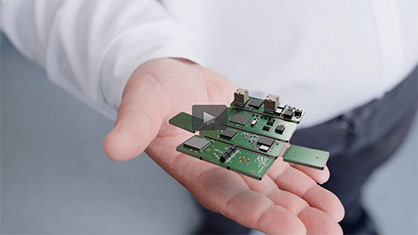
© Fraunhofer IZM / loewn logulagu gmbh


Watch the project video (GERMAN LANGUAGE) to discover more about the potential future for ZEPOWEL’s technologies and components. 

https://youtu.be/GotGWj1YkBc



More News from TEXDATA International

#ITM 2026

ITM 2026: The new geography of textile production

New production hubs are emerging across North Africa and Central Asia, while Türkiye is accelerating its transformation toward higher-value, technology-driven and more sustainable textile manufacturing.

#Research & Development

“Production is a product”

From technical textiles and AI-driven robotics to the limitations of textile circularity: Professor Dr Thomas Gries looks back on more than two decades of development at ITA Aachen. In the interview, he explains why production technology remains a decisive success factor, discusses international collaborations and innovation ecosystems, and shares his views on the transformation of production landscapes and the challenges facing an increasingly regulated industry.

#Knitting & Hosiery

“We need to move away from the price trap and return to a value-driven mindset.”

With its new Textile Innovation Center, KARL MAYER is sending a strong signal for innovation, collaboration, and the future of textile applications. In this interview, Karl Josef Mayer discusses new opportunities in warp knitting, the processing of staple fibres, recycling, the changing role of machinery manufacturers, and why the textile industry must once again focus more strongly on the value of textiles. by Oliver Schmidt

#Associations

“Innovation, resilience and international experience remain the great strengths of the Swiss textile machinery industry”

Geopolitical uncertainty, growing competitive pressure from China, new free trade agreements and the shift towards a circular economy are currently reshaping the global textile industry. In this interview, Cornelia Buchwalder discusses the current mood within the Swiss textile machinery sector, the industry’s distinctive innovative strength, new market opportunities in India and Asia, and the technological trends that could shape the upcoming trade fair cycle leading up to ITMA 2027.

More News on Industry 4.0 / Digitalization

#ITM 2026

Driving digitalization, efficiency, and Smart Manufacturing across textiles and carpets

At this year’s ITM, BMSvision proudly showcases its next leap forward in digital manufacturing excellence. As a long-standing global pioneer in Manufacturing Execution Systems (MES) for the textile and plastics industries, BMSvision continues to accelerate digital transformation by delivering powerful, data-driven solutions that boost productivity, enhance quality and support sustainable growth. Visit BMSvision at the Vandewiele booth in Hall 7, Booth 710, to experience the future of textiles manufacturing.

#Industry 4.0 / Digitalization

Textile ETP launches digital transformation strategy, calling for urgent collective action across the value chain

Textile ETP’s DigitX Innovation Hub published its strategic roadmap for the digital transformation of Europe's textile and apparel industry.

#Research & Development

Textilfabrik 7.0 launched: Mönchengladbach becomes a real-world lab for sustainable textile production

With the official kick-off event of the Textilfabrik 7.0 (T7), a major transformation project for the German textile and apparel industry has been launched in the Monforts Quarter in Mönchengladbach. At the “Textile Roundtable,” an event format organized by the Zukunftsagentur Rheinisches Revier, representatives from industry, research, politics, and the regional economy came together to jointly lay the foundation for CO₂-neutral, circular, and economically viable textile production in Germany.

#Man-Made Fibers

OnceMore® from Södra brings end-to-end traceability for circular Man-made Cellulosic Fibers (MMCF) using TextileGenesis

OnceMore® from Södra, the world’s first large-scale process for recycling blended fabrics into high‐quality dissolving pulp, will begin using TextileGenesis, a Lectra company, to strengthen traceability from raw material to retail across the value chain. OnceMore® produces dissolving pulp made from blended textile waste and wood sourced from responsibly managed Swedish forests. By integrating TextileGenesis, OnceMore® supports the growing need for verified data and secure, transparent tracking throughout increasingly complex supply chain.

Latest News

#Associations

Mario Jorge Machado re-elected President of EURATEX

The EURATEX General Assembly has re-elected Mario Jorge Machado as President of EURATEX, renewing its confidence in his leadership at a crucial moment for the European textile and clothing industry. The sector is facing rising costs, global competitive pressure and an increasingly challenging transition towards sustainability and digitalisation.

#ITM 2026

ITM 2026 makes happy participants with its international and qualified visitor profile

ITM 2026 International Textile Machinery Exhibition, one of the most prestigious meeting points of the textile machinery sector, attracted attention in its first three days, particularly with its diverse international visitor numbers. Industry professionals from all over the world had the opportunity to closely examine the latest technology machines and solutions displayed in operation. Thousands of visitors from approximately 100 countries, primarily Egypt, Pakistan, India, Uzbekistan, Syria, Turkmenistan, Tajikistan, Morocco, Algeria, and Tunisia, met at the Tüyap Fair and Congress Center for new investment and cooperation opportunities.

#ITM 2026

KARL MAYER presents a textile TEXTRONIC® innovation at ITM 2026

With highly efficient machines and continuous textile innovations, KARL MAYER underscores its role as a reliable partner for discerning top-tier customers. Just in time for ITM 2026 in Istanbul, the industry leader is introducing a true innovation: an eyelash lace with its characteristic fringed look – combined with a previously unattainable 4-way stretch. While the established fabric could until now only be produced as rigid version or with one-dimensional stretch, the new elasticity in both dimensions expands the possibilities for cross-band panel fabrics.

#Raw Materials

Better Cotton Initiative welcomes new and returning Council members

The Better Cotton Initiative (BCI) has confirmed a series of appointments and reappointments to its Council, the multistakeholder board responsible for BCI’s strategic direction.

TOP