[pageLogInLogOut]

#Industry 4.0 / Digitalization

Useful predictions

The Internet of Things, Big Data, Artificial Intelligence and Predictive Maintenance are words frequently used in manufacturing today. Are they just buzz words? Can real benefits be gained by introducing digitization into products? Trelleborg’s Johannes Kunze von Bischhoffshausen passionately believes that there are tangible advantages to digital transformation in product design and processes.

What if you could predict when a piece of equipment was going to fail? At home, few of us can cope with the downtime involved when a washing machine breaks down. At some time in its life it will, but wouldn’t it be great to know when?

Machines in production environments also break down, especially when they are in use 24/7. To manufacturers, that does not mean a heap of dirty washing, but rather the cost of lost processing time and income.
© 2021 Trelleborg
© 2021 Trelleborg


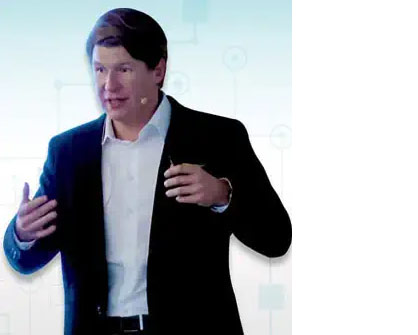
“Maintenance is an important area of focus for manufacturers,” says Dr. Johannes Kunze who is manager of digital transformation for Trelleborg Sealing Solutions. “It’s vital for process efficiency and it’s also an area where the introduction of digital technology can minimize downtime and reduce total cost of ownership, two goals at the forefront of any manufacturer’s mind.” The most basic maintenance strategy is corrective maintenance; simply fixing something when it breaks. Kunze says this is ok in noncritical applications but not a good solution if downtime is costly.

“In more critical applications, it is important that preventative maintenance is undertaken before a machine breakdown. Typically, this involves fixed planned maintenance cycles based on usage or time, but without digital technology. This can be wasteful if components are replaced before it is necessary.”

One step further is conditionbased maintenance, where sensors are added to machines to capture a prescribed condition indicating seal wear, and when a threshold is reached, that replacement is required.

Although this involves digital monitoring, it is still a stage away from full predictive maintenance, which aims to optimize maintenance time by forecasting the useful life of a component or when a component is going to fail. This is seen as one of the big value drivers of digitization and according to the McKinsey Global Institute report, The Internet of Things: Mapping the Value Beyond the Hype, it is estimated that IoT use cases such as predictive maintenance, could help companies save 630 billion USD by 2025.

Kunze adds that: “Real intelligence is achieved by making use of the sensors’ signals and predicting by means of statistics or Artificial Intelligence (AI) what is going to happen within a system and when a part is potentially going to fail, with scheduling maintenance based on this.

“For companies that are using the internet of Things (IoT) and AI in their products and its systems, putting sensors in, capturing the data and analyzing it, is not the challenge. The real challenge is to make sense of the data and act upon it.”

Good predictive maintenance depends on identifying suitable measurements to predict outages of a system.


“Talking to technicians, they will often say that they know when a system is going to fail by the noise it makes,” continues Kunze. “This is a good indicator to measure, along with other common measures, such as external temperature and vibration. However, these obvious indicators occur close to when the machine is going to fail, which is generally too late to prevent downtime.” 

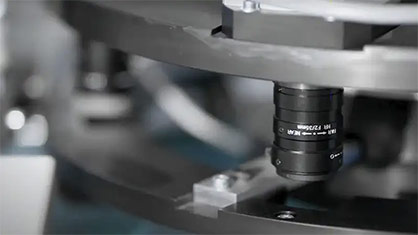
Sensors are increasingly used in equipment today, measuring everything from vibration, humidity, ambient temperature, to acoustic signals, motor current, insulation resistance, electrical capacitance and electrical inductance. Some even utilize thermography to create heat maps to capture what is happening inside equipment. One sensor will not generally indicate failure and data from a combination of sensors is usually required. Kunze, says: “To train a model or algorithm for digitally driven predictive maintenance, sensor data needs to be combined with good data from the field and reference data. It is necessary to find the hidden patterns, the relationship of pressures or rotational speed between breakdowns, for instance.

“One data source can be technician reports, which detail when a machine failed and what components were changed. The sensor data then needs to be split into data when the machine was operating correctly and when it was in failure mode, then integrating this engineering knowledge into preprocessing.”

It’s clear from this that predictive maintenance is not all about statistics for statistics sake. Using sensor data to create potentially meaningful indicators requires deep knowledge of specific applications and requires collaboration between engineers and data scientists to develop failure models. 
© 2021 Trelleborg
© 2021 Trelleborg


“IoT will not result in the replacement  of humans by robots, causing the technician or engineer to become superfluous,” confirms Kunze. “IoT requires intelligent machines, advanced analytics and critically, people.

“We’re beginning to see ever more intelligent machines, which have sensors and internet connectivity, allowing them to transmit data. People are required to make decisions, but with true predictive maintenance, these decisions are based on advanced analytics of the data that is gleaned from these intelligent machines.

“Without IoT, engineers could not possibly decipher data from up to 50 sensors, found in some of the latest manufacturing machines. Data scientists develop algorithms to find patterns and relationships within the data from these sensors and other data sources. The output from this process is more meaningful than the raw data. People then form decisions based on these actionable insights, making their work easier and significantly more effective.”

At Trelleborg Sealing Solutions, the overall approach to predictive maintenance is called Cognitive Sealing. Typically, predictive maintenance focuses on areas where there is a high cost related to downtime and maintenance. There are currently several ongoing Cognitive Sealing projects.

“One example is our three-way partnership with Vapo Hydraulics and Ampelmann Operations. This shows how big data can work to develop next generation solutions,” says Kunze. “We see this as the way we will work in the future. By helping improve our customers’ products and their customers’ products, as well as lowering their total cost of ownership, we hope to cement our relationships through our high value contribution.” 



More News from TEXDATA International

#Recycling / Circular Economy

textile.4U publishes special edition “Top 100 Textile Recycling Companies 2025”

With a comprehensive 176-page special edition, textile.4U is dedicating its latest issue entirely to one of the most dynamic and influential topics in today’s textile industry: textile recycling. The new issue, published exclusively in high-quality print, presents the Top 100 textile recycling companies researched and selected by TexData – organizations that already play a key role in the transition to circular textiles or are expected to have a significant impact in the near future.

#Recycling / Circular Economy

Responsible Textile Recovery Act of 2024 signed by Governor

Senator Josh Newman (D-Fullerton) is proud to announce that Senate Bill 707 (SB 707), the Responsible Textile Recovery Act of 2024, has been signed into law by the Governor of California, Gavin Newsom. This groundbreaking legislation establishes the country’s first Extended Producer Responsibility (EPR) textile recycling program, marking a significant step forward in the state’s efforts to combat waste and promote sustainability.

#Textiles & Apparel / Garment

Modtissimo promotes sustainability with 28 coordinates in the Green Circle

Modtissimo is proving more and more to be a textile and clothing show that delivers the latest innovations in the area of sustainability, with the iTechStyle Green Circle being the main showcase for companies' creations. In this 60+4 edition, taking place on 12 and 13 September, 28 coordinates will be exhibited in a section organised by CITEVE and curated by Paulo Gomes.

#Europe

The EU and Egypt team up to mobilise private sector investments at Investment Conference and sign a Memorandum of Understanding underpinning €1 billion in macro-financial assistance for Egypt

At the EU-Egypt Investment Conference, co-organised by the EU and the Government of Egypt on 29-30 June, the EU and Egypt are teaming up to intensify private sector investments in Egypt. They are also signing a Memorandum of Understanding (MoU) for the disbursement to Egypt of up to €1 billion in Macro-Financial Assistance.

More News on Industry 4.0 / Digitalization

#Industry 4.0 / Digitalization

Lenze receives IEC 62443-4-1 certification: TÜV Rheinland confirms cyber-secure development process

Lenze SE has been certified according to IEC 62443-4-1 since November 2025. TÜV Rheinland thus confirms that Lenze meets the requirements of this internationally recognized standard for a secure development process for industrial automation and drive products. The certification is an important milestone on the way to implementing the EU Cyber Resilience Act (CRA), which will become mandatory for machine manufacturers and their suppliers from December 2027.

#Industry 4.0 / Digitalization

Mango joins TextileGenesis pioneering traceability solution, a Lectra company, for a transparent value chain

Mango, one of the leading international fashion groups, has joined TextileGenesis, the pioneering traceability solution for the fashion and textile industries, to trace their natural and animal fibers, synthetics, man-made cellulosic fibers and leather. TextileGenesis, a Lectra company, offers a complete and secure cutting-edge technology with its six-dimensional (6D) offering and unique “fiber forwards” approach. Mango, has long been committed to maintaining a fully transparent supply chain, and TextileGenesis will reinforce this commitment.

#Sustainability

Cascale’s Higg FEM 2025 update unlocks new data-driven insights

Refreshed Higg FEM 2025 delivers data-driven insights, sharper emission metrics, and enhanced verification to accelerate industry-wide progress.

#Associations

Winners of the ITMF Start-up Award 2025

The winners of the ITMF Start-up Awards 2025 will present their business models at the upcoming ITMF & IAF Conference 2025 which will be held from 24 - 25 October in Yogyakarta, Indonesia and will be co-hosted by the Indonesia Textile Industry Association (API).

Latest News

#Nonwovens

EDANA wraps up its Sustainability & Policy Forum 2025: Uniting the industry and EU policymakers to navigate the future of nonwovens

Against a backdrop of rapidly evolving environmental legislation, the EDANA Sustainability & Policy Forum 2025 concluded the past week in Brussels, marking a step forward in the dialogue between the nonwovens industry and European policymakers. Held from 9-10 December at the historic Residence Palace, the two-day event successfully brought together business leaders, sustainability experts, and EU officials to address the dual challenges of circularity and industrial competitiveness.

#Heimtextil 2026

Mimaki demonstrates versatile, simple TRAPIS textile printing at Heimtextil 2026

Mimaki’s textile pigment transfer printing system, TRAPIS, is able to print on a diverse range of fabrics - unlike traditional processes - including natural fibres and synthetic fabrics. The full solution will be shown on Mimaki’s booth (Hall 3.0 Stand A97), as the company returns to Heimtextil to showcase its advancements in sustainable, high quality and efficient textile printing.

#ITM 2026

The Technology Hub for global denim trends: ITM 2026

The ITM 2026 International Textile Machinery Exhibition, to be held at the Tüyap Fair and Congress Center in Istanbul from June 9–13, 2026, brings together groundbreaking technologies in denim production. From smart production systems to eco-friendly raw materials, from digital washing solutions to laser effect technologies, innovations that will shape the future of denim will be showcased for the first time at ITM 2026.

#Natural Fibers

38th International Cotton Conference Bremen: Let´s Talk about Cotton!

The 38th International Cotton Conference Bremen, to be held on 25-27 March 2026 in Bremen’s parliament building on market square, once again sends a powerful signal for professional excellence and international dialogue. The focus is on the latest market trends and technical innovations throughout the entire value chain – from agriculture and quality assurance to processing and the circular economy. With its high-calibre speakers, the conference remains an indispensable forum for anyone involved in shaping the cotton industry scientifically, technically, or economically.

TOP