[pageLogInLogOut]
TRÜTZSCHLER SPINNING - THE NEW CARD

#Industry 4.0 / Digitalization

Suzhou Tianyuan boosts costing accuracy to 98% with Coats Digital’s GSDCost

GSDCost has enhanced efficiency by 60%, reduced sample development cycles by 25%, and accelerated transformation towards smarter manufacturing
Coats Digital is delighted to announce that Suzhou Tianyuan Garments Co., Ltd., a leading manufacturer of high-quality sportswear and functional apparel for global brands such as Adidas, FILA, ANTA, and The North Face, has achieved remarkable productivity and cost management improvements following the implementation of Coats Digital’s award-winning method-time-cost optimisation solution, GSDCost.


Through the digitization of its production processes, Tianyuan has improved SMV calculation accuracy to 98%, shortened new product process analysis time from four days to one, and reduced sample garment development cycles by 25%.

Founded in Suzhou, Tianyuan Garments employs over 5,000 people and produces more than 26 million garments annually, including sportswear, shirts, trousers, coats, down jackets, and technical outerwear. Certified under the ISO9001 Quality Management System and the BSCI Social Responsibility System, Tianyuan has been honoured with the Adidas Global Supplier Award for four consecutive years.

Before adopting GSDCost, Tianyuan’s standard minute value (SMV) calculations were largely based on engineers’ individual experience, resulting in variations of up to 30% across production lines. The lack of consistent data meant that process analysis for new products could take several days, often producing inaccurate results. The increasing need for faster turnarounds and more fragmented, complex orders highlighted the necessity for a more agile, scientific approach.

Hailan Chen, Industrial Engineering Director at Suzhou Tianyuan, said: “Before implementing GSDCost, SMV calculations relied heavily on engineers’ experience, resulting in variations of up to 30% across different production lines. New product process analysis consequently, took three to four days. As fast fashion and fragmented orders became more prevalent, traditional methods struggled to meet brands’ demands for a rapid response.”

Recognising rising industry costs and the need to strengthen competitiveness, Tianyuan began its digital transformation journey three years ago.

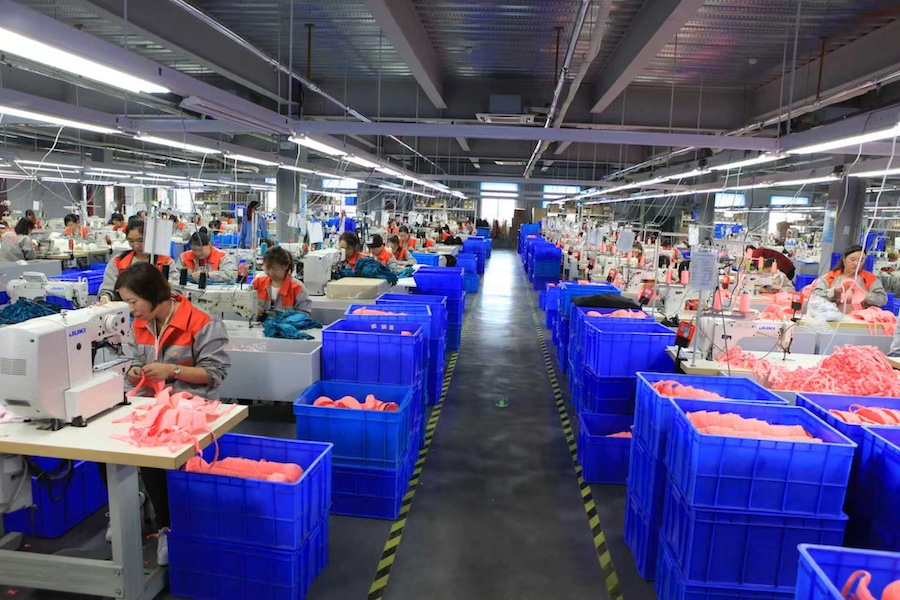
Factory © 2025 COATS Digital


Mr. Tang, General Manager at Suzhou Tianyuan, said: “Amid rising costs and shifting production capacities across the global apparel manufacturing industry, we identified digital transformation as our strategic solution. Before implementing GSDCost, although we served as a contract manufacturer for well-known brands, our cost control methods were inefficient and manual, leading to a year-on-year decline in profit margins.”

The implementation of GSDCost played a pivotal role in achieving the company’s strategic goals of higher transparency, efficiency, and profitability. With GSDCost onboard, Tianyuan quickly established a unified digital process platform that standardised SMV calculations across all operations.

Hailan Chen added: “After adopting GSDCost, our SMV calculation accuracy has now improved to 98%, and new product process analysis time has been shortened to just one day—increasing the quotation efficiency by over 60%.”

For complex functional apparel orders, GSDCost’s intelligent matching feature enables Tianyuan to complete process breakdowns in just a few hours—a task that previously took days.

“The standardised operation library in GSDCost also helped us reduce sample garment development cycles by 25%, securing a critical competitive advantage in an increasingly demanding market,” explained Hailan Chen.

Mr. Tang added: “By digitizing the entire process from order placement to shipment, Tianyuan achieved three major breakthroughs. First, the accuracy of cost estimation improved from 75% to 95%, strengthening our negotiation power and enabling us to secure partnerships with premium clients such as Adidas. Second, we established a real-time production management system, increasing on-time delivery performance to 96% and reducing material waste by approximately 2%. GSDCost has become the core engine driving our transformation from manufacturing to smart manufacturing.”

GSDCost, Coats Digital’s method analysis and predetermined times solution, is widely acknowledged as the de facto international standard across the sewn products industry. It supports a more collaborative, transparent, and sustainable supply chain in which brands and manufacturers establish and optimise ‘International Standard Time Benchmarks’ using standard motion codes and predetermined times. This shared framework supports accurate cost prediction, fact-based negotiation, and a more efficient garment manufacturing process, while concurrently delivering on CSR commitments.

Boris Lu, Customer Success Manager at Coats Digital, said: “The success of the GSDCost project at Suzhou Tianyuan Garments demonstrates the profound value of digital transformation in apparel manufacturing. During the implementation process, we worked closely with the Tianyuan team to deeply integrate industry expertise with system functionalities, building a standardised database covering over 50,000 processes. This has enabled Tianyuan to make faster, more accurate production decisions, optimise processes across multiple lines, and strengthen both its competitiveness and operational resilience.”

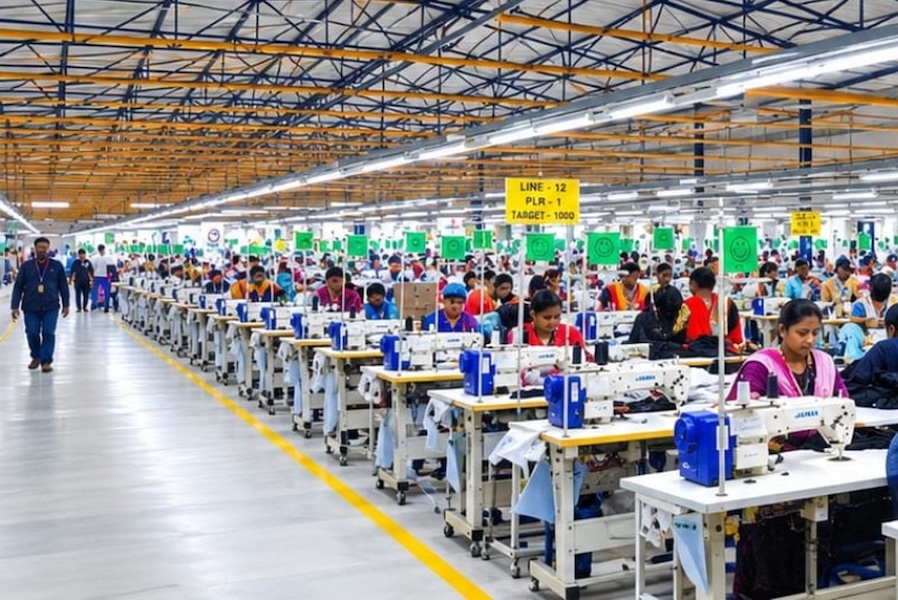
Worker © 2025 COATS Digital


Key Benefits and ROI for Suzhou Tianyuan

  • 98% accuracy in SMV calculation
  • 60% improvement in process analysis efficiency
  • 25% reduction in sample development cycles
  • 95% accuracy in cost estimation
  • 96% on-time delivery performance
  • 2% reduction in material waste


More News from Coats Digital

#Software

UNIFEQ Europe adopts Coats Digital’s GSDCost and AI-powered GSDQuest to support rapid growth

Coats Digital is pleased to announce that rapidly growing Polish defence and uniform manufacturer UNIFEQ Europe Sp. z o.o. has invested in its award-winning GSDCost solution together with its AI-powered GSDQuest platform to establish a consistent approach to garment costing, improve sewing-floor productivity and accelerate labour costing for tenders and new products.

#Industry 4.0 / Digitalization

Orient Rongheng connects production planning across China and Bangladesh with FastReactPlan

Chinese apparel manufacturer Orient Rongheng is implementing Coats Digital’s FastReactPlan to digitalize production planning across its manufacturing operations in China and Bangladesh. The project aims to connect capacity, materials and order planning across multiple factories while integrating these processes with the company’s existing ERP and Manufacturing Execution System (MES).

#Industry 4.0 / Digitalization

Coats Digital launches AI-powered GSD RealMotion for motion analysis

Coats Digital has launched GSD RealMotion, an AI-powered solution designed to provide apparel manufacturers with greater visibility into factory-floor operations. By analysing shop-floor video and applying Coats Digital’s GSD methodology, the solution turns video recordings into structured, motion-by-motion method studies.

#Textiles & Apparel / Garment

Coats to showcase innovative reinforcement and filler materials for leather goods and accessories at APLF 2026

Coats, a world-class Tier 2 manufacturer and trusted partner for the apparel and footwear industries, will be promoting four advanced materials from its ‘Lifestyle Solutions’ portfolio at APLF 2026 in Hong Kong in March. Each innovation has been specifically engineered to help luxury and premium brands elevate the craft, durability, sustainability and creative expression required in the manufacturing of handbags, purses, and other high-end designer accessories.

More News on Industry 4.0 / Digitalization

#Industry 4.0 / Digitalization

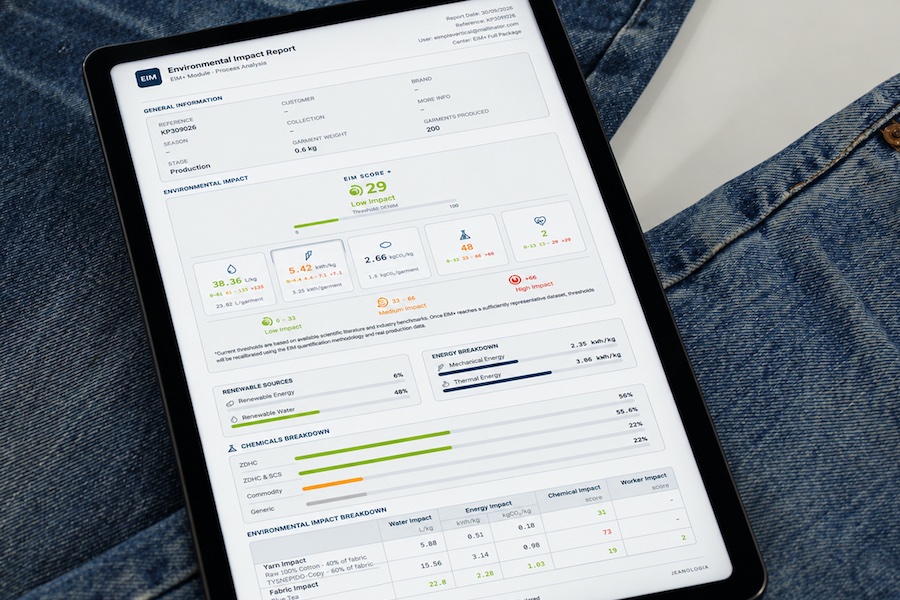
Jeanologia and BCome connect factory data with Life Cycle Assessment and Digital Product Passports

A new white paper by EIM by Jeanologia and BCome demonstrates how primary environmental data from denim finishing processes can be integrated into a garment's Life Cycle Assessment (LCA) and prepared for use in a Digital Product Passport (DPP). A comparative case study highlights significant improvements at the production stage while also showing how these translate into the environmental performance of the finished garment.

#Industry 4.0 / Digitalization

White House reduces production planning time by up to 80% with Coats Digital’s FastReactPlan

Indian garment manufacturer White House has reduced its production planning cycle by 60–80% following the implementation of Coats Digital’s FastReactPlan software. The integrated planning solution provides greater visibility across production, capacity and material requirements while supporting faster decision-making and improved delivery performance.

#Industry 4.0 / Digitalization

Jeanologia presents expanded EIM platform and COMMON GROUND collection at Kingpins Amsterdam

Jeanologia is presenting two approaches to textile product development at Kingpins Amsterdam on October 14–15: measuring the environmental impact of textile production and exploring new creative possibilities through garment finishing technologies.

#Industry 4.0 / Digitalization

EIM evolves into a new Environmental Intelligence to measure the impact of textile production

¿Do we really know the environmental impact behind a garment? Answering this question remains one of the textile industry’s major challenges. Garment production involves multiple stages, from yarn and fabric to final finishing, carried out by different players across the supply chain. Accesing reliable data from each process, connecting it and establishing a common language are essential to understanding a product’s true impact.

Latest News

#India ITME 2026

Stäubli to introduce new S3292 dobby for high-speed weaving at ITME India 2026

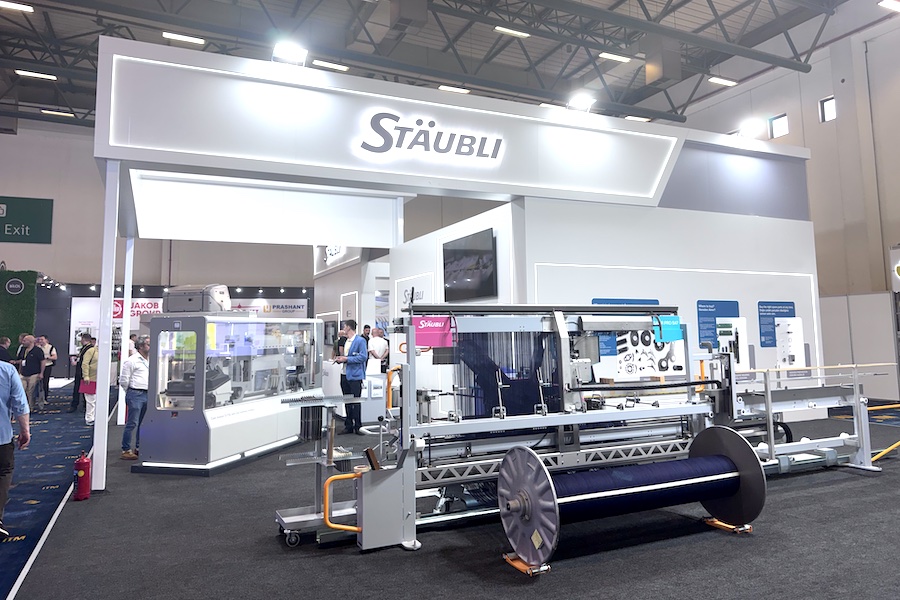
Stäubli will introduce its new S3292 dobby at ITME India 2026, taking place from December 4 to 9 at the India Expo Centre & Mart in Greater Noida, Uttar Pradesh. Designed for high-speed air-jet weaving, the new machine will be among the highlights of the company's presentation, which also includes warp preparation systems, cam motions, Jacquard technologies and digital services.

#Research & Development

DITF develops bio-based binding fibers for wood-fiber insulation materials

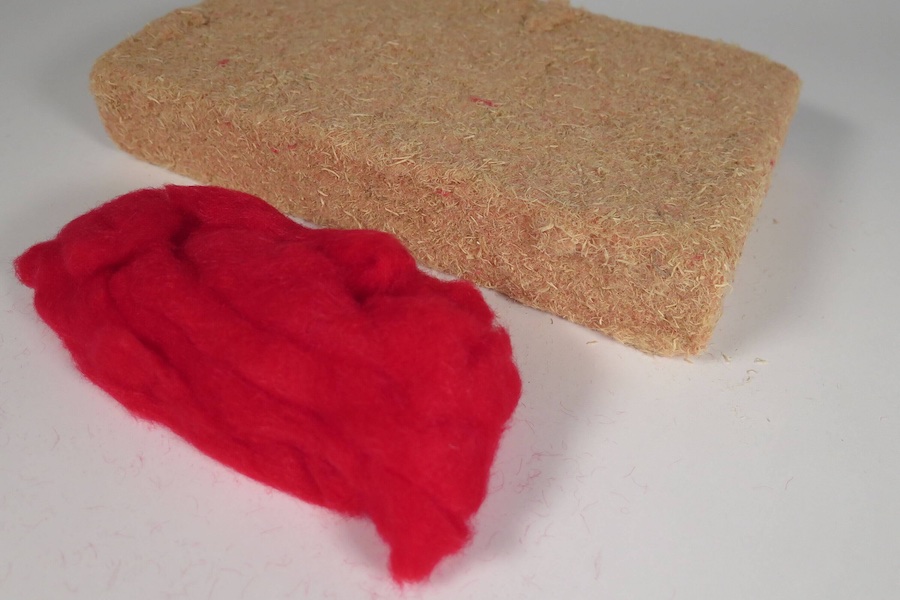
As part of the CelluWoodFlex project, the German Institutes of Textile- and Fiber-Research in Denkendorf (DITF) are developing bio-based cellulose ester fibers as alternative binding fibers for flexible wood fiber insulation materials. In addition to the spinning process and the production of suitable staple fibers, the institute is also investigating how wood and cellulose fibers can be separated and recycled at the end of their useful life.

#Recycled Fibers

Reju expands textile-to-textile recycling network with six international fabric manufacturers

Reju, a textile-to-textile regeneration company, is expanding its industrial network through collaborations with six fabric manufacturers in Europe and the Americas. The initiative aims to accelerate the integration of regenerated polyester into textile manufacturing and support the development of finished fabrics for commercial applications.

#Nonwovens

Magnera highlights HighPleat™ filtration media technology at FiltXPO 2026

At FiltXPO 2026, held on October 28–29 at the Minneapolis Convention Center in Minneapolis, Minnesota, Magnera highlighted advances in air filtration media architecture, with a particular focus on its HighPleat™ platform for MERV 8–10 applications. The technology combines a lofted fiber structure with optimized pore architecture to address the challenge of balancing filtration efficiency, airflow resistance and contaminant-holding capacity.

TOP