[pageLogInLogOut]

#Europe

New EU rules to stop the destruction of unsold clothes and shoes

The European Commission today (Feb 9) adopted new measures under the Ecodesign for Sustainable Products Regulation (ESPR) to prevent the destruction of unsold apparel, clothing, accessories and footwear.

The rules will help cut waste, reduce environmental damage and create a level playing field for companies embracing sustainable business models, allowing them to reap the benefits of a more circular economy.

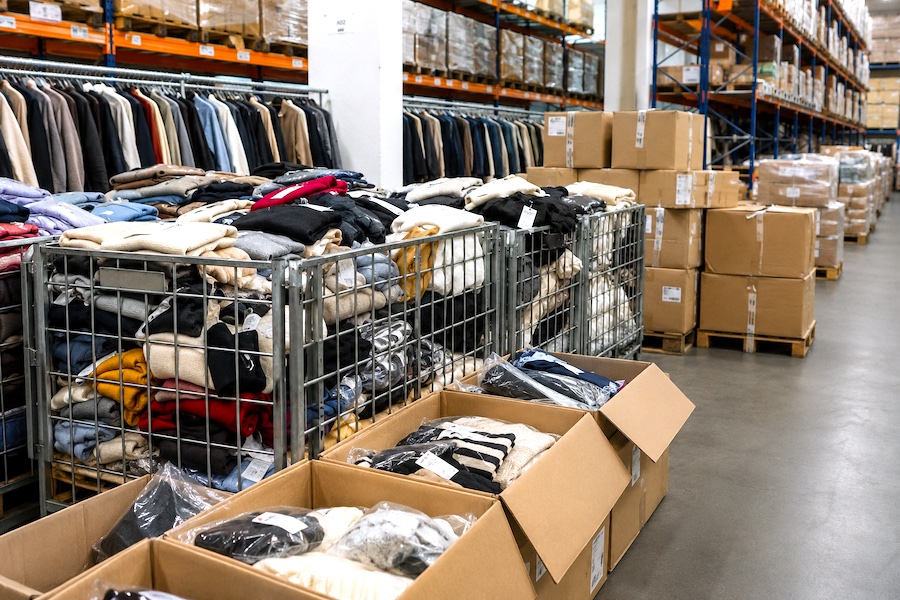
Every year in Europe, an estimated 4-9% of unsold textiles are destroyed before ever being worn. This waste generates around 5.6 million tons of CO2 emissions – almost equal to Sweden’s total net emissions in 2021.

To help reduce this wasteful practice, the ESPR requires companies to disclose information on the unsold consumer products they discard as waste. It also introduces a ban on the destruction of unsold apparel, clothing accessories and footwear.

The Delegated and Implementing Acts adopted today will support businesses in complying with these requirements by:

  • Clarifying derogations: The Delegated Act outlines specific and justified circumstances under which the destruction will be permitted, for instance, due to safety reasons or product damage. National authorities will oversee compliance.
  • Facilitating disclosure: The Implementing Act introduces a standardised format for businesses to disclose the volumes of unsold consumer goods they discard. This applies from February 2027, giving businesses sufficient time to adapt.

Instead of discarding stock, companies are encouraged to manage their stock more effectively, handle returns, and explore alternatives such as resale, remanufacturing, donations, or reuse.

The ban on destruction of unsold apparel, clothing accessories and footwear and the derogations will apply to large companies from 19 July 2026. Medium-sized companies are expected to follow in 2030. The rules on disclosure under the ESPR already apply to large companies and will also apply to medium-sized companies in 2030.

"The textile sector is leading the way in the transition to sustainability, but there are still challenges. The numbers on waste show the need to act. With these new measures, the textile sector will be empowered to move towards sustainable and circular practices, and we can boost our competitiveness and reduce our dependencies", says Jessika Roswall, Commissioner for Environment, Water Resilience and a Competitive Circular Economy
More News from European Commission

#Europe

Commission adopts a first-ever EU Visa Strategy

Today, the European Commission is adopting its first-ever EU Visa Strategy. It sets out a framework for a visa policy that is more strategic and that advances the EU's long-term interests, allowing it to be better equipped for growing mobility as well as the consequences of regional instability and geopolitical competition.

#Europe

EU and India conclude landmark Free Trade Agreement

The EU and India concluded negotiations today for a historic, ambitious and commercially significant free trade agreement (FTA), the largest such deal ever concluded by either side. It will strengthen economic and political ties between the world's second and fourth largest economies, at a time of rising geopolitical tensions and global economic challenges, highlighting their joint commitment to economic openness and rules-based trade.

#Europe

EU and Mercosur sign historic and ambitious partnership

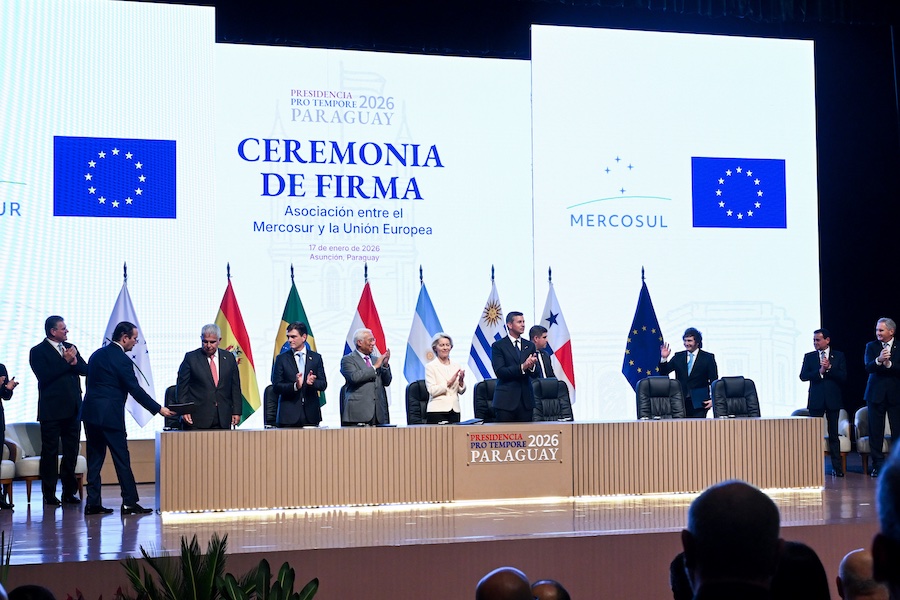
Today, the European Union and Mercosur signed a Partnership Agreement (EMPA) and an Interim Trade Agreement (iTA), representing a historic milestone between the two regions, and an ambitious platform for strengthening their economic, diplomatic and geopolitical relations.

#Europe

EU aims to advance global clean transition and implementation of the Paris Agreement at UN's COP30

At the COP30 UN Climate Change Conference in Belém, Brazil, from 10-21 November, the European Union will reaffirm its strong commitment to climate action. The EU is dedicated to paving the way toward a global transition that is clean, fair, and resilient. This transition aims to provide clean and affordable energy, create business opportunities, stimulate growth, enhance industrial competitiveness, and leave no one behind.

More News on Europe

#Europe

Antwerp Declaration community urges EU leaders to deliver emergency measures as Europe’s competitiveness crisis deepens

EURATEX, representing the European textile and fashion industry, joins the Antwerp Declaration Community’s call on EU Heads of State and Government to adopt emergency measures that restore industrial competitiveness and deliver tangible results for Europe’s manufacturing base in 2026.

#Europe

FITA, ABIT and EURATEX underline strategic importance of Mercosur – EU Partnership Agreement for the textile and apparel industry

The Argentine Textile Industry Federation (FITA), the Brazilian Textile and Apparel Industry Association (ABIT), and the European Apparel and Textile Confederation (EURATEX) continue to monitor the process of internalizing the Mercosur-European Union Partnership Agreement. This agreement is essential for the competitiveness of our industries, on both sides of the Atlantic.

#Europe

ICAC to support European Commission on pending PEF legislation

The International Cotton Advisory Committee (ICAC) is proud to announce that it has been included as a member of the European Commission’s Technical Advisory Board (TAB) on the Product Environmental Footprint methodology. The Commission developed the Product Environmental Footprint (PEF) to assess and communicate the life cycle environmental performance of products and organizations.

#Associations

Industry associations warn against state-run EPR models in the EU

European industry associations, led by Euratex, have raised concerns over a growing trend in several EU Member States to introduce state-run Producer Responsibility Organisations (PROs) within Extended Producer Responsibility (EPR) schemes.

Latest News

#Sustainability

Ying McGuire becomes new CEO of Cascale

Cascale today announced the appointment of Ying McGuire as Chief Executive Officer, effective June 1, 2026.

#Technical Textiles

Sustainable, lightweight, and sound absorbing: Polyester-based front trunk solution for BEVs

As car manufacturers look to further reduce their carbon footprint, Autoneum has developed an innovative front trunk solution for battery electric vehicles (BEVs), made entirely from polyester-based textile. The Ultra-Silent Frunk offers significant weight reduction, improved acoustic and thermal insulation, and uses up to 70 percent recycled material, supporting sustainable and efficient vehicle design. Autoneum, global technology leader in acoustic and thermal management for vehicles, has already received orders for the new frunk from three major OEMs in Asia and Europe to be built in three BEV models. Series production for two BEVs has been underway in China and Germany since last year.

#Raw Materials

Modern testing methods for raw cotton

The 38th International Cotton Conference Bremen will take place from 25 to 27 March 2026 at the Bremen Parliament. This conference has traditionally stood for in-depth expertise and international exchange. The program will focus on technical innovations, market trends, and regulatory frameworks across the entire value chain – from agriculture to the circular economy. With high-profile speakers, the conference is regarded as the key meeting point for the global cotton industry. Today’s focus: Cotton quality and testing methods.

#Spinning

Rieter responds to higher raw material prices

Global political and economic developments have been leading to rising raw material and energy costs for some time. The textile machinery industry is also affected by this trend. Rieter machines and components consist to a large extent of steel, copper, aluminum and electronics. These materials in particular have seen higher demand and higher prices in recent months.

TOP