[pageLogInLogOut]

#Europe

Commission adopts a first-ever EU Visa Strategy

Today, the European Commission is adopting its first-ever EU Visa Strategy. It sets out a framework for a visa policy that is more strategic and that advances the EU's long-term interests, allowing it to be better equipped for growing mobility as well as the consequences of regional instability and geopolitical competition.

The Strategy aims to make Europe (1) safer, by strengthening the first line of security screening; (2) more prosperous and competitive, by facilitating access for those who contribute to our economies and societies; (3) more influential globally, by advancing the EU's strategic interests, values, and global standing; and (4) more efficient, through a smarter, modern and coherent visa policy.

Alongside the Strategy, the Commission is adopting a Recommendation on attracting talent for innovation, to make the EU more attractive to highly qualified and skilled professionals, students, researchers and innovative entrepreneurs and to support the EU's competitiveness in a global context.

The Visa Strategy is built on three key pillars:

1.) Strengthening the EU's security

The Strategy puts forward concrete measures to leverage visa policy to advance the EU's strategic interest and strengthen the EU's security framework. This includes:

  • A modern system for granting visa-free status to partner countries, including a new assessment framework with clear criteria to evaluate potential candidates (in 2026).
  • Stronger monitoring of existing visa-free regimes under the reformed Visa Suspension Mechanism to ensure continued compliance and prevent misuses of visa-free travel.
  • Stronger visa leverages by upgrading the existing Article 25a mechanism, which allows the EU to take targeted visa measures in cases of lack of cooperation on return and readmission and introducing ad hoc measures to incentivise cooperation on security and against illegal migration. This will be done through a revision of the Visa Code in 2026.
  • Possible targeted restrictive visa measures to suspend, refuse or restrict visa applications in response to hostile actions by third countries that undermine EU security, as part of the Visa Code revision, in consultation with Member States.
  • New measures to strengthen travel document security to counter fraud, with new harmonised definitions and sanctions at EU level for document fraud.

2.) Boosting prosperity and competitiveness

Travel and mobility are a major driver of Europe's economy, with the Schengen area remaining the world's most visited destination. The Strategy puts forward new measures to support the EU's global competitiveness, attract and retain talent, and make legitimate travel easier, faster and more predictable for tourists and business travellers, including:

  • New digital procedures for both visa-free and visa required travellers: ETIAS will simplify and partly automate pre-departure checks for visa-free travellers, as of Q4 2026. Digital visa procedures will allow visa-required applicants to complete the entire visa application process online.
  • Multiple entry visas with a longer validity for trusted travellers, to stimulate economic activity and reward visitors with a proven travel history and a common list of verified companies, to facilitate visa processes for business travellers invited by trusted sponsors.
  • Better conditions for talent: exploring possible amendments to EU rules on students and researchers and highly qualified and skilled workers and exploring a targeted EU legal framework for start-up and scale-up founders and innovative entrepreneurs.
  • Additional support to non-EU nationals and employers to address challenges related to the visa process through European Legal Gateway Offices.
  • Additional EU funding to support visa processing for highly qualified and skilled non-EU nationals.

3.) Modern visa tools

Every year millions of travellers arrive at the external borders of the Schengen area, either on short-stay visas or from visa-exempt countries. Managing this efficiently requires modern systems that strengthen security while facilitating legitimate travel.

To this end, the EU is deploying advanced digital tools to modernise visa and border management. The EU's IT systems will be interoperable by 2028, making it possible to query multiple databases at once and through a single, central search, improving information-sharing and preventing visa abuse.

Recommendation on attracting talent for innovation

The Recommendation sets out concrete ways in which Member States can better use their processes to attract and retain students, researchers and highly qualified and skilled workers, startup founders and innovative entrepreneurs in key sectors for the EU's competitiveness and strategic autonomy.

The recommendations encourage Member States to have simpler and faster procedures for long-stay visa and residence permits through more digitised processes, fewer documents and shorter processing times, easier transitions to work or entrepreneurship from study or research in the EU, improved intra-EU mobility as well as better access to information and stronger coordination between Member States' authorities, universities, and research organisations.

The Recommendation contributes to the objectives of the Choose Europe initiative focusing on attracting and retaining global research and innovation talent, the Union of Skills, as well as the EU Startup and Scaleup strategy.
More News from European Commission

#Europe

EU and India conclude landmark Free Trade Agreement

The EU and India concluded negotiations today for a historic, ambitious and commercially significant free trade agreement (FTA), the largest such deal ever concluded by either side. It will strengthen economic and political ties between the world's second and fourth largest economies, at a time of rising geopolitical tensions and global economic challenges, highlighting their joint commitment to economic openness and rules-based trade.

#Europe

EU and Mercosur sign historic and ambitious partnership

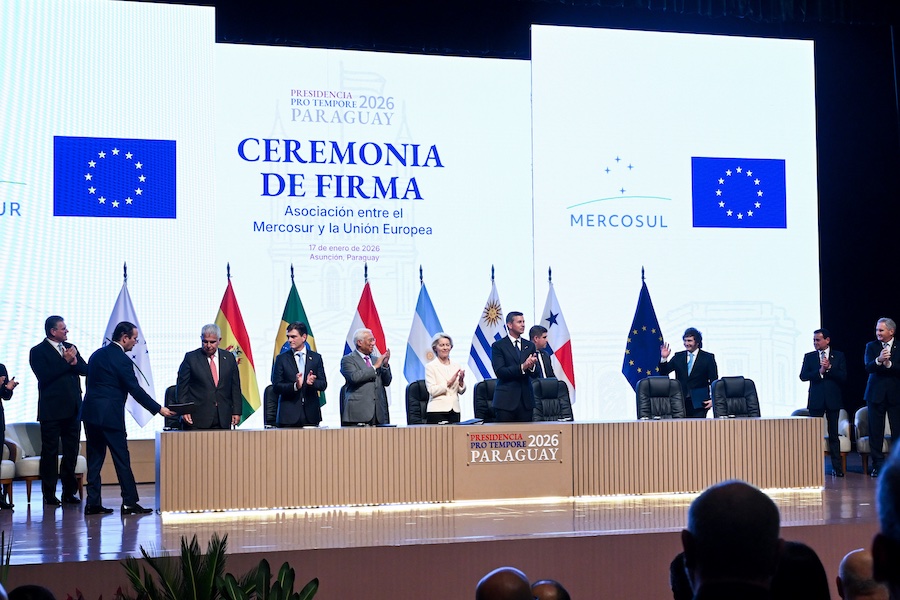
Today, the European Union and Mercosur signed a Partnership Agreement (EMPA) and an Interim Trade Agreement (iTA), representing a historic milestone between the two regions, and an ambitious platform for strengthening their economic, diplomatic and geopolitical relations.

#Europe

EU aims to advance global clean transition and implementation of the Paris Agreement at UN's COP30

At the COP30 UN Climate Change Conference in Belém, Brazil, from 10-21 November, the European Union will reaffirm its strong commitment to climate action. The EU is dedicated to paving the way toward a global transition that is clean, fair, and resilient. This transition aims to provide clean and affordable energy, create business opportunities, stimulate growth, enhance industrial competitiveness, and leave no one behind.

#Recycling / Circular Economy

EU to make textile producers pay for collection and recycling

On Tuesday, Parliament gave its final green light to new measures to prevent and reduce waste from food and textiles across the EU.

More News on Europe

#Europe

FITA, ABIT and EURATEX underline strategic importance of Mercosur – EU Partnership Agreement for the textile and apparel industry

The Argentine Textile Industry Federation (FITA), the Brazilian Textile and Apparel Industry Association (ABIT), and the European Apparel and Textile Confederation (EURATEX) continue to monitor the process of internalizing the Mercosur-European Union Partnership Agreement. This agreement is essential for the competitiveness of our industries, on both sides of the Atlantic.

#Europe

ICAC to support European Commission on pending PEF legislation

The International Cotton Advisory Committee (ICAC) is proud to announce that it has been included as a member of the European Commission’s Technical Advisory Board (TAB) on the Product Environmental Footprint methodology. The Commission developed the Product Environmental Footprint (PEF) to assess and communicate the life cycle environmental performance of products and organizations.

#Associations

Industry associations warn against state-run EPR models in the EU

European industry associations, led by Euratex, have raised concerns over a growing trend in several EU Member States to introduce state-run Producer Responsibility Organisations (PROs) within Extended Producer Responsibility (EPR) schemes.

#Associations

European business associations celebrate the signature of the EU-Mercosur FTA

The 17th January marks a historic milestone with the signing of the EU-Mercosur Trade Agreement, creating the biggest trading block in the world. European business – represented by more than 28 associations across a wide range of sectors – warmly welcomes this signature. It sends a strong and timely signal that the EU remains open and is committed to rules-based global trade. In a time of global uncertainty, this agreement is a key growth booster.

Latest News

#Sustainability

VAUDE eliminates PFAS from all products

PFAS (per- and polyfluoroalkyl substances) are now detectable worldwide – in drinking water, soil and the human body. These so-called “forever chemicals” are considered hazardous to health and potentially carcinogenic, as they do not break down and remain in the environment permanently. Despite these risks, PFAS are still used in a wide range of products. More than 15 years ago, VAUDE made a strategic decision to gradually eliminate PFAS from all product categories.

#Man-Made Fibers

Lenzing AG to become majority owner of TreeToTextile AB and accelerates industrialization of new fibers

The Lenzing Group is taking another strategic milestone by acquiring a controlling majority in the Swedish innovation company TreeToTextile AB. This step strengthens Lenzing’s position as a leading provider of sustainable, wood‑based specialty fibers and expands its innovation pipeline with a highly scalable, patent‑protected technology platform. The transaction is executed through the issuance of new shares.

#

Better Cotton Initiative marks certification anniversary with progress update and accreditation

One year since becoming a certification scheme, the Better Cotton Initiative (BCI) has announced that more than 3,000 supply chain actors have been certified. At farm level, more than 30% of farms and producer units supplying BCI Cotton have received a positive audit outcome.

#Raw Materials

Cotton Incorporated appoints Bev Sylvester as Chief Marketing Officer

Cotton Incorporated announces the appointment of Bev Sylvester as chief marketing officer. In this newly created role, Sylvester will oversee Cotton Incorporated’s marketing strategy, brand positioning, consumer engagement and global outreach to increase demand for cotton and strengthen its relevance in the marketplace.

TOP