[pageLogInLogOut]

#Associations

European Business Coalition welcomes provisional application of EU–Mercosur Agreement and calls for Swift and full implementation
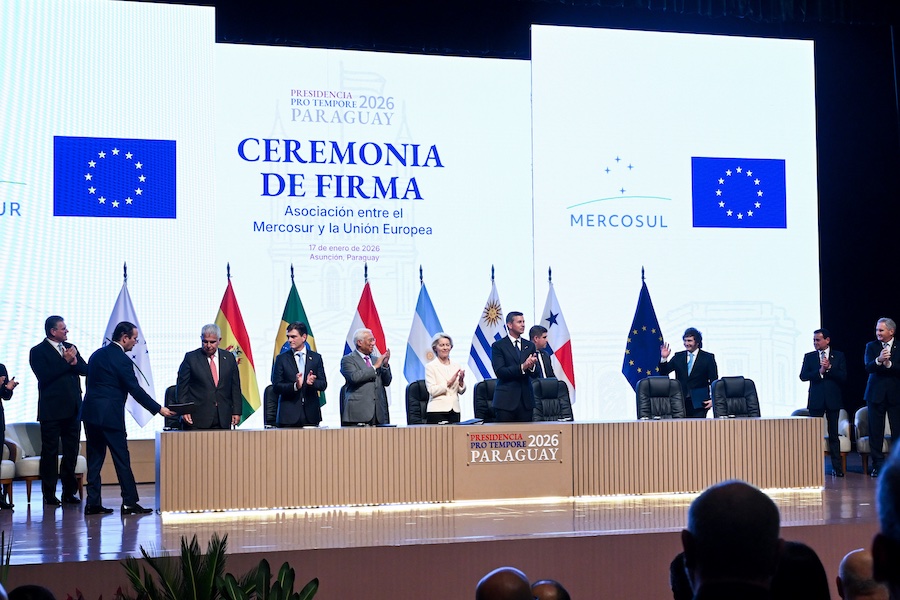
Signing ceremony of the EU-Mercosur partnership agreement and Mercosur-EU Interim Trade Agreement Copyright © 2026: European Union
With the European Commission’s decision to provisionally apply the EU–Mercosur Interim Trade Agreement, a process spanning more than 25 years now moves decisively into its implementation phase.

25 European business associations, representing a broad range of industries across the European Union, fully support this critical and long-anticipated step. The recent ratifications by Argentina and Uruguay further confirm the shared commitment to bringing this strategic partnership fully into force.

A turning point for European competitiveness

The economic case for the EU–Mercosur Free Trade Agreement is clear and compelling. According to the European Commission’s own estimates, once fully implemented, the Agreement will:

  • Increase EU exports to Mercosur by nearly 40%
  • Generate €48.7 billion in additional annual exports
  • Deliver €77.6 billion in annual EU GDP gains by 2040

These gains translate into expanded market access for European companies, strengthened transatlantic value chains, and new growth opportunities in a market of more than 270 million consumers. After years of delay, provisional application now allows European businesses to compete on more equal footing and to secure a first-mover advantage in a key strategic region.

From political agreement to practical delivery

While the provisional application marks a decisive breakthrough, effective and swift operationalisation is now essential. European companies require clarity, predictability and timely implementation of tariff reductions, customs facilitation, and regulatory cooperation provisions.

In recent years, the cost of postponement has been significant. European businesses were estimated to lose €3 billion in exports for every month the Agreement remained stalled. Since the Agreement was initially expected to enter into force in 2021, the cumulative missed GDP gains have reached approximately €291 billion.

In an increasingly fragmented and competitive global landscape, the EU cannot afford further delays in turning trade agreements into tangible economic results.

A strategic partnership for growth, diversification and sustainability

The EU–Mercosur Agreement strengthens Europe’s trade diversification at a time of geopolitical uncertainty. It improves access to essential inputs and raw materials, enhances supply chain resilience, and reinforces the EU’s position as a global standard-setter.

The Agreement is modern, balanced and rules-based. It eliminates the vast majority of tariffs, reduces non-tariff barriers, and includes binding commitments on sustainability, labour rights and environmental protection.

European businesses stand ready to invest, expand and deepen cooperation with Mercosur partners.

With provisional application now underway, it is essential to maintain momentum and ensure full ratification and smooth implementation across all parties.

After 25 years of negotiations, Europe must now ensure that this partnership delivers in practice.

More News from European Apparel and Textile Confederation (EURATEX)

#Associations

Towards pragmatic and harmonised labelling in the EU

EDANA, alongside 14 European associations, urges the European Commission and Member States to adopt a pragmatic approach for the future harmonised packaging labels, in line with the EU’s agenda for the EU Single Market, simplification and competitiveness. The system should rely on text-free pictograms, available in achromatic or monochromatic versions matching the packaging palette, with the possibility of using digital labelling as a core element. Our associations represent manufacturers of consumer goods across Europe.

#Associations

Textile PRO Forum calls for greater harmonisation of textile EPR systems across Europe

The Textile PRO Forum has published a new analysis highlighting the need for greater harmonisation of textile Extended Producer Responsibility systems across Europe. The document, Toward harmonised Textile EPR Systems in Europe: analysis and recommendations, presents the results of work carried out by Workstream 1 of the Textile PRO Forum, led by Dr. Eng. Viola Corbellini, Strategic Development and Innovation Expert at Erion Textiles, and Eng. Luca Campadello, General Director at Erion Textiles. The workstream focused on reducing administrative burden for textile producers by identifying areas where procedures could be better aligned across countries.

#Associations

Mario Jorge Machado re-elected President of EURATEX

The EURATEX General Assembly has re-elected Mario Jorge Machado as President of EURATEX, renewing its confidence in his leadership at a crucial moment for the European textile and clothing industry. The sector is facing rising costs, global competitive pressure and an increasingly challenging transition towards sustainability and digitalisation.

#Associations

Europe is losing its textile industry

EURATEX has released its latest Economic Update on the performance of the European textile and apparel industry in 2025. For the third consecutive year, the sector recorded negative results across all key indicators — production, turnover and employment — confirming a continued erosion of competitiveness across Europe.

More News on Associations

#Associations

Business situation weakens slightly, but the industry stays cautiously optimistic

The International Textile Manufacturers Federation (ITMF) has published the results of its 39th Global Textile Industry Survey (GTIS), conducted from 14 to 22 July 2026 among companies along the entire global textile value chain. Worldwide, 10% of participants rated their business situation as good, 53% as satisfactory and 37% as bad — a balance of -26pp, down from -17pp in May but still well above the 2023 lows. All regions are now in negative territory, from South Asia at -3pp to North & Central America at -58pp.

#Associations

IVGT membership: expertise that pays off

For energy-intensive textile companies, government compensation mechanisms are an important economic factor. The IVGT successfully supports its member companies in applying for state aid and thereby regularly contributes to significant financial relief.

#Associations

Italian textile machinery orders show quarterly recovery in Q2 2026

In the period between April and June 2026, order intake for Italian textile machinery manufacturers showed mixed but encouraging signals for the second half of the year. The order index at constant prices stood at 46.6 points (taking 2021=100 as the base year), showing a slight decrease of 3% compared to the same quarter of 2025. This trend was largely due to the contraction recorded in the domestic market, which fell by 25% compared to the corresponding period of the previous year.

#Associations

Consolidation amidst difficult market conditions

The International Textile Manufacturer Federation has published its International Textile Industry Statistics (ITIS) on productive capacity and raw materials consumption in the short-staple organized (spinning mill-) sector in virtually all textile-producing countries in the world.

Latest News

#Knitting & Hosiery

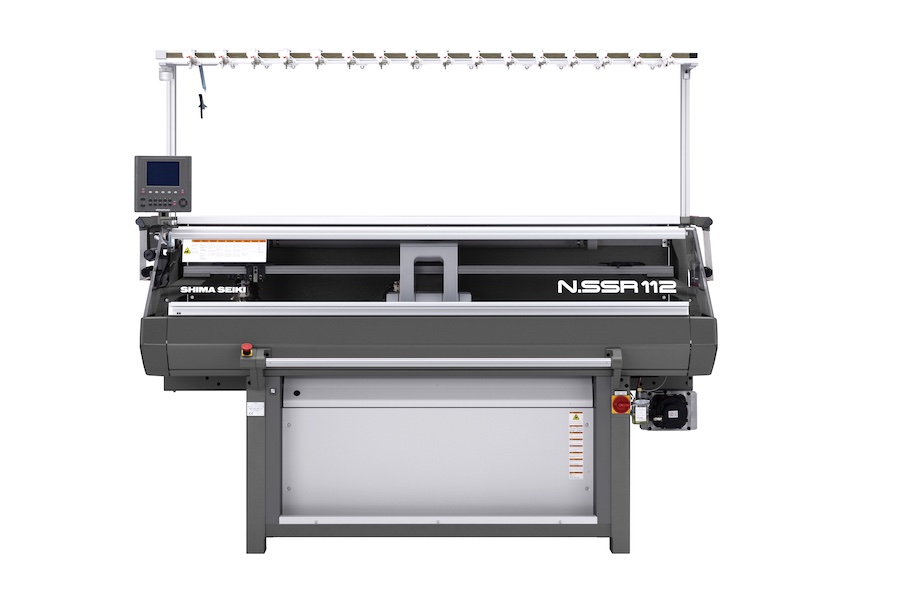
SHIMA SEIKI brings new flat knitting technologies to FEBRATEX 2026

Leading flat knitting solutions provider SHIMA SEIKI MFG., LTD. of Wakayama, Japan, together with its Brazilian representative BRASTEMA TECNOLOGIA TEXTIL LTDA., will exhibit at the Brazilian Textile Industry Fair (FEBRATEX 2026) this month. On display will be a roundup of SHIMA SEIKI computerized flat knitting technology, represented by WHOLEGARMENT® knitting machines, computerized flat knitting machines featuring a brand-new model with high productivity and excellent cost performance, a glove knitting machine and the latest digital solutions.

#Man-Made Fibers

Lenzing reports improved half-year results and advances strategic transformation

Despite a persistently challenging market environment in the first half of 2026, characterized by volatile energy and raw material prices, subdued global consumer demand and intensified competition from Asia, the Lenzing Group significantly improved its financial performance. Net result after tax more than doubled to EUR 35.6 million, compared with EUR 15.2 million in the first half of 2025. Free cash flow increased to EUR 45.8 million, while EBITDA amounted to EUR 239.2 million. Revenue totaled EUR 1.27 billion, compared with EUR 1.34 billion in the previous year.

#Recycling / Circular Economy

German 'ZOLL' turns end-of-life uniforms into valuable raw materials

Together with CWS Workwear, the German Customs Administration is extending the life cycle of service uniforms through reuse, recycling and material recovery, demonstrating how circular economy principles can be successfully implemented in the public sector while delivering significant savings.

#Spinning

Trützschler’s latest spinning and card clothing innovations at CAITME 2026

From September 8 to 10, 2026, Trützschler will present its latest innovations in spinning and card clothing for state-of-the-art fiber processing at CAITME in Tashkent, Uzbekistan. Visitors are invited to meet the experts at Pavilion 2, Booth D50 and explore solutions designed to increase productivity, streamline processes, and ensure consistently high yarn quality. Key topics include the next-generation card TC 30i, the integrated draw frame IDF 3, the high-performance comber TCO 21XL as well as Trützschler Card Clothing’s new flat top series STEELTOP®.

TOP