[pageLogInLogOut]

#Europe

A bolder, simpler, faster Union: the 2025 Commission work programme

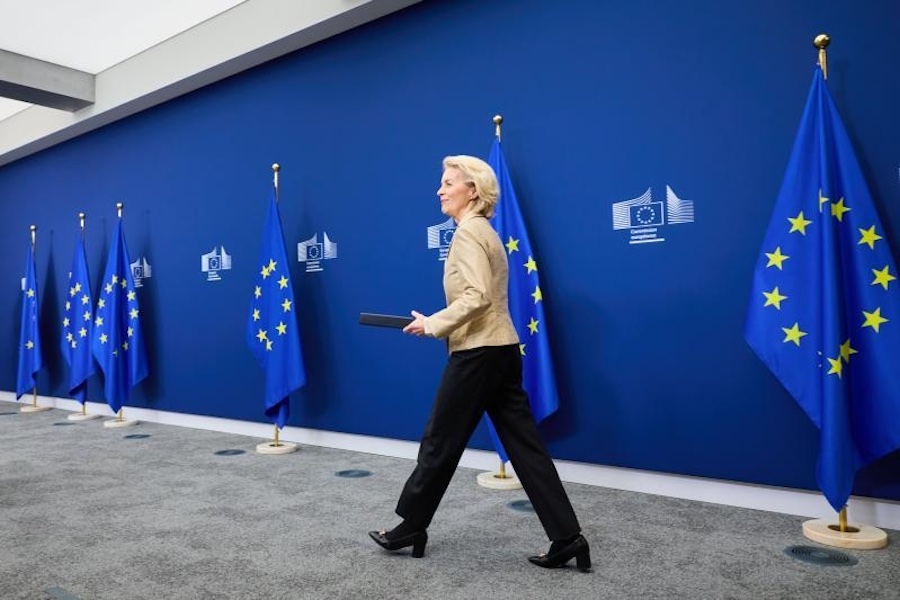
The Commission has adopted its 2025 work programme, outlining its ambition to boost competitiveness, enhance security, and bolster economic resilience in the EU. It builds on the commitments set out in the Political Guidelines and the mission letters sent by President von der Leyen.


The work programme focuses on the flagship initiatives the Commission will take in the first year of its mandate, responding to the issues that matter most to Europeans. It reflects the need for more opportunities, innovation, and growth for our citizens and businesses, ultimately fostering a more secure and prosperous EU. The newly proposed initiatives are laid out in a dedicated annex together with the evaluations and fitness checks announced today.

A Communication on Implementation and Simplification accompanies the work programme. It sets out how the Commission plans, over the next five years, to make implementation of EU rules easier in practice, and to reduce administrative burdens and simplify EU rules. It contains targets and tools to help lighten the regulatory load, boost competitiveness and resilience, and deliver fast and meaningful improvements for people and businesses.

"Citizens and businesses have called for a simpler and leaner European Union. This roadmap charts our course to a more competitive, resilient, and prosperous Europe", stated Ursula von der Leyen, President of the European Commission.

A strategic implementation and simplification agenda

The 2025 work programme focuses strongly on simplification. It includes a first series of Omnibus packages and proposals designed to make EU policies and laws work better and faster to strengthen the EU's competitiveness.

The first Omnibus will put forward far-reaching simplification, notably in the fields of sustainable finance reporting, sustainability due diligence and taxonomy. Other initiatives, like the Industrial Decarbonisation Accelerator Act, will streamline permit granting, authorisations and reporting requirements. A new definition of small mid-caps will lighten the regulatory load so that SMEs face less obstacles when they grow bigger.

Simplification measures concerning the Common Agriculture Policy and other policy areas affecting farmers will further address sources of complexity and excessive administrative burden for national administrations and farmers. Further simplification proposals will be explored, including a possible omnibus in the area of defence to help reach the investment goals that will be set out in the White Paper, and to allow innovative companies to flourish.

Moving forward together: the key deliverables of the 2025 Commission work programme

Sustainable Prosperity and Competitiveness: The newly launched Competitiveness Compass will guide sustainable growth efforts, with the EU Start-up and Scale-up Strategy empowering entrepreneurs through better access to capital. At the heart of the collaborative plan for decarbonisation and competitiveness is the Clean Industrial Deal, which will pave the way towards a proposed 90% emission-reduction target for 2040.

Defence and Security: Amid tensions in the geopolitical landscape, the EU is intensifying efforts to safeguard security and ensure peace, unveiling plans to build a robust future for European Defence. By investing collectively and strategically with NATO's cooperation, the EU aims to reinforce its defence industry and reduce dependencies. The Preparedness Union Strategy will enhance crisis anticipation and resilience, reinforced by initiatives like the EU Stockpiling strategy and the Critical Medicines Act to secure key resources.

Supporting people, strengthening our societies and our social model: Aiming to cement Europe's unique and highly treasured social model and to strengthen social fairness, the Commission will spearhead efforts to modernise social policies through the New Action Plan on the European Pillar of Social Rights. Aiming to adapt to technological, demographic, and sectoral transformations the Commission will present the Union of Skills to ensure that all workers have the education and training they need.

Sustaining our quality of life: The Commission will present a Vision for Agriculture and Food to ensure a stable framework for farmers and outline a roadmap for key proposals. The Ocean Pact will create a unified framework for ocean policies, aiming to preserve ocean health and boost the EU blue economy. Additionally, the European Water Resilience Strategy will adopt a source-to-sea approach to manage water resources effectively, addressing climate change impacts like floods and droughts. A simplification package of the Common Agriculture Policy will address sources of complexity and administrative burden for farmers and national administrations.

Protecting democracy and upholding values: Initiatives like the Democracy Shield will tackle threats like rising extremism and disinformation. The Commission also plans to enhance strategies to combat discrimination based on gender, disability, sexual orientation, or race, including a renewed LGBTIQ Equality strategy and a new Anti-racism strategy.

A global Europe: leveraging our power and partnerships: Whilst working for Ukraine's freedom remains a priority, the EU is committed to a just, comprehensive and lasting peace based on the two-state solution in the Middle East. A Mediterranean Pact and Black Sea strategy will focus on regional cooperation, economic investment, and security, and a new Strategic EU-India agenda will provide a comprehensive approach to pinpoint areas of common strategic interest.

Delivering together and preparing our Union for the future: The Commission plans to present a new Multiannual Financial Framework focused on simplifying access to EU funding and enhancing financial impact to support national, private, and institutional financing. Additionally, a focus on pre-enlargement policy reviews will further assess the consequences and impacts of enlargement on all EU policies guaranteeing that our policies can continue delivering effectively in a larger Union.
More News from European Commission

#Europe

The Digital Product Passport registry is now live

On 20 July, the European Commission launched the Digital Product Passport Registry together with a testing environment, marking an important milestone in making the Digital Product Passport (DPP) a practical reality for businesses placing products on the EU market.

#Europe

EU ban on destroying unsold clothing and footwear now in force

The European Union's ban on the destruction of unsold clothing, clothing accessories and footwear has entered into force. Since July 19, 2026, large companies across the EU have been prohibited from destroying unsold textile products, while medium-sized companies will be required to comply with the same rules from 2030.

#Recycling / Circular Economy

Commission clarifies rules on plastic bottles recycling

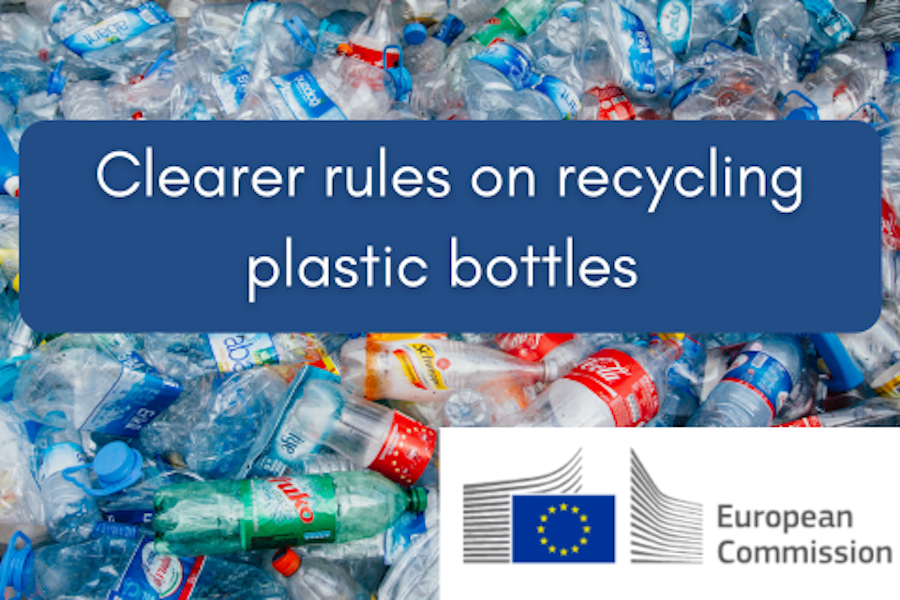
The European Commission today adopted new rules on recycling of single-use plastic beverage bottles made primarily of polyethylene terephthalate (PET bottles). These rules establish, for the first time, a methodology to calculate, verify and report chemically recycled content. This is part of the Commission’s December 2025 plastics package.

#Europe

EU and Australia strengthen relations with Security and Defence Partnership and Trade Agreement

The EU and Australia have today announced the adoption of a groundbreaking Security and Defence Partnership. They have also concluded negotiations for an ambitious and balanced free trade agreement (FTA) and agreed to launch formal negotiations for the association of Australia to Horizon Europe, the world's largest funding programme for research and innovation. With these steps, the EU and Australia are delivering mutually beneficial outcomes and further reinforcing their already close relations in a time of geopolitical uncertainty.

More News on Europe

#Europe

European textile industry calls for €10 handling fee on ultra-fast-fashion imports

The introduction of the €3 customs duty on low-value imports marks an important milestone in Europe’s efforts to address the challenges created by the rapid growth of ultra-fast-fashion imports. Together with the abolition of the €150 customs duty exemption, it demonstrates that policymakers are willing to act when market distortions become impossible to ignore. However, the European textile and clothing industry considers this a first step rather than the final destination.

#Europe

Circular economy offers the EU win-win on environment and economy

Stepping up a circular economy offers the European Union the potential for significant positive impacts on Europe’s environment and poses an untapped and strategic economic opportunity in terms of better access to materials and the creation of new businesses. Three new assessments on circularity, published today by the European Environment Agency (EEA), also stress the need to accelerate investment in circularity efforts to meet EU climate and environment policy targets.

#Europe

Commission presents proposal for EU Inc. - unlocking the full potential of the Single Market for Europe's entrepreneurs

Today, the European Commission presented its proposal for EU Inc., a new single set of corporate rules, building the cornerstone and starting point for the EU's 28th regime. EU Inc. is an optional, digital-by-default European corporate framework. It will make it easier for businesses to start, operate and grow across the EU – incentivising them to stay in Europe, and encourage those who once looked elsewhere to return.

#Associations

European Business Coalition welcomes provisional application of EU–Mercosur Agreement and calls for Swift and full implementation

With the European Commission’s decision to provisionally apply the EU–Mercosur Interim Trade Agreement, a process spanning more than 25 years now moves decisively into its implementation phase.

Latest News

#Weaving

Lindauer DORNIER GmbH welcomes new apprentices and dual-study students

For 22 new “DORNIER Talents”, these days mark the beginning of a new chapter at Lindauer DORNIER. For the family-owned company, in-house training is a key pillar in developing skilled professionals and retaining them within the company for the long term.

#Raw Materials

Cotton Brazil Dialogues 2026 concludes with 50 international participants immersed in Brazilian cotton production

The Cotton Brazil Dialogues concludes its 2026 edition after a series of technical visits to farms, cotton gins and reference centers, as well as workshops focused on Brazilian cotton production. A total of 50 participants from 14 countries took part in the field trips. The initiative is led by the Brazilian Association of Cotton Growers (Abrapa) and the National Association of Cotton Exporters (Anea), with support from the Brazilian Trade and Investment Promotion Agency (ApexBrasil).

#Research & Development

Novel flame-retardant and recyclable fiber-reinforced composite

Airplanes and passenger trains must meet strict safety requirements, including fire safety standards. This calls for materials that are flame-retardant, lightweight, robust, and scalable. Empa researchers, in collaboration with their industry partner Elantas, have now succeeded for the first time in making such a material – a composite – fully recyclable.

#Composites

WHILL selects Teijin’s tough, lightweight Carbon Fiber Composite for new last-mile mobility

Teijin Limited announced today that WHILL Inc., a global leader in inclusive mobility technology, has selected Sereebo® P CFP series, a carbon fiber-reinforced thermoplastic (CFRTP) material, for key structural components of the upcoming WHILL Model C Lite. Sereebo® P CFP series provides high strength, light weight, design flexibility and system cost advantages to the Model C Lite, which is a battery powered, single-seat, last-mile device. This new model combines maneuverability with light weight and one-handed folding to ensure ease of handling and operation.

TOP