[pageLogInLogOut]

#Dyeing, Drying, Finishing

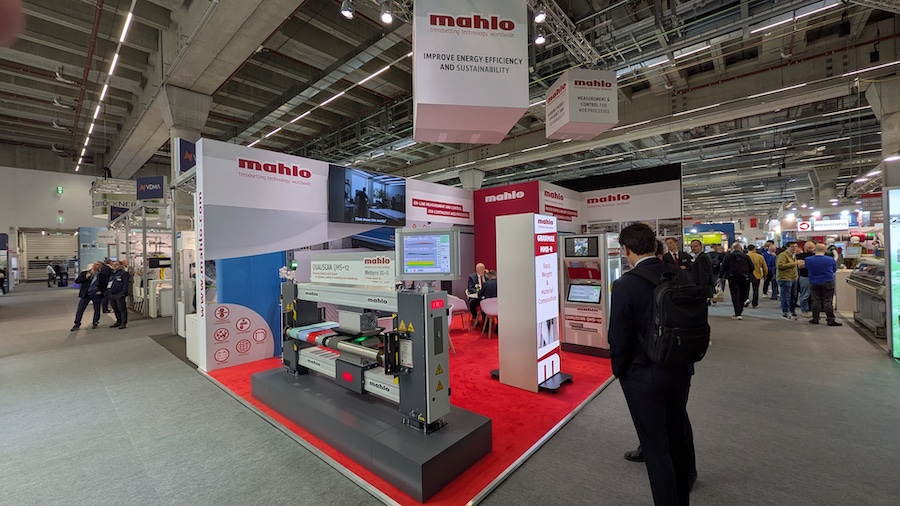
Tintoria Finissaggio 2000: Innovative textile company invests in the latest Mahlo development
Tintoria Finissaggio 2000 is one of the most important Italian companies in the textile finishing sector. Founded in 1973 in Masserano in the textile district of Biella, the company has developed into a highly valued contact point for Italian and international textile manufacturers. In its early days, Tintoria Finissagio 2000 initially concentrated on the processing of knits for sportswear, but then specialised in the processing, finishing and dyeing of fine fibres, particularly wool and cashmere.
© 2024 Mahlo
© 2024 Mahlo


Today it offers the complete range of dyeing of all types of fibres, finishing, digital printing, lamination and membrane lining. These processes are used to give fabrics certain properties, such as colour, pattern, softness, shine or waterproofness.

With over 100 employees, Tintoria Finissaggio's company philosophy is based on three cornerstones: sustainable innovation, high human capital and first-class customer service. The latter is guaranteed above all by customised production and rapid response to new requirements. The company serves a wide range of customers in various industries, including fashion, home textiles, automotive and technical textiles.

At Tintoria Finissaggio 2000, customers benefit from the fact that all processes are handled under one roof, from design support to the finishing of fabrics, combining decades of experience with the new possibilities of lamination and digital printing. The dyeing plant in Masserano is a state-of-the-art facility that fulfils the strictest environmental standards - to name just one example. In general, Tintoria Finissaggio 2000 continuously invests in state-of-the-art technologies and production facilities in order to achieve high-quality results while ensuring sustainable production processes.

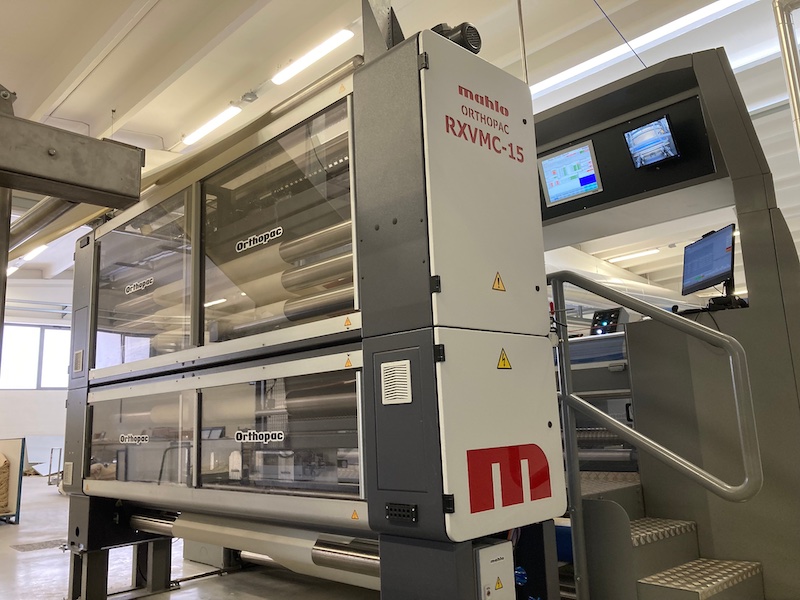
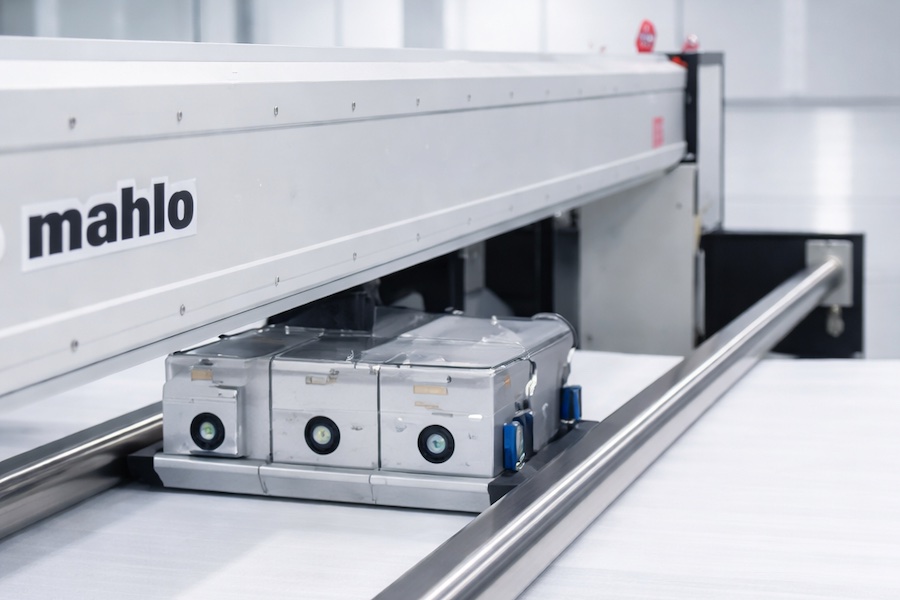
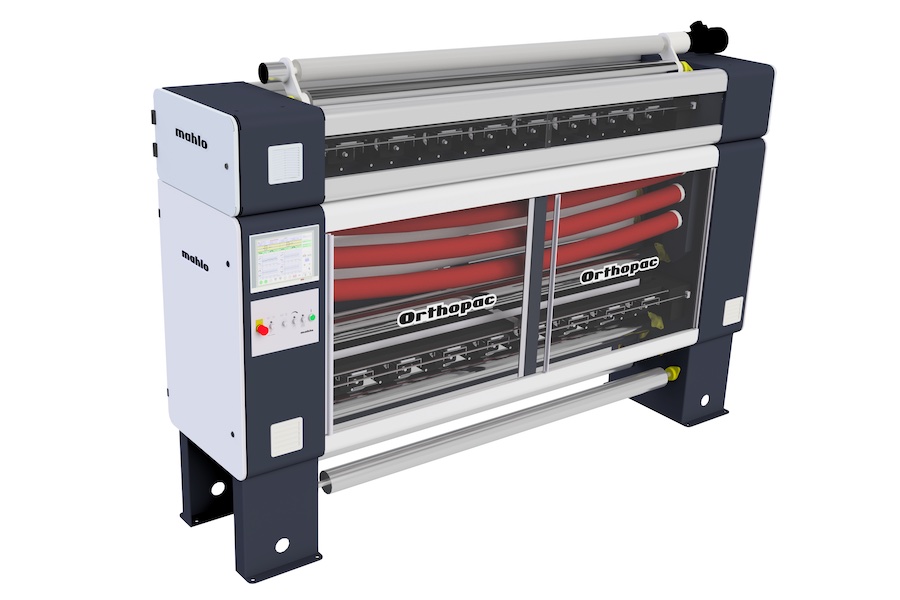
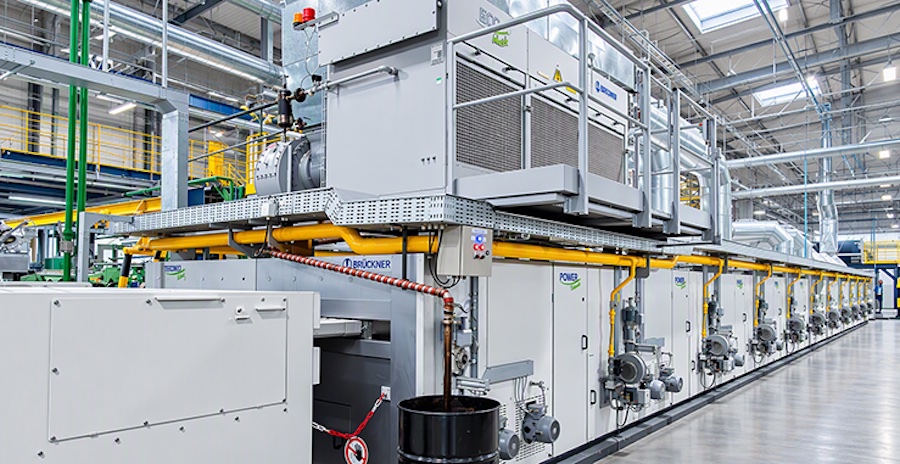
The upgrading of new equipment is therefore another part of the company strategy. Tintoria Finissagio 2000 also focused on innovation when equipping a new stenter frame. The company opted for the latest development from German machine manufacturer Mahlo GmbH + Co. KG: the Orthopac RXVMC-20 automatic straightening system. The new straightening concept is specially designed for processing textiles with high distortion dynamics, i.e. textiles with highly variable distortion. The automatic straightening system can eliminate these distortions in textile webs even faster and more precisely than any other system on the market. "We have paid particular attention to the straightening mechanism and its interaction with the probe system's analysis electronics," explains Mahlo Sales Manager Thomas Höpfl. Two individually controlled and driven straightening modules with a total of three bow and four skew rollers ensure that bow and skew distortions are corrected in small steps. The control concept is also new. A scanner group at the infeed of the straightener detects distortions even before they reach the correction rollers. This means that the rollers are brought directly into position and the fabric is corrected from the very first centimetre. A scanner group at the outfeed also recognises any residual distortion, which is then corrected on the second straightening module.

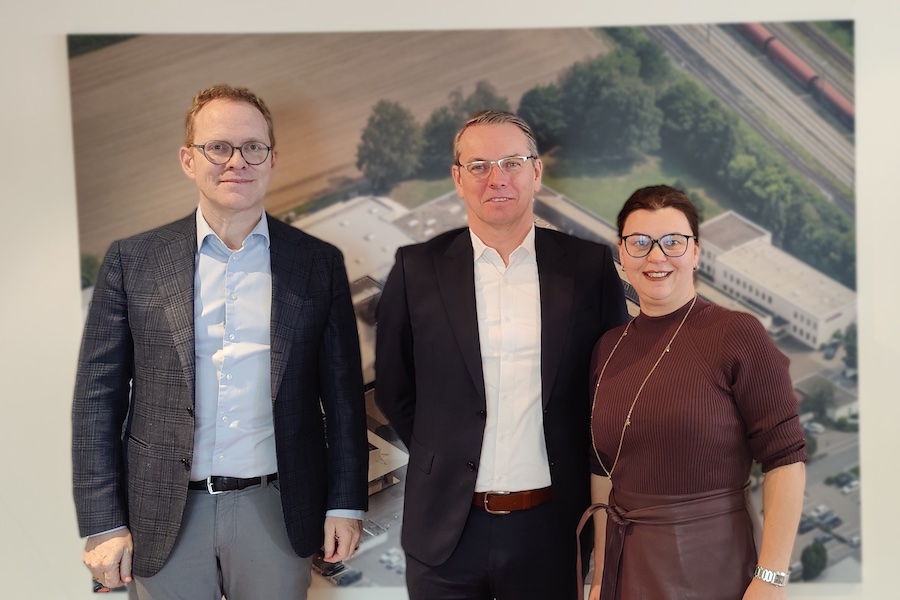
Just a few months after commissioning, it is clear that the decision in favour of the new Mahlo concept was the right one. The owners Dino Masso and Marco Bardelle emphasise: "We had high hopes for the new Orthopac RXVMC-20 straightening system from Mahlo and our expectations have been exceeded by far. The results have fully convinced us. Mahlo also offers outstanding customer service and provided us with excellent support and training during the first few weeks of using the new technology."
More News from Mahlo GmbH + Co. KG

#Dyeing, Drying, Finishing

Smart Quality Control for Technical Textiles

In the end, what matters is the result: a filter that performs reliably, a membrane that remains stable in storm conditions, a composite material with precisely defined properties. But the path to achieving this is demanding. In the production of technical textiles, numerous parameters interact – and even the smallest deviations can have major consequences.

#Advertorial

New Gravimax MMX-R X-ray sensor platform opens up new application fields

The demands placed on quality control in web-based production processes are increasing: materials are becoming more complex, basis weights are varying more widely, and at the same time, pressure is growing to make processes more efficient and transparent. Precise measurement data across the entire web width has therefore become a key factor in ensuring stable production processes. With its new Gravimax MMX-R sensor platform, Mahlo introduces a radiometric measurement solution designed to set new standards in determining basis weight and material composition. The platform combines advanced X-ray technology with newly developed signal processing, enabling measurement tasks that previously often required multiple sensor technologies.

#Dyeing, Drying, Finishing

Orthopac RVMC-20 plus: German Engineering for Smarter Weft Straightening

In times of rising cost pressure and growing quality demands, textile producers worldwide are searching for solutions that combine precision, efficiency, and sustainability. With its latest innovation, the Orthopac RVMC-20 plus, Mahlo once again demonstrates the strength of German engineering: improving proven technology to meet today’s challenges.

#Dyeing, Drying, Finishing

Stefan Moll becomes new CEO of the machinery manufacturer

Starting January 1, 2026, Stefan Moll will take over the management of Mahlo GmbH + Co. KG, the world’s leading provider of measurement and control technology for web-shaped materials. With this move, Mahlo is focusing on the long-term safeguarding of its market position and technological leadership. The current CEO, Rainer Mestermann, will leave the company after 14 years as part of a planned succession arrangement.

More News on Dyeing, Drying, Finishing

#Dyeing, Drying, Finishing

Ferraro S.p.A. acquires the “Finishing” business unit of Cibitex S.r.l.

Ferraro S.p.A. and Cibitex S.r.l. are pleased to announce the completion of the agreement pursuant to which Ferraro S.p.A. has acquired the “Finishing” business unit of Cibitex S.r.l., specialized in the development and manufacturing of technological solutions for textile finishing.

#ITM 2026

New Monforts systems deliver round-the-clock production for Kipaş

As a valued Monforts customer for many years, Türkiye’s Kipaş Textile has just installed a new Thermex dyeing range and a Monfortex sanforizer at its new dyeing and finishing plant in Kahramanmaraş.

#ITM 2026

SETEX turns dyeing and finishing data into daily production control

At ITM 2026, SETEX will show how textile mills can use machine, recipe, quality and energy data for more reliable daily production decisions — not as another reporting layer, but as part of the running dyeing and finishing process. With OrgaTEX X3 MES, E390x/C390x controllers, CamCOUNT and FabricInspector Portable, SETEX connects planning, machine execution and fabric-related quality insight within existing mill structures.

#Dyeing, Drying, Finishing

Tradition and Innovation – Phoenox Textiles Ltd. relies on state-of-the-art carpet back-coating line from Brückner

For more than 70 years, Phoenox Textiles Ltd. has been synonymous with quality, reliability, and inno-vation in the textile industry. Founded in 1954 in Huddersfield (Yorkshire, UK), a region with a long tradition in textiles, this family-owned business has continued to evolve without losing sight of its roots. Today, in its fourth generation under the leadership of the Mosley family, Phoenox successfully combines decades of experience with a clear, forward-looking corporate strategy.

Latest News

#Recycling / Circular Economy

Ence and ShareTex begin initial testing of the ATENEA innovation project to promote textile recycling in Spain

Ence and ShareTex are making progress on the Atenea R&D project, which aims to develop a complete value chain for textile recycling in Spain. Specifically, the goal of the ATENEA project—which is funded by the Center for Technological Development and Innovation (CDTI)—is to connect all the necessary stages for the recovery of textile waste, from collection and management, through recycling and transformation into new raw materials, to their incorporation into new textile products.

#Recycling / Circular Economy

DePoly Inaugurates its Showcase Plant in Monthey Switzerland

What if used plastic bottles, PET packaging material and polyester textiles could become raw materials just as high performing as virgin resources? That is the ambition of DePoly, a circular materials company based in Sion, Switzerland which inaugurated its Showcase Plant in Monthey on July 6th & 7th. The first depolymerization facility of its kind and scale in Switzerland, this industrial Showcase Plant represents a major milestone in the company's growth and its journey toward commercialization.

#Recycling / Circular Economy

Commission clarifies rules on plastic bottles recycling

The European Commission today adopted new rules on recycling of single-use plastic beverage bottles made primarily of polyethylene terephthalate (PET bottles). These rules establish, for the first time, a methodology to calculate, verify and report chemically recycled content. This is part of the Commission’s December 2025 plastics package.

#Sustainability

Global Standards establishes new non-profit foundation to strengthen governance

Global Standards gGmbH, the nonprofit organisation behind the globally recognised Global Organic Textile Standard (GOTS), announced a new governance structure designed to support its long-term mission and reinforce organisational autonomy of its Voluntary Sustainability Standards and programmes.

TOP