[pageLogInLogOut]

#Dyeing, Drying, Finishing

New technology in a proven system
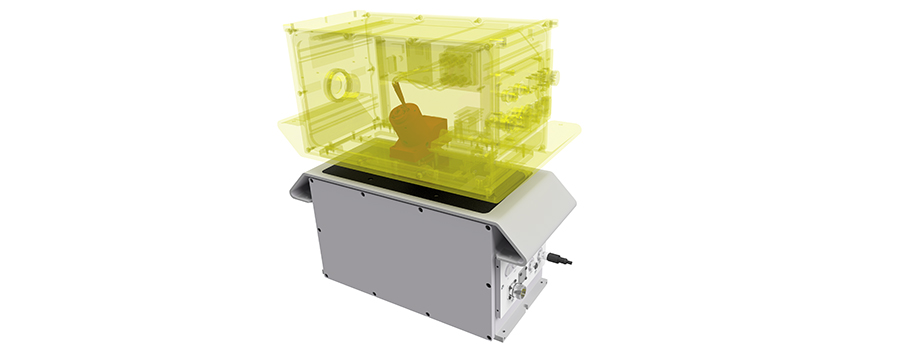
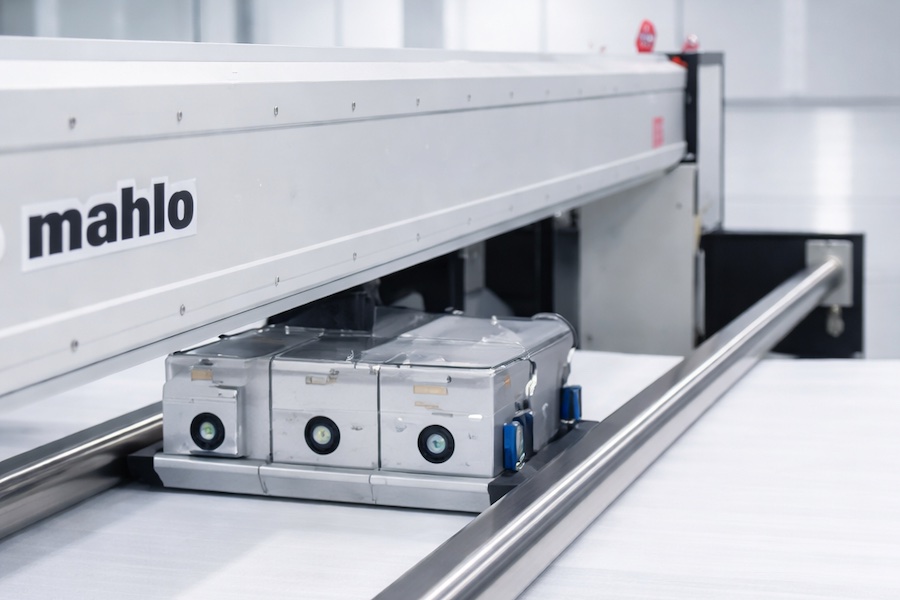
Sensor Infralot IMF-T (c) 2020 Mahlo
Basis weight and residual moisture values are important parameters in the production of nonwoven articles, paper, films, composites and more. Optimal values contribute significantly to the quality of the products and efficient production. The measurement of moisture and basis weight is therefore a decisive aspect during the manufacturing process. The new Mahlo technology in the Infralot IMF infrared sensor enables precise results in even more applications.

There are several reasons why determining these two parameters is so important: Every product, regardless of the sector, has to meet certain requirements that have been previously defined to ensure proper functioning. If the real values do not correspond to these specifications, this can affect the performance. If, for example, a filter mat is too thin in pond systems, it does not catch enough dirt particles and reduces the water quality. Incorrect residual moisture values not only affect the product quality but also the energy consumption in the entire line. For example, if Spunlace nonwo- vens are overdried, this results in unnecessary waste of energy – with negative consequences for the environment and the manufacturer's wallet.

New sensor variant for even more applications

To measure and control basis weight and moisture even more reliably, Mahlo has added a new sensor variant to its proven Qualiscan QMS-12 quality measurement system. The Infralot IMF uses near infrared technology to determine the two essential values. For the first time, the sensor is available as the Infralot IMF-T version in the transmission process, which is used for thick materials and thus covers an even wider range of applications than before. The previously proven reflection method of the Infralot IMF-R has been updated to the latest state of the art. 
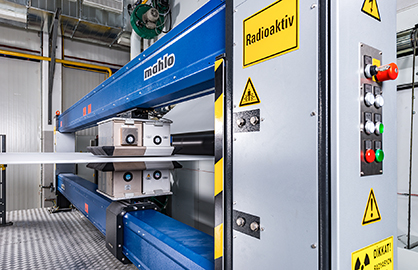
Measuring of basis weight and moisture with Infralot IMF and Beta sensor on spunlace nonwoven (c) 2020 Mahlo


Principle of operation

Water and materials such as cotton, PET or paper absorb light in the near infrared range. They are distinguished by different spectral ranges and can thus be differentiated. By measuring the reflected or transmitted light energy by means of optical evalu- ation, the Infralot IMF determines the moisture content and basis weight of the products. The NIR sensors of the Infralot IMF series are based on a classic filter measuring principle.


However, this is updated with the very latest optical components and in accordance with the most recent trends in optical measuring technology. With conventional filter wheel systems, the wavelengths for dry (reference) and wet conditions are measured with a time delay. This can lead to measurement inaccuracies, which are particularly disadvantageous for inhomogeneous products such as thin non- wovens.

No filter wheel

Mahlo's new simultaneous filter measures all wavelengths simultaneously and at the same spot without rotating filter wheel. Instead, the light is distributed simultaneously to six detectors. This eliminates measurement inaccuracies and allows true same-spot measurement of reference and absorption resonances.

Variants suitable for requirement

The variant used depends on the application. With the double-sided transmission sensor Infralot IMF-T product can be measured with penetrating infrared radiation. Transmission measurement is especially needed for thicker materials and when the overall composition of the material is of interest. Measurement for nonwovens is pos- sible with a basis weight between 10 - 500 g/m2. For paper, moisture can be deter- mined between 0 to 20%, basis weight up to 250 g/m2.

Measurement with IR reflection is used primarily to determine the top layer or coating without measuring the underlying substrate material. The measuring tolerance of the basis weight is between 10 and 60 g/m2 for nonwovens. In paper coating, all polymers, adhesives, resins and water-based coatings can be determined.

Product highlights

  • Non-radioactive
  • Static simultaneous filter – simultaneous measurement of all wavelengths
  • Smart sensor with microprocessor?
  • High spectral resolution
  • Insensitive to product flutter and soiling 


More News from Mahlo GmbH + Co. KG

#Dyeing, Drying, Finishing

Smart Quality Control for Technical Textiles

In the end, what matters is the result: a filter that performs reliably, a membrane that remains stable in storm conditions, a composite material with precisely defined properties. But the path to achieving this is demanding. In the production of technical textiles, numerous parameters interact – and even the smallest deviations can have major consequences.

#Advertorial

New Gravimax MMX-R X-ray sensor platform opens up new application fields

The demands placed on quality control in web-based production processes are increasing: materials are becoming more complex, basis weights are varying more widely, and at the same time, pressure is growing to make processes more efficient and transparent. Precise measurement data across the entire web width has therefore become a key factor in ensuring stable production processes. With its new Gravimax MMX-R sensor platform, Mahlo introduces a radiometric measurement solution designed to set new standards in determining basis weight and material composition. The platform combines advanced X-ray technology with newly developed signal processing, enabling measurement tasks that previously often required multiple sensor technologies.

#Dyeing, Drying, Finishing

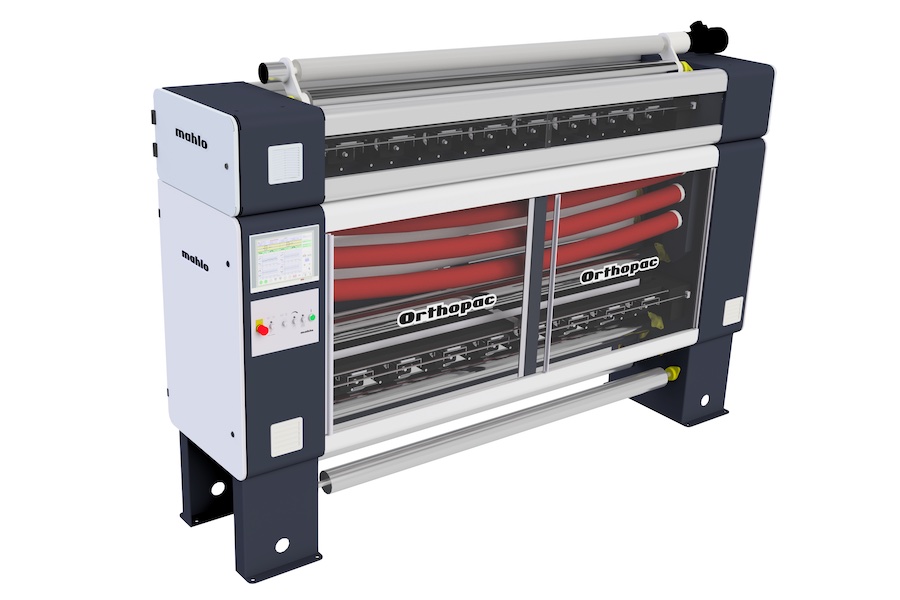
Orthopac RVMC-20 plus: German Engineering for Smarter Weft Straightening

In times of rising cost pressure and growing quality demands, textile producers worldwide are searching for solutions that combine precision, efficiency, and sustainability. With its latest innovation, the Orthopac RVMC-20 plus, Mahlo once again demonstrates the strength of German engineering: improving proven technology to meet today’s challenges.

#Dyeing, Drying, Finishing

Stefan Moll becomes new CEO of the machinery manufacturer

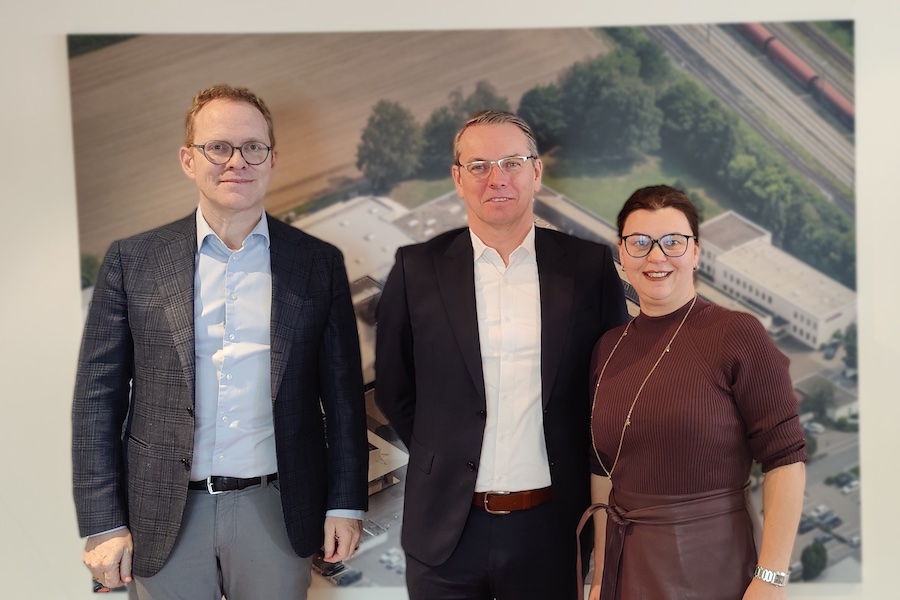
Starting January 1, 2026, Stefan Moll will take over the management of Mahlo GmbH + Co. KG, the world’s leading provider of measurement and control technology for web-shaped materials. With this move, Mahlo is focusing on the long-term safeguarding of its market position and technological leadership. The current CEO, Rainer Mestermann, will leave the company after 14 years as part of a planned succession arrangement.

More News on Dyeing, Drying, Finishing

#ITM 2026

New Monforts systems deliver round-the-clock production for Kipaş

As a valued Monforts customer for many years, Türkiye’s Kipaş Textile has just installed a new Thermex dyeing range and a Monfortex sanforizer at its new dyeing and finishing plant in Kahramanmaraş.

#ITM 2026

SETEX turns dyeing and finishing data into daily production control

At ITM 2026, SETEX will show how textile mills can use machine, recipe, quality and energy data for more reliable daily production decisions — not as another reporting layer, but as part of the running dyeing and finishing process. With OrgaTEX X3 MES, E390x/C390x controllers, CamCOUNT and FabricInspector Portable, SETEX connects planning, machine execution and fabric-related quality insight within existing mill structures.

#Dyeing, Drying, Finishing

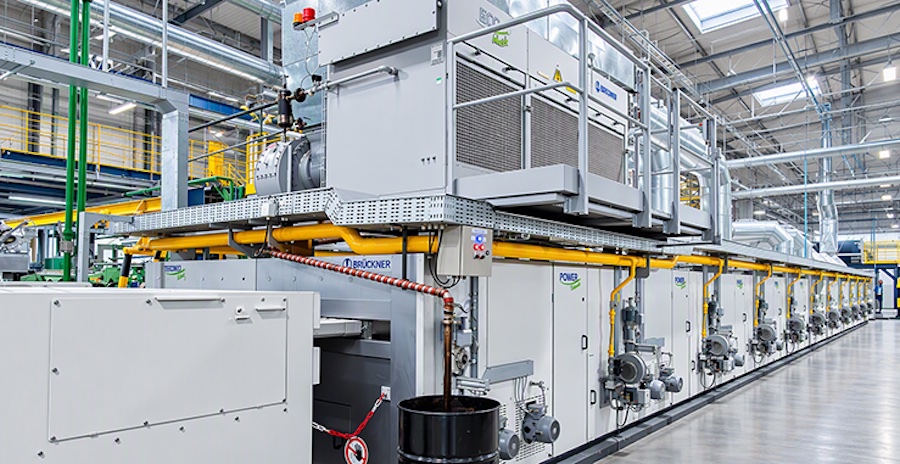
Tradition and Innovation – Phoenox Textiles Ltd. relies on state-of-the-art carpet back-coating line from Brückner

For more than 70 years, Phoenox Textiles Ltd. has been synonymous with quality, reliability, and inno-vation in the textile industry. Founded in 1954 in Huddersfield (Yorkshire, UK), a region with a long tradition in textiles, this family-owned business has continued to evolve without losing sight of its roots. Today, in its fourth generation under the leadership of the Mosley family, Phoenox successfully combines decades of experience with a clear, forward-looking corporate strategy.

#ITM 2026

Monforts sees growing potential for technical textiles in Türkiye

For many years now, Türkiye has been one of the most important markets for textile finishing, coating and continuous dyeing equipment, making ITM 2026 from June 9-13 a key event for Germany’s Monforts. At the Istanbul exhibition at stand 1117D in Hall 11, the company will put the emphasis on its machines which continue to lead the field in conventional dyeing and finishing, and also highlight the strong opportunities for Turkish textile manufacturers in the growing field of technical textiles.

Latest News

#ITM 2026

KARL MAYER presents a textile TEXTRONIC® innovation at ITM 2026

With highly efficient machines and continuous textile innovations, KARL MAYER underscores its role as a reliable partner for discerning top-tier customers. Just in time for ITM 2026 in Istanbul, the industry leader is introducing a true innovation: an eyelash lace with its characteristic fringed look – combined with a previously unattainable 4-way stretch. While the established fabric could until now only be produced as rigid version or with one-dimensional stretch, the new elasticity in both dimensions expands the possibilities for cross-band panel fabrics.

#Raw Materials

Better Cotton Initiative welcomes new and returning Council members

The Better Cotton Initiative (BCI) has confirmed a series of appointments and reappointments to its Council, the multistakeholder board responsible for BCI’s strategic direction.

#Man-Made Fibers

DYNEEMA® and NP Aerospace advance personal protection for military servicewomen

Dyneema®, owned by Avient Corporation, an innovator of materials solutions, is supplying its high-performance unidirectional (UD) materials to world-leading armor manufacturer NP Aerospace, enabling the production of armor systems designed specifically to fit the female body. With 2,000 new armor systems, including 4,000 plates, made in the United Kingdom (UK) and delivered in June 2026, this collaboration addresses a long-standing lack of high-quality personal protection specially built for female defense and security personnel.

#Man-Made Fibers

Textile Exchange publishes comprehensive polyester LCA study

Textile Exchange has released a new Life Cycle Assessment (LCA) study on polyester, providing detailed data on the environmental impacts of both virgin and recycled polyester production. The study aims to strengthen understanding across the fashion, textile and apparel industries and support more informed decision-making regarding polyester sourcing and production.

TOP