[pageLogInLogOut]

#Raw Materials

U.S. Cotton Trust Protocol announces Levi Strauss & Co and their legacy brands as new members

The U.S. Cotton Trust Protocol welcomes new members Levi Strauss & Co, one of the most recognizable denim companies worldwide, and their legacy brands Levi’s®, Dockers®, Denizen® by Levi’s®, and Signature by Levi Strauss & Co.™

More than 90 percent of Levi Strauss & Co’s products are cotton-based. The company has committed to sourcing 100 percent more sustainably grown cotton focusing on decreasing water use, cutting carbon emissions, and reducing fertilizer and pesticide use. This corporate commitment to more sustainable and resilient cotton sourcing is part of a broader internal initiative designed to move the company toward a more sustainable and circular product strategy. “At Levi Strauss & Co., the quality and sustainability of the cotton we use is critical to our business and important to our customers,” said Jeffrey Hogue, Chief Sustainability Officer, Levi Strauss & Co. “Membership in the U.S. Cotton Trust Protocol will be an important step and a key partnership in our efforts to source 100 percent more sustainably grown cotton.” 

© 2021 U.S.Cotton
© 2021 U.S.Cotton


The Trust Protocol will aid Levi Strauss & Co.’s efforts by providing verified data on sustainability practices from U.S. cotton growers and access to aggregate year-over-year data on critical metrics including water use, greenhouse gas emissions, energy use, soil carbon, soil loss and land use efficiency. Levi Strauss & Co will also participate in the pilot phase of the Protocol Credit Management System which provides its members with complete supply chain transparency through use of TextileGenesis’ blockchain technology.


“Levi Strauss & Co. is a globally recognized and respected brand and we are proud to welcome them as members,” said Dr. Gary Adams, president of the U.S. Cotton Trust Protocol. “During the past 35 years, the U.S. cotton industry has made significant progress in reducing our environmental impact and the Trust Protocol is aligned with the 2025 national goals to further those improvements. As a member, Levi Strauss & Co. will receive farm level data which will help them progress their sustainability efforts and achieve their cotton sourcing goals.”

The Trust Protocol has welcomed more than 450 brand, retailer, mill and manufacturer members since its launch in 2020. This includes Gap Inc. and its collection of purpose-led lifestyle brands Old Navy, Gap, Banana Republic and Athleta as well as global apparel manufacturer Gildan. The Trust Protocol has also welcomed UK retailers Tesco, Byford and Next Plc. Other Trust Protocol member announcements include the first 10 U.S. mills to join and the first members in Latin America.

The U.S. Cotton Trust Protocol is aligned with the UN Sustainable Development Goals, recognized by Textile Exchange and Forum for the Future, and part of the Sustainable Apparel Coalition, Cotton 2025 Sustainable Cotton Challenge, Cotton 2040 and Cotton Up initiatives.

More News from TEXDATA International

#ITM 2026

ITM 2026: The new geography of textile production

New production hubs are emerging across North Africa and Central Asia, while Türkiye is accelerating its transformation toward higher-value, technology-driven and more sustainable textile manufacturing.

#Research & Development

“Production is a product”

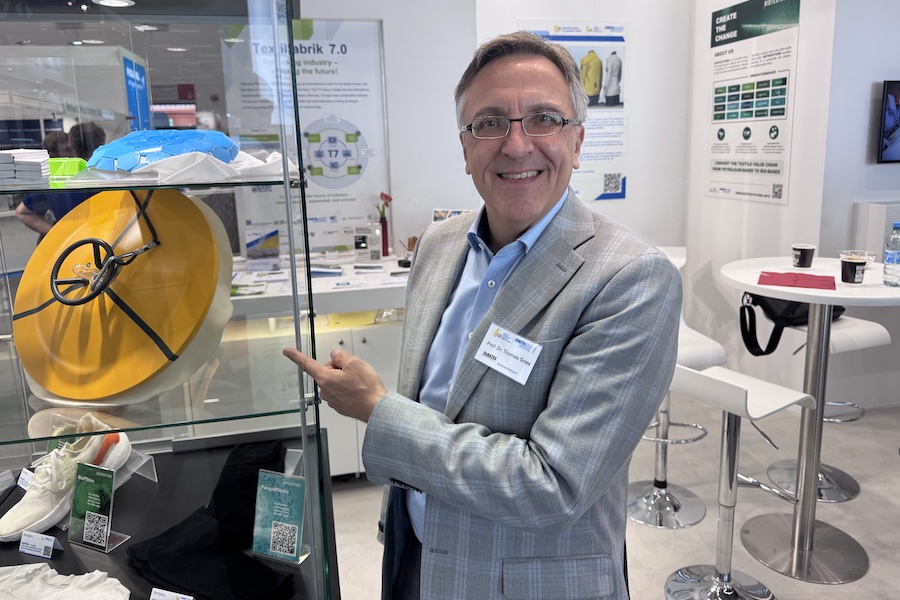
From technical textiles and AI-driven robotics to the limitations of textile circularity: Professor Dr Thomas Gries looks back on more than two decades of development at ITA Aachen. In the interview, he explains why production technology remains a decisive success factor, discusses international collaborations and innovation ecosystems, and shares his views on the transformation of production landscapes and the challenges facing an increasingly regulated industry.

#Knitting & Hosiery

“We need to move away from the price trap and return to a value-driven mindset.”

With its new Textile Innovation Center, KARL MAYER is sending a strong signal for innovation, collaboration, and the future of textile applications. In this interview, Karl Josef Mayer discusses new opportunities in warp knitting, the processing of staple fibres, recycling, the changing role of machinery manufacturers, and why the textile industry must once again focus more strongly on the value of textiles. by Oliver Schmidt

#Associations

“Innovation, resilience and international experience remain the great strengths of the Swiss textile machinery industry”

Geopolitical uncertainty, growing competitive pressure from China, new free trade agreements and the shift towards a circular economy are currently reshaping the global textile industry. In this interview, Cornelia Buchwalder discusses the current mood within the Swiss textile machinery sector, the industry’s distinctive innovative strength, new market opportunities in India and Asia, and the technological trends that could shape the upcoming trade fair cycle leading up to ITMA 2027.

More News on Raw Materials

#Raw Materials

Global cotton consumption to exceed production in 2026/27 as Asian demand remains resilient

Global cotton consumption is projected to exceed production in the 2026/27 season as output declines across several major producing countries while demand remains relatively stable, according to the November edition of Cotton This Month, published by the International Cotton Advisory Committee (ICAC).

#Natural Fibers

ICAC announces 84th Plenary Meeting in Egypt with focus on cotton industry resilience

Registration is now open for the International Cotton Advisory Committee’s 84th Plenary Meeting, which will take place from 24 to 26 March 2027 in Alexandria, Egypt. The conference will address climate resilience, technological developments, sustainability and competitiveness across the global cotton and textile value chain.

#Raw Materials

New Cotton Review examines competitiveness, market risk, and opportunities

From moving record volumes of Brazilian cotton to market, to managing price volatility, unlocking Ethiopia’s production potential, and strengthening African textile trade, the latest edition of Cotton: Review of the World Situation examines some of the most consequential opportunities and challenges facing the global cotton industry.

#Raw Materials

Kraig Labs ships first commercial spider silk yarn

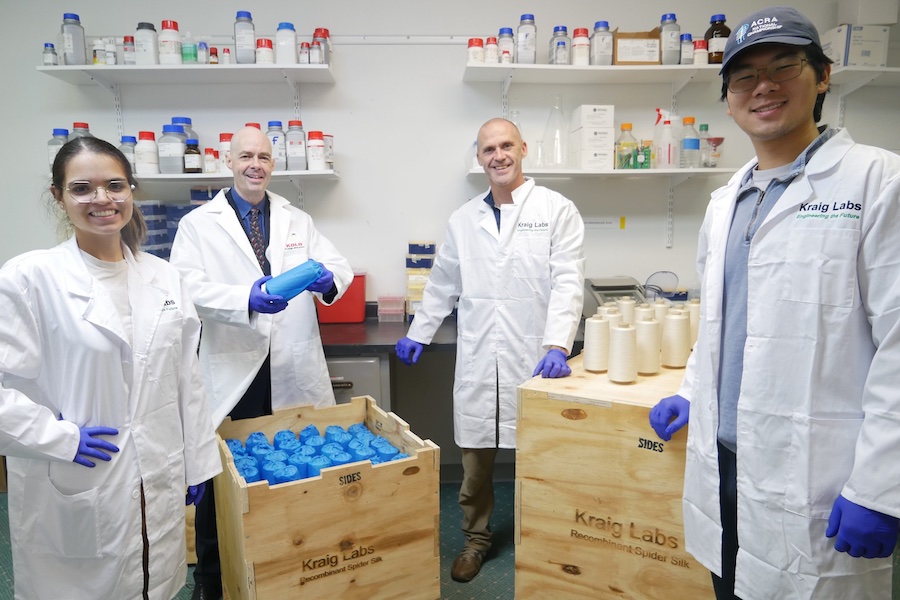
Kraig Biocraft Laboratories, Inc. (OTCQB: KBLB) (“the Company”, “Kraig Labs”, or “Kraig’s”), a world leader in spider silk technology*, today announced the shipment of its first commercial order of recombinant spider silk yarn. The custom-engineered yarn was produced to fulfill a purchase commitment from a globally recognized performance sports brand and is slated for development into a first-of-its-kind performance textile.

Latest News

#Recycling / Circular Economy

Circulose resumes recycling of discarded cotton textiles and appoints interim CEO

Circulose today announced its restart of commercial-scale production plant at Ortviken in Sundsvall, Sweden, marking a significant step in scaling next-generation materials for the global fashion industry. The Ortviken plant is the world’s first commercial-scale chemical textile recycling facility. Its restart demonstrates that the fashion industry is seeking ways to scale proven solutions that move beyond pilots and into commercial production.

#ITMA Asia + CITME 2026

Itema brings textile versatility to ITMA ASIA + CITME 2026

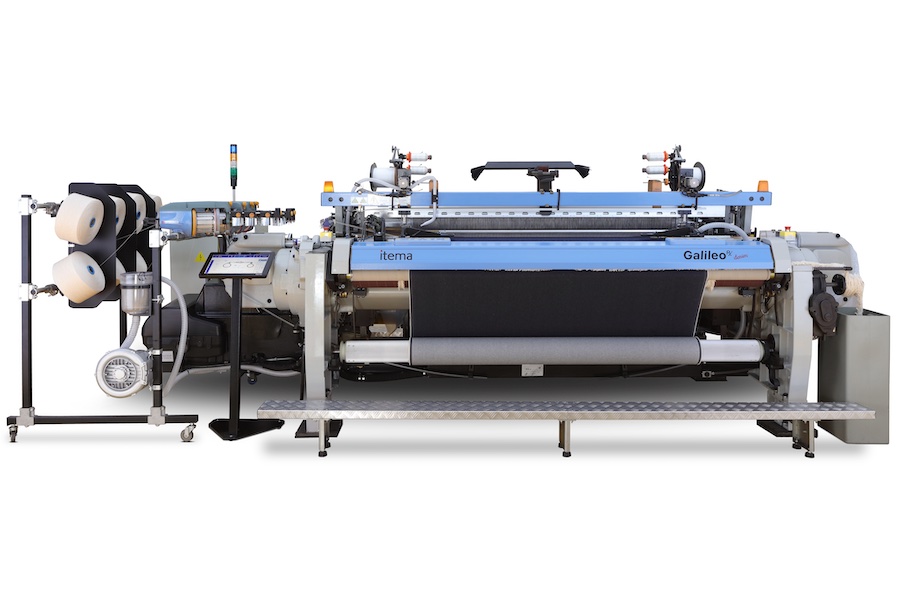
Itema announces its participation in ITMA ASIA + CITME 2026, taking place November 20–24 at the National Exhibition and Convention Center in Shanghai. In Hall 3 – Stand D06, the company will showcase two Galileo-RX rapier weaving machines weaving heavy denim and conveyor belt fabrics, demonstrating its ability to address different textile requirements with application-specific configurations. Five additional Itema machines at partner booths will extend the exhibition lineup to upper shoe fabric, label, Jacquard leno fabrics, and shirting, offering visitors a broader view of Itema rapier and air-jet weaving technologies.

#Dyeing, Drying, Finishing

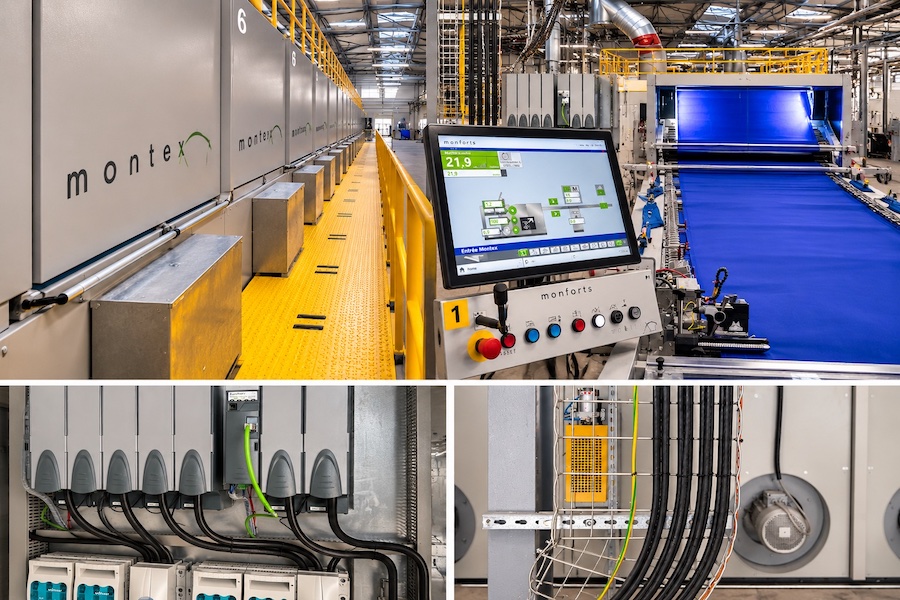
AEI reaps the benefits of all-electric new Monforts range

The impact of the rising cost of energy on the textile industry has been well documented, with some European countries paying up to seven times more to run their manufacturing operations than in other regions of the world.

#ITMA Asia + CITME 2026

Brückner showcases sustainable technologies for the future of textile finishing at ITMA ASIA 2026

With rising energy costs, increasing environmental requirements, and growing competitive pressure, textile manufacturers worldwide are facing the challenge of making their production processes both more sustainable and more cost-effective. As one of the world's leading specialists in textile finishing machinery, Brückner will present innovative solutions and advanced production technologies at ITMA ASIA 2026 in Shanghai. These technologies can play a key role in significantly reducing both energy consumption and emissions.

TOP