[pageLogInLogOut]

#Associations

The European Commission plan to propose a price cap on wholesale gas price at 275€/MWh is a bitter disappointment for the European textiles and clothing manufacturers
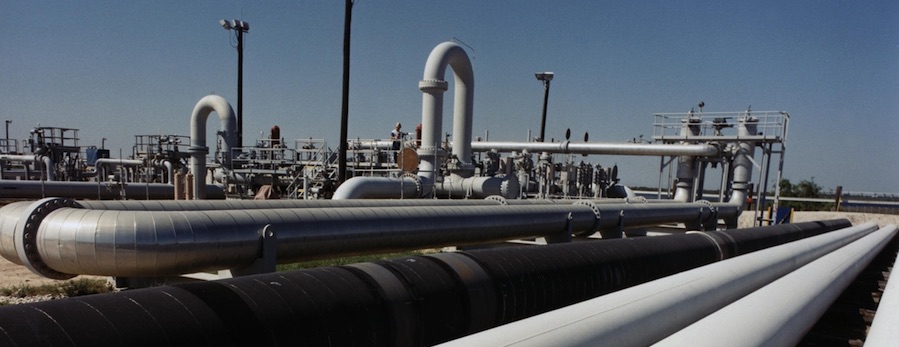
© 2022 Free U.S. Government image
On Tuesday, EURATEX stated in a letter to EC President, Ursula von der Leyen, that any price cap above the level of 80€euro/MWh would not help the EU industry – the textile sector in particular – to survive the current crisis. Indeed, as early as July 2021, the wholesale gas price in the EU was below 30€/MWh.

Now, the EU industry is facing gas and energy prices that have exceeded any coping capacity: from the record-high 320€/MWh last August, the price has reached to 127€/MWh today. Still, it is more than 300% than the business-as-usual prices.

The very existence of the European industry is at stake and with it the European sustainability agenda – and Europe’s capacity to implement it. Furthermore, Europe will lose its strategic autonomy, which guarantees essential goods and services are made available on the European Internal Market. If we continue on this path, the EU will soon become totally dependent on foreign imports with no leverage to implement its sustainability agenda, let alone lead the transition to a circular economy on the international stage.

At present, the EU industry is facing a dire international competition with the industry in China, India and the US working at energy prices of around 10$/MWh. In addition, these competitors are benefitting of sky-high subsidies from their own governments: the rollout of the US $369bln industrial subsidy scheme is just the latest example.


EURATEX Director General, Dirk Vantyghem, believes that “while the EU Industry is under immense, unprecedented pressure, a price cap at 275€/MWh would be meaningless: the European industry will be permanently pushed out on the market. The industry is at the heart of the European way of life and the fundament of our social market economy. The EU must save its industry to save Europe. The moment to act is now.”

More News from European Apparel and Textile Confederation (EURATEX)

#Associations

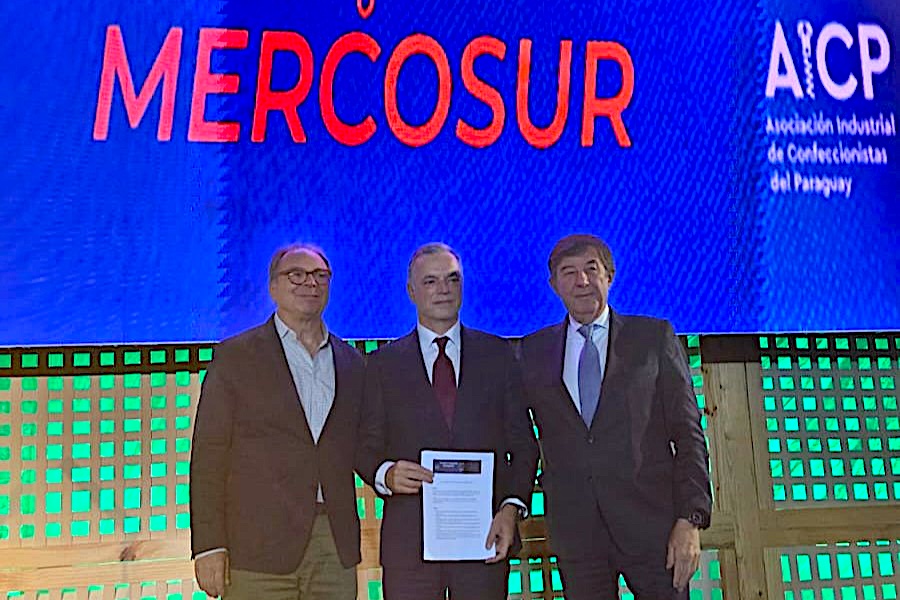
European business associations celebrate the signature of the EU-Mercosur FTA

The 17th January marks a historic milestone with the signing of the EU-Mercosur Trade Agreement, creating the biggest trading block in the world. European business – represented by more than 28 associations across a wide range of sectors – warmly welcomes this signature. It sends a strong and timely signal that the EU remains open and is committed to rules-based global trade. In a time of global uncertainty, this agreement is a key growth booster.

#Europe

Level playing field at stake: Europe’s textile industry demands decisive action

Yesterday, the European Parliament took a welcomed and necessary step by voting a resolution calling for stronger market surveillance, reinforced customs controls and faster enforcement of the Digital Services Act in case of infringements. For Europe’s textile and clothing manufacturers, this is the first political acknowledgement that the system is broken — and that enforcement must finally match the scale of the problem.

#Recycling / Circular Economy

EURATEX calls for a competitive and harmonised Circular Economy Act For Textiles

EURATEX, representing Europe’s textile and clothing industry with over 200,000 companies and 1.3 million workers, has submitted its official position paper to the European Commission’s consultation on the upcoming Circular Economy Act (CEA). The association welcomes the Commission’s initiative to shape a framework that strengthens Europe’s circular economy while maintaining industrial competitiveness.

#Associations

European textile and clothing federations mobilize against ultra-fast fashion

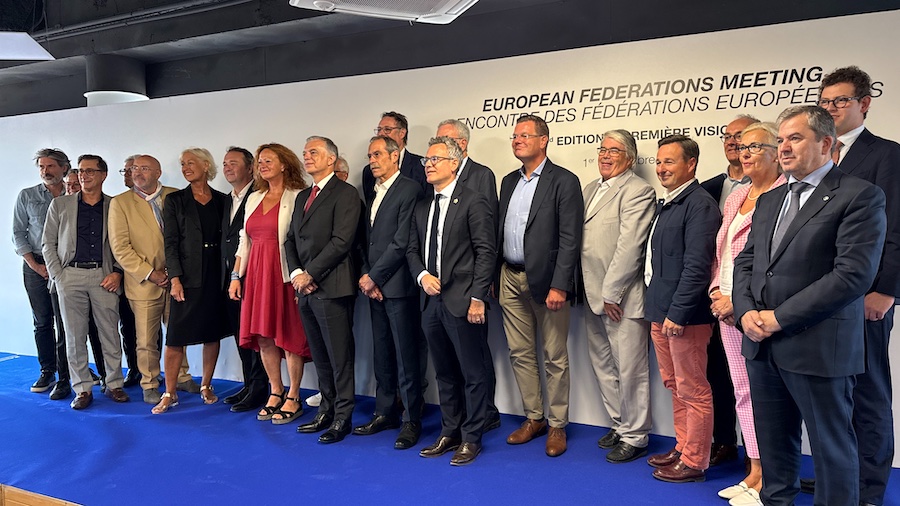
On the occasion of the Première Vision trade fair in Villepinte, the leading European textile and clothing federations issued a solemn call for urgent action against the rapid rise of ultra fast fashion. This model, driven by major non-European e-commerce platforms, already accounted for 4.5 billion imported parcels in the European Union in 2024—representing 5% of clothing sales (20% online)—and continues to grow at a staggering pace.

More News on Associations

#Associations

INDA announces future dates and locations for FiltXPO™ and IDEA® events

INDA, the Association of the Nonwoven Fabrics Industry, announced the future dates and locations for its FiltXPO™ and IDEA® events, reaffirming its long-term commitment to serving the global filtration, nonwovens, and engineered materials communities.

#Associations

Latest news from Bremen: ICAC Plenary Meeting to take place right before the International Cotton Conference

The International Cotton Advisory Committee (ICAC) will hold its 83rd Plenary Meeting on 23–24 March 2026 at the Parliament building in Bremen. The meeting will take place immediately ahead of the 38th International Cotton Conference Bremen (25–27 March 2026) and marks a historic premiere: for the first time, the ICAC Plenary will be hosted in close cooperation with the Bremen Cotton Exchange and the Faserinstitut Bremen e.V. (FIBRE).

#Associations

Textile machinery: the upcoming Colombiatex 2026 speaks Italian

Numerous Italian textile machinery companies will be attending the upcoming Colombiatex, the premier trade fair for the Colombian textile supply chain, held in Medellin from January 27 to 29, 2026. This year’s edition further confirms the strong bond between local textile manufacturers and Italian technology providers.

#Associations

Waste2Fashion: FTTH Committed to advancing Circular Fashion in the Mediterranean

As an official partner of the Waste2Fashion project, the Tunisian Federation of Textile and Apparel (FTTH) participated in the Kick-off Meeting held on 10–11 December in Spain. The event brought together project partners from across the Mediterranean, including Spain, Italy, Egypt, Lebanon, and Tunisia, to align on a shared vision and initiate the first implementation steps.

Latest News

#Fabrics

MUNICH FABRIC START: Between Attitude and Sensuality

The future begins where we reimagine it. After seasons of restraint, Spring.Summer 27 marks a conscious counter-trend: optimism, sensuality, and creative freedom are replacing pragmatism and neutrality. Physical presence and individuality are regaining importance – as a response to uncertainty, exhaustion, and algorithmic predictability. The overarching theme of PLEASURE stands for fashion as an emotional space, as an expression of attitude and cultural reflection. Colours, surfaces, and materials become vehicles for self-confidence and joie de vivre.

#Denim

organIQ seek: smart alternative to potassium permanganate

CHT Group announces new technical findings within its organIQ seek platform that significantly advance the transition toward permanganate-free denim bleaching. Through extensive industrial testing and application research, CHT confirms that organIQ seek can now be used with remarkable effectiveness as a substitute for potassium permanganate in spray bleach, while remaining aligned with sustainability expectations and cost realities in the European market. At the COLOMBIATEX in Medellín as well as at the Exintex in Puebla and the Kingpins Show in Amsterdam the CHT Group will present organIQ seek as an alternative to potassium permanganate.

#Functional Fabrics

PERFORMANCE DAYS: Focus topic shifts to the beginning of the value chain

Following the last Focus Topic in October 2025, which placed Textile-to-Textile Recycling at its core, PERFORMANCE DAYS continues to drive the conversation around circularity – this time with an expanded and more upstream perspective. The upcoming Focus Topic, “Textile to Textile: The Role of Collectors and Sorters,” presented during the spring edition on March 18–19, will spotlight one of the most essential yet often overlooked components of a functioning circular textile system: the efficient collection and sorting of post-consumer textiles.

#Knitting & Hosiery

Proven performance, optimised costs – the new RE 6 EL

Nowadays textile companies increasingly need to produce small production runs and respond to market changes with instantaneous pattern changes in order to operate profitably – meaning they require machines that offer maximum flexibility, reliability and cost efficiency. KARL MAYER understands the challenges of the market and is launching its new RE 6 EL. The Raschel machine offers the core strengths of the classic RSE 6 EL and essentially the same performance parameters, but has been further cost-optimised largely due to local production advantages. This makes the newcomer an efficiency champion in production, especially when it comes to frequent pattern changes.

TOP