[pageLogInLogOut]

#Associations

Antwerp Convention shows: European Textiles and Apparel sector alive and kicking !
© 2021 EURATEX
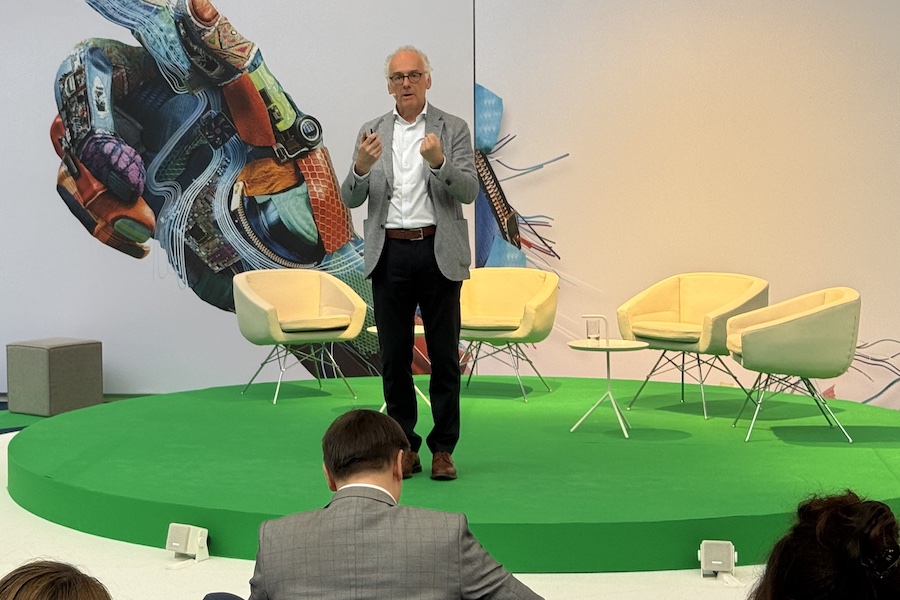
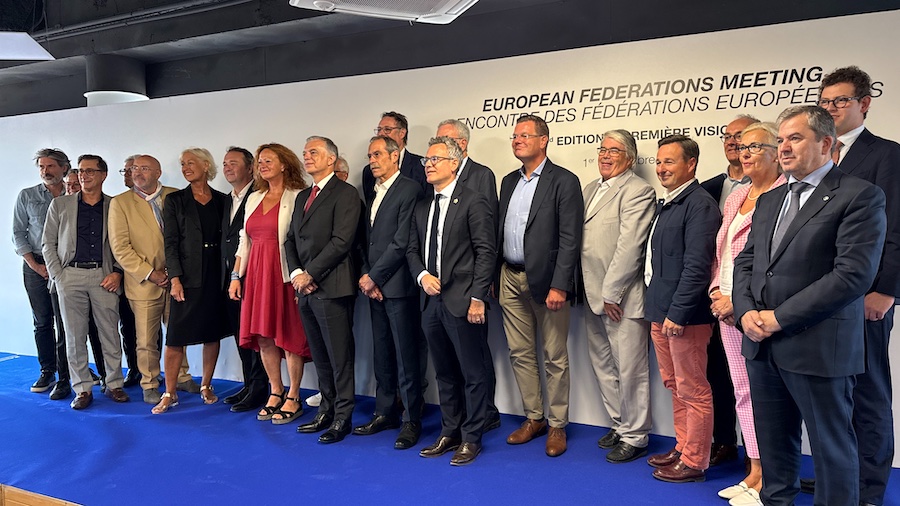
EURATEX 9th Convention was successfully conducted on 9 and 10 November in Antwerp, back-to-back with the 36th IAF World Fashion Convention. The event brought together, under Belgian ‘Covid Safe’ conditions, well over 250 apparel and textile industry professionals, from across Europe and beyond.

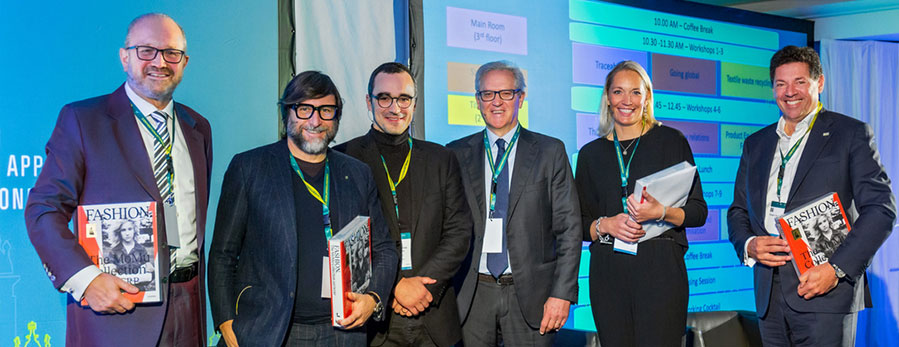
Under the theme “A new paradigm for the European Textiles & Apparel Industry”, the convention focused on the impact of the corona pandemic and the role of the European Union in boosting the competitiveness of our industry. If well designed, the upcoming EU Textiles Strategy and the new EU Industrial Strategy offer an opportunity to shape a new framework, which should allow European textile companies to prosper. That was certainly the message of Commissioner Breton in his opening speech. The plenary panel discussion, with representatives from fibres, apparel, luxury brands, and textile machines, confirmed the need to develop a common strategy across our supply chain; only by working together we can turn challenges – related to sustainability, transparency, level playing field, etc. – into opportunities.
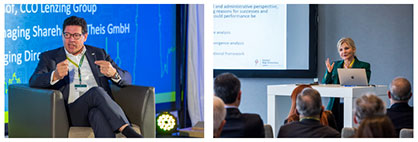
© 2021 EURATEX
© 2021 EURATEX


9 different workshops focused on specific aspects on that EU strategy: how to manage textile waste, the importance of traceability, the impact of the new chemical strategy, the need for new skills, relations with Turkey and the global trade dimension, EU support programmes,… Each workshop offered an insight in the “Brussels agenda” and allowed participants to share their perspective and proposals.
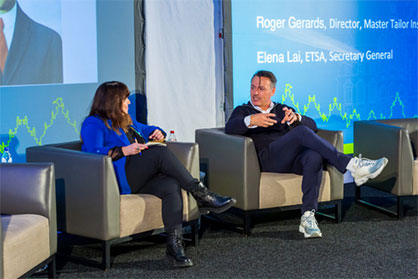
© 2021 EURATEX
© 2021 EURATEX


The convention was also an opportunity to get together again, after nearly 2 years of virtual dialogue. There was intense networking during the different breaks and at the Antwerp Fashion Museum on Monday evening.


With so many topics on the table, so many positive ideas circulating, the convention delivered on its purpose to bring the entire industry together and move forward with confidence. It also gave a boost to EURATEX’ work, in promoting the European textile and apparel industry.

EURATEX wants to thank all participants, speakers and sponsors of the event. We look forward to evaluate, one year from now, how this paradigm shift is taking shape and our companies are prospering in this rapidly changing economy.
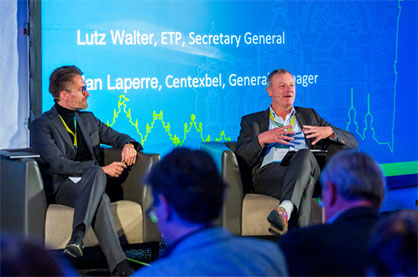
© 2021 EURATEX
© 2021 EURATEX


More News from European Apparel and Textile Confederation (EURATEX)

#Associations

European Business Coalition welcomes provisional application of EU–Mercosur Agreement and calls for Swift and full implementation

With the European Commission’s decision to provisionally apply the EU–Mercosur Interim Trade Agreement, a process spanning more than 25 years now moves decisively into its implementation phase.

#Europe

Antwerp Declaration community urges EU leaders to deliver emergency measures as Europe’s competitiveness crisis deepens

EURATEX, representing the European textile and fashion industry, joins the Antwerp Declaration Community’s call on EU Heads of State and Government to adopt emergency measures that restore industrial competitiveness and deliver tangible results for Europe’s manufacturing base in 2026.

#Europe

FITA, ABIT and EURATEX underline strategic importance of Mercosur – EU Partnership Agreement for the textile and apparel industry

The Argentine Textile Industry Federation (FITA), the Brazilian Textile and Apparel Industry Association (ABIT), and the European Apparel and Textile Confederation (EURATEX) continue to monitor the process of internalizing the Mercosur-European Union Partnership Agreement. This agreement is essential for the competitiveness of our industries, on both sides of the Atlantic.

#Associations

Industry associations warn against state-run EPR models in the EU

European industry associations, led by Euratex, have raised concerns over a growing trend in several EU Member States to introduce state-run Producer Responsibility Organisations (PROs) within Extended Producer Responsibility (EPR) schemes.

More News on Associations

#Techtextil 2026

Italian textile machinery innovation takes center stage in Frankfurt for Techtextil 2026

The Italian textile machinery industry is gearing up for a key event on the international trade fair calendar: Techtextil 2026, taking place from April 21–24 in Frankfurt, Germany. A prestigious representation of Italian companies will participate in the German exhibition—a global benchmark for technical and innovative textiles—to present cutting-edge technologies dedicated to an ever-expanding market.

#Textile processing

Major expansion for ACG Kinna follows record year

In response to growing demand for its full textile and finished product line automation services, ACG Kinna – a member of TMAS, the Swedish textile machinery association – has inaugurated a 1,000-square-metre expansion at its headquarters in Skene, Sweden.

#Techtextil 2026

Precision, performance and progress: British textile machinery at Techtextil and Texprocess 2026

As global demand accelerates for lighter, stronger and more sustainable technical textiles, the machinery and testing technologies behind their manufacture are evolving at pace. At the Techtextil and Texprocess exhibitions in Frankfurt this April, eight members of the British Textile Machinery Association (BTMA) will demonstrate how advanced engineering continues to shape the performance, precision and resource efficiency of advanced fibre and fabric production.

#Nonwovens

INDA honors four industry leaders with 2026 Lifetime Service and Technical Achievement Awards

INDA, the Association of the Nonwoven Fabrics Industry, has announced the four distinguished recipients of the 2026 INDA Lifetime Service Award and Lifetime Technical Achievement Award. Tom Daugherty, Pricie Hanna, Carey Hobbs, and CK Wong are being recognized for their exceptional leadership, innovation, and enduring contributions to advancing the nonwovens industry and strengthening the global community it serves.

Latest News

#Composites

KARL MAYER strengthens partnerships in the composites industry at JEC World 2026

KARL MAYER further strengthened its role as a reliable and competent partner to the composites industry at JEC World 2026. The global market leader in textile machinery manufacturing used the trade show to meet key customers, establish numerous new contacts, and engage in in-depth technical discussions.

#Recycling / Circular Economy

ABB and Syre partner to explore technologies for industrial-scale textile recycling

ABB has signed a Memorandum of Understanding (MoU) with Swedish textile impact company Syre to jointly explore technologies to support the development of Syre’s first textile-to-textile recycling plant in Vietnam. The agreement establishes a framework for collaboration to investigate how ABB’s automation, electrification and digital technologies could contribute to safe, efficient and scalable operations. It will also explore how these capabilities could further optimize process and quality control performance as Syre advances its ambition to produce circular polyester at industrial scale.

#Techtextil 2026

From Nature Performance to Circular Economy: Techtextil 2026 focuses on the future market for technical textiles

Alternative materials and recycling technologies are one of the most important future segments and drivers of innovation in technical textiles. Sustainability goals and regulatory requirements increase their relevance, while advances in performance and economic viability enhance their market competitiveness. Taking place from 21 to 24 April 2026, Techtextil reflects this key industry trend with a growing number of specialised exhibitors. With the new “Nature Performance” label, the leading global trade fair bundles relevant market offerings and facilitates access to new solutions – from natural fibres and yarns to bio-based materials and circular approaches.

#Research & Development

Textile cascade filter for removing microplastics from wastewater

Microplastics are now found almost everywhere, even in remote regions of Antarctica. They enter the human body through the food chain. Studies indicate that microplastics may have negative effects on the human health.

TOP